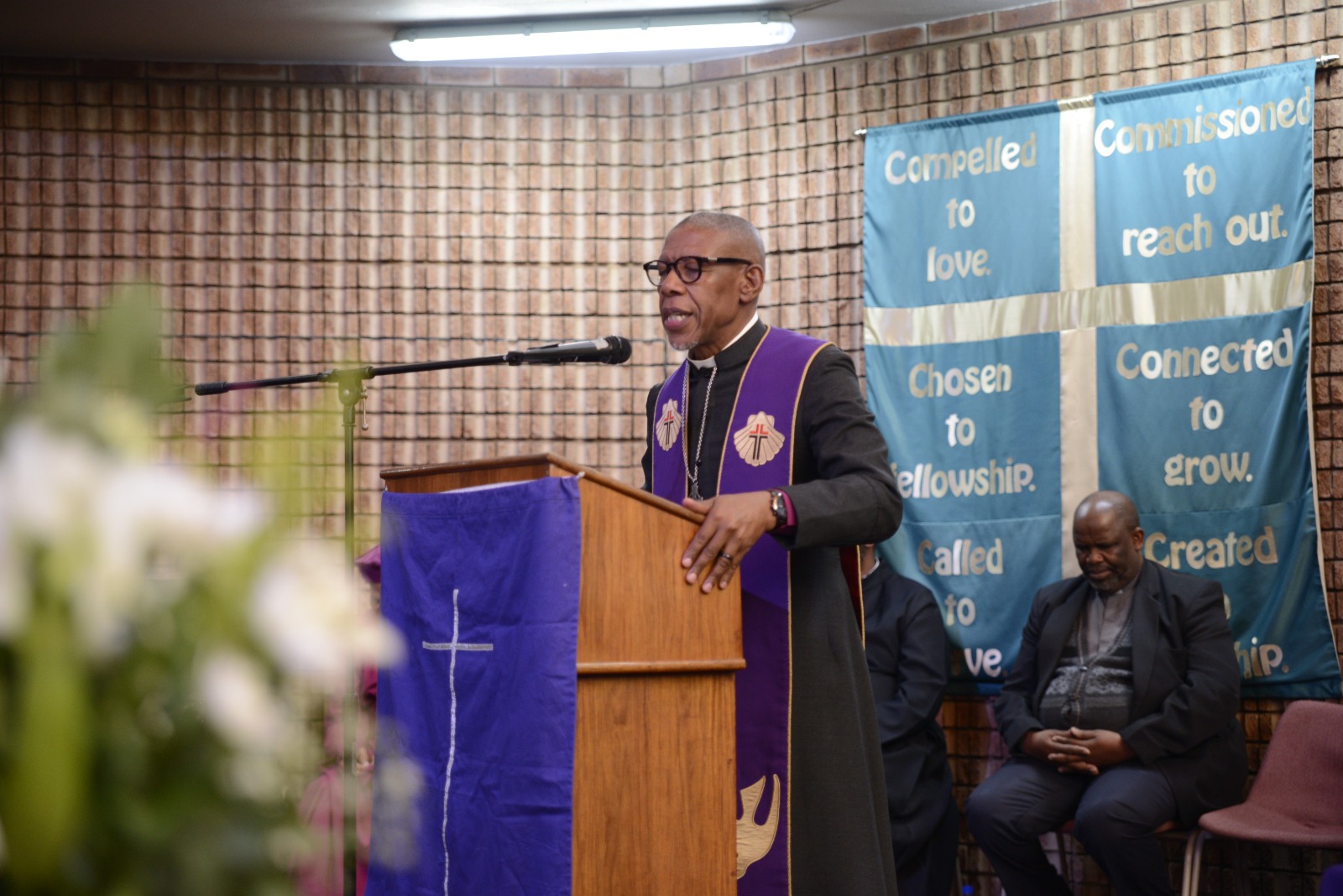
![Bishop Joe Seoka during The Funeral Service of Professor Itumeleng Mosala [Image: Mandla Seloane]](https://gsmn.co.za/wp-content/uploads/2026/08/WhatsApp-Image-2026-08-20-at-15.59.13-1.jpeg)
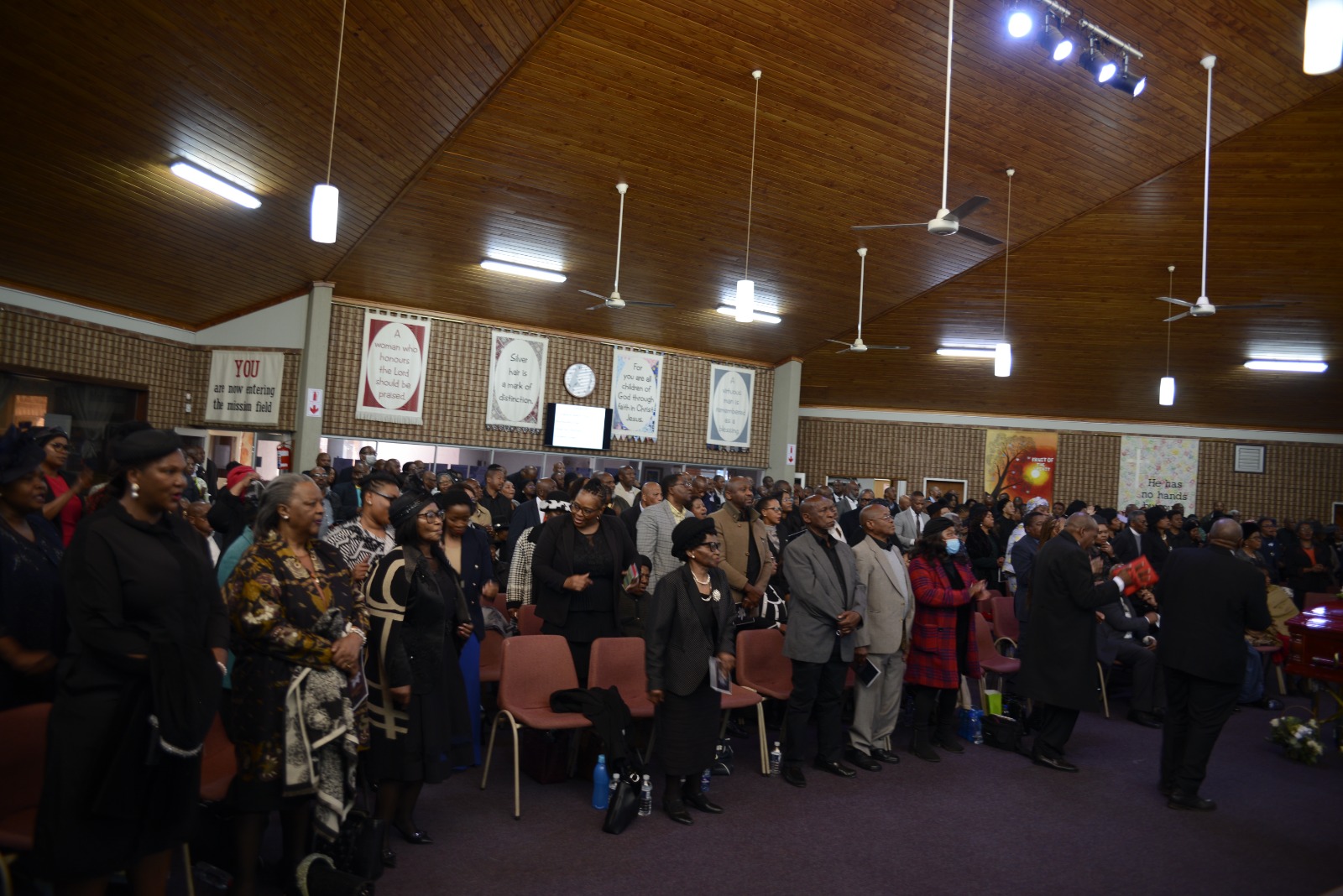
There are few experiences more acutely painful than witnessing parents bury their child. It is an experience that defies imagination and one that no parent should ever have to endure. Yet, in the midst of such profound grief, I was struck by another experience at the funeral of a friend and mentors’ son: the extraordinary manner in which a community gathers around a bereaved family.
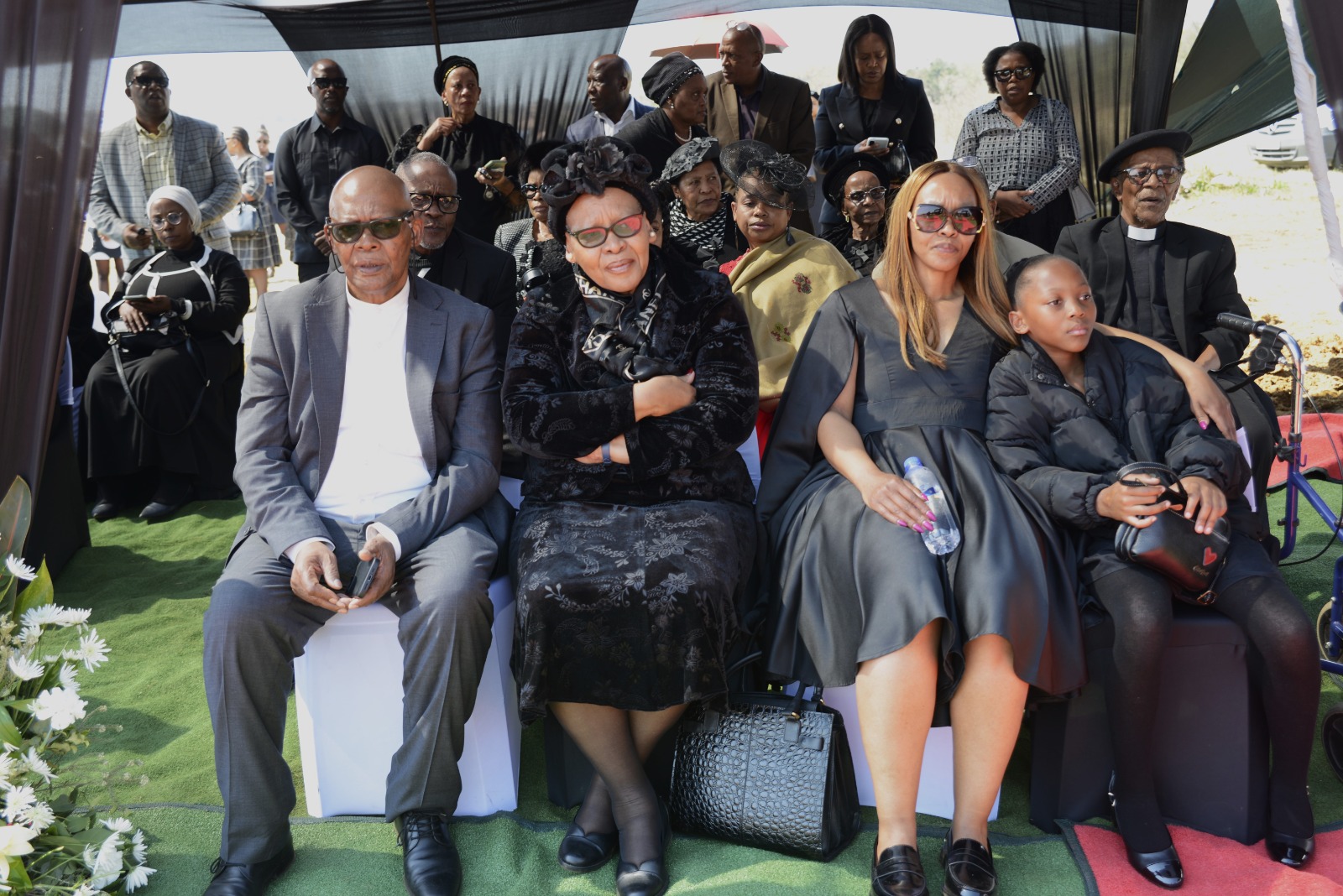
Professor Itumeleng Mosala, his wife Louisa, their daughter, grandchildren and their entire clan, were not alone in their grief. African traditional practice appeared at its most compelling. The old adage that a child is raised by the village was given tangible meaning. The village came not merely to mourn, but to carry, to console, to remember and, in its own way, to absorb some of the unbearable weight of loss.
But the village gathered around the Mosala family was also an intellectual village. It was a village of theologians, scholars, clergy and thinkers drawn from across the various traditions and offices of Christianity. Among them were scholars who had shared intellectual and political journeys with Professor Mosala, including those connected to the traditions of Black Consciousness. The gathering therefore became, almost unexpectedly, a meeting of several histories: family, community, theology, scholarship and the struggle for Black intellectual liberation. What fascinated me most was watching these worlds converge around the pulpit.
Professor Mosala is not simply a theologian. His intellectual contribution is deeply concerned with the question of interpretation. How scripture is read, who interprets it, from what social location it is interpreted, and whose interests are served by particular interpretations. Consequently, when theologians took turns speaking at the funeral, there was something almost extraordinary about watching theologians listen to one another. They were not an ordinary audience. They were peers.
They knew the intellectual traditions from which one another spoke. They understood the demands of theological argument. They knew that scripture is never encountered in a social vacuum and that every interpretation carries assumptions about humanity, power, suffering, justice and God. And so, even within the solemnity of mourning, there was an intellectual attentiveness to the proceedings.
The sermon by Bishop Sidwell Mokgothu was particularly incisive. His engagement with Job was not a casual invocation of a familiar biblical story. Job became a site through which the experience of suffering could be contemplated. The biblical text was placed alongside the human reality of loss. The question was no longer simply what happened to Job, but what it means for human beings to confront suffering that seems to exceed explanation.
For me, this raised a larger question: what happens when Black Theology and Black Consciousness meet in such a moment?
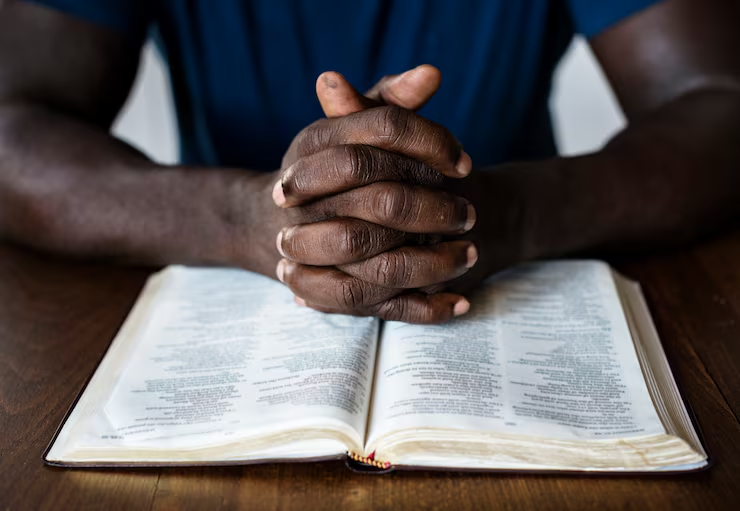
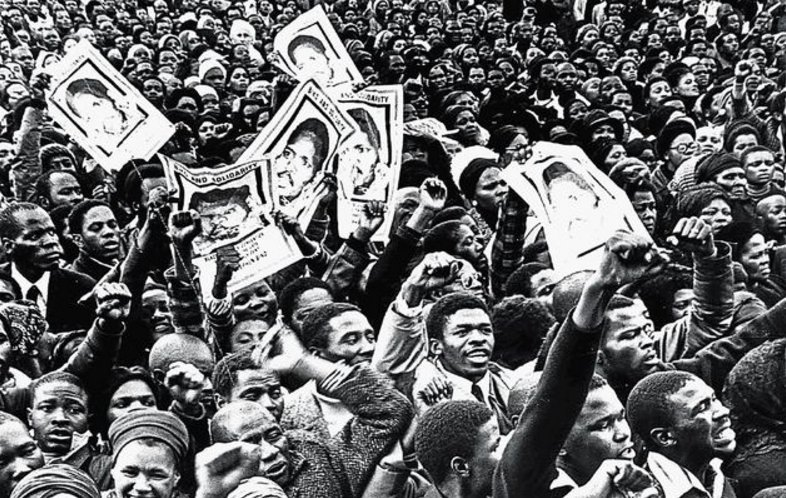
At first glance, they might appear to belong to different intellectual worlds. Black Consciousness is generally associated with the recovery of Black selfhood, psychological liberation, resistance to racial domination and the rejection of the internalisation of oppressive definitions of Black people. Black Theology, meanwhile, operates explicitly within the language and resources of Christianity, seeking to interrogate theology from the lived experience of Black people and to expose the ways in which religion can either legitimise oppression or participate in liberation. But perhaps this difference is more apparent than real.
Both traditions begin with a refusal. Black Consciousness refuses the definition of Black people through the eyes of the oppressor. Black Theology refuses a theological interpretation that presents itself as universal while quietly reproducing the social and racial assumptions of domination. Both therefore ask a fundamental question: Who are we when we refuse to see ourselves through categories imposed upon us? This is where the question of interpretation becomes crucial.
The significance of Professor Mosala‘s theological work lies precisely in the challenge to the assumption that biblical texts can simply be read innocently. Interpretation has a history. It has a social location. It takes place within structures of power. The Bible may be the same text, but the questions brought to it by a Black community experiencing oppression are not necessarily the questions brought by a community occupying a position of privilege. This insight brings Black Theology remarkably close to the intellectual spirit of Black Consciousness.
Black Consciousness insists that liberation must involve consciousness. One cannot simply change political arrangements while leaving intact the psychological and intellectual structures through which the oppressed have been taught to understand themselves. Similarly, Black Theology insists that liberation cannot be reduced to changing political circumstances while leaving theological interpretations untouched. There is therefore a profound connection between consciousness and interpretation. How we interpret the world is connected to how we understand ourselves within it. And how we understand ourselves is connected to whether we imagine ourselves as subjects of history or merely objects within somebody else’s history.
The funeral brought this relationship into sharper focus because death strips away abstraction. Here were people confronted with a suffering that could not be theorised away. The parents were grieving their child. The community was grieving with them. The theologians had to speak into that reality. At that moment, theology could not afford to become merely academic. Nor could Black Consciousness remain merely political vocabulary. Both had to confront the human being in the presence of suffering.
This is perhaps where African communal philosophy enters the conversation with particular force. The funeral demonstrated that grief is not treated exclusively as an individual possession. The suffering of one family becomes, within the communal imagination, the concern of the village. People arrive. They sit. They sing. They pray. They speak. They cook. They remember. They mourn. The community says, in effect: your suffering is not yours alone. There is something deeply significant about this proposition for both Black Theology and Black Consciousness.
Black Consciousness emerged partly from the recognition that domination fragments and diminishes Black existence. It therefore sought to restore a collective sense of dignity and agency. African communal practice, meanwhile, demonstrates that personhood is embedded in relationships. Black Theology adds another dimension: suffering must be interpreted not merely as an individual spiritual problem but within the concrete social realities of human existence. The three traditions therefore begin to speak to one another. The village provides the social ethic. Black Consciousness provides the language of psychological and political emancipation. Black Theology provides a theological critique of suffering, power, human dignity and liberation. At the funeral, these were not theoretical propositions. They were embodied.
Perhaps this is why the presence of so many theologians was so striking. The gathering represented a lineage of Black intellectual work in which theology was never entirely separable from the question of liberation. These scholars were not merely exercising a professional discipline. They were inheritors of a tradition in which scripture, society, race, power and human dignity had to be confronted together.
There was also something profoundly democratic about the pulpit that day. One scholar spoke; others listened. Another interpreted scripture, and his peers listened. The authority of the speaker was therefore accompanied by the scrutiny of fellow thinkers. The pulpit became both sacred space and intellectual space. And perhaps that is an important lesson from Professor Mosala‘s legacy. Theology must continually interrogate itself. It must ask whose voice is being heard, whose experience is being centred, whose suffering is being explained away, and whose humanity is being affirmed.
Black Consciousness asks a parallel set of questions outside the strictly theological domain: Who defines Blackness? Who possesses the authority to define our humanity? What happens when the oppressed begin to define themselves?
The two traditions therefore need not be understood as divergent philosophies. They can be seen as companions in a larger project of liberation. Black Consciousness says: I must become conscious of myself as a human subject. Black Theology says: I must read my faith and my sacred texts from the standpoint of my lived humanity and struggle. African communal practice says: I do not become fully human alone; my humanity is bound to yours. Together, these propositions form a remarkably powerful intellectual and ethical framework.
The funeral therefore became, for me, an unexpected classroom. I arrived to mourn. I left thinking about interpretation. I arrived thinking about the unbearable pain of parents burying their child. I left reflecting on how a community carries suffering. I arrived at a funeral and encountered a village. But it was also a village of theologians. a community of intellectuals who, in their very presence, were an embodiment of Africanness.
Perhaps this is the enduring significance of Black Theology and Black Consciousness when they are brought into conversation. Their meeting is not necessarily a marriage of two identical traditions. They retain important differences. Black Consciousness is not theology, and Black Theology cannot simply be reduced to Black Consciousness expressed in religious language. But they share a fundamental insistence: Black people must be subjects in the interpretation of their own existence.
That may be the deeper lesson of Professor Mosala’s intellectual legacy. In his seminal work Biblcal Hermeneutics and Black Theology, Mosala investigates “the use of the Bible in black theology in South Africa. It begins by judging the extent to which black theology’s use of the Bible represents a clear theoretical break with white western theology. The use of concepts like the “Word of God”, “the universality of the Universality of the Gospel”, “the particularity of the Gospel”, “oppression and oppressors” and “the God of the Oppressed” in black theology, reveals a captivity to the ideological assumptions of white theology.”
He argues that this captivity accounts for the current political impotence of black theology as a cultural weapon of struggle. Therefore, interpretation is never innocent. Consciousness is never politically neutral. Faith is never detached from history. And suffering cannot be understood without asking who suffers, how that suffering is explained, and whether the explanation liberates or merely reconciles the sufferer to the conditions of suffering.
On that day, the theologians gathered around a grieving family. They brought scripture, scholarship, memory and prayer. The village brought presence. The family brought its grief. And somewhere between Job‘s ancient suffering, African communal practice, Black Theology and Black Consciousness, something became visible: liberation is not only a political project or a theological proposition. It is also the struggle to recover the right to name, interpret and carry our human experience together. Perhaps that is what the village was doing that day. It was carrying the Mosala family. And, in carrying them, it reminded all of us that no person, and perhaps no idea. can truly stand alone.








![UN WARNS FUNDING SHORTFALL PUTS 650 000 PEOPLE AT RISK IN SOUTH SUDAN - People fleeing the violence in West Darfur cross the border into Adre, Chad [File: Zohra Bensemra/Reuters]](https://gsmn.co.za/wp-content/uploads/2026/08/2023-11-30T114618Z_180113302_RC2VG2AW7THN_RTRMADP_3_SUDAN-POLITICS-SEXUAL-VIOLENCE-1716120070.webp)