The joint military operation launched by the United States and Israel against Iran marks one of the most dangerous escalations in modern Middle Eastern history. It is being sold as a “defensive necessity.” In reality, it is a calculated gamble which has catastrophic consequences—legally dubious, strategically reckless, and morally indefensible.
This was not an act taken in the fog of immediate invasion. It was a pre-emptive strike justified by long-standing claims that Iran is on the verge of acquiring nuclear weapons and poses an existential threat to Israel and regional stability. Yet for years, diplomatic mechanisms—however fragile—existed to manage precisely this risk. Inspections, negotiations, and multilateral agreements were imperfect but functional tools of restraint. But now, to abandon them in favour of missiles is not strategy; it is failure.
The roots of this confrontation are layered and decades deep.
First, the nuclear question. Iran’s uranium enrichment programme has long alarmed Israel and Washington. Israel views even a latent Iranian nuclear capability as unacceptable. The United States has moved back and forth between negotiation and coercion, but its strategic culture still treats military dominance as the ultimate guarantor of security. Now with the collapse of sustained diplomacy, a vacuum has been left and is being filled with airstrikes.
Second, regional power politics. Iran has expanded its influence through allied groups across Lebanon, Syria, Iraq and Yemen. Israel perceives encirclement. The United States sees a challenge to its regional architecture built around Gulf alliances. Therefore, this strike is as much about containing Iran’s geopolitical influence instead of nuclear weapons.
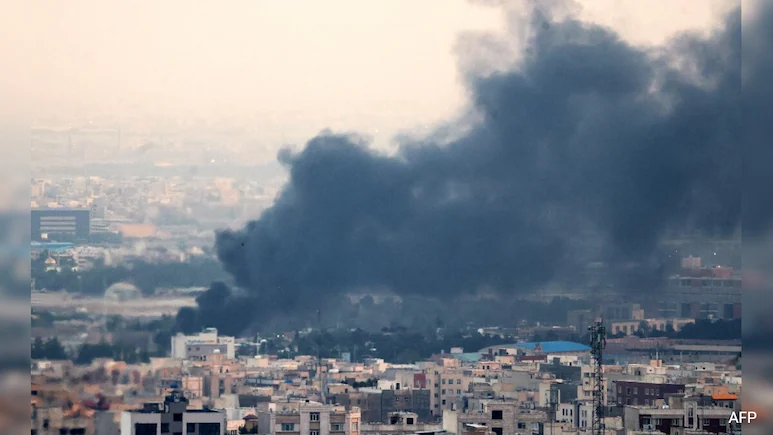
Striking a sovereign state without an imminent armed attack raises grave questions under international law. The prohibition on the use of force—enshrined in the UN Charter—is not a suggestion. It is the foundation of the post-1945 global order. If “potential threat” becomes sufficient justification for bombardment, then no state is safe.
Today it is Iran. Tomorrow it could be any country accused of developing a capability deemed undesirable by a stronger power.
This precedent erodes not only norms, but predictability. And in international politics, predictability prevents catastrophe.
The risks are staggering:
- Regional War: Iran will not absorb humiliation quietly. Further retaliation, whether directly or through regional allies, could ignite a multi-front conflict stretching from the Mediterranean to the Gulf.
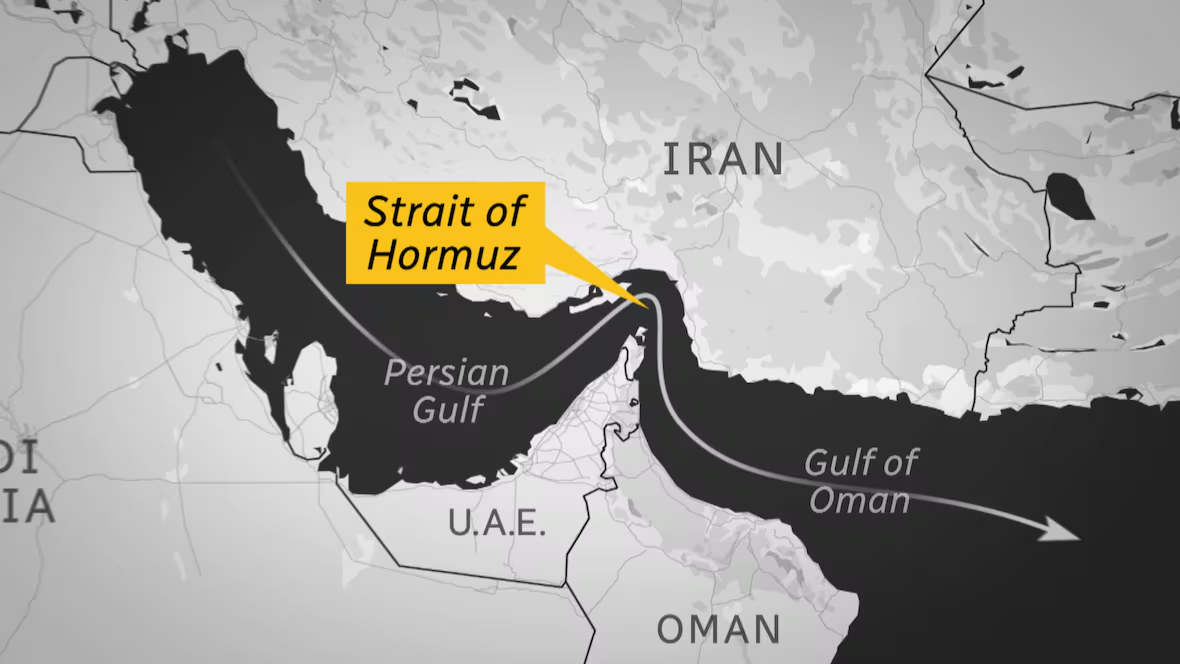
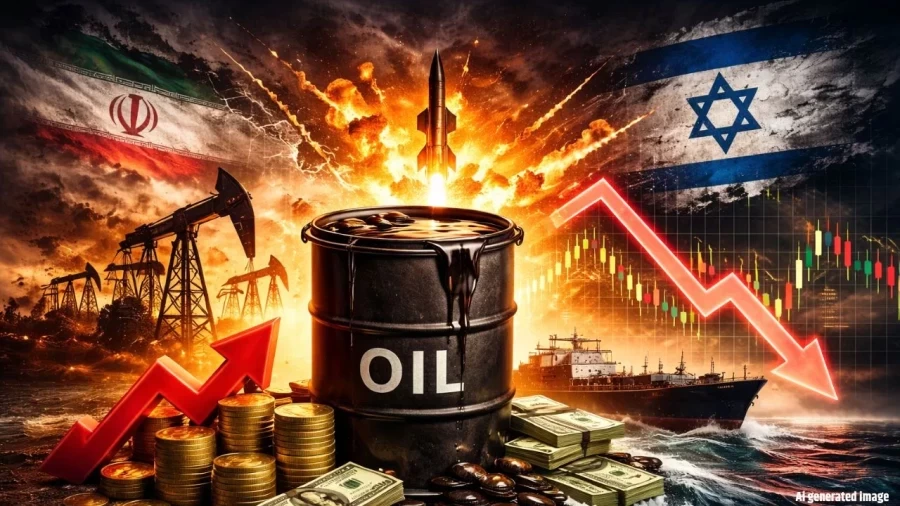
- Global Economic Shock: The Strait of Hormuz carries a significant share of global oil shipments. Even limited disruption could spike energy prices, destabilise fragile economies, and deepen global inequality.
- Nuclear Acceleration: Ironically, attacking a country over alleged nuclear ambitions may convince its leadership that nuclear weapons are the only reliable deterrent. If security is undermined by non-possession, proliferation becomes rational.
- Great Power Entanglement: Russia and China have strategic ties with Iran. While direct confrontation with the United States is unlikely, diplomatic and material backing could harden blocs, accelerating a new era of global polarisation.
The Middle East does not need another generation defined by war trauma. It has barely emerged from the wreckage of Iraq, Syria and Yemen.
Civilian casualties are not “collateral damage” to the families burying their loved ones. Each strike hits far beyond its intended military target. Every bomb deepens resentment, radicalisation, and cycles of revenge. Security achieved through devastation is an illusion. It creates precisely the instability it claims to prevent.
One can criticise Iran’s internal repression, its regional policies, and its governance without endorsing collective punishment through bombardment. Accountability must never be confused with annihilation.
Therefore, what should happen now is that there ought to be:
1. Immediate De-Escalation: All parties must halt further strikes. For every additional missile narrows diplomatic space.
2. Emergency Multilateral Talks: The UN Security Council and regional actors— including Gulf states and Türkiye—must convene urgent negotiations aimed at containment.
3. Revival of Nuclear Diplomacy: A renewed, verifiable framework limiting enrichment and guaranteeing inspections is essential. Diplomacy is slow and frustrating—but war is irreversible.
4. Regional Security Architecture: The Middle East requires an inclusive security dialogue that addresses missile programmes, proxy warfare, and mutual recognition of sovereignty.
5. Recommitment to International Law: Pre-emptive warfare cannot become normalised. If it does, the global order will become a battlefield without rules.
Wars are easy to start and almost impossible to control. The belief that superior firepower guarantees stability has been disproven repeatedly—from Vietnam to Iraq. Military dominance cannot substitute for political settlement.
The joint strike on Iran may satisfy immediate strategic calculations in Washington and Tel Aviv. But history will judge whether it made the region safer—or simply pushed it closer to the brink.
The world does not need another forever war. It needs restraint, law, and the courage to choose dialogue over destruction.




![Hordes of students marching against the Bantu Education system and the use of Afrikaans as a medium in schools, during the June 16, 1976, Student Massacres / Soweto Uprisings [Image: GSMN]](https://gsmn.co.za/wp-content/uploads/2026/06/Soweto-uprising-2-1-1.jpg)