Theme: The State of the Continent – Reigniting the African Renaissance
Venue: Johari Rotana, Dar es Salaam, United Republic of Tanzania | 18–25 May 2025
Foreword and Program Overview
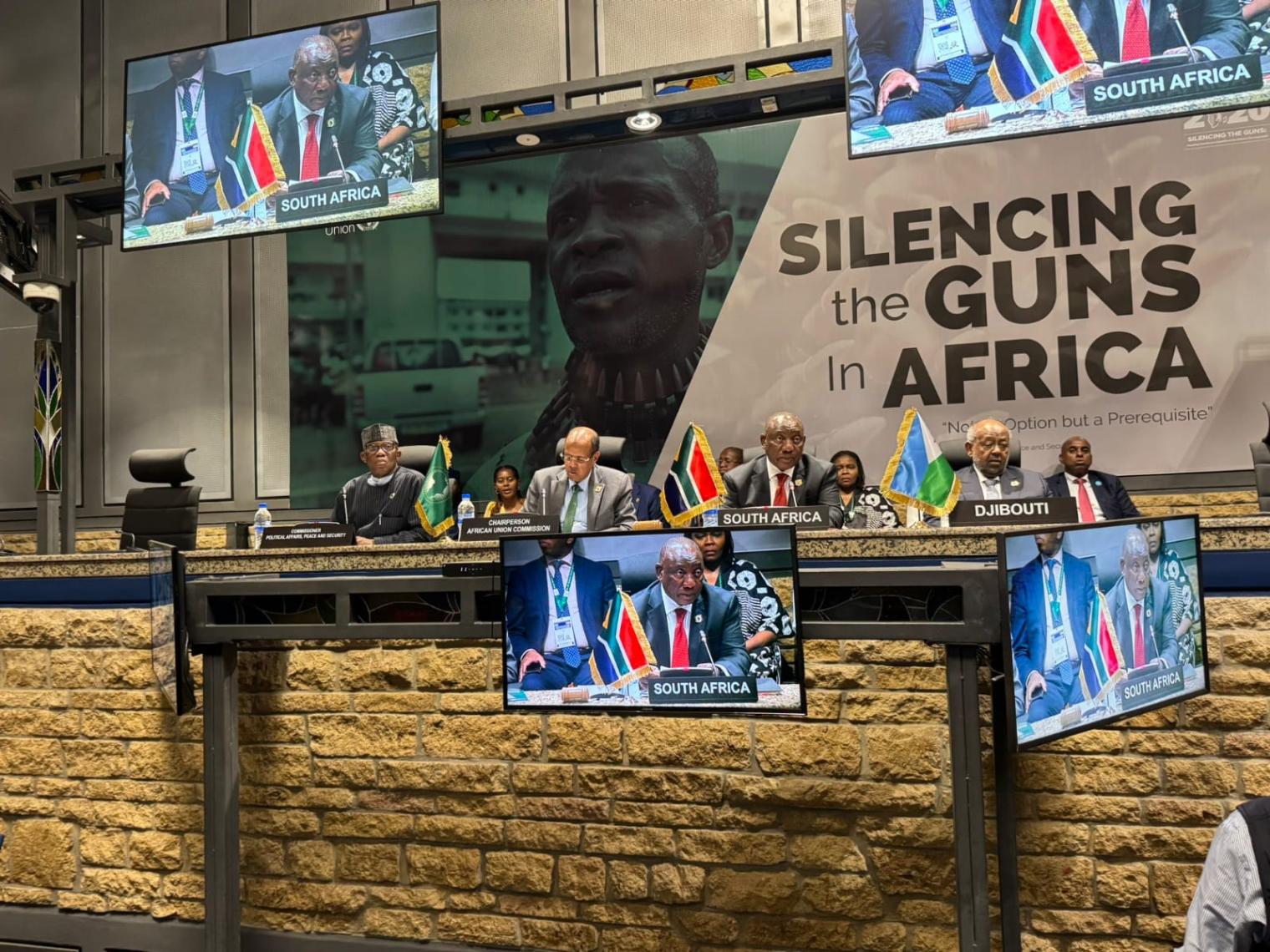
Under the distinguished aegis of the Thabo Mbeki Foundation (TMF), in strategic partnership with the University of South Africa (UNISA) and esteemed Tanzanian collaborators, the 15th iteration of the Thabo Mbeki Africa Day Lecture shall convene in Dar es Salaam from 18–25 May 2025. This flagship continental dialogue commemorates Africa Day—a solemn celebration of the continent’s unity, plurality, historic resistance, and future ambitions under the visionary banner of the African Union.
Guided by the unifying theme, “The State of the Continent: Reigniting the African Renaissance,” the gathering anticipates an illustrious assembly of over 2,500 delegates comprising incumbent and former Heads of State, eminent policymakers, industrial trailblazers, preeminent scholars, youth leaders, and civil society luminaries from across the continent and diaspora. This intellectual convocation is conceived not merely as a forum for reflection but as a catalytic space for actionable continental renewal.

Among the high-level events, a critical highlight is the Roundtable on Harnessing the Blue Economy and Tourism for Africa’s Renaissance, scheduled for the morning of Tuesday, 20 May 2025, at the iconic Johari Rotana. This strategic dialogue interrogates one of Africa’s most underleveraged endowments—its oceanic and littoral geographies—as both a site of historical rupture and prospective regeneration.
Rationale and Strategic Focus of the Roundtable
Encircled by the Indian, Atlantic, and Southern Oceans as well as the Mediterranean and Red Seas, Africa occupies a maritime vantage of unparalleled strategic significance. Yet, while its seas constitute pivotal arteries for global trade and geopolitics, the continent remains hamstrung by fragmented and insufficiently integrated blue economy strategies. Africa’s marine domains face the compounding pressures of commodification, ecological degradation, and geopolitical contestation—nowhere more evident than in the intensifying rivalries across the Indo-Pacific and the nascent scramble for influence in the Southern Ocean.

The roundtable thus seeks to reconceptualize the blue economy not merely as a sectoral opportunity but as a transformative lever in Africa’s developmental trajectory. Core deliberations will be structured around the following guiding inquiries:
- What transformative role can the blue economy play in addressing systemic poverty and structural underdevelopment across the continent?
- How might African policymakers integrate the domains of blue security, blue justice, blue health, and marine tourism within a unified strategic development architecture?
- What synergies exist between the African Continental Free Trade Area (AfCFTA) and an assertive, sovereign blue economy framework?
- What can be gleaned from the Republic of South Africa and the United Republic of Tanzania in their respective blue economy implementation paradigms?
This roundtable represents a clarion call for Africa to recalibrate its maritime posture—towards restitution, resilience, and renaissance. The contributions of the assembled scholars and practitioners, featured herein, constitute a vital corpus of intellectual capital and policy innovation that shall inform both continental discourse and praxis going forward.
Prof Edith Phaswana, Acting Executive Dean: Thabo Mbeki African School of Public and International Affairs

Under the auspices of the 15th Thabo Mbeki Africa Day Lecture, the Roundtable on Harnessing the Blue Economy and Tourism for Africa’s Renaissance commenced with a powerful opening by Prof Edith Phaswana. She underscored the symbolic and strategic significance of Africa Day, while honouring Tanzania’s historic role as a nucleus of liberation, solidarity, and regional leadership—particularly as a sanctuary for South Africa’s ANC during the anti-apartheid struggle.
Prof Phaswana eloquently situated the blue economy within the broader tapestry of Africa’s renewal agenda, asserting that the continent’s future must be authored by its own intellectuals. She called for a continental research ecosystem where African scholars, across all nations, actively contribute to reimagining governance, sustainability, and justice in a rapidly shifting global order. The Roundtable advanced critical interrogations of maritime sovereignty, ecological stewardship, and economic transformation, urging a unified African voice in shaping resilient and dignified oceanic future.
Prof Anthoni van Nieuwerk, Acting Executive Dean: Thabo Mbeki African School of Public and International Affairs

Stepping in with remarkable composure and intellectual rigour, Prof Anthoni van Nieuwerk delivered a masterful keynote address in place of the absent Capt. Hamad, leaving an indelible impression on the Roundtable. He invoked a powerful historical reckoning, reminding the audience that Africa’s oceans—once exploited as conduits of colonisation—must now be reclaimed as instruments of restitution and empowerment.
Prof van Nieuwerk challenged the continent to redefine its maritime identity, urging scholars and policymakers alike to confront the pressing question: How do we recover what was lost and forge a sovereign relationship with our marine inheritance?
While the African Union’s Integrated Maritime Strategy (AIMS) signals a progressive vision, he noted the enduring gap between policy frameworks and lived realities. The plight of local fishers displaced by harbour developments exemplifies this disconnect. For Africa’s blue economy to realise its renaissance potential, it must be grounded in inclusive, community-sensitive implementation and governance.
Prof Eunice Seekoe, Acting Vice-Principal: Teaching, Learning, Community Engagement and Student Support

In her distinguished welcoming remarks at the Roundtable on Harnessing the Blue Economy and Tourism for Africa’s Renaissance, Prof Eunice Seekoe of the University of South Africa (UNISA) reaffirmed the academy’s unwavering commitment to advancing a transformative, ocean-centred development agenda. She articulated the imperative of embedding blue economy paradigms within higher education curricula and deepening their resonance through meaningful community engagement.
Framing the ocean as both a site of economic renewal and ecological guardianship, Prof Seekoe called for a pedagogical revolution—one that integrates marine sustainability, coastal resilience, and oceanic justice into the intellectual and civic fabric of African societies. “We must embed blue economy thinking in education and community engagement,” she asserted, emphasizing the role of African institutions in cultivating a new generation of scholars and citizens who will steward the continent’s maritime wealth. Her remarks set a visionary tone, aligning knowledge production with Africa’s broader renaissance project.
Mr. Joseph Butiku, Chairperson of the Mwalimu Nyerere Foundation

In a stirring address at the Roundtable, Mr. Joseph Butiku, Chairperson of the Mwalimu Nyerere Foundation, invoked the profound urgency of economic liberation for Africa. Framing water as a strategic economic asset, he posed a transformative question: “How do we strengthen our economy using water?” His intervention underscored that political emancipation, while crucial, remains incomplete without genuine economic sovereignty—a vision intrinsic to Africa’s renaissance.
Mr. Butiku reminded participants that the African Union (AU) must serve as a catalyst for achieving not only political autonomy but also self-sustaining economic empowerment. “Real freedom,” he declared, “means economic independence.” He urged a collective pivot toward future-focused strategies that prioritise youth empowerment, sustainable development, and intra-continental cooperation. In this context, the blue economy emerges as a vital frontier—an arena where Africa can reclaim agency, build prosperity, and safeguard intergenerational justice. His call to action was clear: Africa must now own its maritime destiny.
Prof Senia Nhamo, Department of Economics, Unisa

Prof Senia Nhamo of UNISA delivered a resounding and multifaceted contribution to the Roundtable, asserting that Africa’s maritime and aquatic domains represent not a distant frontier but an immediate foundation for inclusive, sustainable development. She cautioned that employment and industrial value are flowing outwards—particularly to Asia—while Africa sits upon an oceanic inheritance of untapped magnitude. “As Africans, we must strategically mobilise our abundant water-based resources to secure prosperity,” she urged.
Prof Nhamo spotlighted Africa’s growing leadership in global ocean discourse, noting UNISA’s contribution to the UN Decade of Ocean Science and the AU’s embrace of the Blue Economy within Agenda 2063. Historic milestones, such as Kenya’s 2018 global blue economy summit, signal continental momentum. Yet, she stressed that Africa’s vision must encompass inland water systems alongside maritime zones.
Calling for curricular reform, innovation, and sustainable financing, Prof Nhamo advocated for policies that link scholarship, governance, and grassroots benefit. The ocean, she concluded, must serve as a catalyst for Africa’s renaissance and restitution.
Dr. Lucy Shule, Director of Studies: Tanzania National Defense College

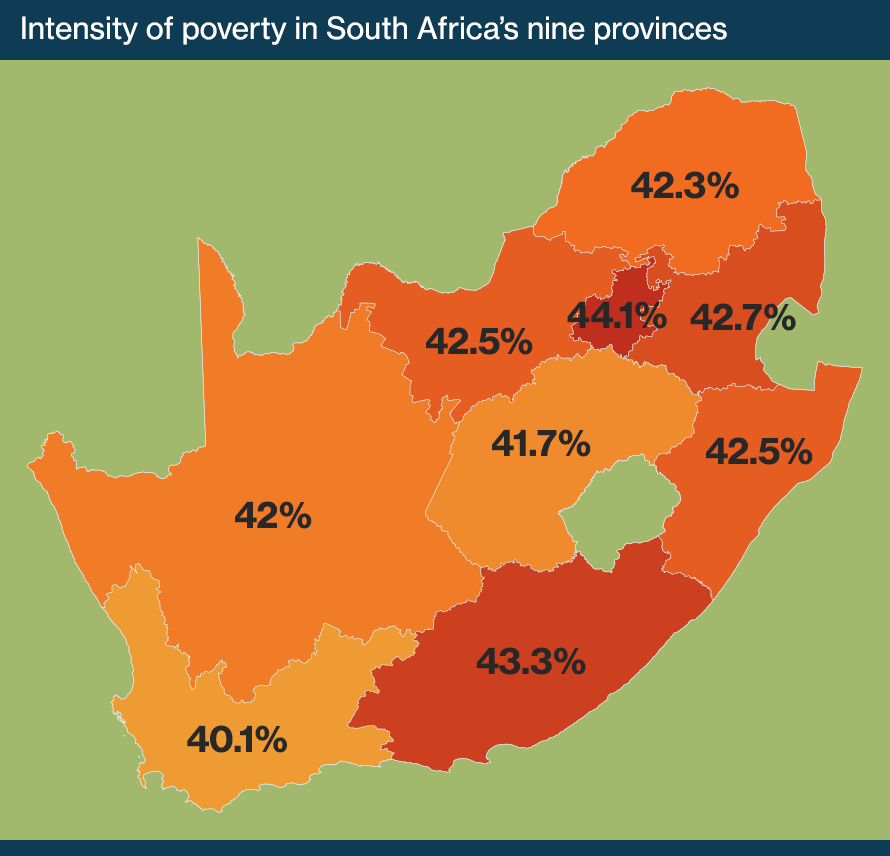
In a thought-provoking intervention, Dr. Lucy Shule illuminated the intrinsic link between maritime security and economic resilience within Africa’s expansive oceanic landscape. With 39 of 54 African nations classified as coastal states and over 13 million square kilometres of Exclusive Economic Zone, the continent possesses immense yet underleveraged marine capital. Dr. Shule juxtaposed this wealth against the persistent reality that nearly half of Africa’s population remains mired in extreme poverty—a sobering paradox demanding transformative ocean-based solutions.
She argued that Africa’s future—poised to host half the world’s population by 2050—hinges on proactive investment in a sustainable and inclusive Blue Economy. Historically overlooked in favour of terrestrial concerns, Africa’s seas must now be re-centred in developmental discourse. Dr. Shule underscored the urgency of addressing piracy, marine pollution, and governance failures as barriers to growth. A secure, sustainable, and strategically governed ocean space, she contended, is foundational to Africa’s socioeconomic renaissance.
Dr. Nariman Jiddawi, Marine Institute

Session Two of the Roundtable engaged incisively with the marine and maritime dimensions of the Blue Economy, foregrounding Zanzibar as a locus of innovation and inclusion. Dr. Nariman Jiddawi, joining virtually, delivered a compelling reflection on the indispensable contributions of women to ocean-based livelihoods. From the shoreline to the marketplace, women are dynamic agents within blue value chains—engaging in shell collection, artisanal fish processing, and local trade.
She underscored the transformative potential of equipping these women with enhanced processing techniques and technical training—tools that would not only elevate product quality, but catalyse income generation and economic mobility. Beyond economics, their work ensures food security, with nutrient-rich fish anchoring community diets.
Dr. Jiddawi further highlighted women’s ingenuity in repurposing marine and coastal resources: crafting ropes from coconut fibres, weaving thatching, and converting seaweed into soaps, jewellery, and apparel. Her insights affirmed that gender-inclusive blue growth is fundamental to Africa’s sustainable maritime renaissance.
Prof David Mello, Thabo Mbeki African School of Public and International Affairs

Concluding with a spirited and solution-oriented Q&A session, expertly moderated by Prof David Mello, the dialogue on Africa’s Blue Economy crystallised into a call for transformative action. Participants engaged deeply with the imperative of reimagining the continent’s maritime future—one anchored in climate resilience, technological innovation, and inclusive development.
Prof Godwell Nhamo advanced a compelling argument for climate-smart policy frameworks, lamenting Africa’s estrangement from its oceans despite ancestral ties to maritime spirituality. He stressed that marine resources—if safeguarded through mechanisms such as marine protected areas—could serve as engines of sustainable prosperity.
Calling for a paradigm shift in academic focus, Prof Nhamo urged the mainstreaming of marine economy studies across institutions. He challenged academia to ensure its scholarship translates into tangible livelihood gains.
From underfunded ship maintenance sectors to the absence of African-owned vessels, he exposed critical gaps in value chains. The future, he concluded, demands bold industrial ambition, strategic investment, and the audacity to think continentally and act exponentially.
Prof. Godwell Nhamo, Department of Economics

In his seminal address during the 15th Thabo Mbeki Africa Day Lecture Roundtable, Prof. Godwell Nhamo delivered a compelling call for Africa to reimagine its engagement with the ocean and maritime sectors. Framing the Blue Economy as a pivotal pillar of the continent’s renaissance, he stressed the foundational role of sustainability and conservation, aligning with global initiatives such as Project 30×30.
Prof. Nhamo’s six key imperatives advocate for:
- technology-driven research for development,
- enhanced ocean observation and coastal resilience,
- community access to marine resources,
- value chain localisation including shipbuilding and ownership,
- amplified African scholarship, and
- the formulation of progressive marine governance policies.
He challenged the continent’s dependency patterns by asking, “Why are we not investing in building our ships? Why don’t we own the vessels that move our goods and connect our continent to the world?” Furthermore, he called for a paradigm shift from merely supporting small enterprises to building globally competitive African industries. With African scholars contributing less than 6% to global marine research, his message is clear: Africa must rise, engage, and lead in shaping a resilient and sovereign maritime future.
Ambassador Said Shaibu Mussa, Deputy Permanent Secretary for Foreign Affairs and East African Cooperation

The Roundtable drew to a close with a succinct yet diplomatically resonant address by Ambassador Mussa, Deputy Principal Secretary in the Ministry of Foreign Affairs of the United Republic of Tanzania. Representing the host government, Ambassador Mussa conveyed unequivocal support for the deliberations, affirming Tanzania’s commitment to advancing the Blue Economy as a catalyst for regional transformation.
He acknowledged the immense promise held within Africa’s maritime and aquatic domains, while also confronting the complexity of the challenges that impede their equitable utilisation. In this regard, he issued a clarion call for bold, innovative, and contextually grounded solutions—those that harmonise ecological stewardship with socioeconomic progress.
Ambassador Mussa’s remarks served as both endorsement and impetus, reinforcing the imperative for sustained multilateral collaboration, academic leadership, and policy innovation to unlock the continent’s blue potential in service of its renaissance.