
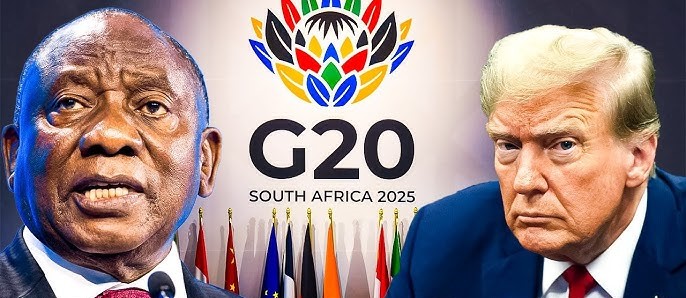
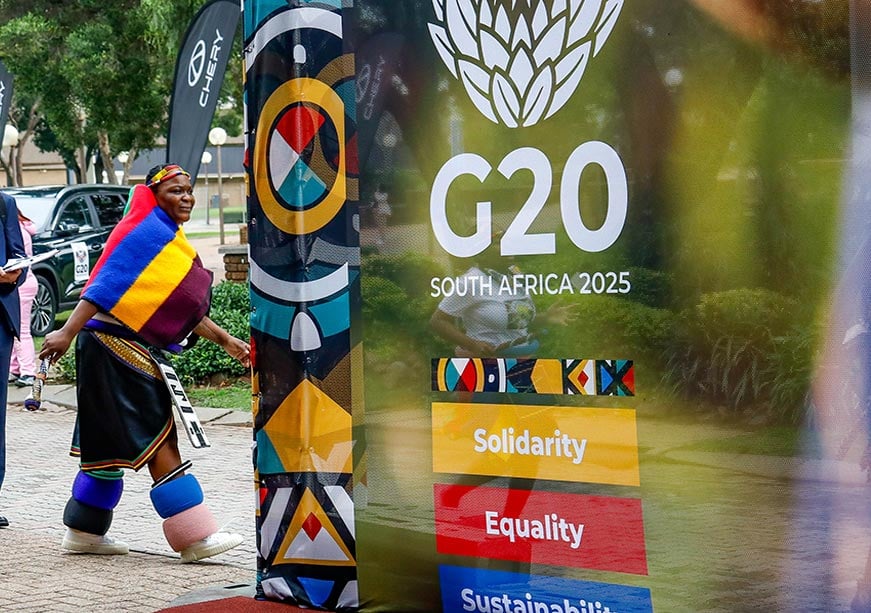
The U.S. President’s soon-to-be absence from the 2025 G20 Summit is not a matter of scheduling oversight, but it is a symbol of a deeper unraveling of American hegemony. For decades, Washington dictated the tempo of global governance through institutions like the IMF, World Bank, and the G7, projecting itself as the indispensable anchor of the international system. Yet today, as the world reorients toward multipolarity, the optics of a missing U.S. leader at the G20 stage speak volumes. It marks not confidence, but retreat — a tacit admission that the era of unchallenged U.S. dominance is drawing to a close.
The post–Cold War moment was defined by a unipolar order of which has portrayed the United States as the “world’s policeman,” moral arbiter, and economic architect. But the foundations of that order are fracturing. Washington’s overreach, domestic political paralysis, and military fatigue after decades of costly interventions have eroded both its credibility and influence. The decision to skip the G20 thus encapsulates a broader malaise that suggests that the U.S. no longer commands the consensus it once took for granted.
Absent from the summit table, America forfeits both narrative control and diplomatic presence at a moment when new power centers are asserting themselves. This withdrawal reveals not strategic calculation, but the isolation of a superpower increasingly unsure of its role in a multilateral world.
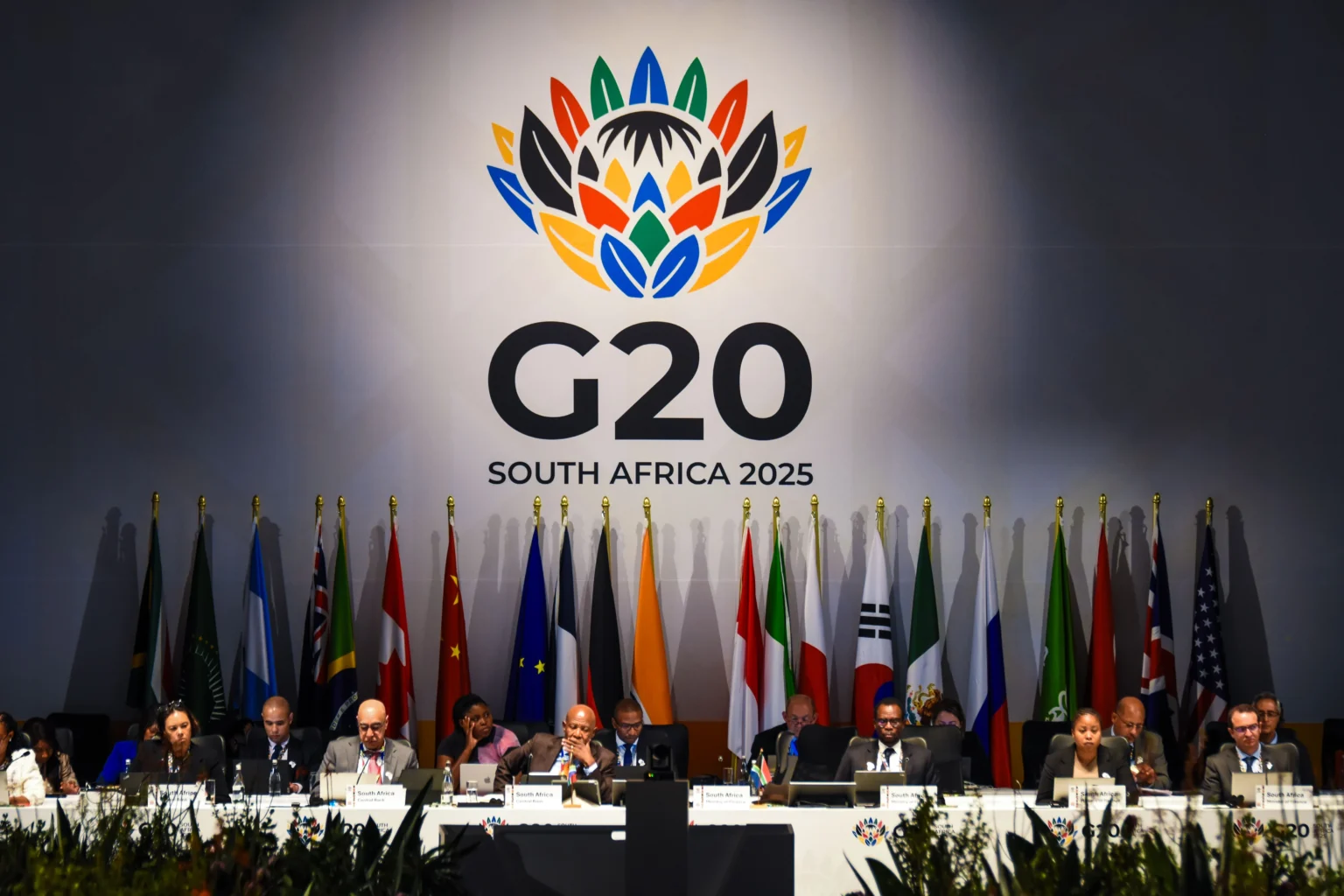
President Donald Trump might claim white genocide being the reason of snubbing the summit, but we all know that this is a stunt that shows an uncomfortable U.S. when it comes to the Balance of Forces no longer tipping on its side.
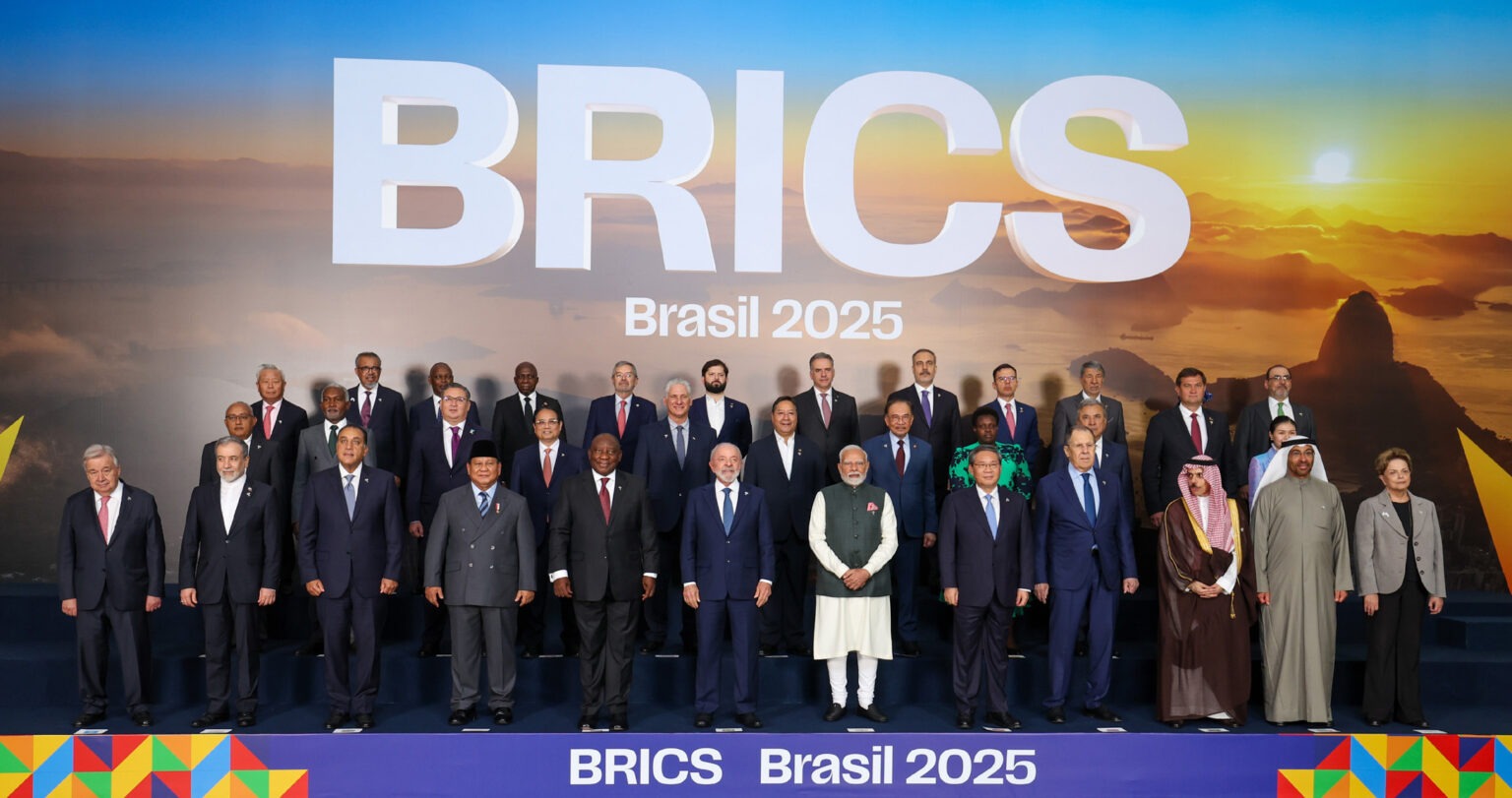
In stark contrast, BRICS+ — the expanded coalition now including major energy producers and rising economies across the Global South — represents a new world of global governance. Its agenda challenges the Western-dominated financial and political order by promoting development financing independent of the IMF, de-dollarisation in trade, and alternative frameworks for cooperation.
The U.S. President’s absence from the G20 shows Washington’s discomfort with this emerging configuration. The G20, once a tool to manage globalisation under Western norms, now mirrors a more pluralistic reality. The growing influence of BRICS+ demonstrates that global governance is no longer synonymous with American leadership. The balance of legitimacy is shifting toward institutions and partnerships that better reflect the aspirations of the non-Western world.
Multilateralism is no longer merely an ideal, but it is an instrument of resistance to hegemony. The United States, once the chief architect of multilateral frameworks like the United Nation (UN) and the World Trade Organisation (WTO), now finds itself sidelined by their evolution. The G20, originally designed to incorporate emerging powers into a managed liberal order, has become a forum where those same powers articulate their independence from that order. U.S. disengagement only accelerates this process.
The symbolism is profound. For a G20 without the U.S. present becomes a rehearsal for a world without U.S. dominance. The stage is occupied by coalitions — BRICS+, the African Union’s inclusion, and the growing assertiveness of middle powers — that no longer seek validation from Washington.
The implications of this geopolitical transformation are far-reaching. The decline of U.S. hegemony does not necessarily entail chaos; rather, it opens space for the renegotiation of international norms. We are witnessing the birth of a post-hegemonic order in which influence is dispersed, and legitimacy is negotiated rather than imposed.
Economically, de-dollarisation and South-South trade mechanisms are reconfiguring the systems of global finance. Politically, the Global South’s assertiveness challenges the moral monopoly of the West. Strategically, Washington’s absence creates opportunities for regional actors to lead on issues like energy transition, security cooperation, and digital governance — areas once monopolised by U.S.-centric institutions.
The real risk for Washington is not merely losing a summit, but losing the narrative of global leadership. Once a nation ceases to show up, it ceases to shape outcomes. Absence, in diplomacy, is rarely neutral, but it is surrender by omission.
The U.S. President’s nonattendance at the G20 thus becomes emblematic of a deeper truth: the hegemon is retreating into silence. As BRICS+ gains coherence and multilateralism evolves beyond Western frameworks, the international community is no longer waiting for U.S. approval to act. The age of imposed order is giving way to negotiated coexistence. In this new era, power is not projected but it is shared. And the greatest irony is that the United States, one of the architects of the post-war multilateral system, now finds itself on the outside of the very order it once built.



One Response
With or without Donald Trump, the G20 must go ahead and be a success. Good piece Thabiso