Let me begin by disarming the title.
Degeneration of the epistemologies of economic thought sounds like something you would only whisper in a doctoral seminar room. It sounds intimidating. Dense. Perhaps even deliberately obscure. But it is actually very simple. It asks one question: How did we forget how to think about the economy properly?
Epistemology simply means: How do we know what we know? Economic thought is how we understand production, exchange, value, labour, wealth, poverty and power. Degeneration means decline. So, the title, stripped of its academic costume, asks: How did our way of understanding the economy become narrower, poorer, and less truthful than it once was?
That is not intimidating. It is urgent.
In recent months, I have written with urgency, opinion and conviction. Perhaps even with impatience. But before all of that, before the commentary, before the provocation, I am first a Thinker. A scholar. Subsequently an Economist. An Econometrician to be precise. I view the world through models, through variables, through structural relationships. My opinions are not born of impulse. They are informed by a disciplinary lens. One that insists that numbers must correspond to lived reality, and that policy must be interrogated not only for elegance but for consequence. It is from that premise that I return to a question that sounds intimidating but is in fact profoundly simple:
Has our way of knowing the economy become smaller than the economy itself?
The degeneration of the epistemologies of economic thought is not about intellectual decline. It is about narrowing. It is about the quiet shrinking of what we consider valid economic knowledge. Before economics became a technocratic language of bond spreads and fiscal anchors, it was political economy. Classical political economy understood that economics and power were inseparable. Who owns land? Who controls capital? Who determines wages? These were foundational questions. Modern technical economics often abstracts away from power. It models representative agents. It assumes rational expectations. It optimizes under constraints. These models are elegant. Beautiful even. But beauty is not truth.
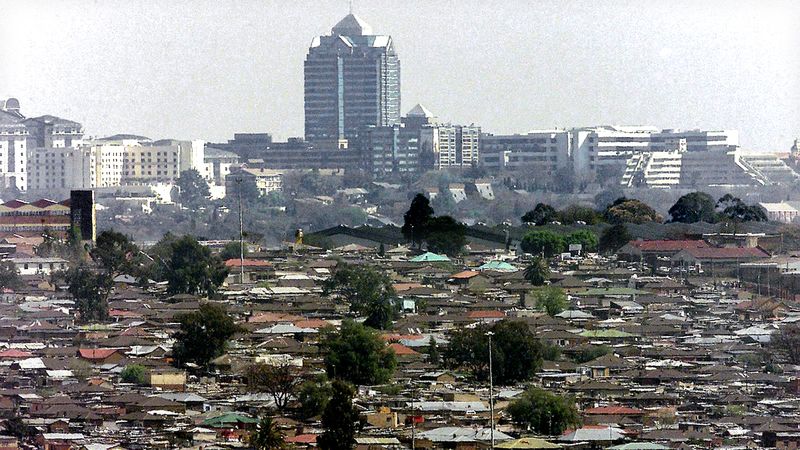
A regression can be perfectly specified and still miss the structural geometry of deprivation. When township spatial clustering, educational collapse, and labour market exclusion are treated as externalities rather than structural outcomes, we are not doing economics. We are doing algebra detached from anthropology.

The Illusion of Neutrality
Another degeneration lies in the claim of neutrality. Economics often presents itself as objective science. “The numbers speak.” “The model predicts.” “The markets react.” But every model begins with assumptions. Every dataset excludes something. Every regression has a specification choice. Choosing GDP over the Multidimensional Poverty Index is not neutral. Choosing fiscal anchors over human anchors is not neutral. Choosing bond spreads over sanitation access is not neutral.
Epistemology is about what we privilege as knowledge. When economic discourse privileges the comfort of capital over the condition of citizens, it has already made a philosophical choice.

Economics Was Once Moral, Political, and Human
Adam Smith was a moral philosopher. Karl Marx wrote about alienation before accumulation. Keynes feared the social consequences of unemployment more than he feared deficits. Karl Polanyi later reminded us that the economy is embedded in society. Markets do not float above social life; they are nested within it. Yet modern macroeconomic discourse often behaves as if society must adjust to markets, rather than markets serving society. That inversion is philosophical before it is technical.
As an econometrician, I am trained to ask a simple question before estimating anything: What is the dependent variable? Because once you choose the dependent variable, you have declared what matters. If your central regression is:
GDP Growth = Debt-to-GDP + Primary Surplus + Inflation + ε. Then you have declared that growth is the primary measure of economic success.
But suppose instead you estimate:
MPI (Multiple Poverty Index) Reduction = Education Quality + Spatial Infrastructure Access + Youth Employment Absorption. Now, deprivation reduction becomes central. The mathematics may be equally rigorous. The philosophical commitment is not. The degeneration of epistemology occurs when only the first model is treated as authoritative.

Omitted Variable Bias as Social Blindness
In econometrics, omitted variable bias arises when a relevant factor is excluded from a model, distorting interpretation. In public policy discourse, spatial deprivation is often the omitted variable. Recent budget speeches have celebrated debt stabilization and primary surpluses. Meanwhile, the visibility of poverty, inequality and unemployment in fiscal rhetoric has declined, a trend rigorously interrogated by Dr Pali Lehohla in his recent article “The Mathematics of Deceit”.
If we were to conduct a content regression of budget language over time, the coefficient on fiscal orthodoxy would likely be rising, while the coefficient on structural deprivation declines. That is not an accidental drift. That is a discursive structural break. And when our models exclude ward-level MPI intensity, youth absorption rates, or spatial LISA (Local Indicators of Spatial Association) clustering, we introduce bias not just statistically, but morally.
The Growth Paradigm as Kuhnian Shift
Thomas Kuhn teaches that paradigms determine what questions are legitimate. Growth became the dominant paradigm in late 20th century economics. Once GDP growth became the supreme dependent variable, everything else became derivative. If growth is positive, policy is working. If debt stabilizes, leadership is responsible. If bond spreads fall, credibility is restored. But this paradigm quietly subordinates distribution, dignity, and structural transformation. The question is not whether growth matters. The question is whether growth alone can serve as the epistemological anchor of a society marked by extreme inequality.
Endogeneity and the Illusion of Market Authority
Markets are frequently treated as exogenous judges of policy. But investor confidence is endogenous. It responds to social stability, institutional credibility, infrastructure quality, and long-term human capital formation. If austerity-driven fiscal consolidation increases deprivation intensity in historically marginalized wards, social instability may rise. That instability feeds back into sovereign risk spreads. This is a simultaneous equations problem. When policy discourse isolates fiscal credibility from social consequence, it violates basic econometric reasoning.

Accounting Versus Anthropology
There is a distinction that must be drawn clearly. Accounting asks whether the books balance. Anthropology asks how people live. A budget can satisfy accounting identities while failing anthropological reality.
Dr Lehohla’s critique frames recent fiscal discourse as a failure of anthropology. The declining prominence of the “triple challenges” signals not merely rhetorical fatigue but epistemological reordering. If credit rating upgrades dominate evaluation while deprivation intensity remains stubborn, we have chosen our hierarchy of truth. We now speak of “what the markets will say” as if markets were moral authorities. But markets aggregate risk and return expectations. They do not measure humiliation, spatial exclusion, or generational stagnation. To privilege market reaction as the primary dependent variable of policy evaluation is to elevate capital preference above citizen welfare. That is not a technical inevitability. It is a philosophical commitment.

Reclaiming the Epistemological Frame
The solution is not to abandon fiscal prudence or econometric rigor. It is to widen the frame. Every budget should be accompanied by:
• A spatial convergence regression.
• A ward-level MPI delta analysis.
• A cohort-based youth absorption model.
• A decomposition of growth by labour intensity.
If fiscal stabilization does not produce statistically significant reductions in deprivation intensity, then the model is incomplete.
Econometrics should function as conscience, not camouflage.

Returning to First Principles
The degeneration of the epistemologies of economic thought is not about excessive mathematics. It is about selective mathematics. It is about mistaking accounting identities for social transformation. It is about allowing the language of economics to intimidate citizens and narrow public debate. As a scholar, I cannot accept that narrowing. To quote a phrase out of the Madlanga Commission “It can’t be”.
Every coefficient corresponds to a household. Every percentage point corresponds to a life trajectory. Every budget line encodes a moral choice. Economics is not merely the science of allocation. It is the disciplined study of how societies choose to structure dignity. If we restore that understanding, if we allow anthropology, philosophy, and econometrics to speak to one another again, then economic thought regains its breadth. And when it regains its breadth, it regains its humanity.