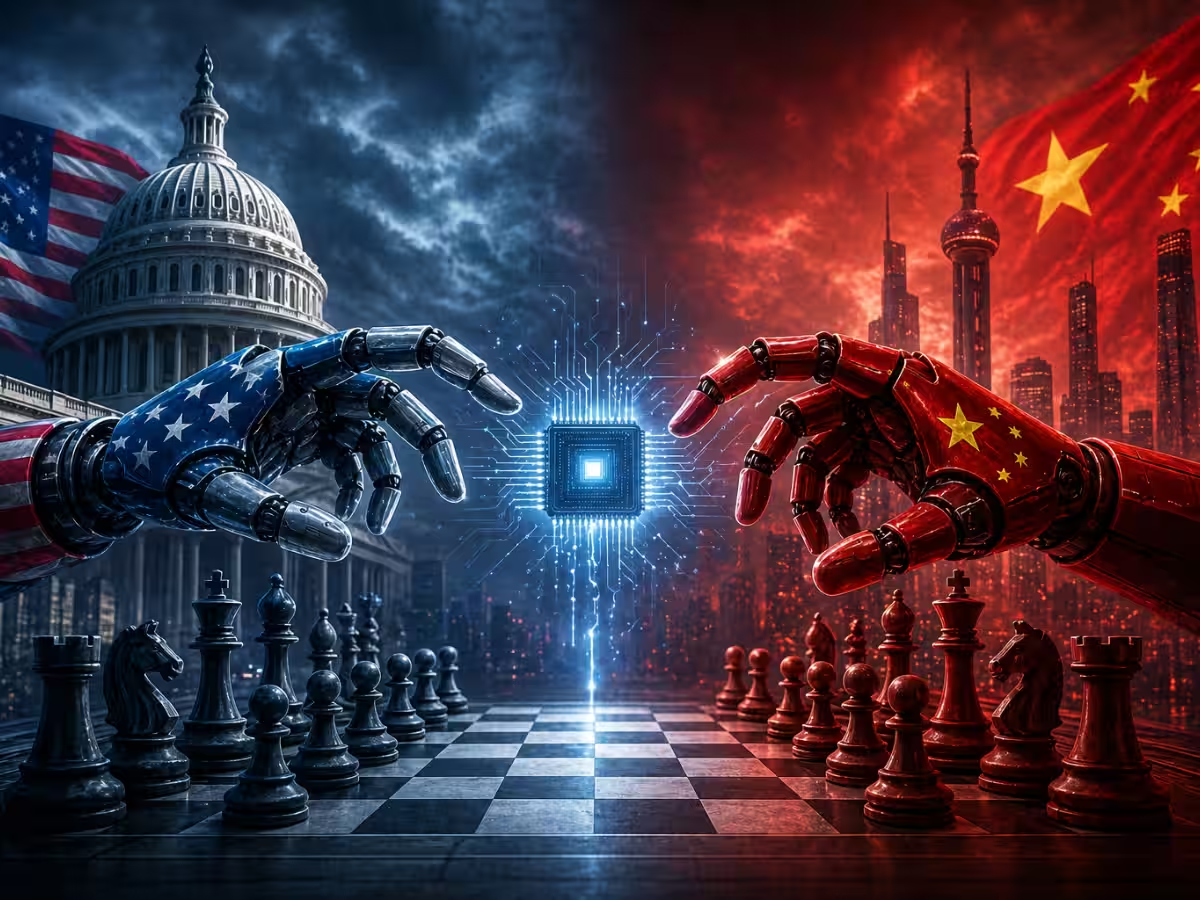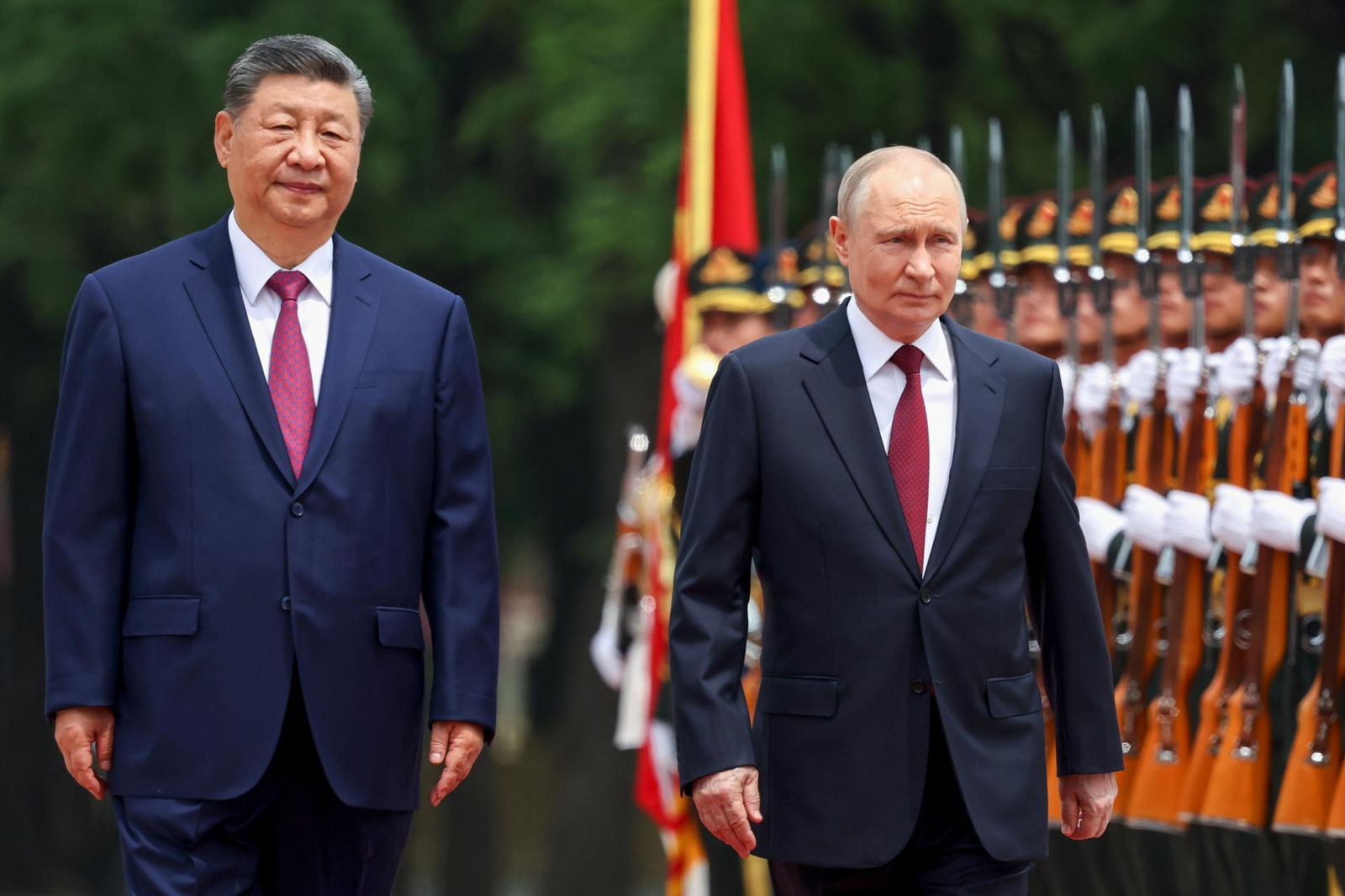
The May 19–20, 2026 state visit of President Vladimir Putin to Beijing was far more than a ceremonial diplomatic engagement marking the 25th anniversary of the Treaty of Good-Neighborliness and Friendly Cooperation between Russia and China. It represented a carefully choreographed geopolitical statement about the changing structure of global power, the evolution of the Russia–China strategic partnership, and China’s growing ambition to position itself as the central balancing force in an increasingly fractured international system. Coming only days after the visit of U.S. President Donald Trump to China, Putin’s arrival in Beijing symbolized the emergence of a new diplomatic reality in which China is increasingly capable of engaging rival global powers simultaneously while advancing its own strategic interests.
The significance of the visit cannot be understood outside the broader transformation of international politics since the outbreak of the Russia–Ukraine war and the intensification of U.S.–China strategic competition. Since 2022, Russia has experienced deepening political and economic isolation from the West due to sweeping sanctions imposed by the United States and its allies. Excluded from many Western markets and financial systems, Moscow has increasingly turned eastward, relying heavily on China as a diplomatic partner, energy market, and economic lifeline.
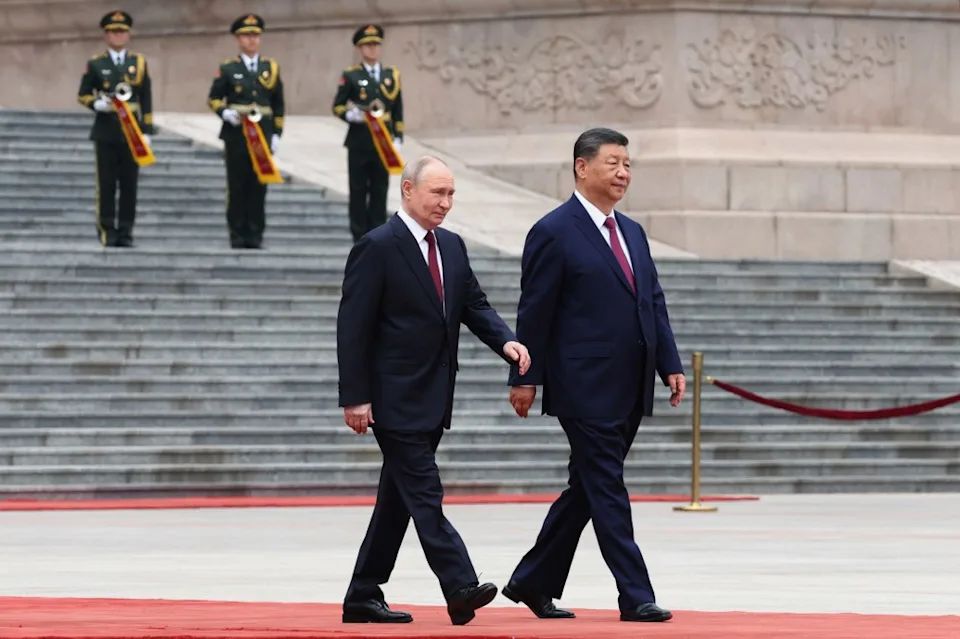
At the same time, China’s motivations for deepening ties with Russia are more complex than simple ideological solidarity or anti-Western alignment. Under the leadership of Xi Jinping, Beijing has sought to reshape the international order in ways that reduce U.S. dominance while avoiding direct military confrontation with Washington. China views Russia as a strategically useful partner in this project because Moscow shares Beijing’s opposition to what both governments describe as Western hegemony, interventionism, and unilateralism. Yet China also recognizes that excessive alignment with Russia carries risks, particularly in terms of economic relations with Europe and the United States. Consequently, Beijing has consistently attempted to frame the partnership as non-allied, non-confrontational, and not directed against any third party.
This balancing strategy was clearly visible during Putin’s visit. Official statements emphasized cooperation, multipolarity, sovereignty, and mutual respect rather than military alliance formation. The renewal of the Treaty of Good-Neighborliness reaffirmed principles such as non-alliance and non-confrontation, allowing both states to deepen coordination while avoiding the formal obligations associated with a military bloc. However, despite these diplomatic formulations, the strategic implications of the relationship are unmistakable. Russia and China increasingly coordinate positions on global governance, international law, cybersecurity, energy security, and opposition to Western sanctions regimes. Their partnership may not resemble a Cold War-style alliance, but it nevertheless constitutes one of the most significant geopolitical alignments of the 21st century.
The timing of Putin’s visit also revealed China’s growing diplomatic muscle. Only days earlier, Trump’s own visit to Beijing had focused heavily on trade tensions, tariffs, and economic negotiations. Although the Trump visit attracted global attention, it reportedly failed to produce major breakthroughs on key geopolitical disputes. Beijing’s ability to host Trump and Putin within the same week allowed China to project itself as an indispensable global actor capable of engaging both Washington and Moscow on its own terms. This reflected a major shift in the international balance of influence.
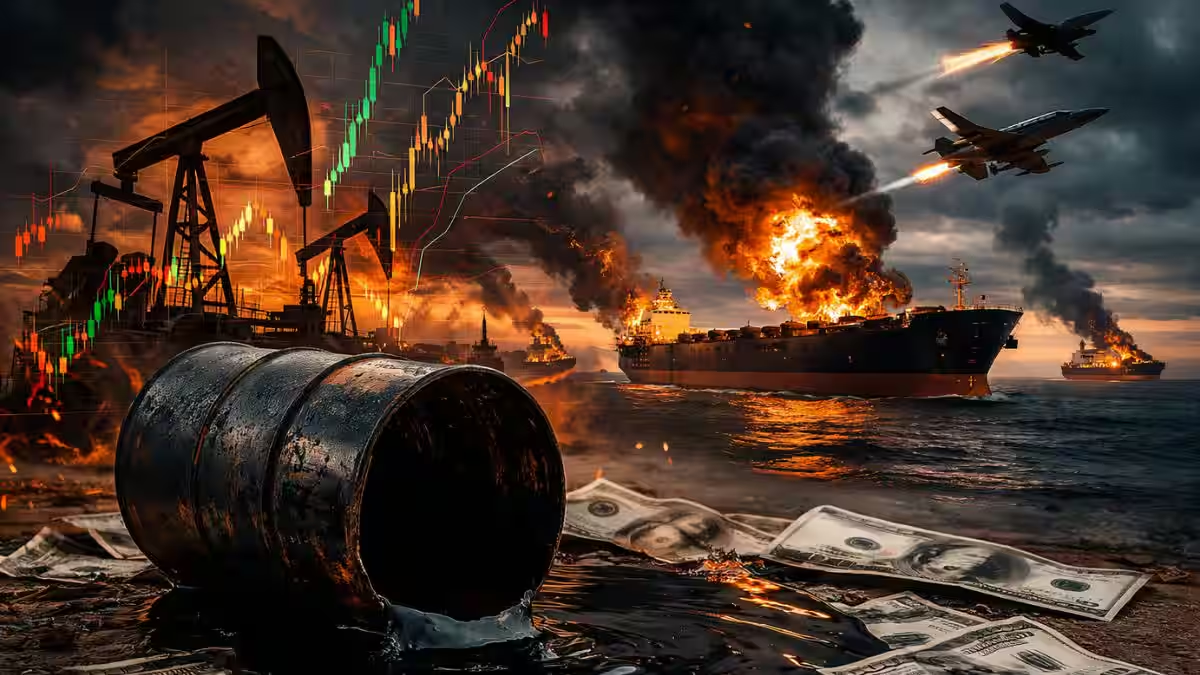
Economics formed another central dimension of the visit, particularly in the energy sector. Since Western sanctions disrupted Russia’s traditional export markets, China has become the largest purchaser of Russian oil and gas. Discussions surrounding the proposed Power of Siberia 2 pipeline highlighted the strategic importance of energy interdependence in the Russia–China relationship. For Moscow, the pipeline represents a crucial opportunity to redirect energy exports away from Europe and secure long-term revenues in Asian markets. For Beijing, expanded access to Russian energy enhances China’s energy security while reducing vulnerability to maritime supply disruptions in contested regions such as the South China Sea and the Strait of Malacca.
Beyond economics and geopolitics, the launch of the China-Russia Years of Education (2026–2027) illustrated an important long-term dimension of the relationship: the cultivation of societal and cultural ties. Educational exchanges, academic cooperation, and people-to-people diplomacy are increasingly viewed by both governments as tools for consolidating strategic trust and countering Western cultural influence. These initiatives reflect a broader recognition that durable partnerships require more than state-level coordination; they also require social and institutional foundations capable of sustaining cooperation across generations.
The joint diplomatic messaging surrounding the visit strongly emphasized the concept of multipolarity, a term that has become central to both Russian and Chinese foreign policy discourse. Multipolarity, as articulated by Moscow and Beijing, refers to an international system in which power is distributed among several major centers rather than dominated by a single superpower. For Russia, this concept represents resistance against U.S.-led unipolarity and a means of preserving great-power status despite economic and military pressures. For China, multipolarity aligns with its broader ambition to expand its influence in global institutions while reducing Western control over international norms and governance structures.
The visit therefore carried implications extending far beyond bilateral diplomacy. It highlighted the continued fragmentation of the post-Cold War international order and the accelerating transition toward a more competitive and decentralized global system. The Russia–China partnership is increasingly central to this transformation because it challenges longstanding assumptions about Western political and economic dominance. While the United States and its allies remain powerful, the ability of China and Russia to coordinate strategically, resist sanctions pressure, and promote alternative diplomatic narratives demonstrates that global politics is no longer defined by a single center of authority.
Ultimately, Putin’s 2026 visit to Beijing revealed a relationship driven not merely by convenience, but by converging strategic calculations rooted in the changing structure of global power. Russia seeks survival, economic alternatives, and geopolitical relevance in the face of Western isolation. China seeks strategic depth, energy security, and a favourable international environment for its rise as a global power. Together, they are attempting to shape a new international order that limits Western influence and elevates the role of non-Western powers in global governance.
The Russia–China partnership has become one of the defining geopolitical forces of the contemporary era, and its evolution will play a decisive role in shaping the future international order.