“We will no longer support long essays. If you are an engineering student, for your thesis, you must manufacture, copy or build something.”
Burkina Faso’s President Captain Ibrahim Traoré’s words sparked exactly the reaction you’d expect. The usual critics dismissed them. Others laughed. Some rushed to explain why Africa should stay in its lane and leave innovation to everyone else. But perhaps that’s precisely the problem. We have become so accustomed to defending the way things have always been that we rarely stop to ask whether those things are actually working.
But perhaps we’re debating the wrong thing. Because whether you agree with Captain Traoré or not, his words force us to confront a question that Africa has avoided for far too long: When did education become about proving what we know instead of proving what we can do?
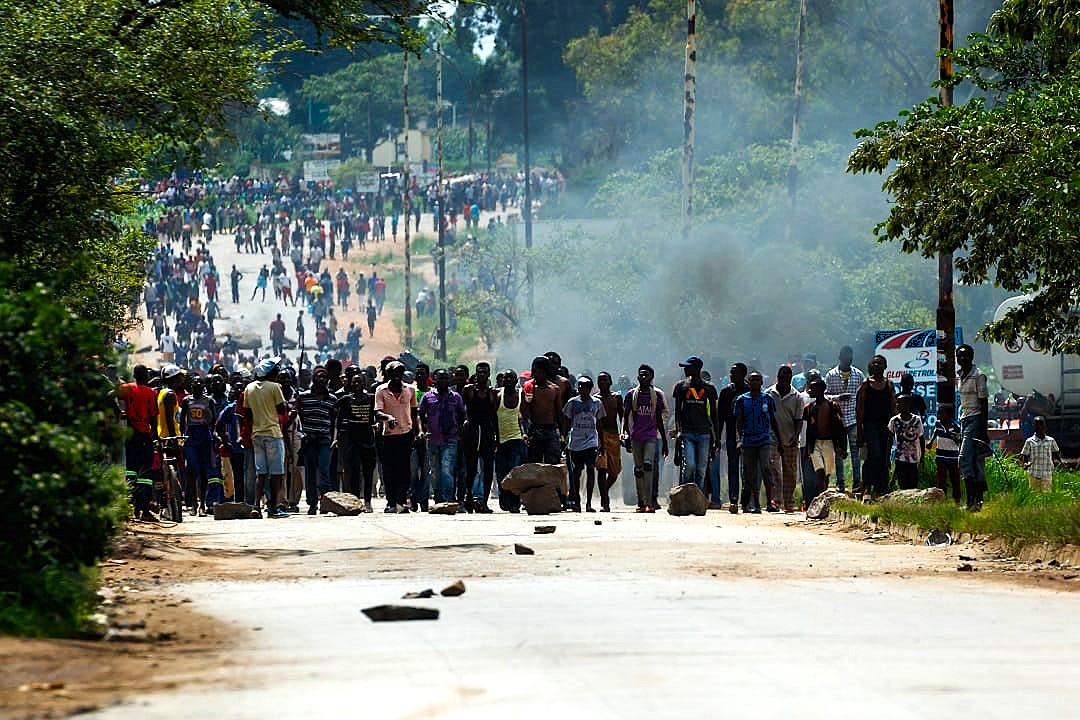
Every year, our universities produce thousands of graduates. We celebrate distinctions. We applaud qualifications. We fill social media with graduation gowns, heartfelt speeches and captions declaring that “education is the key.” Yet ours remains one of the most unequal societies in the entire world. Rampant unemployment rates have ravaged our society. Our municipalities are constantly on the brink of collapsing. Schools continue to fail millions of children every single day. Hospitals are deplorably overwhelmed. Crumbling infrastructure has become a permanent feature of our democracy — and so much more.
If education is supposed to prepare us to solve society’s greatest challenges, then why does it feel as though those challenges are only becoming greater?
Perhaps because somewhere along the way, we confused education with certification. Somewhere along the way, the degree became the destination instead of the beginning.
Before anyone misunderstands the point, this is not an attack on research or academic writing. Essays matter. Research matters. Every major scientific breakthrough began with someone asking difficult questions. But surely education cannot end there. Surely after years of lectures, assignments, examinations and dissertations, the question should no longer be, “What did you write?” It should be, “What did you build? What did you solve? Whose life is better because of what you learned?”
Imagine if every qualification in South Africa required students to leave behind something that improved society. Imagine if law students had to provide legal assistance to underserved communities before graduating. Imagine if education students had to develop literacy programmes that dramatically improved reading outcomes in struggling schools.
Imagine if journalism students had to publish investigative stories exposing corruption or failures in local government instead of submitting assignments that disappear into filing cabinets after being graded. Imagine if business students had to launch functioning enterprises, however small, rather than simply writing business plans that never leave the classroom. Imagine if agriculture students developed practical solutions for food insecurity in rural communities.
Imagine if information technology students designed systems that helped municipalities improve service delivery. Imagine if architecture and engineering students built affordable housing models, safer public spaces or innovative infrastructure suited to South African realities.
One of the greatest tragedies of our education system is that it has often taught young people to look everywhere for answers except within themselves. Indigenous Knowledge Systems remain one of Africa’s most underutilised resources—not because they lack value, but because we have failed to treat them as engines of innovation. Practical learning offers an opportunity to change that. It allows students to draw from generations of African knowledge and combine it with modern science to solve today’s challenges, from food insecurity and climate resilience to healthcare and sustainable development. That is how we build an education system that is not only globally competitive, but authentically and unapologetically African.
With this shift, suddenly, education would become so much more than a personal achievement. It would become a meaningful national investment.
The truth is, South Africa does not suffer from a shortage of graduates. Every year we produce thousands of intelligent, ambitious young people filled with potential. What we suffer from is a shortage of systems that consistently transform that potential into solutions.
We have become incredibly good at producing qualifications. But are we producing problem-solvers? Because the measure of education cannot simply be whether someone passes an examination.
It must also be whether that education leaves a meaningful mark on the society that paid for it, invested in it and desperately needs it.
Too many graduates leave university believing that their only responsibility is to find employment. What if we taught them that their responsibility was also to create opportunity? To solve problems. To build institutions. To strengthen communities. To innovate. To leave South Africa better than they found it. That is the kind of education that builds nations. That is the kind of education that transforms economies.
And perhaps that is why Traoré’s comments have resonated with so many Africans. Not because people suddenly oppose essays, but because they are tired of watching education become an end in itself while the problems outside university gates continue to multiply.
South Africa cannot lecture its way out of unemployment. It cannot theorise its way out of inequality. It cannot dissertation its way out of poverty. At some point, what we know must become what we do. Because the true purpose of education was never simply to produce graduates. It was to produce people capable of rebuilding a country.
Perhaps every university should ask one final question before handing over a qualification: “When history looks back on your education, will it remember what you wrote… or what you built?” Because South Africa doesn’t need another generation of people qualified to analyse its problems. It needs a generation courageous enough to solve them.