
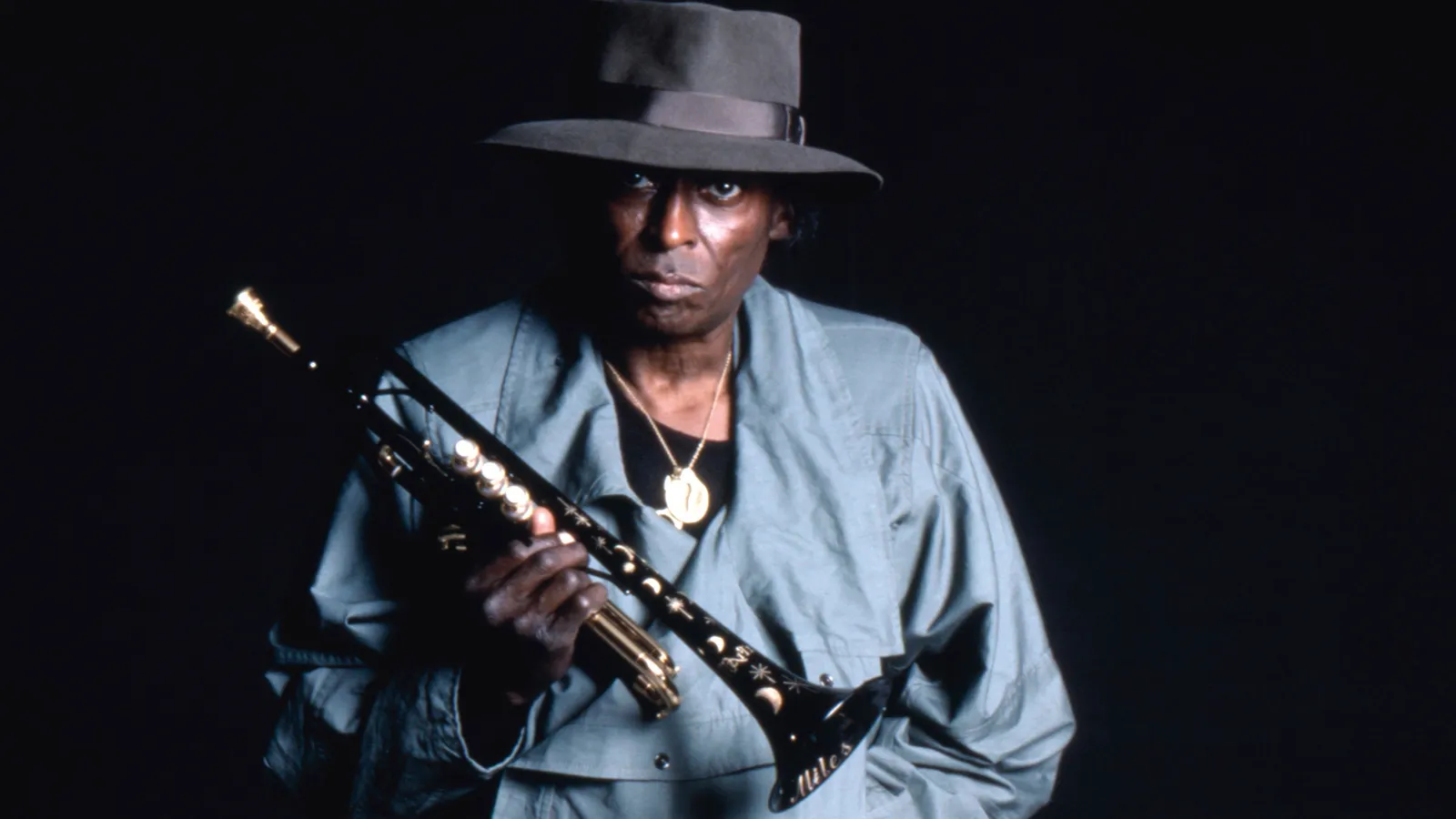
A Brief Note on the Journey
What began as a series of scattered conversations between two friends about Miles Davis slowly evolved into something neither of us had initially anticipated. At first, we believed we were merely exchanging reflections on music, albums, transitions in sound, and the enduring mystery of a man who continues to unsettle listeners a century after his birth. But somewhere along the way, the dialogue itself began to assume the shape of jazz.
Themes emerged. Themes dissolved. Ideas interrupted one another, returned altered, expanded, contradicted, reconciled. What started as commentary became excavation.
We discovered that we were not simply discussing Miles Davis but interrogating the broader questions his life and work provoke: the courage to evolve, the discipline of reinvention, the burden of memory, the relationship between sound and identity, the intimacy between fearlessness and solitude.
In many ways, this essay became less about biography and more about method. Less about Miles the historical figure, and more about Miles as proposition: a way of approaching art, uncertainty, movement, and life itself.
The dialogue also revealed something personal between us. That friendship, particularly one sustained over decades, often develops its own rhythm and tonality. There are conversations that begin in youth and only arrive at their full meaning much later in life. This collaboration became one such conversation.
And perhaps that is why the piece unfolds not as argument alone, but as accompaniment. Two listeners. Two histories. Two temperaments. One enduring sound.
If there is a final lesson we take from this journey, it may simply be this: that Miles Davis never asked us merely to admire him. He asked us to continue becoming.
We did not arrive at Miles Davis in the same way, nor did we remain with him for the same reasons. And yet, across time, distance, exile, memory, and return, his music became a site of convergence. A place where separate journeys could speak to one another without needing complete agreement. What follows is not a single voice, but an encounter: between two listeners shaped differently by the same sound, tracing what it has meant, and continues to mean, to live in the wake of Miles.
Movement I – Invocation
Tshepo:
I have come to think of Miles not as a figure, but as a process.
The temptation is always to fix him in a moment. Kind of Blue. The cool. The restraint. The perfection of form. Critics, academics, and jazz purists have spent decades embalming Miles into periods, movements, and stylistic categories, as though genius can be archived neatly like a museum artifact. But Miles never stayed anywhere long enough to be comfortably possessed.
That is what unsettles people about him. He treated every arrival as a point of departure. The moment a sound became legible, he abandoned it. The moment the audience settled into understanding, he disrupted the terms of engagement. What people call innovation in Miles was, perhaps, something more existential. A refusal to calcify.
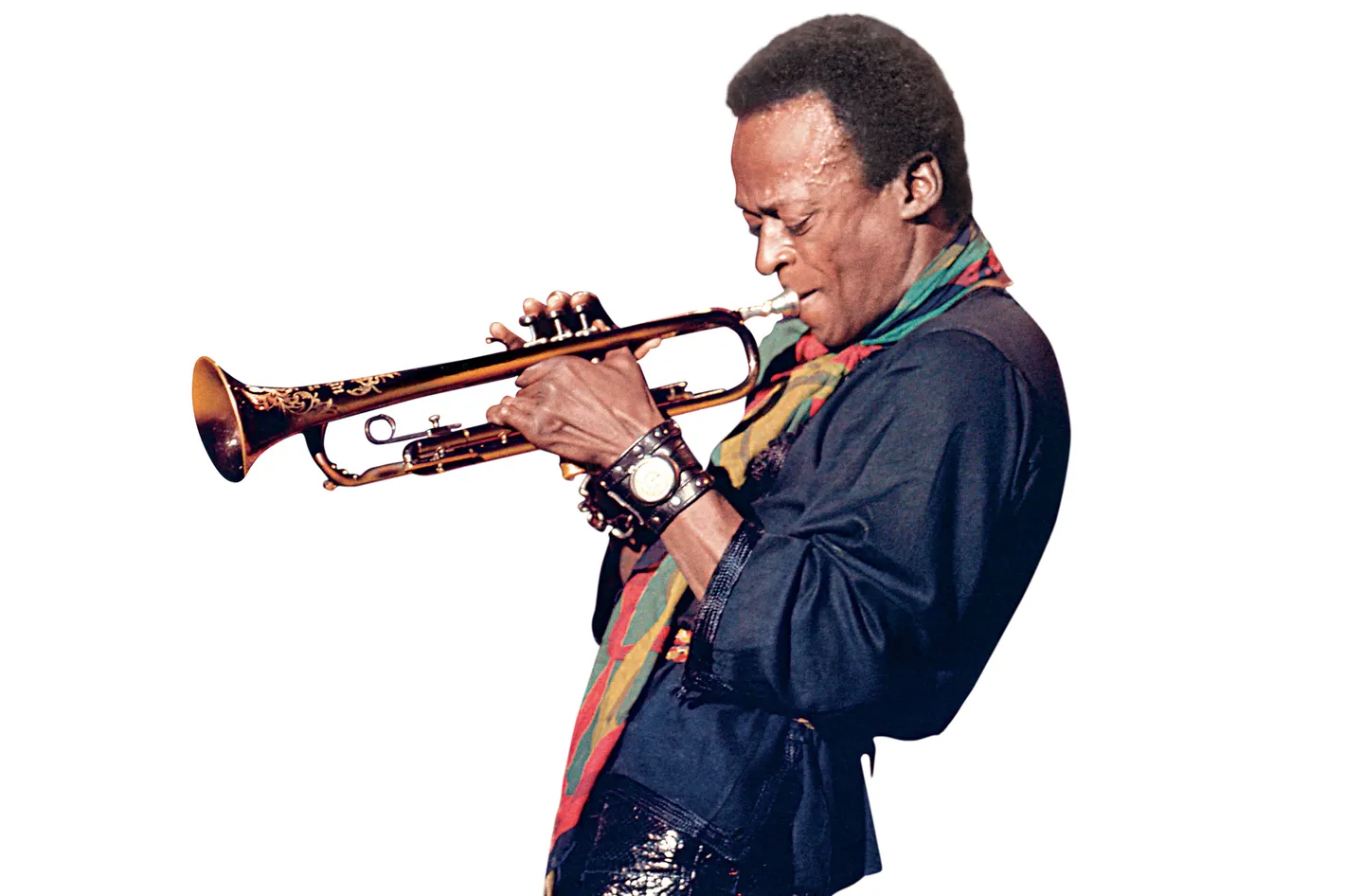
The horn, in his hands, ceased to be merely an instrument. It became a philosophical device. A mechanism for becoming. Through it he searched, withheld, provoked, whispered, destabilised. He understood something many artists never fully grasp. That repetition, however successful, is a slow form of death.
And perhaps that is why so many of us have spent lifetimes returning to him. Not because he comforts us. But because he refuses to.
Oyama:
And yet that becoming was never abstract. You can hear it in the decisions.
Take the opening of So What. The economy of it. The architecture of restraint before a single solo even announces itself. The famous bass figure enters almost conversationally, but beneath that apparent ease lies rigorous structure. The space is designed. The silences are measured. The freedom that follows is not accidental; it is constructed.
That is what fascinates me about Miles. Even at his most exploratory, he remains deliberate. The music never drifts. It expands. People often speak about Miles as though he simply “felt” his way into greatness. That romanticism misses the discipline. The band choices. The sequencing. The tonal calibrations. The precision with which he understood atmosphere. He was not merely reacting to music. He was reorganising its conditions.
Movement II – Becoming
Tshepo:
But perhaps that is the paradox: that freedom requires form, if only to transcend it.
What draws me to Miles is not structure itself, but the refusal to remain imprisoned within structure. He sheds skins continuously. Acoustic dissolves into modal. Modal mutates into electric. Jazz absorbs funk, rock, African rhythm, silence, noise.
He behaves less like a musician than a migrating force. And maybe that is why Miles resonates so deeply across the African diaspora. There is something profoundly diasporic in perpetual reinvention. To survive displacement, one learns adaptation. One learns multiplicity. One learns how to become without fully abandoning what came before. Miles understood this intuitively. Even his silences carry motion.
Oyama:
I would resist the notion of shedding too cleanly. Miles carries things forward. Listen closely enough and continuity reveals itself beneath rupture. The phrasing remains. The restraint remains. Even in the density of Bitches Brew, amid the electric storms and layered percussion, there are moments where he withdraws into a single cutting note.
That is not abandonment. That is memory reconfigured. In Hegelian and Marxian dialectics there exists the notion of the negation of the negation: transformation that preserves traces of what preceded it. Miles evolves precisely this way. He changes without erasing himself. That distinction matters.

Movement III – Rupture
Tshepo:
Yes. Memory without nostalgia.
There is no longing for return in Miles. No sentimental retreat into purity. He moves forward even when the future appears unstable. That takes a particular kind of courage. Especially in art. Most artists eventually become custodians of their own mythologies. They learn what audiences love and begin reproducing versions of themselves for public consumption.
Miles refused that economy. He risked incoherence instead. And there is something profoundly philosophical in that posture. It suggests that identity itself must remain unfinished. That becoming is more important than preservation. Perhaps that is the real terror of Miles Davis. He never allowed certainty to settle.
Oyama:
Participation, then, but always on his terms. Miles never meets the listener halfway. The listener must move.
When he shifts from Nefertiti into In a Silent Way, he does not explain himself. He recalibrates the listening experience entirely. The sequencing matters. The transitions matter. Even the pacing between albums becomes argument.
That is why his work continues to resist lazy listening. One cannot consume Miles passively. He demands adjustment. And perhaps that is why some audiences initially rejected entire phases of his career. They mistook discomfort for failure. But Miles understood something they did not: comfort is often the enemy of perception.
Movement IV – Translation Beyond Sound
Tshepo:
That refusal extended beyond music.
When Miles turned increasingly toward visual art in the final years of his life, many treated it as a curious side project. A hobby. An eccentric late flourish from an aging genius. I think they misunderstood what they were witnessing. The drawings and paintings were not diversions. They were spillovers.
By then the body had begun negotiating with time. The trumpet, demanding breath and physical endurance, no longer yielded as obediently as before. But the creative impulse had not diminished. If anything, it intensified. So, the energy moved. Into line. Into colour. Into fractured faces and restless forms.
The visual work is deeply revealing because it exposes process rather than performance. In music, sound disappears as soon as it is made. In drawing, gesture remains visible. One sees hesitation, acceleration, pressure. One sees the mind searching.
Oyama:
And yet even there, one sees discipline.
The use of colour is not random. The lines are not merely chaotic release. They emerge from decades of thinking structurally about rhythm, balance, tension. The visual work bears traces of the same intelligence that shaped the music. I often think of his proximity to Picasso here.
Picasso dismantled form in order to liberate it from realism. Miles dismantled musical expectation for similar reasons. But where Picasso often reconstructed, Miles leaves things deliberately unresolved. That incompletion becomes its own aesthetic.
Which brings us back to the music. What sounds spontaneous in Miles is often underwritten by deep internal architecture.
Tshepo:
Perhaps this is where the true incandescence of Miles Davis reveals itself. Incandescence is not elegance. It is heat made visible. It is what happens when something burns at such intensity that it emits its own illumination.
Miles, in the final decades of his life, did not cool into legacy. He heated. The music had already carried him to the outer edges of modern sound. The body began to negotiate. The industry attempted to historicise him. Critics tried to freeze him into greatness. But the mind remained restless. Unappeased. So, the energy migrated. Into sound. Into silence. Into fashion. Into paint. Into line. Into the stubborn refusal to arrive.
And perhaps that is why the late works disturb people. They are not interested in beauty. They are interested in exposure.
Movement V – The Human Thesis
Tshepo:
So, we return, then, to the individual. To the listener. To the question lingering beneath all of this: What do we do with Miles? Not as admirers. But as inheritors of a certain possibility.
I have become increasingly persuaded that there exists, in each of us, a muted note waiting to be sounded. Not identical to Miles. Not derivative of him. But ours. What he offers is not a template. He offers permission.
Permission to evolve publicly. Permission to risk misunderstanding. Permission to remain unfinished. And perhaps that is why he continues to matter beyond music. He models a way of being.
Oyama:
If that is so, then the task is not imitation. It is method. To listen closely to oneself. To history. To context. To contradiction. And then to respond intentionally. Miles does not give us a fixed sound to reproduce. He gives us an approach to uncertainty.
Which may explain why his work ages differently from that of many contemporaries. He was never trying to preserve the present. He was trying to locate the next question. And that requires fearlessness. Not performance of fearlessness. The real thing.
I was reminded of this recently while listening to Dee Dee Bridgewater describe Miles during the International Jazz Day Global Concert in Chicago. She called him a fearless visionary, unconstrained by what she termed “the self-appointed keepers of the flame” and by audiences’ content with repetition.
That struck me deeply. Because Miles consistently challenged us to move beyond comfort. He expected labour from the listener. In that sense, he reminds me of Toni Morrison responding to critics who found Beloved difficult: “I do not write for lazy people. I expect folks to read and re-read my work to be one with my imagination”.
Miles did not play for lazy listeners either.

Movement VI – Fearlessness
Tshepo:
Then perhaps this is what we have truly been circling all along: that Miles Davis was never merely making music. He was modelling a way of being. One that resists fixation. One that embraces risk. One that understands expression not as completion, but as continuous transformation.
He taught us that movement itself can become coherence. That uncertainty need not produce collapse. That reinvention is not betrayal. And perhaps that is why he has remained with some of us so intimately. There is something I have shared with almost no one until now. Not publicly. Not even fully in my own writing. I had imagined it belonged somewhere in memoir, perhaps much later. But perhaps Miles himself demands otherwise.
And perhaps that understanding deepened years later, in a quieter but no less devastating theatre of loss. There are deaths that arrive dramatically, with thunder and rupture. And there are deaths that arrive slowly, consecutively, almost methodically.
Over a span of years, I buried my parents. Then siblings. One after another. The architecture of family, which one assumes unconsciously will always remain standing somewhere in the distance, began collapsing room by room. Grief altered its texture over time. It was no longer shock. It became atmosphere.
And in those periods, I found myself returning repeatedly to Miles. Not analytically. Not academically. Existentially. Late at night, often alone, I would retreat into albums the way some retreat into prayer. Sketches of Spain. In a Silent Way. Ascenseur pour l’échafaud. Certain trumpet phrases began behaving almost like private scripture.
I was not looking for answers exactly. At least not in the conventional sense. Because grief eventually teaches one that some questions do not resolve. They simply accompany you.
Oyama:
In Soul of a Nation, I recount surviving the Maseru Massacre of the 9th of December 1982, where forty-two people lost their lives, among them close comrades. That night I led a small group into the mountainside behind the residence where we had been sheltering. Among them were the wife and daughter of Vusi Pikoli, our erstwhile prosecution boss; Jerry Modisane, who succeeded Steve Biko, as president of the South African Student Organisation (SASO); and the exiled Thembu monarch, King Sabata Dalindyebo, kin of Nelson Mandela.
Once they were safely ensconced by the mountainside, I returned alone to my redoubt, armed with an AK-47. I was young. Young enough to believe death and courage belonged naturally together. The firepower surrounding us was overwhelming. And yet I remember, with extraordinary clarity, what happened next.
At around 2:45 in the morning, I saw movement in the darkness. I believed, genuinely, that this was the end. The moment revolutionaries imagine in theory but rarely confront in flesh. My body tightened entirely. And then, suddenly, two presences entered me simultaneously. The visage of my mother. And the strains of In a Silent Way.
Miles Davis and my mother accompanied me toward what I believed was my final moment on earth. And strangely, perhaps improbably, I was not afraid. The figures emerging through the darkness turned out not to be the Boers, but comrades attempting to reach us through the chaos and carnage of that night. But something irreversible had been registered. I understood then that Miles had ceased to be music for me. He had become posture. A way of standing inside danger without surrendering to its gravitational pull.
Return to Unison
Together.
Perhaps what remains, then, is not imitation, but recognition. Not to become Miles, but to recognise within ourselves, the impulse he never abandoned: to change, to listen, to begin again. Always moving. Always discovering. Always rediscovering. Because life itself demands motion. To stand still is to die. To remain unchanged is to defy nature.
And perhaps that is why Miles Davis, even a century after his birth, does not feel historical to us. He feels unfinished. Still becoming. Still summoning us toward versions of ourselves we have not yet fully encountered. And in that, the distance between us, geographical, historical, philosophical resolves into something else. Not distance. Resonance. Not separation.
But the sound between us. Miles Davis will never die.

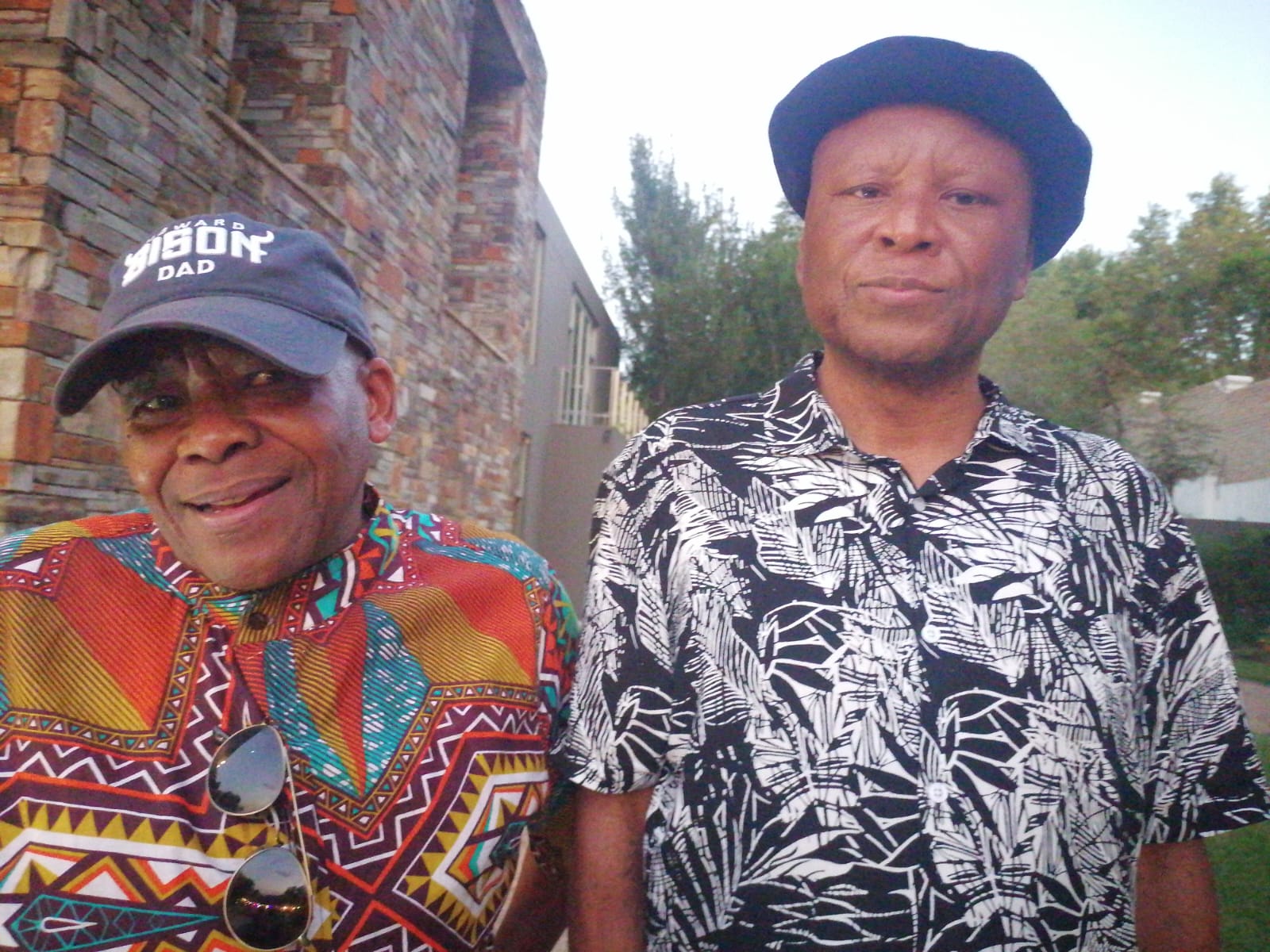

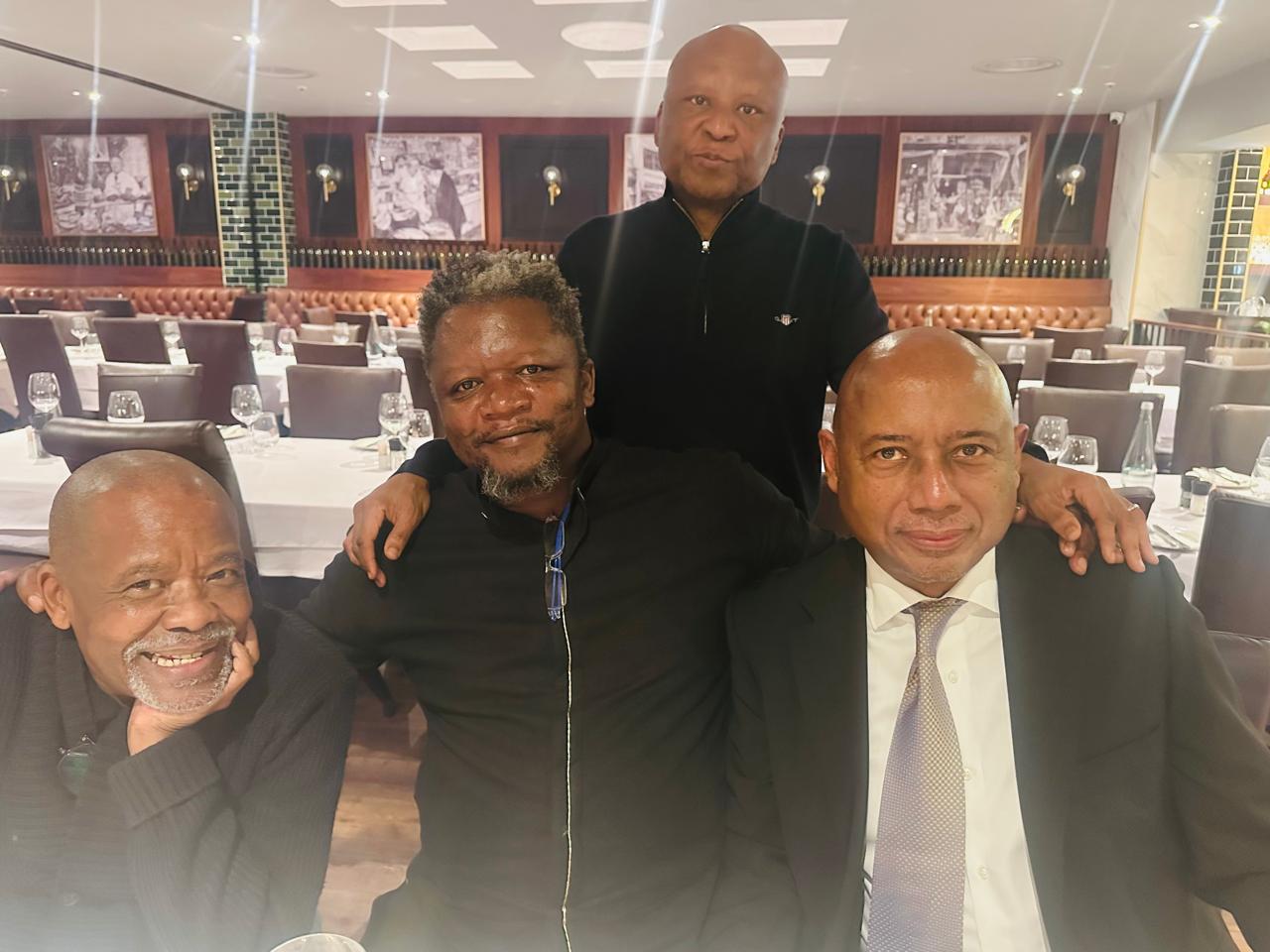
















2 Responses
All I can say is that you guys are deep. You sound more like musical cultural boffins than just mere audience at some Jazz Club or Festival . Must admit that though I have listened to Miles and also have in my collection quintessential Kind of Blue album and the psychedelic and revolutionary In a silent way. I have never really to even try analyze his intricate style, tantamount to revolutionary during his domination of the Afrojazz scene. You guys are probably better positioned to engage with that due to what I perhaps presume having walked similar paths both in revolutionary and classical jazz guise. Thanks for the brilliant analytical prognosis.
Amandla. Power!!