

This is a humble contribution by us as ordinary but concerned members of the African National Congress, who also spent the greater part of our adult lives serving the ANC prior and post the national democratic breakthrough of 1994.
The performance of the ANC, on many fronts, is of concern to many members and supporters. This concern extends beyond the borders of our country to many in our continent and globally who always regarded the ANC as a premier progressive movement and an inspiration in the struggle for a better world.
We, like many genuine members and supporters of our Movement, are concerned about the decline of the efficacy, the image and quality of membership, and the leadership of our movement at all levels.
The ANC’s performance during the 2016 and 2021 local government elections and the 2019 national elections sounded a warning that future elections would be disastrous.
The message from our members and supporters was that unless something drastic is done, the Movement and the progressive forces would soon disappear from the political landscape. Very little was done to respond to this.
The results of the 2024 National General Elections are the clearest demonstration of the loss of confidence by the electorate on the Movement.
Having reached this point, if nothing visible, clear and even dramatic is not done urgently the ANC will die.
In the process, the very idea of the national democratic revolution will die with it, thus dashing the hopes and aspirations of millions of the masses of our people at home and in the continent.
I, on behalf of hordes of our cadres, therefore take this extraordinary step of making this submission, informed by this reality and wish to urge our leadership and the general membership to reflect honestly, and act on some of the matters we raise. We further urge our leadership to heed this modest counsel to extricate our movement from what we consider to be the strategic defeat flowing from the 2024 National General Elections.
We count ourselves amongst those that our movement can call upon to join hands in responding to the challenges we raise, wherefore we are making this submission not as outsiders and passive onlookers.
LITERATURE SAMPLING
Clarke Garrett – Professor of History at Dickinson College who has published Essays on the French Revolution: Paris and the Provinces – writes:
“One of the few issues upon which orthodox and revisionist French historians of their Revolution can agree is that a sort of dark counterforce to the Revolution itself there existed a phenomenon called ‘the counterrevolution’.” He quotes Jacques Godechot writing in 1961 on the French Revolution, saying: “From its origins in the first months of the Revolution, this counter revolution retained its essential characteristics despite the subsequent diversity of its forms and the fragmentation of its leadership.” Additionally, Godechot wrote: “The counterrevolution began at the same time as the Revolution, from its origin, adversaries of the revolution resolved to oppose it”
Charles Tilly, an American sociologist and political scientist, writes in his seminal work: The analysis of a counter-revolution.
“Just as a theory of heredity which could not account for the occasional appearance of dramatically new genetic traits would be considered incomplete, a theory of revolution, or an analysis of a specific revolution, which provides no understanding of the presence of counter – revolutionary forces in the midst of a society in revolt must leave us unsatisfied. If a theory purports to tell us when and why a society is ready for rebellion, it also ought to tell us which sectors of the society will resist the rebellion and why.”
In May 2019, I penned a paper in collaboration with a few of my comrades under the heading: “ON COUNTER REVOLUTION, STATE CAPTURE AND CORRUPTION IN SOUTH AFRICA,” We made the following observations:
“We define counter-revolution as any commission or omission which deliberately seeks to undermine and eventually defeat the objectives of the National Democratic Revolution. It has historically manifested itself in different ways in each country, depending on the complex interplay of local and international balance of forces.
As a governing party, the ANC develops its own policies through its internal processes which are informed by its ideological perspectives and its historical mission. These policies form the basis of policy formulation in the state. To ensure that the policy formulation and implementation in the state follows its designs, the ANC deploys its cadres in state institutions and various levels of government.”
It therefore stands to reason that defeat of the National Democratic Revolution (NDR) would manifest itself, amongst others, essentially in three ways:
The first is that the policies of the ANC must be distorted and veer away from the objectives of the ANC, either through populist stances or through downright revolutionary adventurism.
Secondly, the enemies of the revolution would also ensure that they form part of the cohort of deployees in state institutions.
Thirdly, the ANC deploys a cohort of incompetents who then wittingly or unwittingly become part of the counter-revolution through no fault of their own.
Throughout its existence, there have been various attempts to distort the policies of the ANC. The ANC has, until recently, managed to resist these attempts.
However, in recent years, it has become clear that the ANC has been denuded of its ideological content and is available to be persuaded by all and sundry.
In 1994, it is clear, we as the ANC made a strategic mistake. In 1994, and immediately thereafter, we convinced ourselves that we had “dealt a final blow to the apartheid forces, such that these would never be able to again gain political dominance or significant political influence”. We are able to come to this conclusion with the benefit of hindsight.
Now, the counter-revolution smells victory and has been emboldened and infused with sufficient confidence to predict the demise of the ANC:
“Over the next 10 to 15 years the ANC will continue to crumble. As (it) disintegrates our job is…to show people the DA difference in government and to consolidate the non-racial democratic centre in South Africa,” according to Helen Zille, as quoted by Peter Bruce: Sunday Times, 4 August 2024)
HISTORICAL PERSPECTIVE
Since the 2009 General Election, our country’s fourth democratic election, the ANC has progressively been losing popular support. Consistent with this trend, the ANC continued to lose support during the 2024 Elections, our seventh democratic election.
However, this most recent election result has sent shock waves throughout the national democratic movement.
During the period 2004 and 2019, covering four General Elections, ANC support declined by 12.9% – from 69.69% to 57.50%.
During each of these elections, total voter support for the ANC did not fall below 10 million. It moved downwards from 10,881,000 in 2004, to 10,026,475 in 2019.
However, between the 2019 and 2024 Elections, ANC support dropped by a whopping 17.32% – from 57.50% to 40.18%.
For the first time since 1994, the ANC vote dropped below 10 million, reaching the remarkable figure of 6,459,692.
WHY HAVE THE MASSES BEEN DESERTING THE ANC?
It is actually untrue that these masses have been turning their backs on the ANC during the entire period of thirty years since 1994.
The following figures attest to this factor: In the 1994 General Election, the ANC got 62.65% of the votes cast. This increased to 66.35% in the 1999 General Election, rising to 69.69% in the 2004 Election.
We believe that it is not difficult to identify the reason for this increasing support for the ANC during our country’s first three democratic elections.
The simple reason was that during these years, the socio-economic situation in our country was changing for the better, directly benefiting the masses of our people.
The contrasting electoral performance of the ANC within the past 30 years of our democracy caught the attention of some institutions that have published their opinions regarding the reasons and consequently the opportunity to defeat the NDR.
As part of our analysis below we borrowed somewhat from Comrade Thabo Mbeki’s reflections on the 30 years of democracy that he presented at Freedom Park on April 30, 2024.
In this regard in 2023, Dr John Endres, the CEO of the SA Institute of Race Relations, wrote: “South Africa’s first age, from 1994 to 2007, was marked by considerable progress across a range of indicators. GDP grew at an average rate of 3.6%. The number of people with jobs increased from 8 million to 14 million, and the average GDP per capita increased by almost 40%, from R55 000 per year to R76 000 per year in real terms, after adjusting for inflation.”
To this we can add the immense social wage which accrued to the ordinary people in such forms as housing, clean water, electricity and social security.
We can therefore justifiably claim that during the 1999 and 2004 Elections, the masses continued to vote for the governing party, the ANC, because it had lived up to its promise of bringing about “a better life to the people”.
In the same document to which we have referred, Dr Endres further wrote: “By contrast, for the period 2008 to 2022 the average GDP growth rate was a lacklustre 1.2%. The number of people with jobs increased by barely a million over a period of 14 years, while the population grew by 10 million over the same period. GDP per capita declined by R1 600, as people became poorer in real terms.”
He continued: “The unemployment rate has crept up over the years and now sits at an astonishing 32.9% (up from 22.6% in 2008), or 42.4% (29.5%) on the expanded definition that includes discouraged job seekers. Even these bleak employment numbers are generously assessed, as they include both formal and informal employment.
“Business indicators show a similarly stark divide… The lack of investment by the private and the public sector has started affecting the infrastructure that forms the backbone of the country’s economic activity…
While the total amount of electricity produced rose from 170TWh in 1995 to 253TWh in 2007 during the first age – an increase of 49% – it declined from there to barely 209TWh in 2022 – a drop of almost 18%.”
Factually speaking, what Dr Endress says about the period from 2008 is correct.
THE ANC’S DWINDLING SUPPORT
It stands to reason that it would be rational to conclude that the ANC during this period would consistently lose the support of the people exactly because of its failure, during this period, to meet its commitment to bring “a better life to the people”.
More to the point, Piet Croucamp published an article in the online Vrye Weekblad on 17 May 2024 entitled: “Power in the age of Cyril the Silent”. Among others, the article says: “Ramaphosa is in a strong position within his party, or probably much stronger than in December 2017 when he took over from Jacob Zuma as president of the ANC and in 2018 as president of South Africa.
“But since then, 1.4 million more people have become unemployed, the economy refuses to grow, and inflation is north of the Reserve Bank’s expectations. Under Ramaphosa, South Africa has reached new lows on the Corruption Perceptions Index (83rd out of 180 countries). In 2019, the national debt burden as a percentage of GDP was 56% but it is now 75.5%.
“Crime, especially violent crime, is growing exponentially. In the year Ramaphosa became president, just over 21,000 people were murdered (34 people per 100,000), but by 2023 there were 27,274 murders (46 per 100,000). Of the nearly 80 people who are killed every day, eight to 10 of their next of kin can expect justice. As for the rest, the murderer walks smugly away from his misconduct.”
“The fact is, South Africans are experiencing the unthinkable and are significantly worse off with Ramaphosa at the helm than they were under the corrupt Zuma.”
However, as the ANC, we are a revolutionary movement and need to dig deeper to understand the processes which have led to the disastrous 2024 election results.
In this context we must explain what happened to ensure proper understanding of the radical difference between Ages One and Two, especially given that the ANC was the governing party during both Ages!
What went wrong?
THE SETTLER-COLONIAL STATE (COLONIALISM OF A SPECIAL TYPE)
The processes which started with the arrival at the Cape of the 1652 Dutch settlers resulted in transforming our country into a Settler-Colonial State, what was called ‘colonialism of a special type’.
As a Settler-Colonial State, ours did not differ from how similar Settler-Colonial States, such as the US and Israel, behaved towards the indigenous population.
Simply, the Settler-Colonial State dispossesses the indigenous population of its country, hands it over as the property of the settlers and treats the indigenous population as subordinate sub-humans.
The difference between us and the US, is that our indigenous population remained by far the overwhelming majority relative the settlers.
This is what made it possible for this majority to rise up to end the Settler Colonial State and, in our case, to proclaim that ‘South Africa belongs to all who live in it, black and white’, and later declare in the Constitution that ‘South Africa belongs to all who live in it, united in our diversity’.
LOGIC BEHIND NDR
The struggle to achieve this goal we identified as the National Democratic Revolution (NDR).
“National” here relates to the fact that the oppressed in the Settler-Colonial State had to fight for their national liberation. The “national question” in such a State is resolved by the liberation of the oppressed.
In our case, a seminal moment in the resolution of the national question was the end of white minority rule as signified by the 1994 Elections.
It was possible that the oppressed could secure their national liberation while subsequently falling victim to a black dictatorship.
Our own struggle to defeat the Settler-Colonial State consciously sought to defeat two prominent features of this State, these being:
• The systemic oppression of the black majority; and,
• The denial of the democratic rights of that majority.
Our national liberation movement was therefore determined that liberated South Africa should be reconstructed as a Democratic State.
This is what accounts for ‘democratic’ in the National Democratic Revolution (NDR).
In this context, it is very important to understand that, in summary, the strategic task of the NDR is the creation of a democratic, non-racial, non-sexist and prosperous South Africa based on the eradication of the legacy of colonialism and apartheid, both of them an expression of the functioning of the Settler Colonial State.
VESTED INTERESTS AND THE NDR
It is important to bear in mind that as we speak of the strategic task of the NDR, the 1994 democratic elections came almost 350 years after the arrival of the first contingent of Dutch settlers.
What this means is that by the time it became possible to abolish the Settler Colonial State, various practices and beliefs had become entrenched in society during the centuries of its existence, and therefore there were many with entrenched racial benefits deriving from the old order.
Naturally, these would resist any change and even the threat of such change, if they believed that such change would result in them losing the racial benefits bestowed on them by the Settler-Colonial State.
Brought up in ideas of white supremacy and therefore the definition of the black as sub-human, many among these beneficiaries of the Settler-Colonial State would be convinced that these sub-humans would be incapable of managing a modern democratic State, and act accordingly.
It therefore stood to reason that the victory of the National Democratic Revolution would give birth to its opposite, an anti-NDR Counter-Revolution.
ANC ON COUNTER-REVOLUTION
The ANC warned about this at its 50th National Conference in 1997. In its document on Strategy and Tactics it said:
“In the narrow sense, counter-revolution can be defined as a combination of aims and forms of action that are mainly unconstitutional and illegal, to subvert transformation. These include setting up intelligence and armed networks parallel to and within the state to sabotage change through direct political activity or aggravation of such social problems as crime.
They also entail underground efforts to undermine the country’s economy, including investor confidence and the currency; deliberate acts of corruption driven not merely by greed; sabotage of the programme for delivery; wrecking the government’s information systems; illegal and malicious acts of capital flight and so on…
“Uppermost in the immediate objectives of these counter-revolutionary forces is to disorganise, weaken and destroy the ANC, the vanguard of the NDR, both from within and from outside its ranks. It is in the interest of these elements that the masses of the people should be left leaderless and rudderless, and thus open to manipulation against their own interests.
“In this sense, therefore, the democratic movement will be committing a monumental blunder — a historical error of great proportions — to lull itself into a false sense of security. Maximum vigilance is required.
But even more critical, the revolutionary movement needs to act with resolution in transforming the state machinery. It needs to use those centres of power in which it has a foothold to widen and deepen popular power.
The nature of our transition also means that, rather than rely mainly on revolutionary force (in a situation in which the instruments of force themselves require fundamental transformation), the democratic movement should creatively employ the weapons of transparency and openness to expose the machinations of counter-revolution and root out their networks.
It should ensure that the agenda in the battle of ideas is not set by counter-revolution.
“In addressing these challenges, the ANC will do well to remember the adage of its own campaigns: “attack the enemy on all fronts.”
Counter-revolutionary mobilisation can only take root if there are real grievances to exploit, whether these grievances are deliberately engineered or not. The democratic movement itself needs at all times to be vigilant that its own actions and omissions do not assist such mobilisation.”
Earlier we explained the National Democratic Revolution (NDR) and its strategic task as understood by our Movement.
Anti-Communism and the Settler-Colonial State
However, there are others in our country, drawn from the old apartheid forces, which have a very different view of the NDR and its objectives.
During the Second World War many of the leaders who belonged to the National Party which won the whites-only elections in 1948 were also members of the Afrikaner nationalist organisation, Die Ossewabrandwag (OB), which was drawn to the Nazism led by Adolf Hitler in Germany.
One of the leaders of the OB, B.J. Vorster, the later apartheid Prime Minister, wrote:
“We stand for Christian Nationalism which is an ally of National Socialism. You can call this anti-democratic principle dictatorship if you wish. In Italy it is called Fascism, in Germany National Socialism (Nazism) and in South Africa, Christian Nationalism.”
More relevant to the point we want to emphasise, Kowie Marais, an OB member and key member of the Broederbond, recalled that in their admiration of Nazism:
“We thought (Hitler) might rejuvenate western civilization…against the communist-socialist trends that were creeping in from the east. We thought it was the dawn of a new era.”
Nazism saw Communism as its real and strategic enemy. This is why Nazi Germany saw the destruction of the Soviet Union as its historic mission.
Members of the OB, like B.J. Vorster, P.W. Botha and others developed an intense anti-communism as a matter of ideological commitment during their years in the OB, ‘against the communist-socialist trends that were creeping in from the east’, as Kowie Marais put it.
As leaders of the apartheid regime, these and their followers saw the ANC as being little more than a proxy of the Soviet Union and the Communist Party of the Soviet Union (CPSU).
ANTI-COMMUNISM AND APARTHEID-ERA SA DEFENCE FORCE
When he gave evidence at the Truth and Reconciliation Commission (TRC), the former Chief of the SADF, Gen Constand Viljoen said:
“The cold war situation developed and eventually we had in South Africa, on the one side the USSR block as a superpower combining within the possibility of internal blocks such as for example, Angola, Mozambique and the liberation movements…The people sort of followed the concept of fighting through proxy wars…
“Most revolutionary wars were thus not only wars of liberation in Africa but also proxy wars for the superpowers…
“So, in this way the USSR was for us a conventional threat, a real physical conventional threat because they were actually present, and they had their proxy agents present in Southern Africa…
It was all connected with the important international conflict of international – communist expansionism. This is the way we saw it, and this is as far as we are concerned, a very, very, important motivating factor for us.
In fact, it was certainly the major motivating factor and the fact that eventually this was achieved through the collapse of communism in 1989, at least gave us the satisfaction that this part of it, we did contribute some important aspects in this regard….
ANTI-COMMUNISM, THE US AND OTHERS
The US had contributed to reinforce the view of the apartheid system that it had an important role to play against ‘communist expansionism’. In this regard, the US State Department said:
“U.S. President Harry Truman’s foremost foreign policy goal was to limit Soviet expansion.
Despite supporting a domestic civil rights agenda to further the rights of black people in the United States, the Truman Administration chose not to protest the anti-communist South African government’s system of Apartheid in an effort to maintain an ally against the Soviet Union in southern Africa. This set the stage for successive administrations to quietly support the Apartheid regime as a stalwart ally against the spread of communism.”
When he gave evidence at the TRC, Craig Williamson said:
“The liberation movements and their members were never seen as fellow citizens of our society. We regarded them as an alien enemy which threatened our society; our job was to eliminate that threat…”
So entrenched was the view that the ANC was nothing more than a communist proxy, that when he ADDRESSED the TRC, the then Head of the South African Police (SAP), Gen van der Merwe, said: “In 1985 the SACP held a conference in Zambia…” This was an ANC Conference. “To counter this attack by the SACP alliance…” For many decades, our Movement has spoken of ‘the ANC-led alliance’.
Gen van der Merwe went on to say: “The ANC/SACP saw themselves as part of the East bloc countries. And the struggle between the SA government and the SACP/ANC was seen as an East-West conflict…”
In April 2022, the prominent Afrikaner intellectual, Hermann Gilliomee, published an article entitled: “When the ANC lost its brain.”
Unashamedly, Prof Giliomee says that the ANC lost its brain when the Soviet Union ceased to exist. Here is some of what he wrote: “The ideology of the SACP was very close to that of the Soviet Union and that the SACP dominated the ANC-SACP Alliance during the years of Struggle…
“It is clear that the paralysis that has seemed to grip the ANC government is due largely to the decline of communism as an ideology and the cessation of the flow of expert advice from Moscow…
“President Cyril Ramaphosa’s appeals to his voters sound increasingly like calls to stragglers who are lost and without guidance.”
ANTI-COMMUNISM AND THE NDR
It is clear from all this that the apartheid system had convinced itself that the ANC was little more than a proxy of the Soviet Union, effectively led by the South African Communist Party (SACP).
What did these forces make of the NDR, the National Democratic Revolution of the ANC?
Dr Anthea Jeffery, Head of Policy Research at the Institute of Race Relations, has written a book entitled “Countdown to Socialism: The National Democratic Revolution in South Africa since 1994.”
Concerning this book, she said in 2023: “With growth stalling, joblessness at crisis levels, and governance unravelling, most South Africans cannot fathom why the ANC does not embark on meaningful reform. The answer lies in what is seldom raised: the ruling party’s unwavering determination to take the country by incremental steps from capitalism to socialism.
“As I explain in my new book, “Countdown to Socialism: The National Democratic Revolution in South Africa since 1994”, this transformation is being implemented via a Moscow-inspired “National Democratic Revolution” (NDR) dating back many decades. Despite the Soviet Union’s collapse in 1991, the ANC/SACP alliance still sees the NDR as offering the “most direct route” to socialism in South Africa – and hence as its bedrock strategy.”
One Andrew Kenny, described as writer, an engineer and a classical liberal, noted: “The NDR is a plan to turn South Africa into a purely socialist state – with 100% state control and no private property – in which all power will be held and kept in the hands of the ruling party, and in which ‘the motive forces of the revolution’ who will benefit from it are ‘Black people in general and Africans in particular’.
(This quote is from one of the ANC’s Strategy and Tactics documents, all of which continually focus on the NDR.)
“The NDR is a two-part plan: the first part is to take power, which they have already done through the 1994 election. The second part is to turn South Africa into a full-on socialist state, or communist state. The inspiration for the NDR, which they are quite open about, comes from Vladimir Lenin and Communism in Russia…”
Mr Dave Steward, former head of the F.W. de Klerk Foundation, has written that: “(Hermann) Giliomee also correctly points to the fact that the ANC did not negotiate in good faith and is committed to the implementation of its unconstitutional National Democratic Revolution.”
For its part the SA Institute of Race Relations says: “The more state control expands and private provision contracts under the impact of the NDR, the more South Africans will find themselves dependent on the ANC…”
In this scenario, the ANC will entrench itself in power at the apex of an effective one-party state, as Zanu-PF has done in Zimbabwe. This will bring unprecedented wealth and power to a small coterie of senior SACP and ANC leaders, who will become increasingly adept at extracting rents for themselves and stamping out any dissent.
Totalitarian control will become the hallmark of the political and economic ‘emancipation’ the NDR has brought.”
When Mr F.W. de Klerk, former President of apartheid South Africa addressed the TRC. He said: “Those who fought on the side of the Government believed that they were defending their country against what they perceived to be the aggressive expansion of Soviet communism. They had ample reason to believe this…The perception of those on the side of the Government was accordingly that the installation of an ANC Government would lead to Communist domination. They believed that in conducting their struggle against the ANC, they were playing an important role in the West’s global resistance to the expansion of Soviet Communism…
“The collapse of global communism in 1989 removed the major strategic concern that had dominated the thinking of the previous successive governments for decades and greatly facilitated negotiations with the ANC.”
ANTI-COMMUNISM AND THE COUNTER-REVOLUTION
Whereas F.W. de Klerk and others among the National Party leadership meant that the threat of ‘communist domination’ died with the collapse of the Soviet Union, there were others among the apartheid ranks who took a radically different position.
As FW de Klerk himself had said, they continued to believe that the “installation of an ANC Government would lead to Communist domination.”
In this context, they fully accepted the explanation of the NDR as presented by Anthea Jeffrey and others, as indicated earlier, that it was merely the first stage in the transition to socialism.
Being drawn especially from the apartheid security forces, and especially then Military Intelligence Division of the SADF, they constituted themselves into a Group whose –
Mission was to defeat the National Democratic Revolution and therefore the ANC, precisely to ensure that our country never experiences the ‘transition to socialism’!
Thus, was born a Counter-Revolutionary Group which engaged in a detailed process to achieve its Mission.
This was the moment which the 1997 50th ANC National Conference had warned about, arguing that the strategic objective of the counter-revolution would be “to subvert transformation”.
Directly relevant to what we are now experiencing, that warning also said:
“Uppermost in the immediate objectives of these counter-revolutionary forces is to disorganise, weaken and destroy the ANC, the vanguard of the NDR, both from within and from outside its ranks. It is in the interest of these elements that the masses of the people should be left leaderless and rudderless, and thus open to manipulation against their own interests.”
Earlier, we quoted the CEO of the SAIRR, Dr John Endress, as he correctly explained what had happened during what he called the two ages, from 1994 to 2007, and from 2008 to 2022, with the latter being the direct opposite of the former in terms of social development.
We said this required explaining, especially given that the ANC remained the governing party during both periods, and posed the question – what went wrong?
The answer to what appeared to be a conundrum was that the Counter Revolution had intervened, precisely to ensure that whereas Age One represented national progress, across the board, Age Two would stand out as the direct opposite.
COUNTER-REVOLUTION V/S THE ANC
One of the first decisions taken by the Counter-Revolution was to change the leadership of the ANC.
It prepared thoroughly for this, determined to achieve its objectives. It was only able to act on this matter at the 2007 52nd ANC National Conference in Polokwane.
So determined was the Counter-Revolution to realise its goal that it actually brought to Polokwane an armed group of hired assassins. If for some reason it had failed to achieve the leadership changes it wanted, it would have used these assassins to murder many of the delegates and leaders at the Conference.
It would then ensure that in the ensuing confusion, it would put in place as the ANC interim leadership people of its choice.
It was ready and willing to go to these lengths because it knew that it could not achieve its objective of the defeat of the NDR in the face of direct opposition by the ANC.
Quite early during the Conference, a stormy debate had arisen when some of the delegations refused that the President’s Political Report should be discussed during the Plenary Session as was historically the usual practice.
The nay-sayers won the day, and the Political Report was not discussed by Conference, the very first time this had ever happened. This changed forever the character and the course of our important national conferences from being a proper political school to a voting festival bereft of political content.
Later it became known that the Counter-Revolution had ensured that the Political Report was not discussed because it had concluded that its favourites for leadership would be defeated during the debate of the Political Report, and therefore did everything to ensure that the debate did not take place.
This is an indication of the thoroughness of the preparations of the Counter revolution to ensure its success which we will come across later in this document.
OF TRAINTORS AND COLLABORATORS
In his 2014 book, “Askari”, author, Jacob Dlamini raises the complex and sensitive question of those – apart from the “Askaris”, who collaborated with the apartheid regime and its agencies.
He writes: “Should South Africans push for disclosure about collaboration? Should we be asking who, besides the askaris, collaborated with the apartheid state and in what ways? Should we be purging our public life of known and suspected collaborators?
“The struggle against apartheid was, above all, a struggle for justice. That means that, even if South Africans do agree to have a frank conversation about collaboration and complicity under apartheid, that conversation can only be meaningful if it is guided by the principle of justice. Knowing who the collaborators were and where the askaris are today need not mean the violation of individual rights and human dignity.”
The matters raised by Jacob Dlamini in these two paragraphs, and elsewhere in his book, are directly relevant to our Movement and the important matter we are discussing of what the Counter-Revolution has done.
This is because when the Counter-Revolution decided to intervene at the 2007 ANC National Conference to change our leadership, this was because there were ‘collaborators’ within our Movement, agents infiltrated by the apartheid intelligence services whom we had not discovered.
Such agents remain within our Movement and continue to play a negative role on the instruction of their ‘handlers’, who today are part of the Counter Revolution.
REFUSAL TO DISCLOSE THE APARTHEID AGENTS
Quite early on after the formation of the 1994 Government of National Unity, our leadership was sensitive to this reality. It therefore decided to act on it. President Mandela was very focused on this matter as he harboured belief that there were many Apartheid Agents within the ranks of our movement.
It delegated two of our leaders to engage the Heads of the National Intelligence Service, the SAPS and the SADF, Dr Neil Barnard, Gen Johan van der Merwe and Gen George Meiring respectively to ask them to disclose to these two ANC leaders such agents as thy had in the ANC.
The proposal advanced by the two ANC leaders was that they would speak privately to each of the agents as disclosed to them by the former apartheid ‘securocrats’ to inform them that they no longer owed any obligations to their former ‘handlers’, and therefore that they should take no instructions from the ‘handlers’.
The ANC leaders assured the former apartheid ‘securocrats’ that no negative consequences would be visited on the disclosed agents, and that the two would keep the identities of the agents to themselves, without ever disclosing these to the ANC or any other person.
Unfortunately, all three former leaders of the apartheid security forces effectively turned down the request of the ANC leaders. This suggested then that there were plans among the apartheid collectives to use the agents they still had within the ranks of the ANC.
What happened at the 2007 ANC Polokwane Conference confirmed that this suspicion was correct.
Our discussion of what happened to the ANC after the 2007 intervention of the Counter-Revolution must include, at a later date and after proper preparations – a presentation of how the Counter-Revolution corrupted and compromised the ANC Youth League.
Before we pass this matter of the discussion of the ANC, we must engage the equally important issue of the serious decline in the political calibre and quality of many of the ANC members.
POLITICAL QUALITY OF ANC RECRUITS POST-1994
In his Political Report at the 1997 50th ANC National Conference, President Nelson Mandela raised very serious concerns about the quality of the ANC members. Among others, he said:
“One of these negative features (which have emerged in the last three years) is the emergence of careerism within our ranks. Many among our members see their membership of the ANC as a means to advance their personal ambitions to attain positions of power and access to resources for their own individual gratification.”
Mandela continued: “During the last three years, this has created such problems as division within the movement, conflicts based on differences among individuals, the encouragement of rank indiscipline leading to the undermining of our organisational integrity, conflict within communities and the demoralization of some of the best cadres of our organisation.
“In reality, during the last three years, we have found it difficult to deal with such careerists in a decisive manner. We, ourselves, have therefore allowed the space to emerge for these opportunists to pursue their counter-revolutionary goals, to the detriment of our movement and struggle.
“During this period, we have also been faced with various instances of corruption involving our own members, including those who occupy positions of authority by virtue of the victory of the democratic revolution…
“Clearly, we have to take all necessary measures to purge ourselves of such members and organise ourselves in a way that will make it difficult for corrupt elements to gain entry into our movement.”
The reality is that our Movement failed to implement this directive from Madiba.

MANTASHE’S DIAGNOSTIC REPORT
The result is that almost twenty years later, at the 2017 ANC National Policy Conference, ANC Secretary-General Gwede Mantashe delivered a Diagnostic Report which focused on this same matter of the political quality of the ANC members.
Mantashe said: “We owe it to ourselves first, the movement and society, to analyse in detail the implications of a liberation movement that has ascended to power and, therefore, controls huge resources.
Being in power is rapidly becoming a source of political bankruptcy, in that members of the ANC fight for deployment either as councillors, MPLs and MPs, respectively, as if there is ‘no tomorrow’…
“It is foreign to our movement for comrades to see deployment as a source of material benefit rather than the reason to serve the people. These fights among comrades turn the interest of our people off and push them away from the movement.
“The use of money to buy votes for elections in the party, is at the heart of the decline of the quality of structures across the board. Money has replaced consciousness as a basis for being elected into leadership positions at all levels of the organisation.
The ethical behaviour of leaders is no longer an issue, as it has been replaced by status…
Social distance accelerates the growth of the trust deficit between leaders and society, leading to decline of support for our movement…
“The general decline in the quality of membership is a product of the following factors:
• mass recruitment of membership, not a problem in itself, adversely quality over time.
• the weak induction programme leads to a big membership that does not understand the organisation. This weakens the values and traditions of the organisation…
“There is a general decline at leadership level, to anchor debates, addresses and closed discussions, on the basic policy documents. The term ‘revolution’, or its opposite ‘counter-revolution’, hardly features in our vocabulary. Even the NDR is referred to only a few times and far apart. Terms like ‘colonialism of a special type’ are hardly seen except in political classes.”
Manifestations of Poor Quality of ANC Members: 2002
“ACCESS TO RESOURCES, PATRONAGE, KILLING THE ANC” – MOTLANTHE
Already fifteen years earlier, in his Organisational Report at the 2002 51st ANC National Conference, ANC SG Kgalema Motlanthe had addressed the important matter of the effect of the decline in the political maturity of the ANC members and said:
“We found that the issues dividing leadership of some of our provinces are not of a political nature, but have mainly revolved around access to resources, positioning themselves or others to access resources, dispensing patronage and in the process using organisational structures to further these goals. This often lies at the heart of conflicts between constitutional and governance structures – especially at local level and is reflected in contestations around lists, deployment and internal elections process of the movement. These practices tarnish the image and effectiveness of the movement,” Motlanthe argued.
He continued: “The limited political consciousness has impacted negatively on our capacity to root out corrupt and divisive elements among ourselves…
“We seek to develop members, so that they can consciously make choices, wherever they are and at all times, about approaches, behaviour and actions that either furthers the cause, or constitutes a betrayal, of the people.
This political consciousness is what should distinguish an ANC member, and should find expression in how they conduct themselves, their style of leadership, their adherence to policies, values and norms of the ANC and their commitment to work resolutely for the improvement of the conditions of our people…”
The ANC SGs were therefore saying that as long as the ANC failed to deal with the challenge of people joining the Movement with no commitment to its policies and values, so long will we have members who are corrupt, work to steal public resources for self-enrichment, ill-disciplined, reliant on money to rise in the ranks of the Movement, and unable to serve the people.
Inevitably, therefore, these mere card-carriers within the Movement would easily fall prey to the machinations of the Counter-Revolution, serving as its unconscious agents.
In addition, in time and in the eyes of many among the public, and therefore the voters, these mere card-carriers, who had nothing to do with ANC policies and values, came to represent the normal ANC member, and therefore necessarily drove away the ordinary people away from the ANC.
RENEWAL OF THE ANC
Having considered the matter of the political calibre of the ANC members, the 2017 54th ANC National Conference adopted a Resolution which said:
“Organisational renewal, therefore, is an absolute and urgent priority, and we may go as far as to say, to the survival of our great movement…conference mandates the NEC to drive a sustained programme of Organisational renewal and report on such to the NGC.”
The 2022 55th ANC National Conference followed up on this and resolved that: “(It) Instructs the National Executive Committee to develop a short-term renewal programme of action, which includes the following elements, with clear timeframes and a monitoring and evaluation framework, as follows:
• implementing the resolution of the 54th Conference which said:
“Organisational renewal therefore is an absolute and urgent priority, and we may go as far as to say to the survival of our great movement”;
• addressing the strategic challenge of the deterioration of the political quality of membership of the ANC as successively raised at all National Conferences and NGCs of the ANC during the period 1997 – 2022 and therefore the imperative urgently to address the political quality of our membership, focusing on quality rather than quantity…
Unfortunately, the ANC NEC has failed to implement these decisions of the ANC National Conferences calling for the critically important Renewal of the ANC!
Or
at worst it has failed to understand and appreciate the gravity of this task.

COUNTER-REVOLUTIONARY SHENANIGANS COST THE ANC
People elect governments to provide goods and services to the population as a whole. It is therefore obvious that if any governing party consistently fails to provide these goods and services, it will lose the support of the people.
As we would expect, one of the important decisions taken by the Counter Revolution was to ensure that as a governing party, the ANC, failed to meet the people’s expectations and therefore, over time, lost the support of the people, and therefore the voters.
In 1997, the ANC had warned that the activities of the counter-revolution would “also entail underground efforts to undermine the country’s economy, including investor confidence and the currency; deliberate acts of corruption driven not merely by greed; sabotage of the programme for delivery…”
SA REVENUE SERVICES (SARS)
States are like giant machines which must always be kept in motion. What lubricates that motion are the State Revenues without which the State cannot exist.
The Commission of Inquiry into Tax Administration and Governance by SARS, headed by Justice Robert Nugent, (the Nugent Commission), was appointed in May 2018 and submitted its Final Report in December of the same year.
President Cyril Ramaphosa appointed the Commission because contrary to what had been the case in the past, SARS’ responsibility for 95-98% of State Revenue collection, was visibly underwhelming – collecting ever diminishing revenues with each passing year. This started during the 2014/15 Fiscal Year.
The Commission was charged with the task to establish the cause for the underperformance of SARS and make Recommendations to correct this situation.
Let us comment on a few elements of the Nugent and Zondo Commissions Reports. The Judicial Commission of Inquiry into Allegations of State Capture, chaired by Deputy Chief Justice Raymond Zondo, (Zondo Commission), also examined the SARS matter, building on the work done by the Nugent Commission.]
Here are some of the Findings of these two Judicial Commissions of Inquiry.
Some people set out to destroy SARS. President Zuma appointed Tom Moyane as Head of SARS in 2014 to lead this process of destruction.
The leading US Business Consultancy, Bain and Company, prepared Moyane for this role and worked with him to implement their destructive plan once Moyane was appointed.
Moyane, Bain and others actually implemented the plan, which resulted in the reduction of revenues collected, setting off the alarm bells which resulted in the appointment of the Nugent Commission.
Some people in the State Security Agency, SSA, also played a role in assisting the planned destructive process.
So did then President of the Republic and the ANC, Jacob Zuma. Whatever the self-proclaimed intentions of Zuma, Moyane, Bain and others, it stands out like a sore thumb that the objective to destroy SARS would have resulted in destroying the Democratic State. Such acts can be described as counter-revolution in its rawest form!
It is therefore no coincidence that both leaders of this destructive process at SARS are now the leaders of the MKP whose objective is clearly the destruction of the ANC and undermining of our constitutional democracy.
After both Nugent and Zondo reports had conveyed to the public a clear message of an ANC President engaged in counter-revolutionary acts on the one hand and failure of the State to charge him for Treason on the other, the failure by the ANC to act is difficult to fathom.
This failure to act in the interest of both country and organisation allowed Zuma to pursue his destructive agenda unabated.
However, this did not mean that the counter-revolution would stop implementing other plans to ensure the failure of the ANC in terms of the ordinary discharge of the tasks and obligations of Government.
ESKOM
No country in the world can function properly without sufficient and reliable supplies of electricity.
Where there are shortages or disruptions this immediately affects the economy and therefore the related tasks of job creation and poverty reduction.
There are a number of instances at Eskom which show deliberate interventions to cause shortages in the supply of electricity. These include the inordinate amount of time it has taken to build and commission the new power stations, Medupi and Kusile.
Both these power stations were scheduled to be commissioned by 2014.
However, Medupi was only finally commissioned in 2021. Kusile will only be finally commissioned in 2025.
Our first national load shedding took place in January 2008.
An SIU Report finalised in 2017 said about this 2008 event:
‘Eskom’s Executive Management and Board of Directors did not heed warnings from employees that Eskom was facing a potential shortage of coal by December 2007. The declaration of an emergency could thus have been avoided with the exercise of reasonable care…It appears that the emergency situation the Eskom found itself was self-created and thus could have been avoided by the exercise of reasonable care.
The BOD did not respond to warnings that the coal stocks were reaching dangerously low levels prior to January 2008 and that the threat of load shedding was a strong possibility.’
The load-shedding and short supply of electricity has impacted very negatively on the ANC with the general perspective gaining wide acceptance that:
• the governing party, the ANC, has failed in its task to supply the required amounts of electricity.
• accordingly, it has contributed to the virtual absence of economic growth and the consequent increases in the unemployment levels; and that,
• further, it has contributed to lowering the standard of living of the people by obliging households to suffer from long periods without electricity.
The document on Eskom that will soon be released will show that the counter revolution intervened to ensure the electricity crisis, with the deliberate objective severely to undermine the capacity of the ANC-led Government to discharge its responsibilities to the nation and the population as a whole.
A new Eskom Board was appointed in 2018 because of concerns about how the previous Board had been conducting itself. It is very important, in this context, to take serious note of what the Chairperson of the new Board, the late Jabu Mabuza, said when making a presentation to the Zondo Commission.
Here is some of what he said: “The new Board’s observation is that there was previously a culture of corrupt practices, mismanagement and malfeasance that has been inculcated in Eskom by certain individuals in Eskom over a period of time.
The issues of impropriety within Eskom seemingly extend beyond the matters which are under investigation by the Commission. This was clearly a pervasive culture and was sanctioned from within the Board, the Executive and Senior Management.

TOP-DOWN PHENOMENON
We have no hesitation in saying that this situation at Eskom, introduced by ‘certain individuals’, as Jabu Mabuza out it, would serve the purposes of the counter-revolution perfectly.
As all of us know, during the last fifteen years, other State-Owned Enterprises have also suffered from significant malaise.
In its 14 October 2023 edition, the Daily Maverick report that:
“Stellenbosch University estimates that the country is losing R1-billion a day as a result of the dysfunction at Transnet.
Trains are delayed or not moving at all, and its ports are ranked among the world’s worst in efficiency, container loading and waiting times….
“Volumes in the rail operations have declined from a peak of more than 200 million tonnes a year in 2019 to an expected 143 million in 2023 because of Transnet’s mismanagement of the rail network, cable theft and vandalism… “
During the period 2005 – 2009, Transnet’s annual profits averaged more than R4 billion. And yet Transnet unveiled a loss of R5.7-billion for its 2022/23 financial year. We can tell similar stories about other State-Owned Enterprises (SOEs.) None of this can be accidental or merely coincidental.
At the same time we have seen an erosion of the capacity of the Department of Public Enterprises (DPE) to supervise and support the SOEs for which it is responsible.
For instance, the technical oversight personnel, those with the engineering and other skills relevant to the various SOEs, experienced a vacancy rate in the DPE which grew from 26% in 2019, to 41% in 2022.
We will recall that the counter-revolution removed precisely this category of personnel as it began its efforts to destroy SARS.
All the preceding means that the State sector of the economy was yet another area in which the governing party, the ANC, made a negative contribution during the last fifteen years.
During November 2023, a lead economist from the World Bank, Jacques Morisset, wrote: “The role of the State is to ensure macroeconomic stability and equity, while delivering quality public services to all citizens. South African authorities have struggled to meet the second aspect, despite significant public spending.
For example, in 2021, the country was ranked 135th (out of 173) on the World Bank’s Human Capital Index, despite spending on education and health being amongst the highest in the world (almost 15 % of GDP).
South Africa’s level of crime insecurity is also higher than would be expected in relation to the level of public spending on police, safety, and protection services. The quality of public infrastructure has also rapidly deteriorated in recent years.
In this context, again during 2023, a Statistics South Africa (StatsSA) Report said: “The level of trust in 10 of the 15 government/public institutions declined between 2019/20 and 2022/23.”
Sometime earlier, the South African Public Service Commission had said: “The Batho-Pele (People First) White Paper on Transforming Public Service Delivery seeks to introduce a citizen-oriented approach that puts the people first. The White Paper requires departments to transform and improve their public service delivery in terms of eight service delivery principles.
Specific requirements are laid down for departments to put these principles into practice, the ultimate aim of which is to improve services to citizens. The Public Service Commission is tasked with monitoring departments’ progress with implementation.”
This shows that the Government policy is in place to address this delivery of “quality public services to all citizens”. And yet, as Stats SA has reported, the level of public trust in Government has declined during the last few years.
EROSION OF GOVERNMENT EFFECTIVENESS
In 2017 the SA Institute of Race Relations put its finger on some elements which would definitely contribute to the weakened performance of Government Departments.
That year it published a Report entitled ‘Political Musical Chairs’ and deals with elements of governance during the period, May 2009 to July 2017, the first 100 months of the Jacob Zuma presidency.
The Report says, correctly: “In any national government department leadership resides in two parallel authorities: the national minister (the political head of any given ministry, responsible for policy direction, oversight and communication); and the director general (the administrative head of a department, responsible for the implementation of a policy programme, procurement, the performance of staff and the financial management of that department, as prescribed by the Public Finance Management Act). Each of these roles must work closely with the other in order to deliver on a mandate…
“If, however, an administration is subject to constant change and upheaval, either politically or administratively, it will inevitably have a detrimental effect on delivery; for disproportional disruption tends to bring with it confusion, uncertainty and conflict. They are the enemies of delivery.”
However, the period under review, the first 100 months of the Zuma presidency, was marked by frequent changes affecting both the Ministers and the Directors General.
The Report discloses that:
• “In total, since 10 May 2009, Zuma has made 126 changes to the national executive.
• “President Zuma is currently (July 2017) overseeing his 11th different cabinet and national executive;
• “The average length of a cabinet under Zuma, before it is reshuffled, is just under 8.6 months; and,
• “Of Zuma’s first national executive, only 11 people have retained the position they occupied in 2009, including the president, without any change over that period.”
Let us now look at the matter of the Directors General (DGs) in 38 National Departments.
• “172 people have held the position of Director-General in these 38 departments, either in a permanent or acting capacity, since 10 May 2009;
• “That represents an average of 4.5 directors-general per department during the 100 months, or an average of 22 months per director-general, before a change occurs; and,
• “An average of 20 months per department occupied by directors-general serving in an acting capacity.”
Here is what the Report calls the Big Picture
• “Between all 32 national departments and ministries, there were 215 different relationships between Ministers and Directors-General;
• “That is an average of 6.7 relationships per department/ministry over a 100 month period; and.
• “The average period of any given relationship is 14 months.”
The Report points to this summary:
“On a grand scale the numbers are astounding. The majority of relationships between Ministers and Directors-General, around 60%, will last 12 months or less and more than 40% of all of them will involve an Acting Director-General.”
These figures of an extra-ordinarily high turnover of Ministers and Directors General mean only one thing. This is that Government was increasingly becoming dysfunctional resulting in mounting failure to address the needs of the population.
Ministers & Pursuit of Private Interests
Evidence suggests that this decline in government performance was but a reflection of how much the attention of the political leaders, the Ministers, had moved away from the solemn task of the governing party, the ANC, to serve the people of South Africa!
In July 2021, a senior Treasury official, Mr Ismail Momoniat, gave evidence at the Zondo Commission. Among others, he gave an account of the time it took for the Cabinet to approve an amendment to the Financial Intelligence Centre Act (FICA).
Mr Momoniat reported that: “In summary, it took us over a year to secure Cabinet approval to introduce the Bill in Parliament, from the time we first submitted the Bill to Cabinet for its consideration. We also had to split the Cabinet approval process for the Bill into two.”
This happened in a situation in which the country had an obligation on time to comply with various regulations of the Financial Action Task Force (FATF) concerning anti-money laundering and other anti-corruption global prescripts.
One of the FATF directives was that South Africa had to gazette the amended FICA, with the necessary regulations, by December 2016. This could not be done because after a long delay, President Zuma referred the amended FICA back to Parliament in November of that year.
Treasury submitted the first Cabinet memorandum to Cabinet on or after 3 October 2014. It was only on 23 September 2015 that Cabinet allowed the Finance Minister to table the Bill in Parliament on 27 October 2015.
The National Assembly then passed the Bill on 18 May 2016. By early June 2016, after the National Council of Provinces also passed the Bill, Parliament sent the Bill to the Presidency, for President Zuma to consider signing it into law.
President Zuma waited until 28 November 2016 to respond on the Bill, when he decided to return the Bill to Parliament for its reconsideration over concerns he had about the constitutionality of one clause.
What was the problem? The problem was the inclusion in the FICA Amendment of provisions concerning ‘politically exposed persons’!
On this matter, Mr Momoniat explained to the Zondo Commission that: “Politically exposed persons (PEPs) are individuals who are entrusted with a prominent public position and therefore assessed by UNCAC (UN Convention against Corruption) and FATF to be more susceptible to acquiring money through illegal means, which also means that they are statistically more likely to launder money.
FATF recommendation (no 12) requires financial institutions to actively monitor such customers through a risk-based approach, including identifying their sources of wealth, regular monitoring, and introducing senior management approval for establishing or continuing customer relationships.”
The problem the Ministers in the Zuma-led Cabinet saw in the FICA amendment was that its provisions about ‘politically exposed persons’ virtually prohibited them from doing business with Government as private business people.
By refusing to adopt the proposed FICA amendment they were protecting their personal interests of accessing State resources through acquisition of tenders for themselves as business people.
Even in the situation that the country might be punished globally for not putting in place the necessary money-laundering laws and regulations, these ANC Ministers saw their personal interest in private wealth-acquisition as taking precedence over the national interest.
Consistent with what we said earlier about the decline in the political calibre of many ANC members, such Ministers would have no interest in the proper functioning of Government, to provide the required goods and services to the people, because they were in government only to pursue their selfish and corrupt goals.
It was for this reason that these Ministers and the Cabinet in which they served, were not in the least concerned about the destructive process of ‘political musical chairs’ raised correctly by the SAIRR.
It was because they understood all this that many among the masses of our people turned their backs on the ANC when Election Day came.
The ANC had foreseen this situation when it said in its 2017 Strategy and Tactics document: “The ANC faces declining fortunes. Internal squabbles, money politics, corruption and poor performance in government all conspire to undermine its legitimacy in the eyes of the broader public.
Some progressive formations and individuals who historically have been part of the broad front of forces for change are challenging the movement on important current issues, particularly corruption.”
In this context we must also pay close attention to what the 2017 ANC document on Strategy and Tactics said that: “It cannot altogether be ruled out that the liberation movement itself can be so corrupted – in terms of its objectives, policies, value systems as well as composition and conduct of its leadership – that it becomes a bed of counter revolutionary infestation.
Given its historical standing in society…this may result in the delegitimization and destabilisation of the democratic polity in its entirety.”
CHALLENGES GALORE
Earlier, we cited the ANC view about the goals of the counter-revolution expressed nearly three decades ago, in 1997. This is what was said:
“Uppermost in the immediate objectives of these counter-revolutionary forces is to disorganise, weaken and destroy the ANC, the vanguard of the NDR, both from within and from outside its ranks. It is in the interest of these elements that the masses of the people should be left leaderless and rudderless, and thus open to manipulation against their own interests.”
The 2024 General Election results demonstrate that the counter-revolution has made much progress towards the goal of ensuring that “the masses of the people should be left leaderless and rudderless, and thus open to manipulation against their own interests.”
Necessarily this means that while it has not been destroyed, the ANC has been disorganised and weakened.
The Election results make the unequivocal statement that both the NDR and the ANC are under threat.
All this should raise alarm bells within the Movement and inspire an immediate response to answer these two vital questions:
ж what must be done to defend the National Democratic Revolution; and,
ж what must be done to defend the leader of the NDR, the ANC?
When answering these questions, we must keep in sharp focus that the strategic goal of the counter-revolution is to disorganise, weaken and destroy the ANC and therefore defeat the National Democratic Revolution.
The Capable Developmental State & the NDR
In this context, we must pay attention to the critical role the developmental state is required to pay in realising the goals of the NDR.
In this regard, the 2017 ANC document on Strategy and Tactics says:
“Construction of a new society depends centrally on the leadership role of the state. Over the years, progress has been made in transforming state institutions both in terms of their orientation and their composition.
However, there is a long way to go in building a capable developmental state which directs economic activity to benefit all of society, especially the poor.
The ANC appreciates that a trickle-down approach to development would not bring about the desired results.
Thus, combined with the classical notion of a developmental state, it emphasises the best features of social democracy.”
In our country the Settler-Colonial State deliberately set out to enrich and otherwise ensure the prosperity of the white settler minority, on the basis of the impoverishment of the black majority.
And to bring a black minority to the ranks of the super-rich as a way of legitimising their own accumulation of the ill-gotten gains or to divert attention away from this reality.
It was therefore inevitable that the NDR would set itself the strategic task to eradicate black poverty as well as address the gross inequality in wealth and income between black and white.
To achieve these goals, essentially the sustained upliftment of the black majority, would be impossible to realise without a strong and capable developmental State.
As the ANC has observed, “a trickle-down approach to development would not bring about the desired results (of eradicating black poverty and underdevelopment)”.
LESSONS FROM THE IRR AND ROLE OF THE DEMOCRATIC STATE
In this context, let us return to the same document by Dr John Endress of the Institute of Race Relations which we have quoted.
Dr Endress discusses accurately what has been happening to the Democratic State during our years of liberation and says:
“As the State (in South Africa) becomes less and less capable, it is being increasingly by-passed by private actors. This process has been underway (in South Africa) for a considerable time already. Those who can afford it rely on private healthcare and schooling, of a quality far higher than that provided by the State.
In the absence of reliable electricity from the state-owned utility, those who can afford it install solar power on their rooftops…
“A State could be receding in terms of its capabilities, even while its aspirations remain ambitious.
This is the third age that South Africa is now transitioning into, although not many have realised it yet. We call this kind of a State the ‘emasculated state’…
“This is where South Africa’s greatest opportunity for the future is to be found: in its innovative and resilient private sector and civil society, which are solving problems in the growing absence of the State and doing so successfully.
In years to come, South Africa may well become a case study of how private initiative succeeds where States fail.
“And in future, South Africa could end up with an enabling, compact State – or a ‘lean state’ which cooperates with non-state actors instead of trying to stifle their efforts…”
This is a merciless exposure of how much our Movement has failed to build the capable developmental State we view as being of critical importance for the achievement of the goals of the NDR.
It is a clear picture of how much the counter-revolution has succeeded to help destroy the developmental State we sought to build, knowing its vital importance in terms of the NDR project.
None of us can deny that indeed the Democratic State has become less and less capable. In many instances the State has had to appeal to the private sector to solve problems that fall squarely within its mandate.
This was demonstrated recently when the State tried to privatise the distribution of NSFAS bursaries. This is not a technical matter! Rather, it is one of strategic importance.
This is because the more our Movement – the governing party – surrenders its supposedly transformational tasks to the private sector, because it has failed to build a capable developmental State, the more it loses its revolutionary democratic character. It might very well keep its name but in fact abandon the pursuit of the NDR.
Dr ENDRESS & AGE THREE
As Dr Endress has forecast, based on what is actually happening objectively, our country is drifting towards the situation in which:
*we will have a minimal (‘lean’) enabling State, very different from the capable developmental State described in the 2017 ANC Strategy and Tactics document (in which,)
*many of the principal tasks historically carried out by the State would be discharged by the private sector and the civil society organisations it supports, following the US example.
This is what Dr Endress described as Age Three.
What this would mean effectively is that the NDR would have failed and its leader, the ANC, would have abandoned its historic mission and therefore lost its reason for existence.
Sadly, prior the 2024 NGC there has been a cacophony of noise predicting that the ANC will receive less than 50% support from the population, that the ANC must abandon the idea of a revolution and now being advised that ideology is not relevant when governing.
All of these are sought to denude the ANC of its liberation movement character. These are but other words to describe the victory of the counter-revolution!
TASKS OF THE ANC
This is a Make-Or-Break Moment for our Movement. It demands that the Movement urgently undertakes a serious and objective assessment of the current possibilities of both the NDR and the ANC relative to their historic tasks.
PART 1
Underlining that assessment must be an explanation about:
• why ANC voter support dropped by an extraordinary 17% between the 2019 and the 2024 General Elections;
• a loss of 3 566 783 votes requires the following to be answered: what is the analytical breakdown of these numbers?;
• Stats SA reported that: “The level of trust in 10 of the 15 government/public institutions declined between 2019/20 and 2022/23”: what were these 10 institutions and why did public trust decline; and,
• Piet Croucamp wrote that: “The fact is, South Africans are experiencing the unthinkable and are significantly worse off with Ramaphosa at the helm than they were under the corrupt Zuma.” What is our analytical understanding of this assessment?
PART 2
Our assessment must answer yet another important question.
In other circumstances, the horrendous 2024 electoral losses would have resulted, inter alia, in the resignation of some of the national and provincial leaders of the party affected.
This is done to show respect for the voice of the people and to communicate the message that the party would urgently attend to the matters which caused the people to withhold their votes.
In our case, arising out of the 2024 Elections, these considerations would apply especially to the National and Provincial leadership of the ANC.
However, at the National level our Movement has communicated the message to the masses of our people that business would go on as usual with no changes in the ANC leadership.
We are obliged to answer the question – what impact will all this have on the support base of the ANC?
PART 3
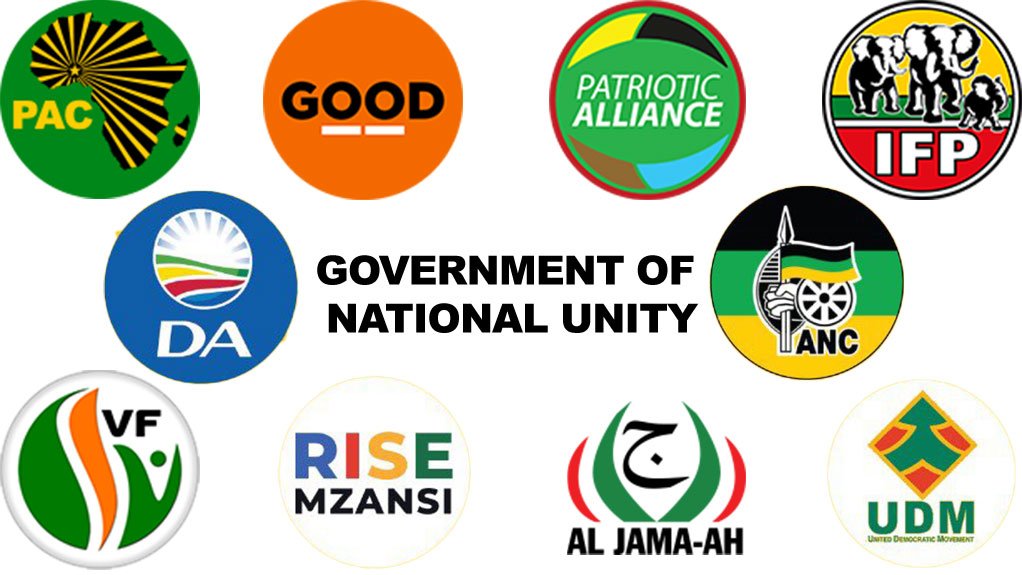
There is yet another question which the required assessment must answer, arising out of the decision to form a Government of National Unity (GNU).
In this document we have tried to explain why electoral support for the ANC has been declining for at least fifteen years.
What the masses of our people have experienced during this latter period has been, among others:
• a declining socio-economic quality of life, with no end in sight.
• a worsening situation with regard to the important matter of safety and
security; and,
• a decline in the quality, including, in some cases, the integrity, of the cadres presented by the ANC to the people as the representatives they should elect.
Obviously, especially in the light of the horrendous 2024 election results, an ANC government would consider and adopt exceptional policies and programmes to address these serious deficiencies.
However, what our country will now have is a GNU led by the ANC.
This means that the public policies and programmes our country will now see and experience, would be what would have been agreed by the ten-party GNU.
Consistent with its established policy of continuously working for a better life for all, the ANC must be very interested that the GNU effectively addresses the two matters of significantly improving the socio-economic quality of life as well as the safety and security of the people.
If the GNU fails in this regard, the population will place the bulk of the blame on the ANC as the leader of the Government, resulting in a further erosion of the popular support of the Movement.
The serious question the ANC must pose to itself is – what proposals will it canvas among its partners in the GNU to ensure that over the next five years, there is actual and sustained improvement in the lives of the people in the important areas we have indicated!
PART 4
Those who stand to benefit most from the creation of a democratic, non-racial, non-exist and prosperous society through the eradication of the legacy of colonialism and apartheid – the success of the NDR – are:
• the black working class;
• the black rural working people;
• the black women;
• the black and white middle strata; and,
• the black youth.
These are the sections of our population the ANC should normally mobilise to engage in action to advance the National Democratic Revolution.
The worst electoral losses the ANC has suffered, including during the 2024 Election, have been among some of these beneficiaries of the NDR, namely:
* the black urban working class; and,
* the black middle strata.
The loss is not matched by any significant increase in popular support of other political parties. This draws attention to the urgent task of the ANC to reach out to these sectors of our society which remain to benefit most from the victory of the NDR to try to strengthen their support the Democratic Revolution.
Our recent experience suggests that the ANC will have to focus especially on those sections which have taken the lead in withholding their electoral support for the Movement. Many in these groups have always been ANC supporters.
The purpose of the engagement of the relevant sections of our population, the motive forces of the NDR, must be: • to educate each of these about the importance of the intended benefits of the NDR;
• to educate each of them about the obstacles and possibility for the realisation of these benefits; and,
• to mobilise them to put pressure or encourage the Government in all three spheres urgently to address the two areas of:
*significantly improving the socio-economic quality of life of the people on a sustainable basis; and,
*radically improving the safety and security of the people.
With regard to the immediate foregoing, it is necessary for the Movement to understand that though it is heavily involved in all three spheres of Government, it also has a responsibility simultaneously to mobilise the masses of the people into action as the motive forces of the National Democratic Revolution!
THE MK PARTY
During the run-up to the 2024 General Election, a veritable chorus developed, singing one song – that the ANC must be brought down to less than 50% of the vote!
A plethora of new political Parties also emerged, and joined the older ones in committing themselves to this same goal.
It would be easy for our Movement to attribute the serious reverse it has suffered to this concerted campaign. However, the election results show that this would be a mistaken conclusion.
This plethora of small parties did not draw that much support, except for the MK Party!
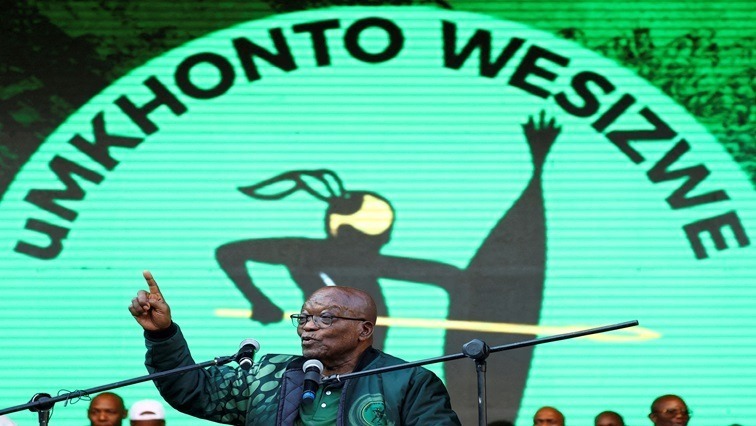
The MK Party is a unique case.
Earlier in this document we reported on the conclusion announced by the Zondo Commission, that then President on the ANC and the Republic, Jacob Zuma, was directly involved in the counter-revolutionary attempt to destroy SARS.
He has now been involved in another effort of the counter-revolution, deliberately to weaken the ANC.
It was exactly for this reason that he chose the name MK, to mislead the ANC support base into believing that the MK Party was the ANC by another name.
It would not be surprising later to establish that Jacob Zuma’s principal supporters used the machinery established under the National Security Management System (NSMS) during the apartheid years, and never fully dismantled, to help the MK Party garner the votes it did in KZN and elsewhere, consistent with the objective of ensuring that the ANC falls below 50% in the 2024 NGE.
The MKP’s revolutionary sounding phrases or some farfetched radicalism is nothing but a smokescreen to lure the unsuspecting masses of our people to join the ranks of counter-revolution, primarily to defeat the party of the revolution and to defeat the revolution itself.
Henceforth Zuma has no further interest in appropriate policies, constructive programmes and vision for the Country as long as he achieves his long held task of destroying the ANC.
STRATEGIC TASKS OF THE ANC
The 2024 Election Results have imposed on the Movement a new but strategic task – to defend the Democratic Revolution and its leader, the ANC.
To implement this strategic task, two of the objectives our Movement will have to focus on without wavering, must be:
(1) to ensure that wherever the ANC serves in Government, at the national, provincial and municipal levels, it turns the page and actually delivers the goods and services expected in each of these spheres of Government and;
(2) to undertake the actual Renewal of the ANC, informed by what the Movement has identified during the last 30 years that the quality of membership of the ANC has deteriorated to an alarming degree, in good measure because of the entry into its ranks of careerists who do not believe in the values and policies of the Movement.
These tasks cannot be taken lightly, adopting the “business as usual” approach, otherwise our Movement as we know it will die and the victory of democratic revolution with remain an illusion, and frankly the betrayal of decades of the struggle.
An urgent non-elective consultative conference is required. This must include not only the branch membership of the ANC and Alliance partners but also, the structures of the mass democratic movement.
Practice and our actions henceforth will tell whether the ANC has the core of revolutionary cadres dedicated to attend to these major objectives, and therefore, contribute to the achievement of the strategic task to defend both the Democratic Revolution and its leader, the ANC!



2 Responses
What stops ANC from each member starting from current President, his NEC and down to the last member re apply each from his /:her Branch, get vetted recommended by branch, then the process escalate to province to National as we renew but those who are implicated to be considered after their cases are cleared.
I submit
The ANC must introduce a law that allow all pensioners from the age of 60 yrs to get grant, people must not be discriminated based on marital status before they can get a state grant. There are thousands of people out there who are not getting SASSA grant because their spouses are working for the state , these is a painful discrimination that some South Africans are facing and the movement expect these people to vote, no it cant be.