
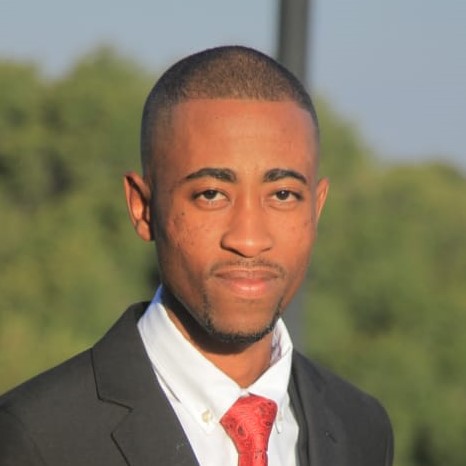

South Africa’s election to the African Union Peace and Security Council (PSC) is more than a diplomatic win in Addis Ababa. It is a statement: Pretoria is reclaiming its place at the centre of Africa’s peace and security architecture.
At a time when coups are no longer shocking, terrorism is mutating across the Sahel, and fragile states are buckling under economic and political strain, the continent needs steady hands. By electing South Africa to serve from April 2026 to March 2028, AU member states have sent a clear message that leadership matters.
The PSC is not ceremonial. It is Africa’s equivalent of the UN Security Council. It authorises peace support operations, imposes sanctions, and shapes continental responses to unconstitutional changes of government. Membership doesn’t only mean influence, but it also means responsibility.
South Africa’s election is a vote of confidence in its diplomatic pedigree. Since 1994, Pretoria has positioned itself as a champion of multilateralism and “African solutions to African problems.” It has mediated conflicts in Burundi, South Sudan, and the Democratic Republic of Congo. It has contributed troops to peace missions. It has consistently framed its foreign policy around continental stability.
But this seat comes at a delicate moment.
Since 2020, Africa has experienced a worrying resurgence of military coups. Violent extremism continues to destabilise entire regions. Civilian populations are paying the price. The AU’s credibility is under strain — criticised for inconsistency and slow responses.
South Africa will now be expected to do more than issue statements. It must help shape decisive, coherent action.

Together with Lesotho, South Africa represents the Southern African region. This matters. Regional balance is essential to the legitimacy of the PSC. But beyond representation, South Africa brings weight — economically, diplomatically, and militarily.
As interim Chair of SADC, Pretoria sits at the intersection of regional and continental security governance. That positioning gives it leverage to bridge gaps between regional blocs and the AU — something the continent has often struggled to achieve. If used strategically, this dual role could strengthen coordination between SADC and the AU, particularly in conflict prevention and early warning systems.
There is no denying the prestige. A PSC seat enhances South Africa’s continental standing. It reinforces its self-image as a normative power — a state that promotes dialogue over force, constitutionalism over coups, negotiation over chaos. Yet prestige without performance is hollow. South Africa must navigate complex political terrain:
- How firmly will it act against unconstitutional changes of government?
- Will it support sanctions consistently, even when geopolitics complicates matters?
- Can it balance non-interference with the responsibility to protect civilians?
These are not theoretical questions. They will define its term.

The AU’s Agenda 2063 speaks of “The Africa We Want” — peaceful, prosperous, and integrated. But peace is the foundation upon which every other aspiration rests. Without stability, development stalls. Without security, integration falters.
South Africa’s election signals that member states recognise the urgency of reinforcing the continent’s peace machinery. It suggests a desire for experienced actors to step forward at a time when instability threatens to normalise itself.
The next two years will test whether Africa’s security architecture can move from reactive crisis management to proactive conflict prevention.
This is South Africa’s opportunity to demonstrate principled leadership — not loud, but effective. Not rhetorical, but strategic. If it uses its seat to strengthen early warning systems, advocate for inclusive political settlements, and reinforce constitutional norms, it will not only elevate its own standing but contribute meaningfully to continental resilience.
The PSC seat is not just a diplomatic achievement. It is a responsibility to act when it matters most.
Africa is watching.

![trump and iran war in middle east (isreal) [Image: Times Now News]](https://gsmn.co.za/wp-content/uploads/2026/03/153887693.png)
![AI image of Ukraine's Zelensky and US Donald Trump and Russia's Putin [Image: Telegraph]](https://gsmn.co.za/wp-content/uploads/2026/03/TELEMMGLPICT000441536366_17587260184330_trans_NvBQzQNjv4BqqVzuuqpFlyLIwiB6NTmJwfSVWeZ_vEN7c6bHu2jJnT8-1.webp)
![MILES DAVIS [Image: The Audiophile Man]](https://gsmn.co.za/wp-content/uploads/2026/03/miles1967.jpg)
![PAUL MASHATILE AND CHINA VP HAN ZHENG [Image: South African Government via Facebook]](https://gsmn.co.za/wp-content/uploads/2026/03/image-162.png)


![Manas Tshungu - missing person [Image: Supplied]](https://gsmn.co.za/wp-content/uploads/2026/03/Screenshot_34.png)

![AI image of US Donald Trump and Israel Netanyhu [Image: SBS, Getty, AAP]](https://gsmn.co.za/wp-content/uploads/2026/03/download-1.avif)

