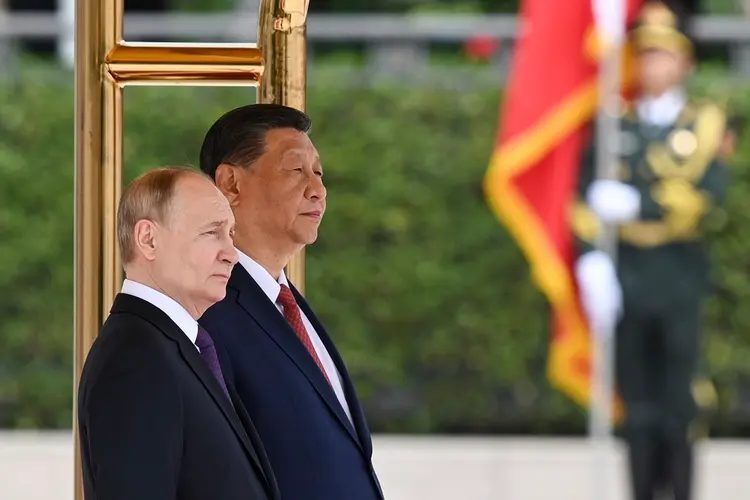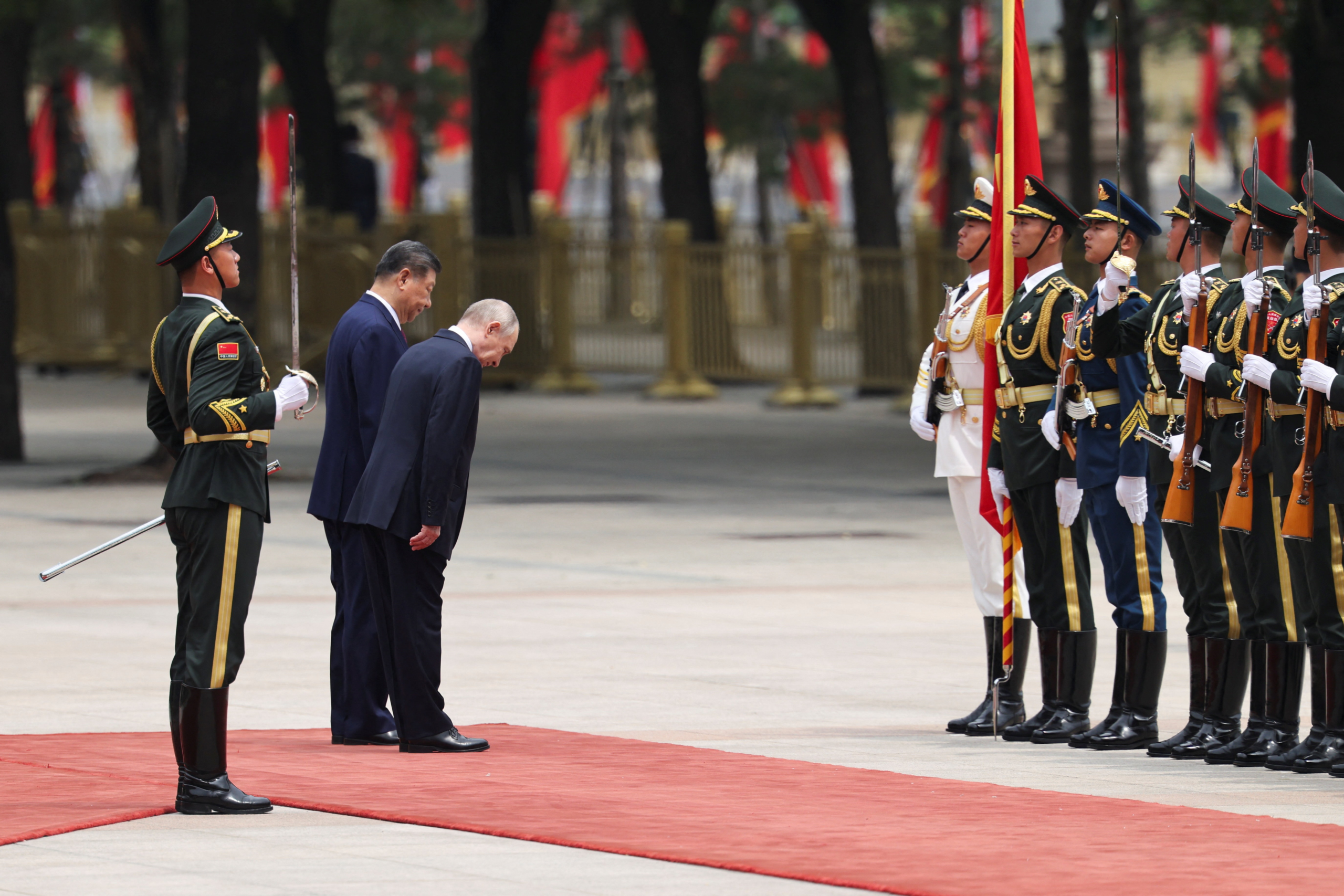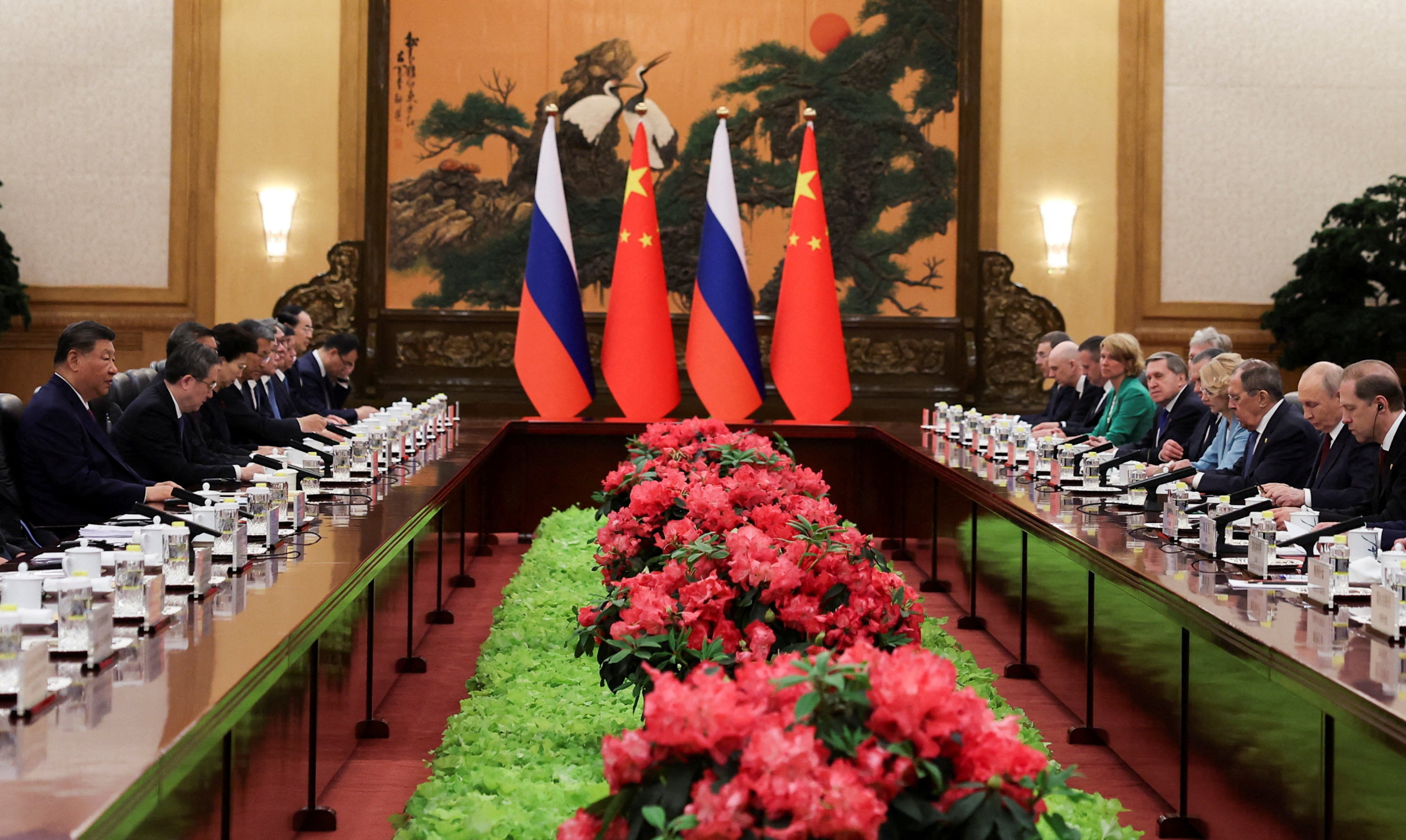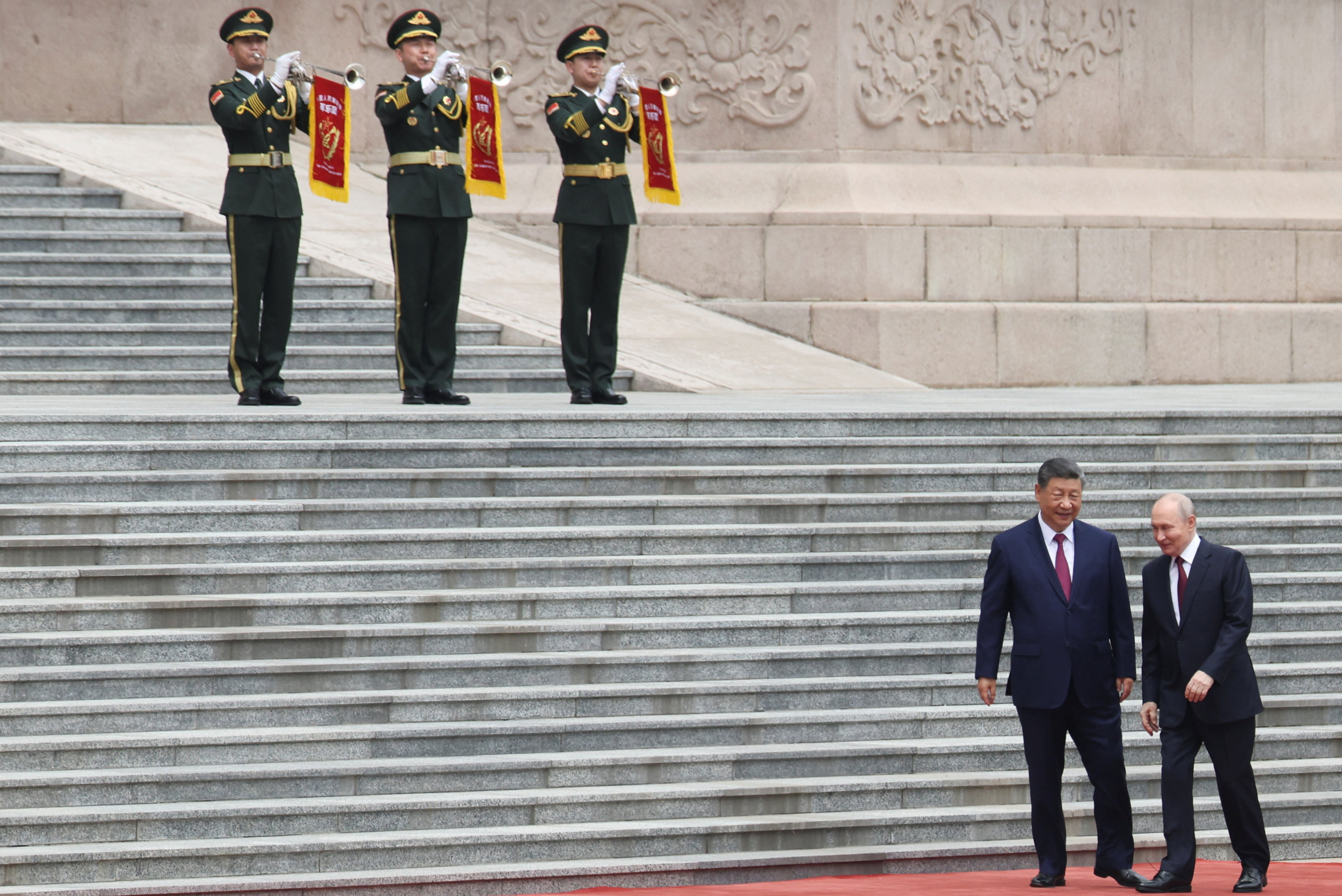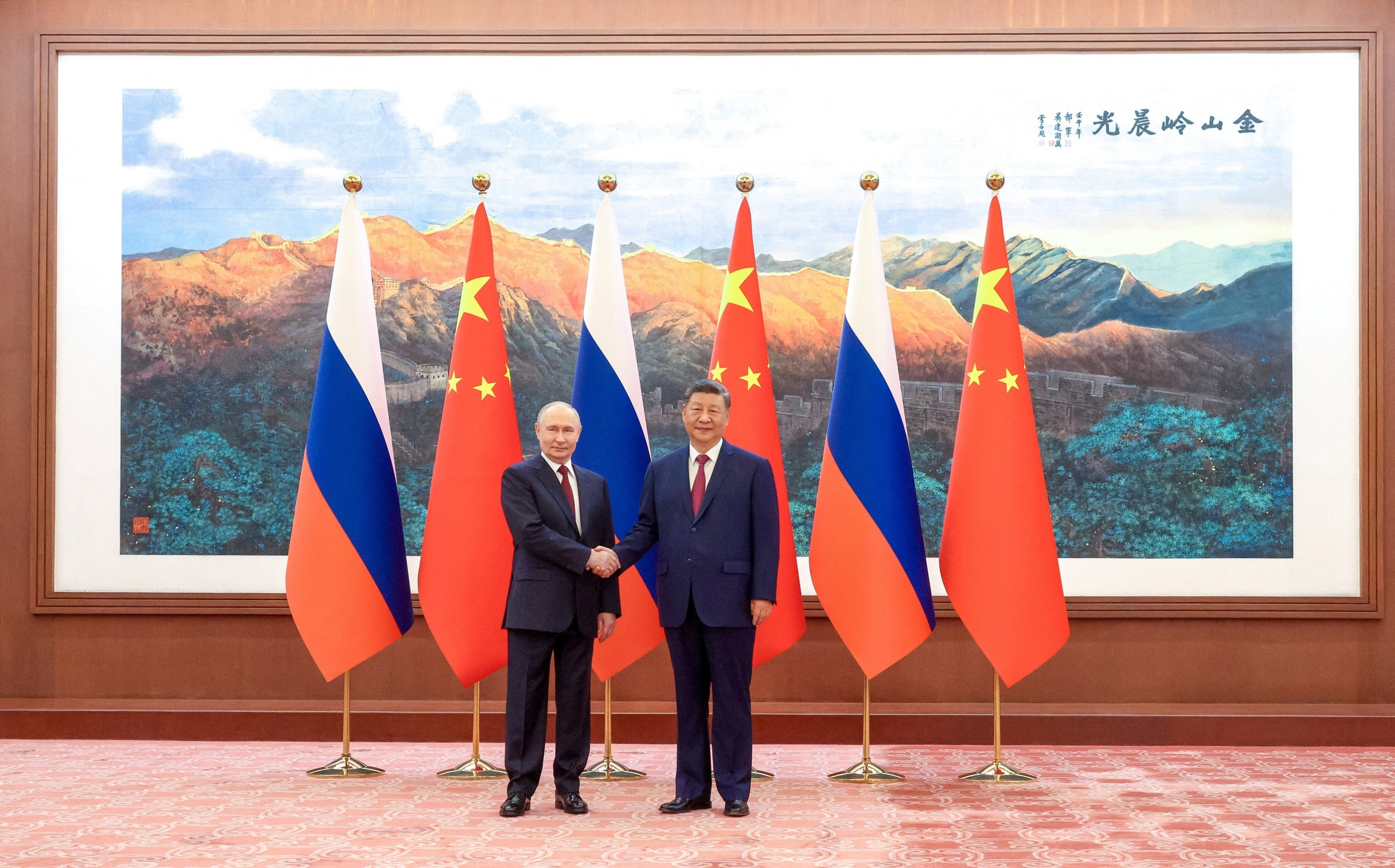
A mere week after US President Donald Trump flew out of Beijing following a glamorous rare state visit – the first in a decade by a US president – China proved to be a modern-day mecca for crisis diplomacy as Russian President Vladimir Putin stepped in.
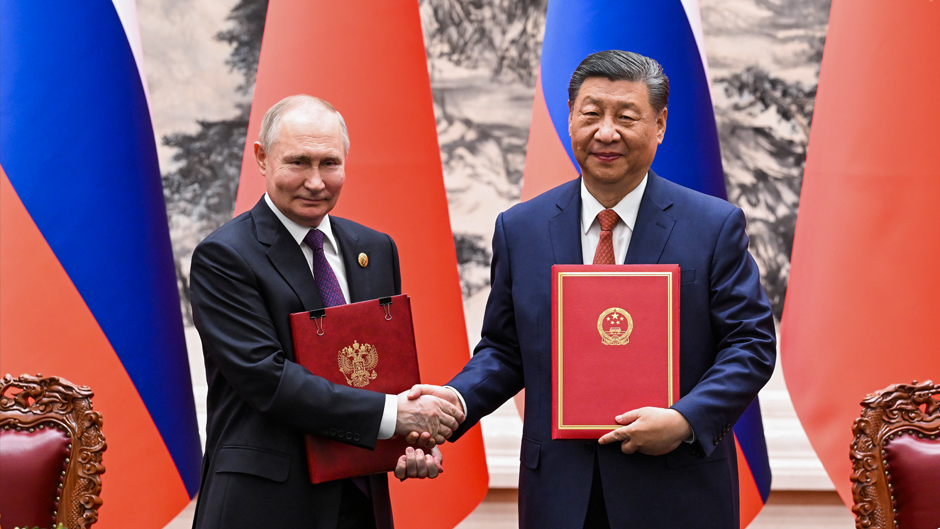
The contrast in both mood and expectation was palpable in every corner of the universe. Whereas Trump was in China to reset fragile bilateral relations, Putin sat down with his Chinese counterpart President Xi Jinping to cement all-weather ties that has grown to symbolize an anti-thesis to the US-led Western hegemony.
It has thus been a fortnight of high-level diplomacy by arguably the world’s three most powerful leaders. However, that Beijing was the meeting point that marked a significant shift in global power relations. If anything, it confirmed, if there was any doubt, the meteoric rise of China in international affairs.
The world’s second biggest continues to host a flurry of world leaders seeking a special and private audience with the Chinese president. The world is indeed turning to China to solve intractable global challenges that traditional multilateral institutions are sadly no longer able to resolve. The spectre is, in my humble opinion, a damning confirmation and acceptance of the rise of unilateralism that has thrown the world order in a tailspin.
But it is China-Russia relations that doubtlessly caught the eye of geopolitical followers this week. Putin was quick to point out that the special bond that continues to grow between Beijing and Moscow need not scare the West, or anyone for that matter. Their bilateral ties are primarily seized with matters of mutual interest only, if not in the main.
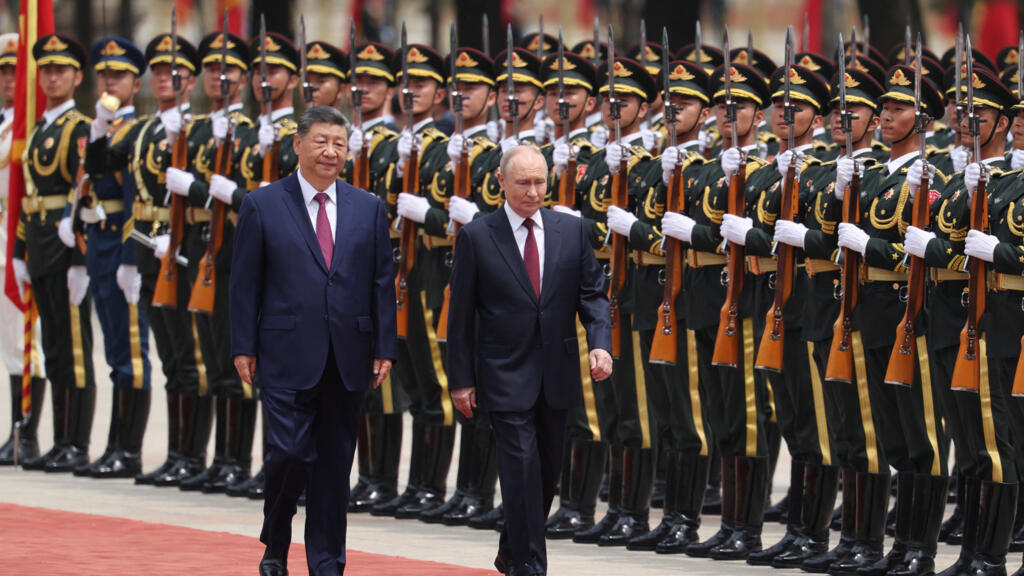
The two nations will continue to work together “in the name of peace”, Putin said. They are committed to sovereign and independent international policy, “working together to stabilize the international situation”, Putin added.
That the two nuclear powers have remained steadfast in their pro-Global South and South-South relations stance, there can be doubt about the threat of their cooperation to the domination of the West in international relations.
Trump implored Xi to prevail over a fellow BRICS member Iran to re-open the Strait of Hormuz. Thus far, it appears as though the appeal has fallen on deaf ears, although global diplomacy can be characterised by the sluggish idiosyncrasy.
The take-away from the Xi-Putin meeting are interesting. Xi described their meeting as “deep, friendly and productive”. He said their discussions centred on a broad spectrum of international matters.
![US President Donald Trump shakes hands with China's President Xi Jinping at the Great Hall of the People in Beijing. [Kenny Holston/Pool via AFP]](https://gsmn.co.za/wp-content/uploads/2026/05/image-66.png)
China and Russia are credited by international relations scholars as the epitome of a new world order. At the heart of this new global force for change lie “political trust” between the two nations that has been inadvertently been driven into a close proximity by ubiquitous Western enmity.
Since the outbreak of the Ukraine war four years ago, Russophobia across the West has reached new heights. However, in an international world architecture marked by the phenomenon of globalization that is characterised by visible inter-dependence and inter-connectedness – economic hardships have gradually forced the West to loosen their sanctions on Russian oil and gas.
The UK, which has been one of the key factors behind Ukraine pulling back from signing a truce with Russia two years ago in Istanbul, is the latest European powerhouse to ease restrictions on Russian oil.
Economics have their own unique way of teaching politics that human beings need each other regardless of their ideological differences. Humans are known to have no patience with hunger, starvation and wanton hardships.
The economic and political isolation has failed dismally, thanks in large measure to China, which has led the Majority World in unbreakable economic and political cooperation with Russia despite Western threats for reprisals.
Russia’s economy has remained resilient and steadfast in spite of sanctions. In fact, the economy has grown amidst the war with Ukraine.
Despite difficult international situation, Russia-China trade turnover exceeds 200 billion US dollars. According to Xi, trade turnover between January and April this year alone grew by 20%, “which was not an easy feat”, he said.
Between 2015 and 2026, Russia-China trade surged by over 256%, which is an increase from 64 billion US dollars to 228 billion US dollars.
According to Putin, this upward economic trajectory will continue to rise ferociously. Among other key factors for this rise will be Russia’s ongoing modernization of key eastern railways – Trans-Siberian and Baikal-Amur.
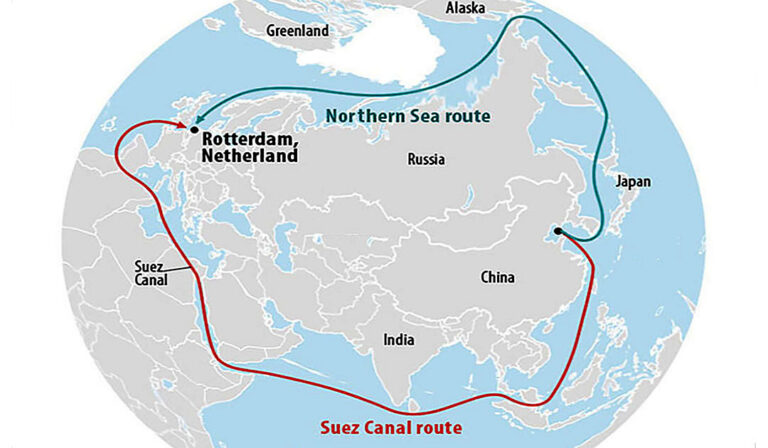
“We are working on the Trans-Arctic transport corridor, including its main thoroughfare – the Northern Sea Route,” Putin said.
This means Russia is positioning the Northern Sea Route as an alternative passageway between Europe and Asia, thereby rivalling the traditional Suez Canal route.
Russia is also racing to ensure energy security for China. According to Putin, Russian reactors are set to empower China’s economy with cheap and clean energy.
“At the Xudapu nuclear power plant, Russian-designed reactors are being completed,” Putin said, before adding: “They will contribute greatly to China’s economy, supplying Chinese businesses and households with cheap and clean energy.”
High-value-added goods so far this year alone have yielded trade turn-over of almost 240 billion US dollars, according to The Kremlin. Of greater significance, all export-import operations are now done in Russian Rubles and Chinese Yuan.
Putin stated that Russia and China “have built a sustainable system of mutual trade, protected from negative trends in global markets”.
In the greater scheme of things, this is part of the “de-dollarization” strategy that has been officially adopted by BRICS despite threats of a backlash by the Trump administration. Mutual trade between China and Russia is protected against any external influence.
In a swipe to the US, Xi said “Unilateralism threatens to bring us back to the new law of the jungle,” he said. He added that China and Russia will champion “a concept of a single fate for humankind”. He said this will counter unilateralism, protect the UN authority and push back against the revival of Nazism and fascism.