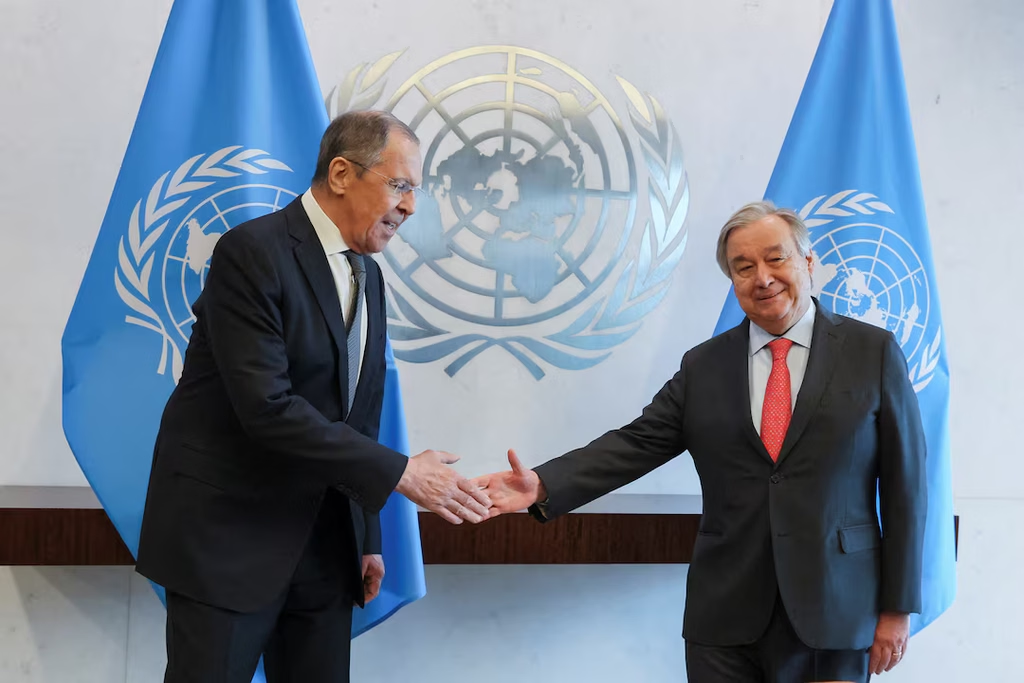
SEEKING SOLUTION: Russian Foreign Affairs Minister Sergey Lavrov has had talks with the UN Chief Antonio Guterres about maritime security
International maritime law rests on a fundamental proposition: the seas are essential to international commerce and communication, and lawful maritime navigation should not be arbitrarily obstructed. The principle is particularly important at strategic chokepoints such as the Strait of Hormuz, the Red Sea and the Black Sea, where disruption can affect global energy, food and fertiliser supplies.
The contemporary maritime environment, however, is increasingly characterised by blockades, sanctions, vessel interdictions, military attacks, drone warfare and restrictions imposed in the name of national security. These actions raise difficult questions concerning the limits of state power at sea and the protection afforded to merchant vessels and civilian maritime commerce.
The issue is not whether states possess legitimate security interests. They plainly do. The question is whether measures adopted in pursuit of those interests remain consistent with international law, and whether their consequences disproportionately interfere with the maritime rights and economic interests of third states.
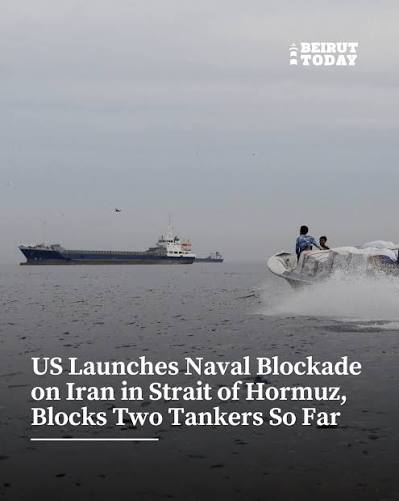
This question has become particularly urgent in 2026. The United States has openly announced and implemented a naval blockade against maritime traffic entering and leaving Iranian ports. US Central Command stated that its forces would enforce the blockade against vessels transiting to or from Iranian ports and coastal areas, while also allowing certain humanitarian vessels to pass. At the same time, the United Nations Secretary-General has called for the restoration of full freedom of navigation in the Strait of Hormuz and urged all parties to cease attacks and de-escalate.
These developments illustrate the central problem examined in this article: when does maritime security become unlawful interference with international maritime commerce?
The International Legal Standard
The United Nations Convention on the Law of the Sea (UNCLOS) provides the central legal framework for navigation. Of particular importance are the rules concerning international straits. Article 44 provides that states bordering international straits must not hamper transit passage and that there shall be no suspension of transit passage.
The principle is significant for the Strait of Hormuz because the waterway is not merely a national maritime space. It is an international commercial artery connecting the Persian Gulf with the wider Indian Ocean.
The broader maritime-security framework is complemented by the International Maritime Organization (IMO). The SOLAS Convention’s Chapter XI-2 incorporates the International Ship and Port Facility Security Code (ISPS Code), creating a mandatory framework for governments, ports and shipping companies to assess and manage maritime-security risks.
International law nevertheless recognises circumstances in which states may lawfully restrict maritime activity. Sanctions, customs enforcement, criminal interdiction, naval warfare and blockades can all have different legal foundations. They should therefore not be treated as interchangeable.
A naval blockade, for example, is fundamentally different from an economic embargo. Similarly, detaining a vessel pursuant to a domestic court order is legally different from capturing an enemy merchant vessel during an international armed conflict.
This distinction is essential if maritime-law analysis is to remain credible.
Strait of Hormuz: Blockade and Freedom of Navigation
The Strait of Hormuz provides the most immediate contemporary example.
In July 2026, CENTCOM announced that US forces would resume a naval blockade against vessels entering and leaving Iranian ports. It subsequently reported disabling a Curaçao-flagged oil tanker, the Belma, after alleging that the vessel ignored repeated warnings and attempted to reach Kharg Island.
The United States presents its actions as necessary measures to enforce the blockade and protect regional and international security. Iran, meanwhile, has undertaken attacks against shipping and threatened restrictions affecting maritime traffic. The UN Secretary-General has condemned the escalation by all sides and called for freedom of navigation to be restored.
The legal question is therefore not simply whether Iran or the United States has a legitimate security concern. It is whether the particular restrictions imposed on merchant shipping comply with the applicable rules of international law.
The answer depends on factors including the legal status of the conflict, the nature of the vessel, its cargo, its destination, the geographic area of enforcement, the necessity and proportionality of the action, and the legal authority relied upon by the enforcing state.
This is precisely why the international community requires transparent legal standards rather than unilateral assertions.
The consequences are also global. The WTO has reported that the Hormuz conflict severely disrupted international fertiliser trade and warned that certain African and Asian economies are particularly vulnerable to resulting shortages and price increases.
A dispute between states in the Gulf can therefore become a food-security problem in Africa.
Cuba: Embargo, Blockade and the Importance of Legal Precision
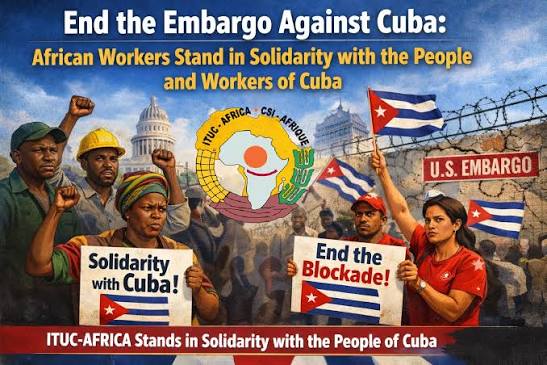
The long-standing US measures against Cuba provide another important example, although they should be described accurately.
The United States has maintained an extensive economic, commercial and financial embargo against Cuba for decades. The UN General Assembly again adopted a resolution in 2025 calling for an end to the US embargo, by a vote of 165 to 7, with 12 abstentions.
However, an economic embargo should not automatically be described as a naval blockade. The two concepts have different legal characteristics.
The Cuban example is nevertheless relevant because it demonstrates how economic measures imposed by a powerful state can affect a third country’s access to international commerce and finance over an extended period.
For an article concerned with maritime law, the lesson is broader: restrictions on trade may operate through financial institutions, insurance, shipping companies, ports and vessel operators even where there is no conventional naval blockade.
This distinction becomes especially important when considering sanctions against Russia.
Interdiction and the Use of Force at Sea
A further challenge arises when states intercept or attack vessels suspected of transporting illicit goods.
Recent US military operations against vessels in waters associated with anti-drug enforcement illustrate the difficulty. In one recent case involving vessels associated with Ecuador, the US and Ecuadorian authorities maintained that the vessels were connected to drug trafficking, while relatives of some crew members disputed the allegations and claimed the men were fishermen. The available reporting indicates that the factual circumstances remain contested.
This illustrates a fundamental principle: an allegation that a vessel carries illicit cargo does not, by itself, resolve the question of whether the use of military force against that vessel is lawful.
There must be a legal basis for the interception and, where force is used, the force must satisfy the applicable legal requirements.
The same principle applies to vessels associated with sanctions evasion. Enforcement may be legitimate in circumstances authorised by applicable domestic and international law. But sanctions enforcement should not automatically be equated with an unrestricted right to capture merchant vessels wherever they may be found.
Russia, Ukraine and Attacks on Merchant Shipping
MISGUIDED: Russia argues that Western sanctions need to be replaced by genuine dialogue
The Black Sea presents an even more complex environment because maritime insecurity occurs within an ongoing armed conflict.
The IMO has explicitly condemned attacks on civilian merchant vessels in the Black Sea and Sea of Azov, stating that such attacks endanger seafarers, threaten navigation, disrupt global supply chains and undermine the principles on which international shipping depends.
Recent attacks have involved both Russian and Ukrainian forces. Commercial vessels have been damaged by drones and other attacks, while Russian attacks have also affected Ukrainian ports and export infrastructure. Reuters reported in September 2026 that commercial tankers and cargo ships navigating the region were adopting makeshift anti-drone defences because of increasing attacks from both sides.
The legal distinction between military and civilian targets is therefore crucial. A vessel does not become a legitimate military target simply because it sails under the flag of a state involved in an armed conflict. Where merchant vessels and civilian seafarers are not participating in hostilities, the international community has a strong interest in their protection.
The IMO’s position is unequivocal: parties to conflicts should refrain from actions endangering innocent merchant shipping and respect international law.
Detention and Seizure of Russian Vessels
The question of Russian vessels captured or detained in Western jurisdictions is similarly complex.
Not every seizure constitutes a “capture” under the law of naval warfare. A vessel may be detained pursuant to sanctions legislation, arrested pursuant to a judicial order, or seized for purposes of enforcing a judgment.
A recent Norwegian case illustrates this distinction. Norwegian authorities seized the Russian research vessel Professor Molchanov in Svalbard following a court process connected with enforcement of a compensation award obtained by Ukraine’s Naftogaz. Russia condemned the seizure as unlawful, while the Ukrainian side relied upon the underlying international legal award.
Whatever the ultimate legal merits of that particular case, it demonstrates why maritime-law discussions must distinguish between judicial enforcement, sanctions enforcement and wartime capture.
The wider principle should be that states exercising jurisdiction over foreign vessels must identify the legal basis for their action and provide appropriate procedural safeguards.
The Cape of Good Hope and South Africa
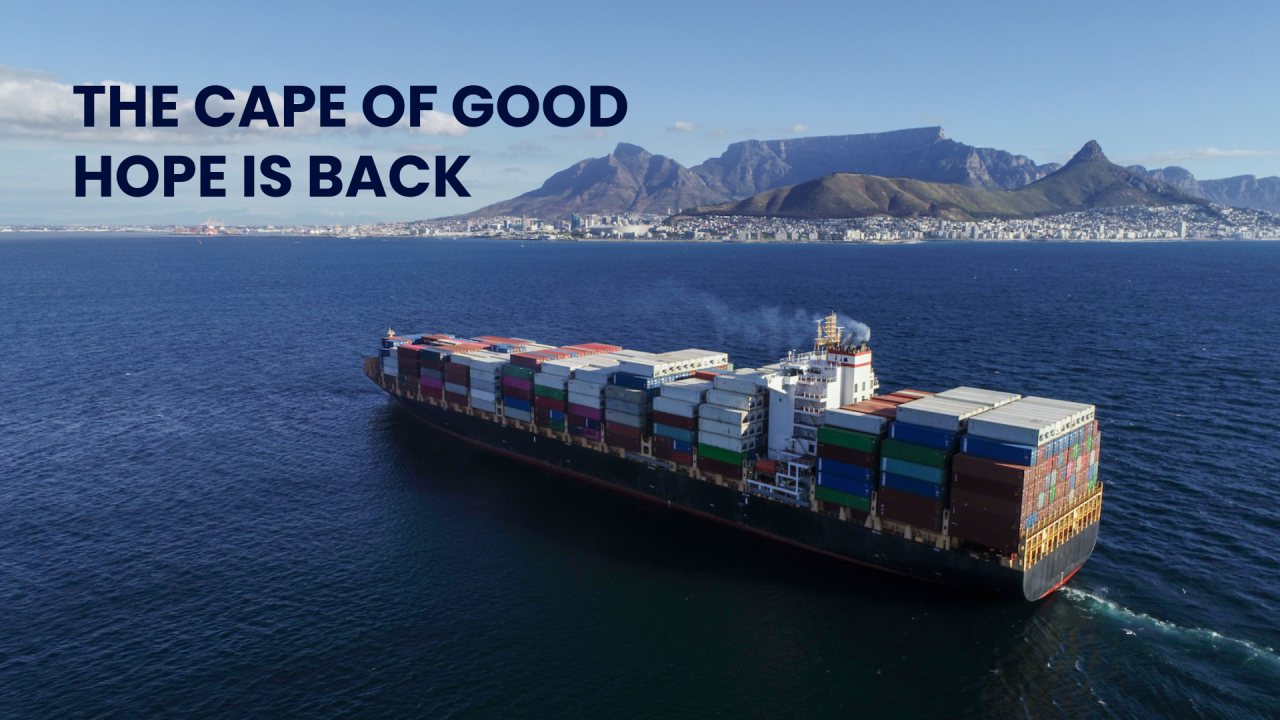
VITALLY IMPORTANT: Cape of Good Hope has become the world’s most important maritime route following global conflict elsewhere
The disruption of traditional maritime routes is increasingly affecting South Africa directly.
When vessels avoid the Strait of Hormuz, the Red Sea or other insecure routes, shipping companies may redirect vessels around the Cape of Good Hope. The alternative route can add substantial distance, fuel consumption, insurance costs and voyage time.
This creates both opportunities and responsibilities for South Africa.
The country’s geographical position gives its ports and maritime services increased strategic importance when global shipping is rerouted around the Cape. At the same time, increased traffic creates additional requirements for maritime surveillance, port security, search and rescue, environmental protection and protection against organised maritime crime.
South Africa should therefore avoid treating maritime-security disputes as distant geopolitical matters. The country’s position on the Cape route means that disruptions elsewhere can have direct economic and strategic consequences.
What Should South Africa Do?
South Africa should adopt a principled and legally grounded approach.
First, it should systematically document alleged violations affecting South African vessels, cargoes, seafarers or maritime interests.
Second, alleged violations should be referred to the appropriate international institution according to their legal character.
The IMO is the natural forum for matters concerning the safety and security of international shipping. UNCLOS dispute-settlement mechanisms may be relevant to disputes concerning navigation and maritime rights. The United Nations system is appropriate for questions involving international peace and security, armed conflict and threats to international stability. The WTO may be relevant where the underlying dispute concerns trade restrictions falling within WTO agreements.
South Africa should therefore resist the temptation to treat any single organisation as a universal maritime-law enforcement body.
Third, South Africa should advocate for the principle that merchant shipping and civilian seafarers should not become collateral damage in geopolitical conflicts.
Implications for the Global South
The consequences for the Global South are substantial.
First, maritime disruption increases transport and insurance costs.
Second, longer routes increase fuel consumption and therefore the cost of imported goods.
Third, energy disruptions can feed directly into food production because modern agriculture depends heavily upon energy and fertiliser.
Fourth, developing countries frequently have less fiscal capacity to absorb global price shocks than wealthy states.
Finally, the Global South risks becoming an unintended economic casualty of conflicts in which it has no direct participation.
The WTO’s analysis of the Hormuz crisis provides a contemporary example: fertiliser trade has been severely disrupted and vulnerable African and Asian economies face heightened exposure to shortages and price increases.
Conclusion
International maritime law cannot prevent every geopolitical conflict, but it provides essential principles governing navigation, maritime security and the protection of civilian shipping.
The current crises in Hormuz, the Black Sea and the Red Sea demonstrate that these principles are under increasing pressure. Blockades, attacks on merchant vessels, sanctions enforcement and maritime interdictions may sometimes have legitimate legal foundations, but those foundations must be transparent and subject to international scrutiny.
The central principle should be simple: maritime security must protect international commerce rather than become an instrument for unnecessarily disrupting it.
South Africa and other Global South states have a particular interest in defending this principle. Their economies are vulnerable to increases in shipping, energy, food and fertilizer costs caused by conflicts in which they are not parties.
The international community should therefore strengthen mechanisms for reporting and investigating alleged violations of maritime law and insist upon the protection of civilian merchant shipping. The objective should not be to shield any particular state from legitimate accountability, but to ensure that geopolitical competition does not erode the international maritime order upon which global commerce depends.