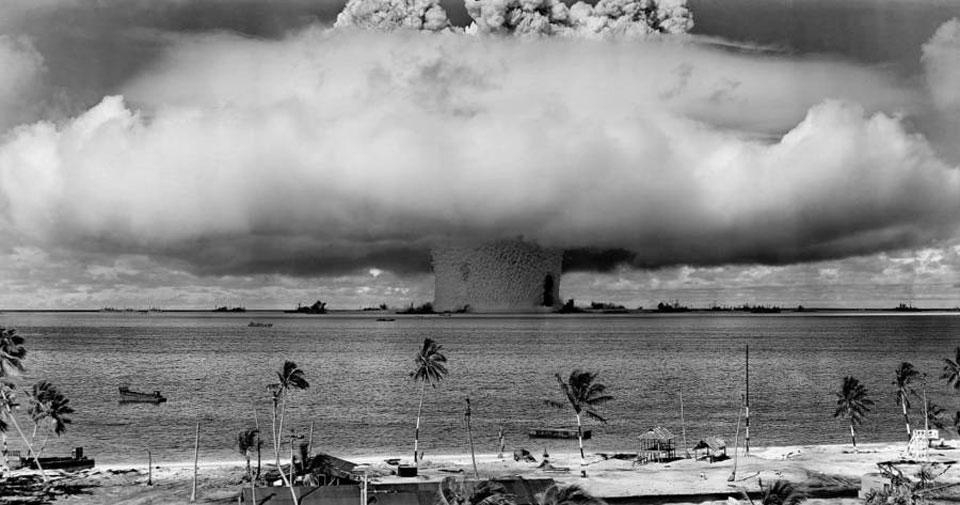
On yesterday’s 81st anniversary of the dropping of the atomic bomb on Nagasaki, its mayor, Shiro Suzuki, said: “The theory of nuclear deterrence is extremely dangerous and fragile. Nuclear weapons are not a ‘necessary evil’ but an ‘absolute evil,’ and can never coexist with humanity…To all leaders of the nuclear states and nations relying on nuclear deterrence, you must face the reality that the more you rely on nuclear deterrence, the more you increase the risk of a nuclear war.”
The International Peace Coalition discussion of this past Friday hosted an extraordinary discussion, not only of what the true human cost of the use of nuclear weapons has been, and may soon be, but also of the higher idea of humanity that must supplant the bestial notions underlying the very premise that nuclear weapons could and should be used for any purpose. One of the highlights of the discourse was an in-depth discussion of the official evaluation supplied by the American Strategic Bombing Survey of 1946:
“Based on a detailed investigation of all the facts, and supported by the testimony of the surviving Japanese leaders involved, it is the Survey’s opinion that certainly prior to 31 December 1945, and in all probability prior to 1 November 1945, Japan would have surrendered even if the atomic bombs had not been dropped, even if Russia had not entered the war, and even if no invasion had been planned or contemplated.” Pope Leo XIV’s outlook on the matter of war, as expressed in statements yesterday, and also last year regarding nuclear weapons, is a welcome exception to the moral bankruptcy and cultural despair that contend that “war”—which now, once it becomes global, means thermonuclear war, either by design or miscalculation, in fact—”is the only answer.”
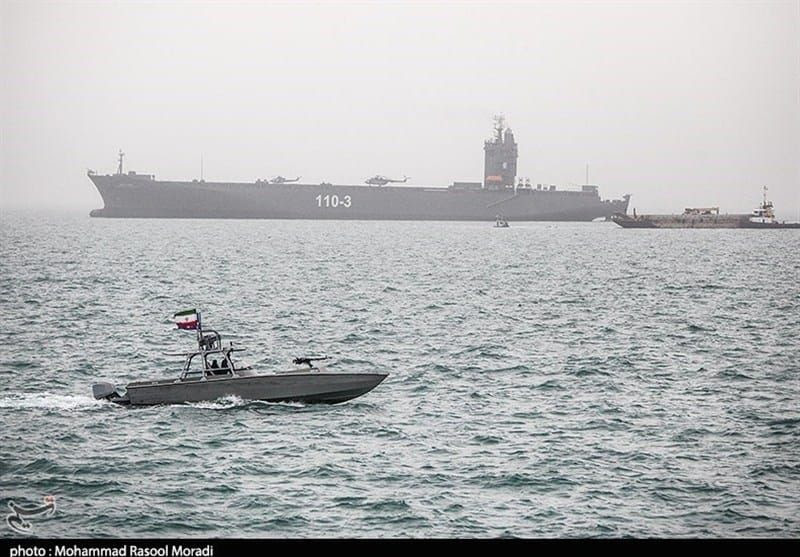
The daily, creeping convergence between the NATO-Russia war in Ukraine, and the Israel/U.S “crusader war” against Iran, could combust, if diplomatic solutions are not soon found, in multiple mushroom clouds. New strategic alliances that are being formed for one purpose, such as that just announced among Turkey, Saudi Arabia and Pakistan, may find themselves deployed for another, unanticipated purpose, for which they were neither designed nor intended. Call it “tactical.”
Call it “limited.” The overwhelming risk to humanity posed by the possible use of thermonuclear weapons through their proliferation and deployment—even by a Japan that is constitutionally prohibited from doing so—must compel us to a dialogue of nations, not only to walk back from the brink, but to chart another path entirely.
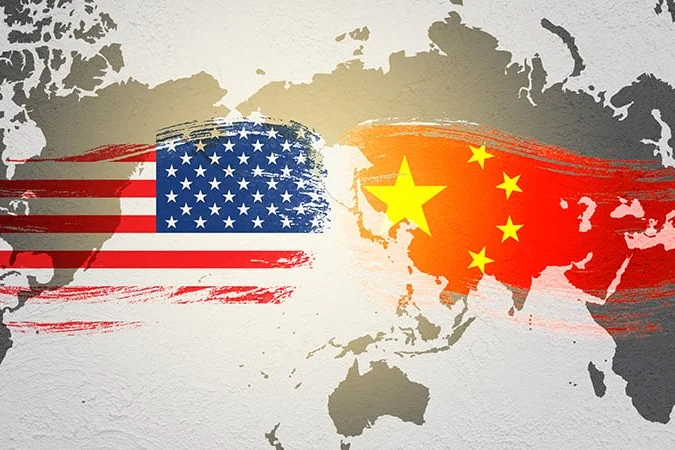
The letter, now being circulated by Veterans For Peace, Pax Christi, the Schiller Institute and many other organizations and individuals, contains a plea for a higher-order diplomacy, similar to that carried out by Pope St. John XXIII, Nikita Khrushchev and John F. Kennedy in defiance of planetary extinction in 1962. Can the present leaders of Russia, China, the United States and other nations rise above the level of current history, in the service of universal history?
There is, in fact, a fundamental disagreement about the very idea of humanity itself—and humanity’s advancement through the science of physical economy in particular—that is the underlying reason for the world’s present dilemma. For example, what does Benjamin Netanyahu mean by a “Super-Sparta economy,” as proposed in his September 15, 2025 speech at a conference of the Accountant General of the Israeli Ministry of Finance?
As Lyndon LaRouche pointed out, in his book There Are No Limits To Growth, “It is from the philosophical outlook typified by Lycurgus’ Sparta, and (the) evil creator of the Spartan model, the temple of the Cult of Apollo at Delphi, that modern Malthusianism and neo-Malthusianism are produced.”
Is it possible, for example, that the real importance of H.R. 219/S.R. 1217, now being debated in the United States Congress regarding the de facto merger of the Israeli and US defense sectors, that it is not something being done on behalf of “the Zionist lobby” alone, but for the creation of a “super-Sparta” Allgemeine SS apparatus that would be prepared to act as a kind of “park ranger for the human race,” to cull the “human herd” of the undesirable poor, to implement the reduction of the human race by 6 billion—a genocide for which thermonuclear weapons are an essential ingredient?
The recent, sudden release a week ago of “a new study” on population, “Achieve Sustainability by Easing Population to 4 Billion by 2200,” was the “soft cop” variant on a “hard cop” theme earlier screamed from the pages of the New York Post and other outlets back on May 26 of this year:
“Human population could collapse and be halved in just 40 years, chilling doomsday study reveals.” That article contained the following absurdity, which only systems analysts could believe: “The research—published in Chaos, solitons and fractals—reached its grim prediction after analyzing 12,000 years of human population growth—and suggested that humanity’s growth over the last 50 years could be entirely wiped out by 2064.”
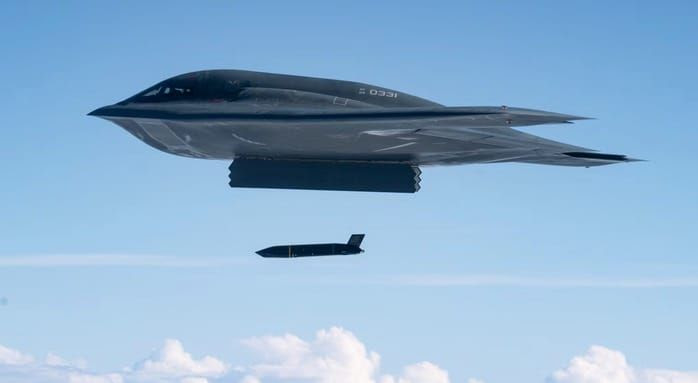
World population is presently projected by 2064 to be just over 10 billion people, so the number by which population would be reduced is actually six billion, not 4 billion-plus. The ‘Sustainable Development,’ “no-coercion, just-a-suggestion 4 billion by 2100” model also proposes reducing the population from the United Nations’ present projection of 10.9 billion by some six billion people. So we ask: Is “tactical nuclear war” seen, as Eldridge Colby spoke of it last Wednesday, as a “credible option” for use in the Asia theater, not because China threatens war, but because Asia is the present center of world “overpopulation”?
This is not the world the BRICS nations believe in, nor the nations of Africa, Asia or South America desire. The world in fact needs more, not less people. Limited resources are not the problem; after all, nature itself knows of no such thing as “natural resources.” So-called “natural resources” are created through the ingenuity of humans, largely through qualitatively more advanced uses of fire and combustion.
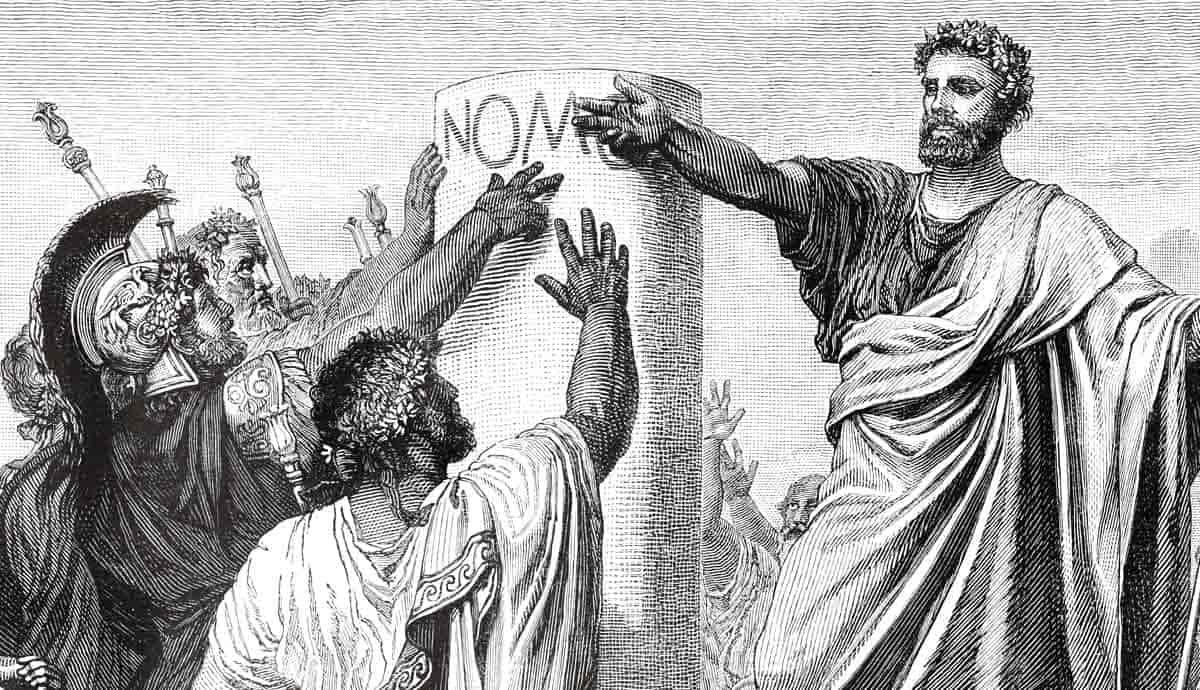
The higher conception of humanity, and economy, that prevails in this world is not that of Lycurgus of Sparta, but of the poet-legislator, Solon of Athens. Friedrich Schiller, in his historical study “The Legislation of Lycurgus and Solon,” writes:
“The condition of the Athenian people at that time was lamentable in the extreme. One class of people possessed everything, the other, on the other hand, nothing at all; the rich mercilessly repressed and exploited the poor.… For the sums they borrowed, they had to pay immense interest, and if they did not pay on time, they were first forced to sell even their lands to their creditors. When they had nothing more to give, and yet had to live, they were forced to sell their own children as slaves, and finally, when this recourse, too, was exhausted, they took credit, secured on their own persons, and had to accept being sold by their creditors as slaves… The first act, with which he began his work, was the famous edict, called the seisachtheia, or the release, whereby all debts were annulled, and it was forbidden at the same time, that in the future anyone be permitted to borrow on his own person.”
The Ten Principles for A New Security and Development Architecture, and the LaRouche Oasis Plan are the realization of the physical economy, through statecraft, of the mission of Solon. Instead of frying people with bombs, the true importance of thermonuclear power is in what President Dwight Eisenhower, who opposed dropping the bomb on Japan, called “Atoms For Peace.”
The re-direction of the immense human resources deployed for war into the field of thermonuclear fusion research could result, probably well before 2064, in the achievement of controlled thermonuclear reactions—fusion power—that would make burning fossil fuels a thing of the past. With such power, the world could sustain tens of billions of people. Humanity, freed from the poverty of self-induced energy scarcity, could also reach, in the next century, all of the inner, perhaps even the outer reaches of our solar system. We could become a first-order civilization, traveling around our solar system, with aspirations to second order (galactic travel) and third order (inter-galactic) stature in a clearly foreseeable future.
We need not be alive later, as individuals, to participate in that future. We need to imagine that future now, and act to realize it, in order to not destroy it through miscalculation or moral negligence in multiple mushroom clouds now, or soon. The dignity of man—Magnifica Humanitas—is our jumping-off point for the diplomacy of survival. As JFK said at American University, “Too many of us think (peace) is impossible. Too many think it unreal. But that is a dangerous, defeatist belief. It leads to the conclusion that war is inevitable—that mankind is doomed—that we are gripped by forces we cannot control. We need not accept that view….. No problem of human destiny is beyond human beings.”