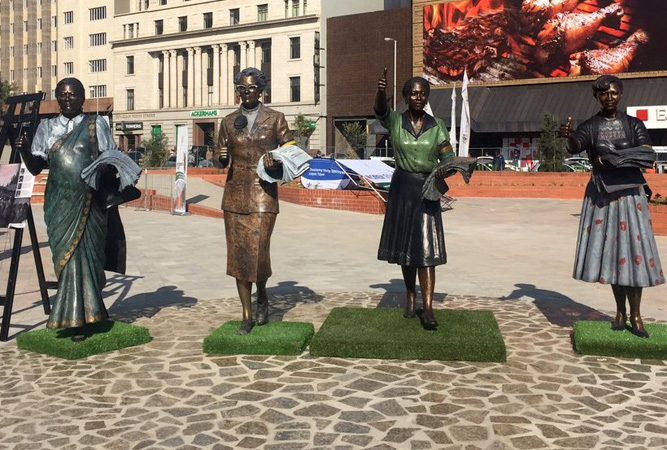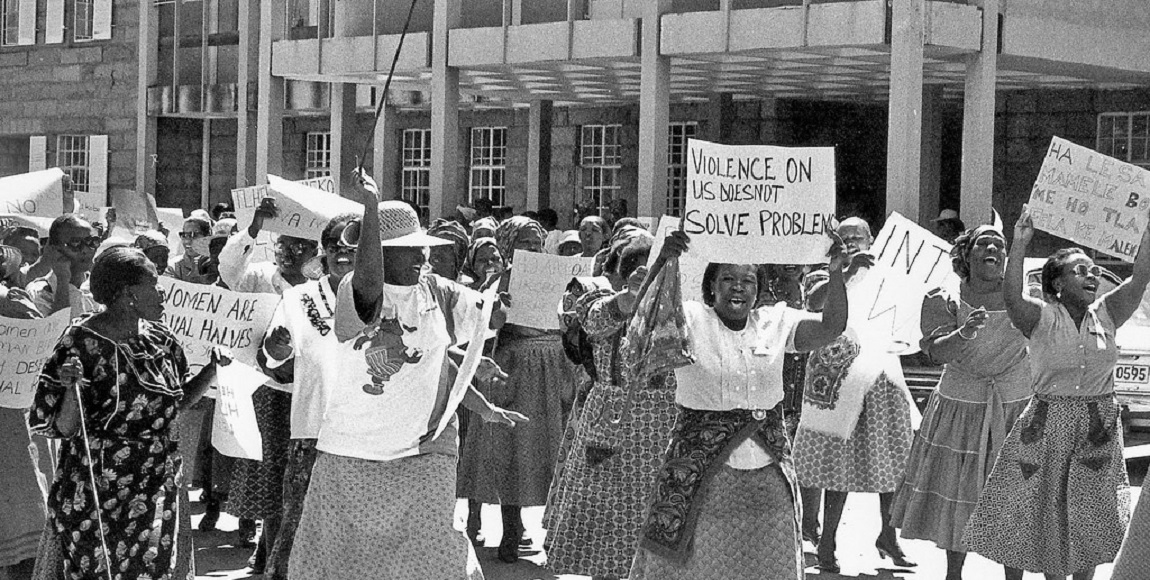
This August marks the 70th anniversary of our National Women’s Day, when over 20 000 women stood shoulder to shoulder outside the Union Buildings in defiance of apartheid’s barbaric pass laws. They did not march for applause, annual commemorations or symbolic gestures. They marched because injustice had become unbearable. Seventy years later, the uncomfortable question is whether today’s South Africa has truly honoured the legacy they fought so fiercely to leave behind.
If we are honest, the answer is no.
The women of 1956 did not march so that future generations could inherit equality in legislation but inequality in reality. They marched because they believed South Africa could become fairer, safer and more just. They marched because they understood that the measure of any nation is found in how it treats its most vulnerable.
Yet, seventy years later, millions of South African women continue to navigate a country where opportunity remains unequal, safety is precarious and justice is too often reserved for the privileged rather than guaranteed for all.
Today, more than half of South Africa’s households are headed by women. They are raising children, caring for elderly relatives, stretching every rand, running households and holding communities together while carrying an economy that continues to undervalue their labour.
Women still remain more likely to earn less than men for comparable work, dominate lower-paying sectors and face invisible barriers to promotion long after entering the workforce.

We call women the backbone of our society, yet we continue to build an economy that wholly breaks their backs while rewarding them less and less. Equality cannot exist where women’s work is still blatantly worth less than men’s.
The same contradiction exists across industries traditionally dominated by men. Whether in construction, engineering, mining, transport or professional sport, women continue to fight battles that should have ended decades ago. They are still expected to prove they belong before they are afforded the same respect automatically given to their male counterparts. Every woman who breaks through the ceiling is celebrated as exceptional, when the real goal should be making her success a common occurrence.
But perhaps our greatest failure lies with the girls who will one day become the women we claim to celebrate.
Thousands of girls continue to miss school because they cannot afford schooling resources or sanitary products. In a constitutional democracy that proudly boasts about dignity and equal opportunity, something as basic as sanitary pads still determines whether many girls remain in the classroom or fall behind.
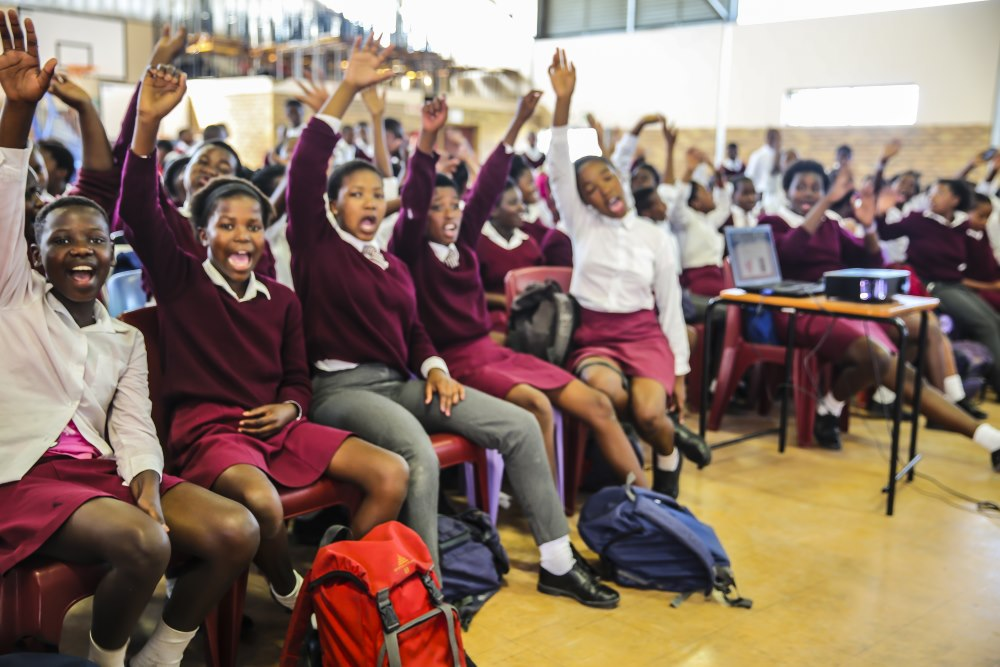
Period poverty is not merely a health issue; it is an education issue, an economic issue and ultimately a social justice issue. Every day a girl misses school because of something entirely preventable is another day we quietly rob South Africa of her future potential. When we fail our girls, we fail our future.
Yet no injustice overshadows the lives of South African women more than violence.
South Africa continues to battle horrific levels of gender-based violence and femicide, while human trafficking increasingly preys on women and girls whose vulnerability is exploited for profit. These crimes do not persist because women are weak. They persist because our systems remain too weak to protect them. Behind every headline is a daughter, a mother, a sister or a friend whose life has been permanently altered by violence that should never have occurred.
What makes this crisis even more devastating is that survivors are too often failed twice: first by perpetrators, then by the institutions meant to deliver justice. Victims report crimes only to encounter overwhelmed police stations, delayed investigations, missing dockets and court processes that drag on for years. Reports of lost police dockets have become disturbingly common, while corruption continues to hollow out public confidence in institutions that cannot function because accountability has become dishearteningly negotiable.
How can we continue to ask women to trust institutions that too often fail to trust them?

Women’s Day should never become an annual exercise in selective memory. It cannot be reduced to breakfast events, corporate campaigns, discounted flowers, social media hashtags and carefully rehearsed speeches celebrating the resilience of women.
Resilience is admirable, but it was never meant to become a permanent survival strategy. Women should not have to be resilient because they fear walking home after sunset. They should not have to be resilient because they earn less for equal work, because their daughters cannot afford sanitary pads, or because justice disappears with a missing docket.
The women of 1956 were not marching for resilience. They were marching for justice.
Justice means girls who never have to choose between education and menstrual dignity. Justice means equal pay for equal work. Justice means women leading boardrooms, construction sites, sports federations and government departments without their competence constantly being questioned.
Justice means policing systems that protect victims instead of exhausting them, courts that move with urgency, and institutions where corruption is swiftly stifled.
That is the South Africa the women of 1956 imagined.
Seventy years later, remembering them is no longer enough. We need to honour their legacy not through ceremonies but through applied courage; not through speeches but through structural change; not through symbolic celebrations but through measurable progress.
Until every woman is safe, every girl has equal opportunity, every survivor finds justice and every institution values women as much as it praises them, the march that began in 1956 has not ended.
Seventy years ago, women marched because injustice had become unbearable. The tragedy is that, for far too many South African women, it still is.