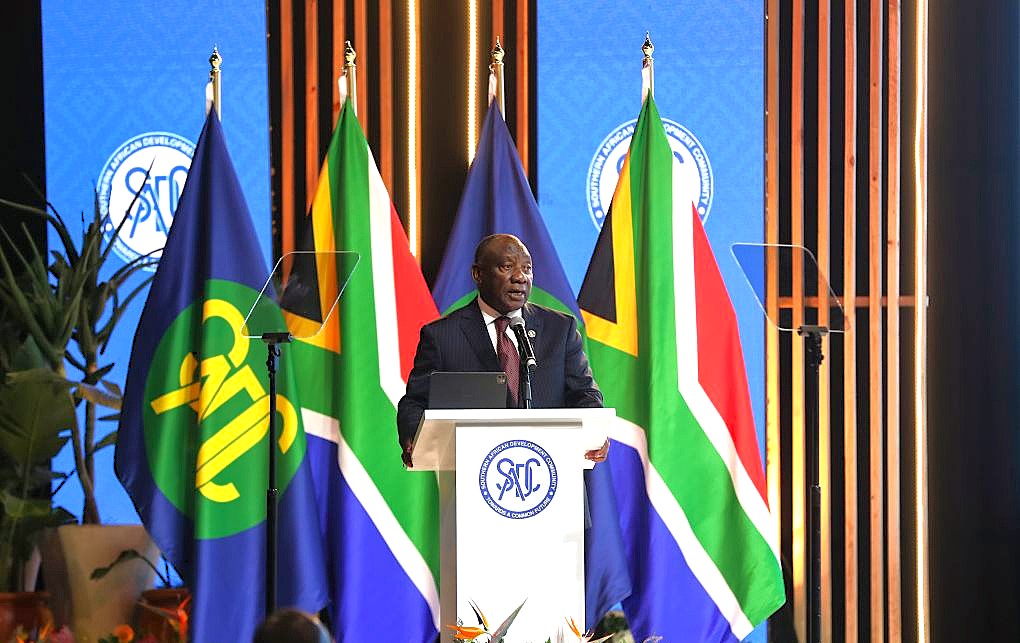
South Africa’s assumption of the chairmanship of the Southern African Development Community (SADC) comes at a moment when the region needs more than another cycle of summit declarations, communiqués and diplomatic handshakes. It needs leadership that can translate regional ambition into practical outcomes.
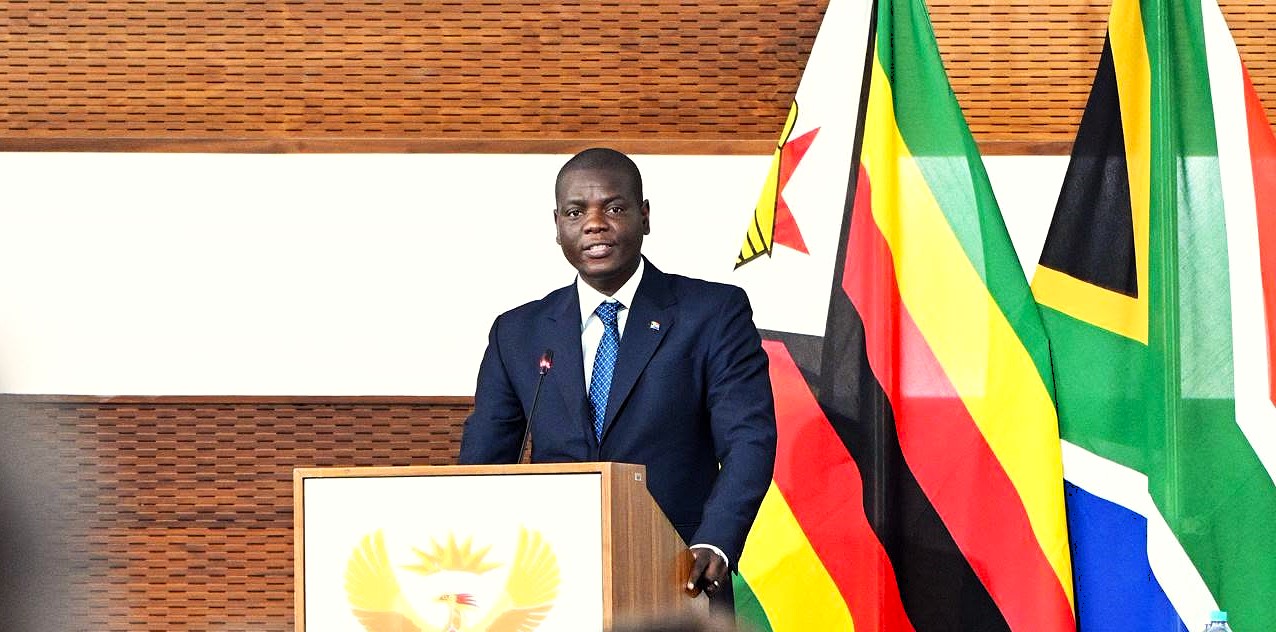
On 17 August 2026, President Cyril Ramaphosa formally assumed the SADC chairmanship for the 2026/27, following its interim chairmanship after issue with Madagascar. South Africa has placed industrialisation, infrastructure development, agricultural transformation and the beneficiation of critical minerals at the centre of its agenda.
The question, however, is not simply what South Africa intends to do during its twelve months at the helm.
The more important question is whether South Africa can use its chairmanship to help SADC become more effective in doing what it has been promising to do for decades: integrate economies, expand intra-regional trade, build infrastructure, promote peace and transform the region’s abundant natural resources into industries and jobs. That is the real test.
Southern Africa possesses enormous potential. The region is rich in minerals, agricultural land, energy resources and human capital. It includes some of the world’s most strategically important deposits of critical minerals. It has major ports, transport corridors and markets. It is also home to a young and growing population.
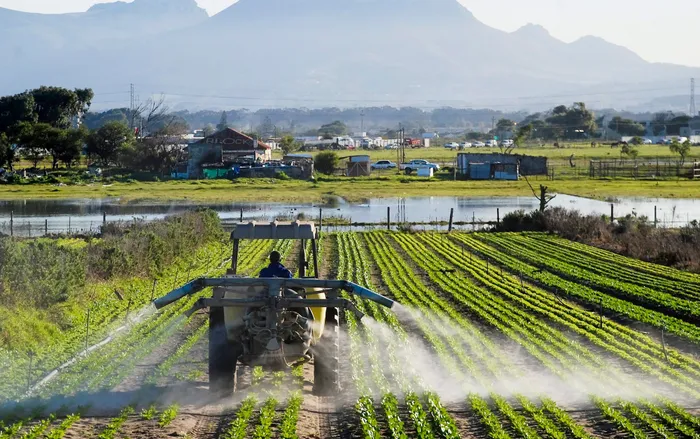
Yet the region remains economically fragmented. A truck can still spend excessive time at a border. Infrastructure does not always connect efficiently across national boundaries. Raw materials are often exported with limited local beneficiation. Intra-African and intra-regional trade remains below its potential, while economies that should complement one another frequently compete to export the same raw or semi-processed commodities.
South Africa’s chairmanship therefore arrives at an important moment. The global economy is becoming increasingly uncertain, supply chains are being reshaped and competition for strategic minerals is intensifying. The question for Southern Africa is whether it will remain primarily a supplier of raw materials to the rest of the world or whether it can build the industrial and technological capacity to capture greater value from its own resources.
South Africa’s chosen theme for the 46th SADC Summit speaks directly to this challenge: resilient, sustainable and inclusive industrialisation through infrastructure development, agricultural and critical minerals transformation in pursuit of a just world.
The language is ambitious. Now comes the harder part: implementation. One of the most important signals from South Africa’s chairmanship is the decision to place infrastructure and regional corridors at the centre of the agenda.
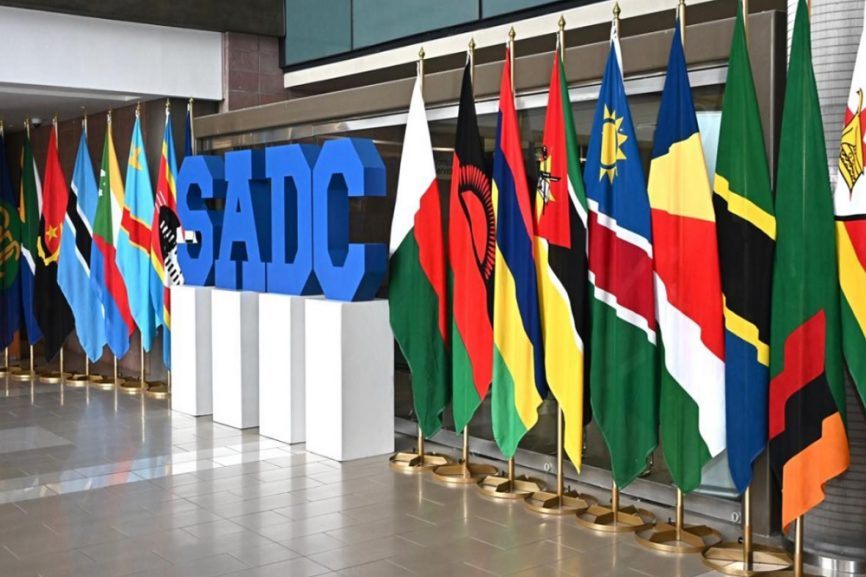
At the conclusion of the Durban summit, President Ramaphosa argued that regional corridors must become the arteries of integration, linking centres of production to markets, connecting landlocked countries to ports and allowing goods and people to move more efficiently across Southern Africa. He also highlighted the need to accelerate one-stop border posts.
This may sound technical, but it has direct economic consequences. Regional integration will remain an abstract idea if moving goods from Johannesburg to Lusaka, Harare, Maputo or Gaborone remains unnecessarily expensive, slow and administratively complicated. A SADC that works should be visible not only in summit halls but at border posts, railway stations, ports, farms, factories and logistics hubs.
South Africa’s opportunity is to push the region towards a more practical approach to integration: identify a limited number of high-impact projects, establish clear timelines and ensure political accountability for implementation.
The region does not necessarily need more plans. It needs more projects that actually get finished.
Perhaps the most strategically important aspect of South Africa’s chairmanship will be the emphasis on critical minerals. Southern Africa has become increasingly important in global discussions around the energy transition, battery technologies, electric vehicles and advanced manufacturing. The region possesses resources that the world’s major economies increasingly need. But natural resources alone do not create prosperity. The critical question is who controls the higher-value stages of production.
If SADC countries simply compete against one another to export unprocessed minerals, they risk repeating an old African economic pattern: the extraction of wealth without the development of sufficient domestic industrial capacity.
South Africa’s chairmanship provides an opportunity to advance a different model. Instead of viewing beneficiation as a purely national project, SADC could begin thinking in terms of regional value chains. One country may possess the mineral resource, another may have processing capacity, another may have industrial infrastructure and another may provide access to a port or regional market.
The future may not lie in every country attempting to build everything for itself. It may lie in building together. This is where South Africa’s relatively developed industrial base, infrastructure and financial institutions could become important—not as instruments of South African dominance, but as platforms for regional development. That distinction will matter.
South Africa is the largest and most industrialised economy in the SADC region. That gives it influence, but it also creates a responsibility to lead carefully. Regional leadership cannot mean telling smaller economies what to do. Nor can it mean using SADC primarily as an extension of South Africa’s own commercial interests.
The success of South Africa’s chairmanship will depend partly on whether Pretoria can demonstrate that a stronger SADC benefits the entire region. That requires consultation, consensus and recognition that regional integration must produce visible benefits beyond South Africa’s borders.

President Ramaphosa has emphasised cooperation, sovereign equality and consensus-building as principles for South Africa’s tenure. The real challenge will be turning those principles into practice.
South Africa’s chairmanship also takes place against a backdrop of continuing security challenges in parts of the region. The connection between peace and development is often repeated, but it deserves to be taken seriously. No transport corridor can function effectively through instability. No investor will confidently commit capital to a region affected by persistent conflict. No ambitious industrialisation strategy can succeed where insecurity disrupts communities, trade and infrastructure.
South Africa has identified peace, security and stability as important priorities, including continued efforts to support lasting peace in the eastern Democratic Republic of Congo and stability elsewhere in the region.
The challenge for SADC is to ensure that its security architecture is not separated from its economic agenda. Peacekeeping, diplomacy, infrastructure, trade and development are not separate conversations. They are part of the same regional project.
South Africa’s SADC chairmanship should ultimately be judged less by the number of meetings held than by what has changed by the time it hands over the chair.
Have border delays been reduced? Have key infrastructure projects moved from discussion to implementation? Have regional value chains been strengthened? Has intra-SADC trade increased? Has progress been made towards greater beneficiation of the region’s minerals? Has the region become more coordinated in responding to conflict and instability? These are the questions that should define the success of the next twelve months.
South Africa has inherited the chairmanship at a time when Southern Africa has both extraordinary opportunities and serious challenges. The region can either continue operating as a collection of neighbouring economies, each pursuing development largely on its own, or it can begin acting with greater seriousness as an integrated economic and political community.
The SADC chairmanship gives South Africa an opportunity to push that choice in the right direction. But chairmanship is not power in itself. It is an opportunity to convene, persuade, coordinate and lead. For South Africa, the next twelve months should therefore not be about hosting more successful meetings. It should be about making SADC matter more in the everyday lives of the people it was created to serve.
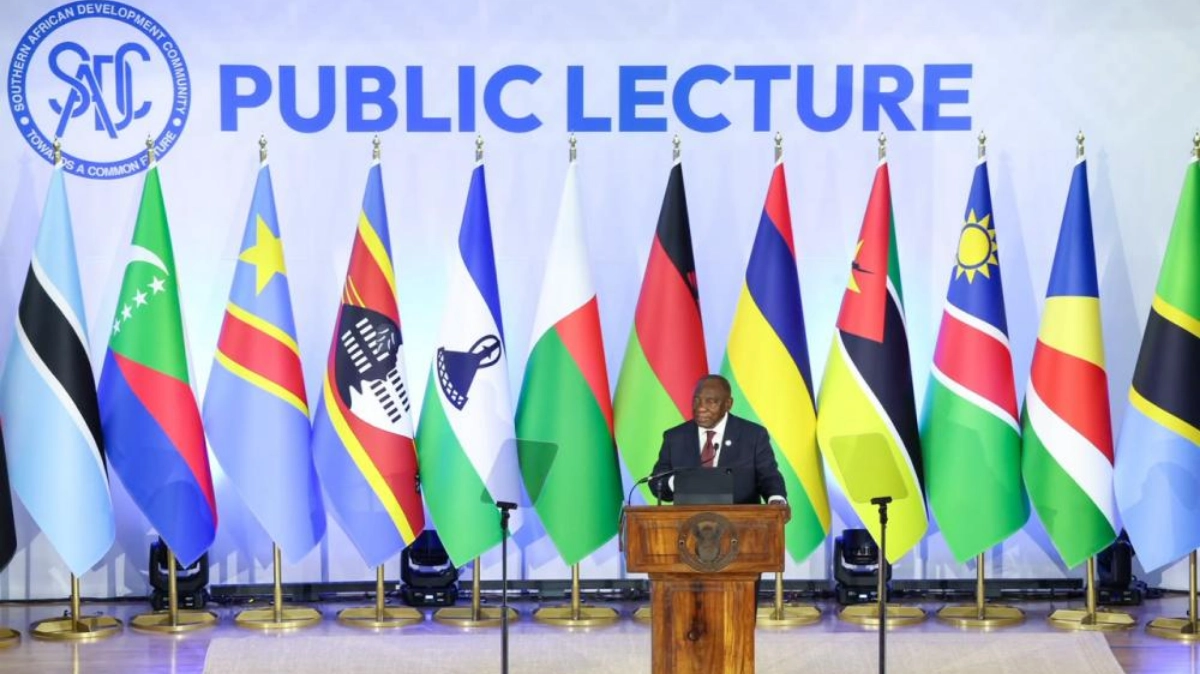
The real measure of South Africa’s leadership will not be found in the photographs from the Durban summit.
It will be found in what moves afterwards: the trucks at the borders, the trains on the railways, the goods across the region, the factories created, the minerals processed and the opportunities generated for the people of Southern Africa.
![Bishop Joe Seoka during The Funeral Service of Professor Itumeleng Mosala [Image: Mandla Seloane]](https://gsmn.co.za/wp-content/uploads/2026/08/WhatsApp-Image-2026-08-20-at-15.59.13-1.jpeg)