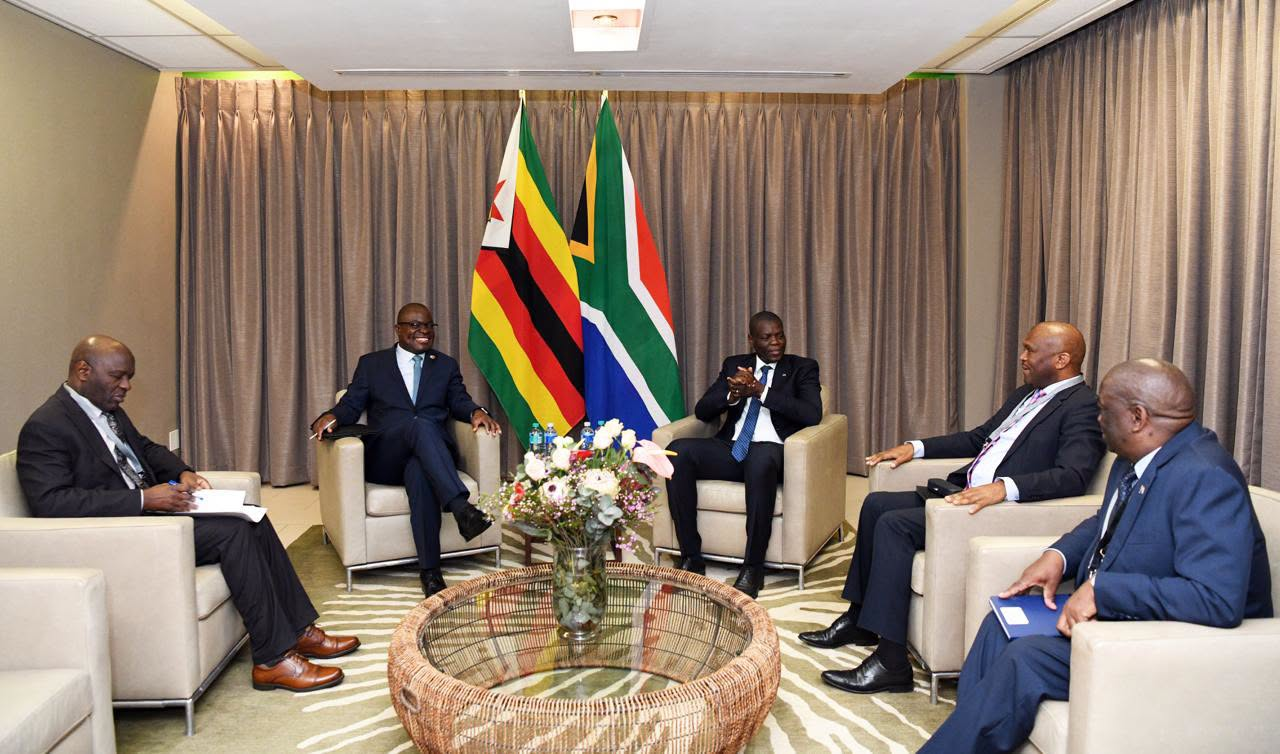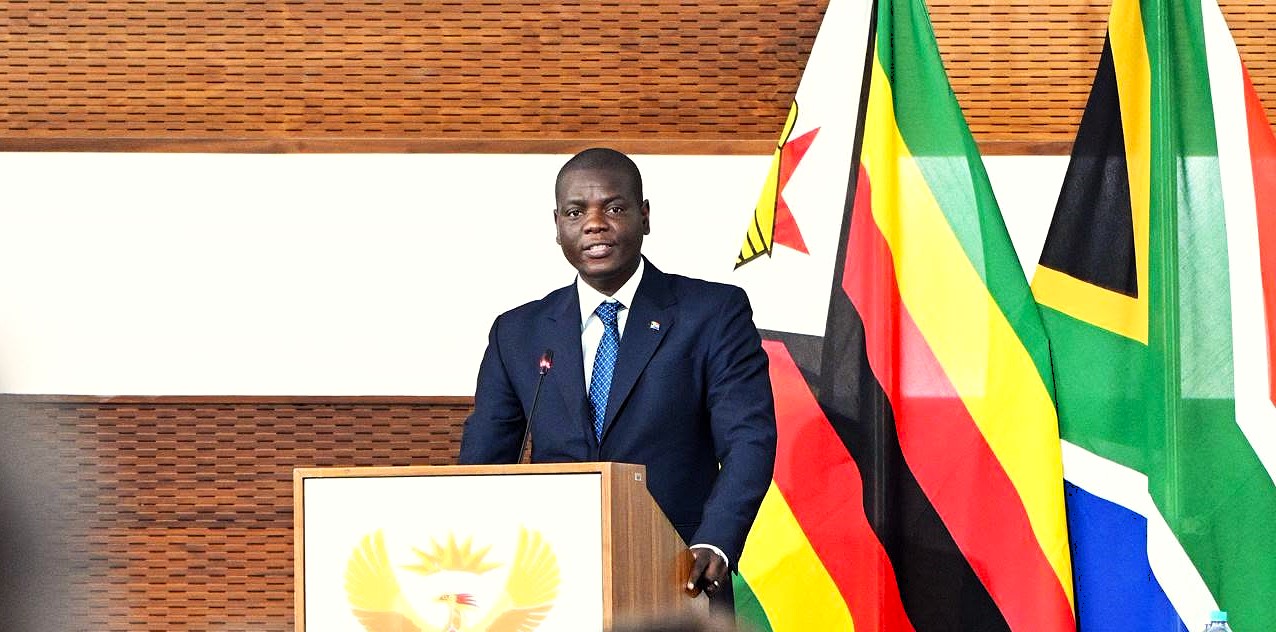
“My dear Brother and Co-Chair, it is with great pleasure that I warmly welcome you and your distinguished delegation to Pretoria for this Ministerial Segment of the Fourth Session of the South Africa–Zimbabwe Bi-National Commission. We trust that you travelled safely and that, during your stay, you will take some time to explore what Gauteng has to offer.
Only a few days ago, we were together in Durban for the historic 46th Summit of the SADC Heads of State and Government. We thank you most sincerely for your unwavering support and solidarity, which contributed in no small measure to the success of the Summit. We also look forward to working closely with Zimbabwe as we advance the priorities of our regional organisation during South Africa’s tenure as Chair of SADC.
Before I proceed, allow me to convey, on behalf of the Government and people of the Republic of South Africa, our deepest condolences to the Government and people of Zimbabwe following the tragic loss of lives in the recent accident in Lake Kariba. Our thoughts and prayers are with the bereaved families and all those affected by this tragedy.
May I request that we stand for a moment of silence in honour of those who lost their lives. [Moment of silence]. I thank you.
My dear Brother, since our respective appointments as Ministers of Foreign Affairs, we have had the opportunity to meet on several occasions, both in Pretoria and Harare, as well as on the margins of various multilateral meetings.
In September 2025, you also invited me to Beitbridge, where we jointly conducted an inspection in loco of the modernised Beitbridge Border Post. That visit provided a practical illustration of the extent to which our two countries can work together to facilitate the movement of people and goods and to strengthen the infrastructure that connects our economies.
During these engagements, we have reaffirmed that the political and diplomatic relations between South Africa and Zimbabwe are strong and firmly anchored in the historic bonds forged during the liberation struggle against colonialism and apartheid. These bonds continue to provide a solid foundation upon which we can build a partnership that responds to the aspirations of our peoples.
Today, our countries face a new set of developmental challenges. Our peoples expect their governments to create the conditions for inclusive economic growth, decent employment and improved livelihoods, as well as access to quality education, healthcare, reliable electricity, safe drinking water, sanitation, modern infrastructure and safe communities.
They will rightly expect this Commission to translate our strong political relationship into practical cooperation that delivers these tangible benefits. I look forward to receiving the report of our Senior Officials on progress since the last Session of the Bi-National Commission in 2019. I also look forward to considering new proposals to deepen our cooperation and to the signing of the relevant legal instruments.
I trust that our officials have identified economic opportunities and areas of comparative and complementary advantage that can be developed into concrete programmes and projects. Our objective should be to build partnerships that generate investment, expand production, create employment and strengthen the resilience of our economies.
South Africa and Zimbabwe are integral partners in the North–South Corridor, with the Beitbridge Border Post serving as one of the principal gateways for the movement of people and goods between our two countries and the wider region. The corridor is central to the implementation of the African Continental Free Trade Area.
We should use this shared geographical and economic advantage to deepen cooperation along the corridor, including through the modernisation and expansion of road and rail infrastructure, the improvement of border management systems, the development of logistics facilities and the strengthening of connectivity with ports and regional markets.
Infrastructure connectivity must also extend beyond transport. We should strengthen cooperation in water resource management and water security, including infrastructure that supports reliable access to water for communities, agriculture and industry. We should also explore opportunities to improve digital connectivity and other forms of infrastructure that can facilitate trade, investment and the movement of people.
Connectivity between our two countries also has an important human dimension. The Zimbabwe–South Africa route is one of Africa’s busiest migration corridors. South Africa is the continent’s leading migrant-receiving country, with most migrants coming from Southern Africa. Zimbabwe is the largest country of origin for migrants to South Africa, accounting for approximately 48 percent of the migrant population.
Movement between our countries is a longstanding feature of our relationship, shaped as much by economic conditions as by the history and geography we share. This places both South Africa and Zimbabwe at the heart of the migration question in our region.
Any durable regional response must therefore draw on the experience, cooperation and leadership of both our countries. We must pursue greater regional integration, trade and connectivity with tenacity because, ultimately, peaceful co-existence among our people is closely tied to our ability to expand economic opportunity and prosperity across the region. We should work towards a Southern Africa in which mobility is increasingly driven by choice and opportunity rather than economic compulsion.
Safe, orderly and regular migration benefits South Africa, Zimbabwe and the wider region. Together, we must continue to cooperate on migration management, border governance and the facilitation of lawful movement. In this regard, we welcome SADC’s call for a migration dialogue to address the underlying drivers of migration and develop holistic and sustainable responses.
Energy security is another area where our cooperation can yield significant benefits. The availability of reliable and affordable electricity is fundamental to industrialisation, economic growth and the wellbeing of our peoples. We should therefore explore opportunities for cooperation in electricity generation, transmission and regional power connectivity, including through the Southern African Power Pool. This should include consideration of opportunities for investment in new generation capacity, renewable energy and other technologies that can strengthen the resilience of our respective energy systems.
South Africa and Zimbabwe have a strong agricultural relationship that extends across the food, fibre and beverage industries. Our geographical proximity, similar diets and integrated markets have helped to sustain significant trade in agricultural products between our two countries.
In 2025, South Africa was Zimbabwe’s second-largest agricultural export market, accounting for approximately 202 million US dollars in exports, including fruits, tea, nuts, spices and tobacco products.
Zimbabwe, in turn, was South Africa’s second-largest agricultural export market globally, after the Netherlands, and its largest on the African continent, with exports valued at approximately 1.1 billion US dollars.
We should consolidate this relationship and ensure that it continues to deliver mutual benefit. This means expanding cooperation beyond the trade in finished products to include seeds, machinery, agricultural technologies, agro-processing and other areas that can strengthen productive capacity in both our countries.
This should form part of a broader effort to develop regional value chains. Our two countries should work together to ensure that the minerals, agricultural products and other resources produced in our region generate greater value within Southern Africa.
Both our countries are endowed with significant mineral resources, including critical minerals that are increasingly important to the global economy. We welcome measures to promote greater beneficiation and value addition within our respective economies. We should use this Bi-National Commission to exchange experiences and explore practical opportunities for joint investment, technology transfer, skills development and industrial cooperation in the minerals and manufacturing sectors.
Our economic cooperation must also be supported by an enabling environment for business. We should encourage greater interaction between our respective private sectors, identify barriers to investment and trade, and strengthen mechanisms that can support joint ventures and cross-border investment. The Commission should help create the conditions for businesses in our two countries to see the bilateral relationship as a platform for expanding production and accessing regional markets.
Our cooperation should, however, not be confined to economic and infrastructure matters. The bonds between South Africans and Zimbabweans are also deeply rooted in our shared social, cultural and historical heritage. We should therefore strengthen cooperation in arts, culture and heritage, including through exchanges between our artists, cultural institutions, museums, creative industries and heritage practitioners. The recent successful repatriation of the Zimbabwe Bird (Chapungu) and ancestral human remains in Harare in April this year is a practical demonstration of our strategic partnership.
These people-to-people ties will be further strengthened when we co-host the 2027 Men’s Cricket World Cup in Zimbabwe, South Africa and Namibia. Our bilateral cooperation should reinforce our regional commitments. Where appropriate, we should pursue initiatives jointly and use the Bi-National Commission as a platform for identifying projects that can contribute to SADC’s broader priorities, particularly in infrastructure development, industrialisation, energy security, food security and regional value chains.
We should also ensure that our bilateral cooperation contributes to the implementation of the African Continental Free Trade Area, enabling our businesses to participate more effectively in regional and continental markets.
Honourable Co-Chair, our political relationship is strong. Our historical bonds are deep. Our geographical proximity creates enormous opportunities. What is required now is to convert these advantages into concrete programmes and projects that improve the lives of our peoples.
I therefore encourage all Ministers and Senior Officials participating in this Session to engage openly and constructively, to identify areas where progress can be accelerated and, where necessary, to confront obstacles that have prevented implementation.
Let us ensure that the decisions we take here are supported by clear responsibilities and realistic timelines. The true measure of the success of this Bi-National Commission will be the extent to which our decisions translate into investment, trade, jobs, infrastructure, energy security, food security and improved livelihoods for our peoples.
As we prepare for the Summit tomorrow, let us present our Heads of State with a programme of cooperation that is ambitious, practical and capable of delivering results.
Let us seize this moment to accelerate progress towards a more integrated, industrialised and prosperous Southern Africa. I thank you.”