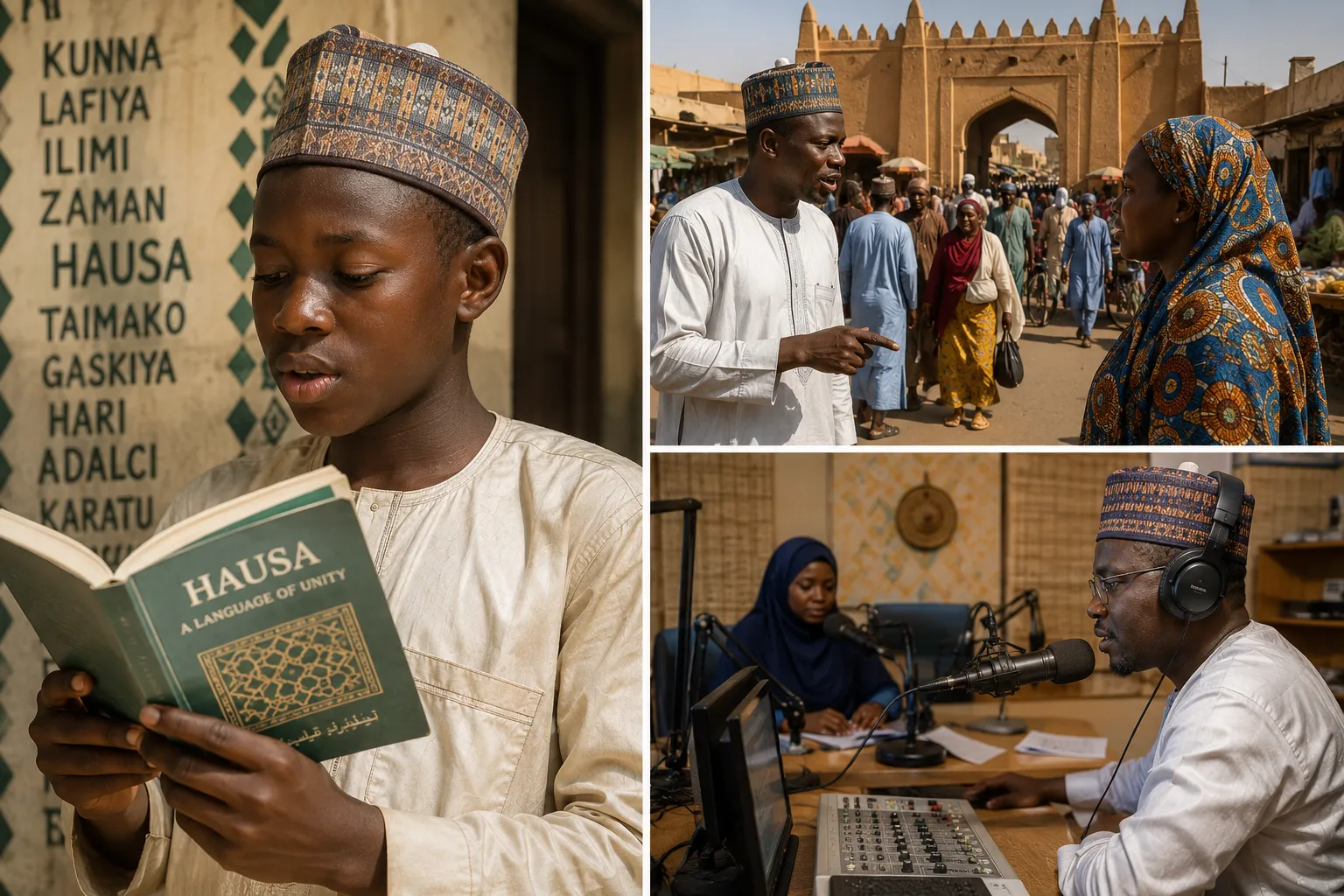
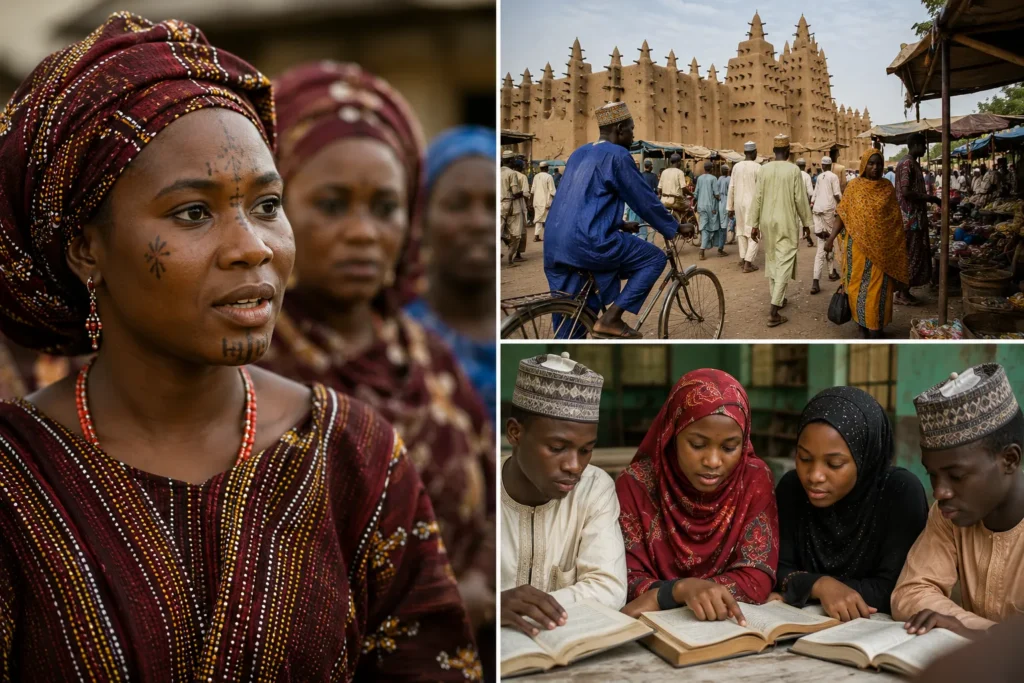
August 26 marks the annual global celebration to honour the language, rich cultural heritage, traditions, and history of the Hausa people. They are one of the largest ethnic and cultural groups in West Africa, and can be found mostly in Nigeria and Niger, totaling between 50 and 80 million.
World Hausa Day, also known as Ranar Hausa, was founded in 2015 when Nigerian journalist, Abdulbaqi Aliyu Jari started the observance of Hausa as a digital social media campaign aimed at encouraging the use of the Hausa language online.
Hausa is spoken by tens of millions of people as a first or second language, thereby serving as a crucial bridge for commerce and unity across Africa and indeed the world. Although the celebrations are massive across West Africa, in places such as the historic centre, Daura – known as the cradle of Hausa civilization – the message around the importance of Mother Tongue has gained traction globally.
It has since expanded from mere online hashtag (#RanarHausa) into an international event celebrated on over 30 countries, and growing.
This year, the Hausa language was celebrated under the theme: “Our Culture, Our Future.” It focused on the preservation of traditions and language for younger generations.
Now, in my humble opinion, Hausa need to serve as a microcosm for Africa’s linguistic sovereignty. Every tribe, every community – and there are thousands, need to emulate the Hausa-speaking people in fighting not only for the survival of their Mother Tongue, but also for its inclusion in universal communications.
Language is an embodiment of a people’s unique identity. It encompasses culture, tradition and customs, among other others. Language is a summation of what makes people who are they are. From the figures of speech, idioms, expressions and other areas of literature, language can be credited with the behavior of communities.
The celebration of World Hausa Day triggered mixed feelings for me. Let me start with the positives. It reminded me that in Africa, we have people such as Abdulbaqi Aliyu Jari, who refuse to wallow in self-pity when the adverse effects of globalization attempt to prevail. Virtually all search engines online are in English. There is of course a clear visible presence of other languages internationally, a presence enhanced by economic power and global standing in geopolitics.
That a relatively unknown language from West Africa could rise and demand a seat at the table of world languages deserves to be commended. Jari represent the new spirit of Africa, led by the continent’s youthful population that is enlightened, shameless and fearless.
This young population, which makes the vast majority of Africa’s 1.4 billion people, knows too well that our languages in their diverse nature has a right to be spoken, to be heard and to be understood in the same way as other foreign languages makes their way into our everyday oral and written communication. These factors, and many more represented by the rebellion of Ranar Hausa in demanding space among the international language population register, should inspire confidence about the future of Mother Africa.
I raise these factors in the fullness of the knowledge of how colonialism as destroyed many Africans mentally. Our erstwhile colonisers started off by removing our languages from mainstream communication, including in education and commerce. To rub salt into the wound, our suppressed languages were then replaced by alien languages of our conquerors, including English, French, Spanish and Portuguese, among others.
The lingering traits of colonialism in Africa continue to be felt through the choice of language in official communication. I want to argue that to assume a foreign language, understand and excel at it at the expense of one’s Mother Tongue guarantees transforming one into a subject of that domineering language i.e. The belief and value system, behavior, thinking, world outlook and view – all these combined removes one from their true self and build them into assumed characters of alien identity brought in by language.
There can be no denying that language is power. This factor along was a key reason behind the success of centuries-old colonialism in Africa and the Global South. You can never successfully colonize a people if they retain their language. Thus the first entry point in the disenfranchisement of a people is to take away their language – by force if need be, and replace their Mother Tongue with that of their conquerors. Once this formula is fully implemented, the take-over, vanquishing of a people is complete.
Ngugi wa Thiong’o, in his book “Decolonising the Mind: the Politics of Language in African Literature,” made a bold intervention to push back against this global linguistic domination, which has far-reaching implications than just the spoken language.
Ngugi analysed language and its constructive role in national culture, history and identity. He advocated for “linguistic decolonization”, triggering public discourse over the role of language of in the development of societies, or “language debate”, as he put it.
The World Hausa Day triggered my thoughts in this regard. Abandoning indigenous languages first by force, as was the case during colonialism, and nowadays by complex and sophisticated means, robs Africa of the expression of her true self. Relegating African Mother Tongue to the bottom of the list of important priorities ensures one brutal fact: It takes away the development of African scholarship. African epistemologies cannot be developed with in-depth understanding of our Mother Tongue. To ensure survival, we must celebrate our languages with no apology, just as Hausa does.
Abbey Makoe is Founder and Editor-in-Chief of Global South Media Network (gsmn.co.za). Views expressed are personal.