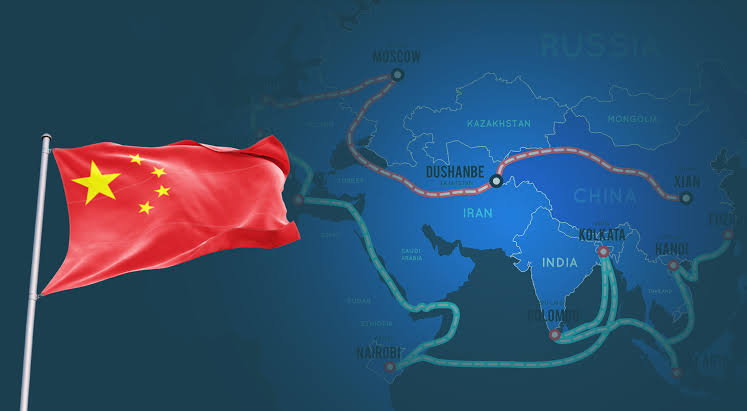
Confirming studies by Lyndon LaRouche’s “LaRouche-Riemann Economic Model” team going back four decades, a new study by Nanjing University researchers, covering 197 nations as to their participation in China’s Belt and Road Initiative (BRI), has found improved political stability and governance in the 146 nations which participated. The study was published in the peer-reviewed Quarterly Journal of International Politics.
The earlier LaRouche-Riemann studies found a consistent correlation between economic infrastructure modernization and economic productivity.
The BRI was initiated in 2013 by China’s President Xi Jinping. After its initially being welcomed even by Western media, those media universally turned hostile to the grand infrastructure initiative, claiming that it bred corruption and was a “debt trap” for developing nations. Those charges were countered, again, by published studies of EIR’s Hussein Askary, Jason Ross, and others.
Now, the Nanjing University researchers’ cross-country data analysis, beginning in 2000 and running through 2023, has found that BRI infrastructure projects brought better political stability and governance, and that weak economic infrastructure, by contrast, contributed to poverty, unemployment and inequality, especially in developing nations.
The study, reported in the South China Morning Post, found that “infrastructure projects were not just about building roads, ports, power plants and communication networks, but also about strengthening the government’s ability to allocate resources and provide public services,” thereby improving national economies as a whole. Nations participating in the BRI were better able to integrate remote or isolated areas economically, and to maintain social order.
As to indebtedness, the study did not find that BRI participation increased a nation’s financial vulnerability, because the participating countries increased their government revenue from the infrastructure development, and thereby gained in ability to pay debt.
Study leader Mao Weizhun said that “the limited cases of debt risks were not caused by the Belt and Road Initiative or infrastructure construction, but by long-term structural economic problems accumulated by participating countries.”