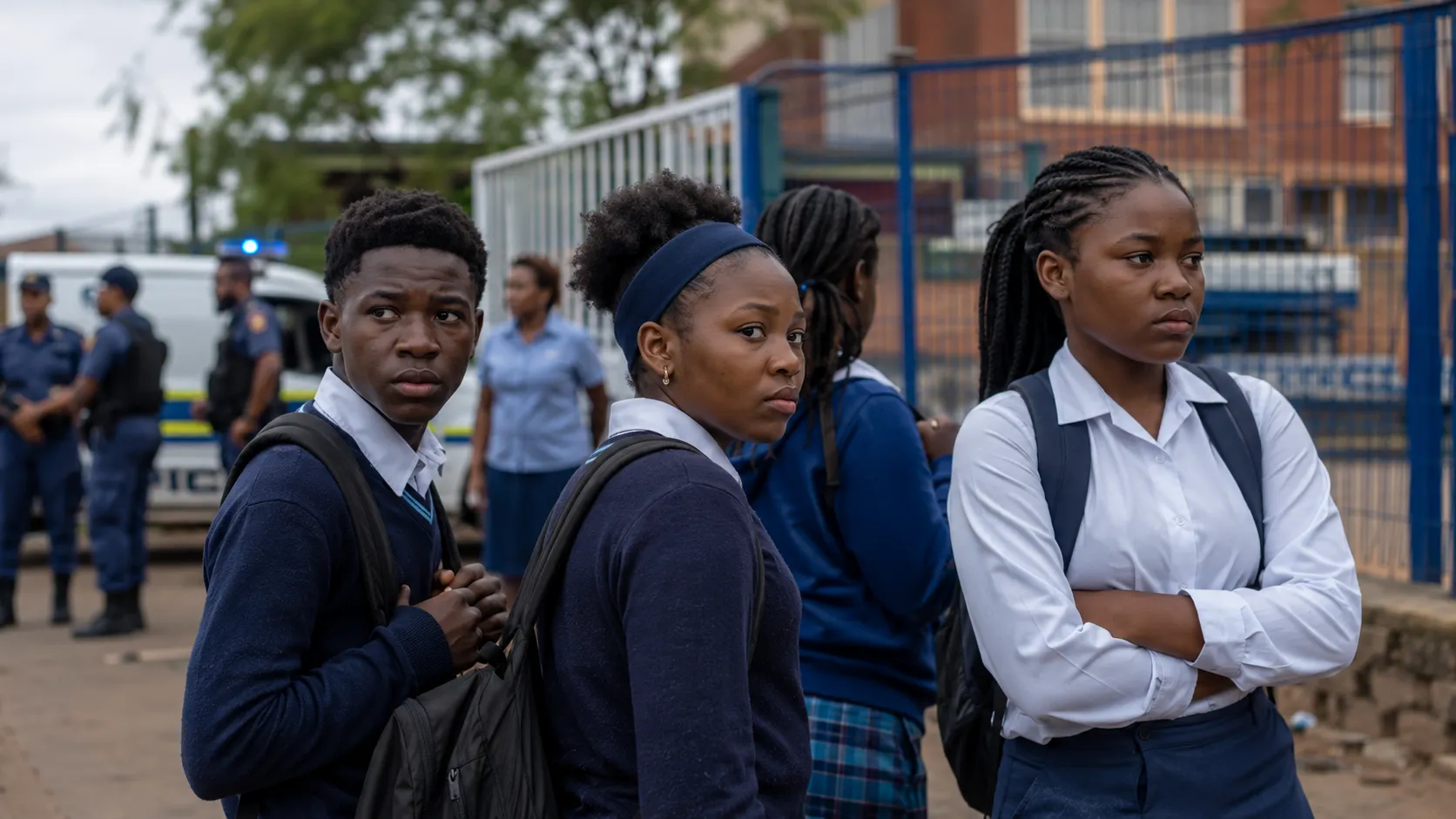
Gauteng’s latest school safety raids have once again exposed a crisis we keep trying to contain at the school gates when it has already taken root far beyond them.
Police searches at five schools uncovered nyaope, dagga and abortion pills, bringing the number of schools raided in the province to 17. These are deeply disturbing discoveries. But what should disturb us even more is the reality behind them: our children are being exposed to an increasingly brutal social environment long before they arrive at school each morning.
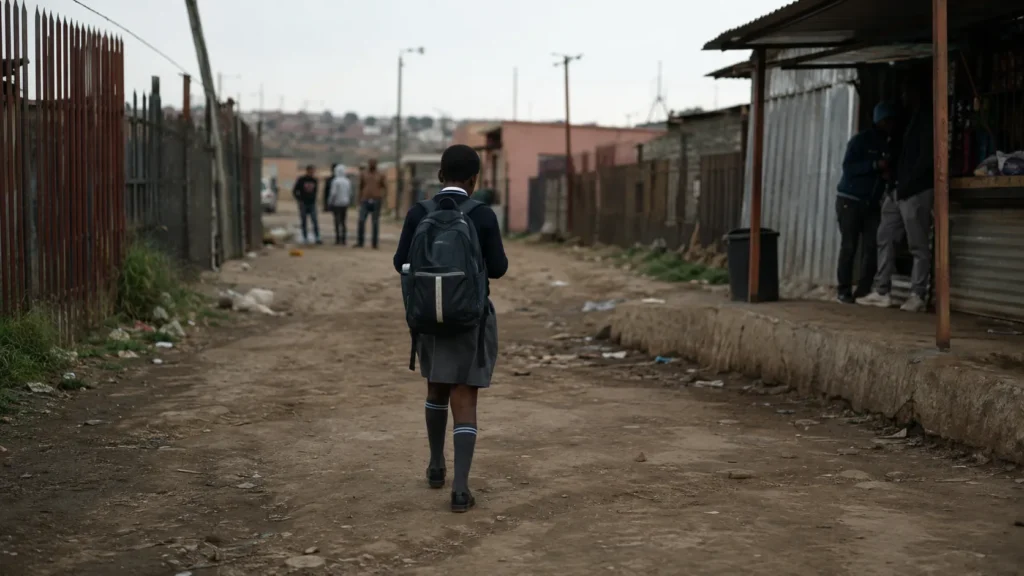
The schoolbag is not where this crisis begins. For some children, it begins on the walk to school. It begins in neighbourhoods where drugs are openly sold and criminality is an everyday reality. It begins in homes struggling with poverty, violence, neglect or instability. It begins when children have nowhere safe to go after school, nowhere to play, nowhere to seek guidance and too few adults capable of intervening when things begin to go wrong.
This is precisely why children become targets. A vulnerable child is easier to manipulate. A child who needs money can be tempted by it. A child desperate for acceptance can be bought with belonging. A child who feels unsafe can be recruited with the promise of protection. A child who has already been failed by the adults around them can become dangerously susceptible to the adult who finally appears to take an interest in them — even when that interest is predatory.
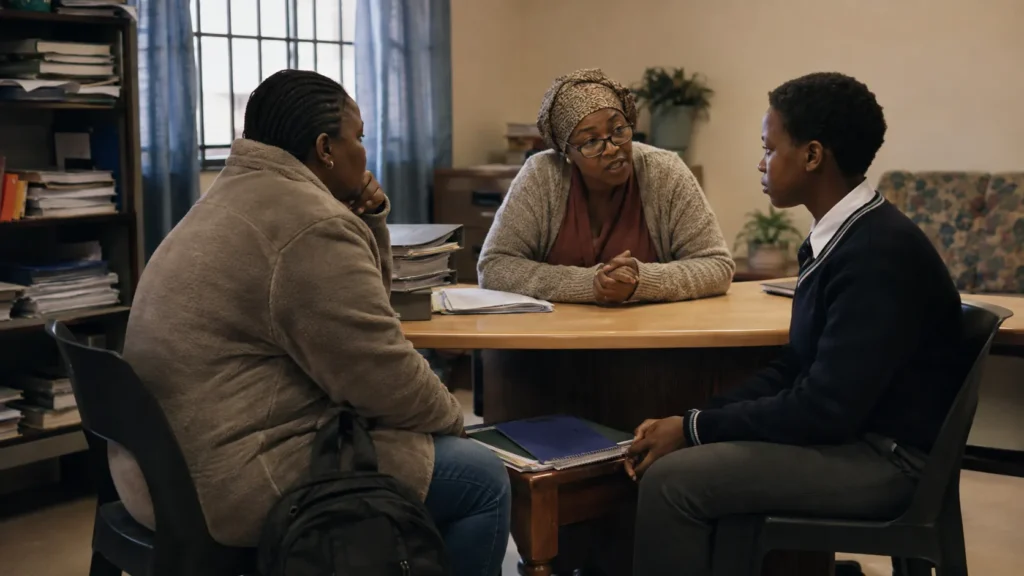
According to the Gauteng Department of Education, one learner found with small packets of dagga reportedly told authorities that he had been recruited by a local drug dealer to sell the substance. That should not simply horrify us. It should force us to ask how long that child had been vulnerable before someone came along to exploit it.
In most cases, criminal recruitment rarely starts with a child being handed a bag of drugs and told to become a dealer. It can begin with a favour, a little money, a free substance, friendship, intimidation or the promise of belonging. By the time the child is caught, the exploitation may already be well established.
And drugs are only one manifestation of what our children are being exposed to. There is violence, bullying, sexual exploitation, human trafficking, teenage pregnancy, abuse, criminality, peer pressure, poverty, neglect, unsafe homes and streets, and much more. It all begins in communities where children are surrounded by adult problems they are simply not equipped to carry.
According to a research study by the University of Cape Town, approximately 10 000 children are recruited into gangs annually, in the Cape Flats alone. Essentially, we are asking children to navigate a minefield and then acting shocked when one of them steps on a landmine.
That is not to say learners should escape accountability. Schools must remain safe, drugs and weapons must be removed and children who break the law must face appropriate consequences. But accountability cannot become an excuse for abandoning children who are already vulnerable.
A learner who is expelled may struggle to find another school. Their education can be interrupted. Their family can become exposed to threats or retaliation. Their connection to one of the few institutions providing structure and supervision can disappear at the blink of an eye.
We cannot congratulate ourselves for removing a child from a dangerous environment if we are sending them straight back into the environment that made them vulnerable. The answer is not to tolerate criminality in schools. It is to intervene much earlier, with much more urgency.
Parents need support to recognise when children are being pulled into dangerous environments. Schools need meaningful counselling and early-intervention systems. Social workers need the capacity to reach families long before a crisis becomes a catastrophe. Communities need functioning recreational spaces and safe places for children to go. Law enforcement must dismantle the networks that prey on children rather than simply waiting to catch the child carrying the drugs.
Most importantly, we need to stop pretending that children can be protected by institutions operating in isolation.
A teacher cannot undo what happens in a neighbourhood at 6pm. A police raid cannot repair what happens in a home at midnight. An expulsion cannot erase the criminal network waiting outside the school gates. These are connected failures, and they require a connected response.
Each time we find drugs in a school, we are not discovering the beginning of the problem. We are discovering how far the problem has already travelled. And if we keep responding only when a child is caught, expelled, threatened, pregnant, addicted, exploited or pushed out of education, then we are not protecting children. We are arriving after the damage has already been done.
South Africa cannot keep asking its children to survive the consequences of failures they did not create. We owe them more than a raid after the crisis reaches the classroom. We owe them a society that does not spend their childhood exposing them to danger, then blaming them for what that danger produces.