Introduction
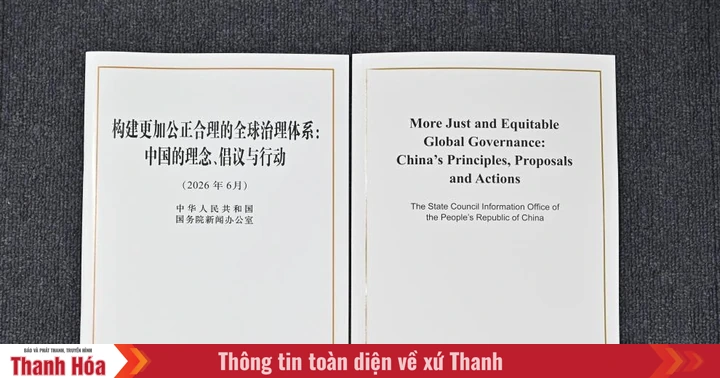
The State Council Information Office’s White Paper, “More Just and Equitable Global Governance: China’s Principles, Proposals and Actions,” which was published in June 2026 arrives at a critical juncture. As our contemporary conjuncture remains mired in escalating polycrises which are the direct offspring of neoliberal globalisation’s primary contradictions, the White Paper constitutes a welcome contribution to the critical analysis of international relations and world systems dynamics.
Diagnosing the Polycrises of Capitalism
The White Paper accurately identifies the defining symptoms of our era: escalating geopolitical tensions, expanding inequities, illegitimate military conflicts, and the weaponisation of trade. These are not aberrations but rather represent the logical expression of capitalism’s inherent tendencies toward crisis, accumulation by dispossession, and inter-imperialist rivalry. When the White Paper invokes the “Law of the Jungle,” it accounts for a fundamental reality of our contemporary conjuncture whereby monopoly capital, in its relentless drive for profits, subordinates all territories and peoples to its logic of accumulation. The world majority recognises that such schemes ostensibly from the combined west [and former colonial metropoles] are not fostering international cooperation but reflect neocolonial predation dressed in diplomatic garb.
The Rise of the World Majority
The “world majority” is coalescing through the development and expanded distribution of improved productive forces that are also driving scientific and technological advances whilst fundamentally altering the global balance of forces. The White Paper correctly asserts that “… based on purchasing power parity, the Global South now makes up over 60 percent of the world economy and contributes 80 percent to global economic growth.” These empirical facts challenge the development paradigms constructed to maintain and reproduce the domination of the world majority by the hegemonic states of the combined West. The primary contradiction of our contemporary conjuncture lies precisely between the consequences of global integration and an international political superstructure that remains vestigially organised to advance neocolonial relations of subordination. This contradiction lies at the heart of our global governance crises.
Multilateralism: Reform or Pacification?
The White Paper places significant emphasis on multilateralism, sovereign equality, and the international rule of law as mechanisms for moderating capitalism’s most destructive tendencies. Yet moderation, in the face of genocide, the belligerent violation of sovereignty as witnessed in the continued military attacks on West Asia, the kidnapping of Venezuela’s 53rd President alongside its former National Assembly President, and the illegitimate blockade of Cuba, exposes the profound limits of reform within capitalist world systems. The progressive potential of international solidarity is real, but it must not be mistaken as a solution to the underlying iniquitous relations of production. Reform without transformation is merely the management of crisis and does not represent a just resolution to the contradictions.
The Hypocrisy of “Small Yards with High Walls”
The White Paper appropriately condemns the protectionism and unilateralism deployed by the regime occupying the presidency of the United States. The construction of “small yards with high walls” and “parallel systems” transparently “overstretches the concept of national security to suppress and contain the economic and technological progress of other countries.” This is imperialism by other means and an attempt to restructure global supply chains to centre US hegemony and its Western collaborators. But such efforts are backfiring as they contribute to catalysing an international rethinking of the subordination of the world majority to the global minority, and the reassertion of the right to development is gaining ground.
The Bishkek Declaration and the Crisis of G20 Legitimacy
This rethinking finds concrete expression in the Bishkek Declaration, issued by the 26th meeting of the Council of Heads of State of the Shanghai Cooperation Organisation (SCO) on 1st September 2026. The Declaration reaffirms sovereign equality and non-interference in internal affairs, amplifying the call for a representative, democratic, and equitable multipolar world order.
In high-definition contrast, the simultaneous G20 Finance Ministers and Central Bank Governors Meeting which is chaired this year by the United States failed to achieve consensus and rather issued a Chair’s Statement characterised by subjective and partial analysis. Worse, this year’s G20 excluded last year’s Chair, the Republic of South Africa, on spurious grounds. This act of petty authoritarianism further erodes the G20’s already shaky legitimacy as a forum for serious macroeconomic governance. The contrast could not be starker: one body advances genuine multilateralism, the other perpetuates exclusion and domination.
BRICS+, SCO, and the Anti-Imperialist Impulse
The continued growth of the SCO, alongside BRICS+, affirms the rise of the world majority and its determination to realise a better world for all. While neither formation explicitly challenges capitalism, both are indicative of profound changes in the international balance of forces. They contribute to redressing peripheralisation, marginalisation, and exclusion whilst affording further advances in anti-imperialist struggles. These formations represent not the abolition of the old order, but the emergence of spaces where alternatives can be articulated and contested.
People-Centred Development: A Weapon Against Privatisation
The White Paper’s exhortation towards “people-centred” development finds broad support across the developing countries and emerging economies of the world majority. This is not mere rhetoric but represents a significant political intervention. Such a strongly articulated position bolsters those defending high-quality public goods and services against further alienation from production whilst also directly challenging those seeking to privatise and corrupt the public sector. In an era of relentless commodification, this is a necessary rebuke.
Conclusion: A Vision for the World Majority
In conclusion, the White Paper on “More Just and Equitable Global Governance: China’s Principles, Proposals and Actions” correctly diagnoses root causes of the polycrises engulfing international relations and accurately reflects primary contradictions of our contemporary conjuncture. For the world majority, the emphasis on multilateralism, rule of law, and sovereign equity affords new opportunities for countries excluded from international governance to articulate their principled positions and nationally-determined developmental priorities.
The world majority welcomes and endorses this White Paper not because it offers a total solution, but rather because it opens space for struggle. It provides rhetorical and political cover for those demanding an inclusive economic world that works for all. President Xi Jinping’ vision of “a global governance system characterised by extensive consultation and joint contribution for shared benefit,” ostensibly advances us all towards a true multilateralism which seeks to foster an equitable and orderly multipolar world which is universally beneficial to all. Together with the Peoples Republic of China, we look forward to co-creating a brighter future for all of humanity, defending our global knowledge commons, and enlightening the further progress of human civilization.