Western imperialism is, without doubt, the most destructive force unleashed on humanity over the past 500 years.
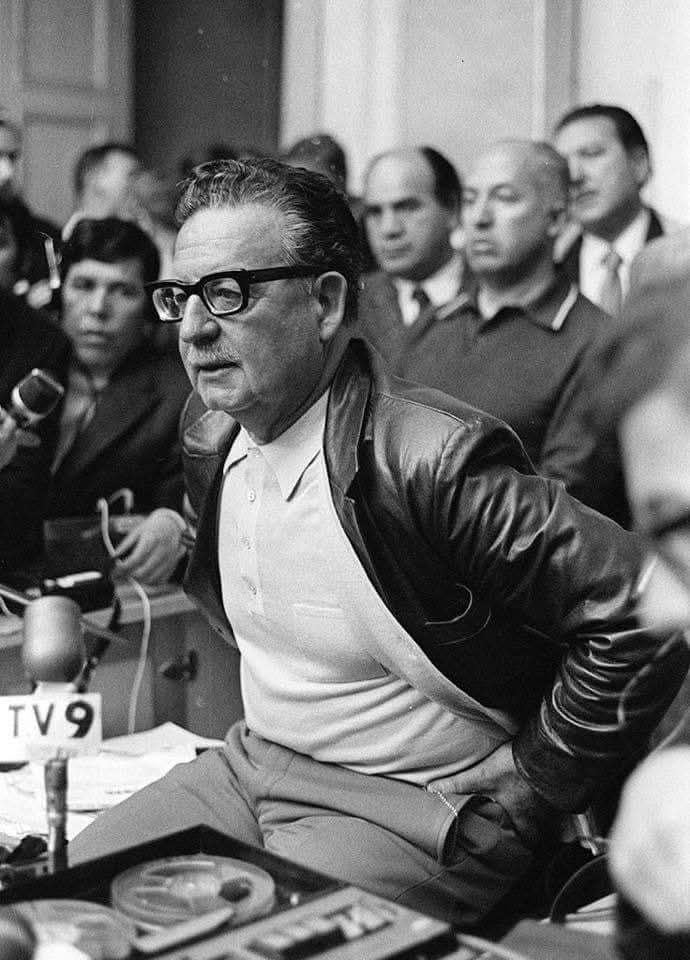
Today, 4 September 2026, marks the 56th anniversary of Salvador Guillermo Allende Gossens’ election as President of Chile in 1970.
The 11th of this month will also mark the 53rd anniversary of the bloody, US-backed military coup that overthrew his democratically elected socialist government on 11 September 1973—one of the darkest moments in world history.
Allende was removed through a military coup led by Chilean general and US puppet, Augusto Pinochet.
Long before he took office, the US declared Allende persona non grata due to his socialist views and his relationship with leaders like Fidel Castro.
The US viewed Allende’s left-wing stance and immense popularity among ordinary people as a direct threat to its interests. Washington feared his ascent would energise popular anti-capitalist struggles across Latin America.
Furthermore, strategic sectors of the Chilean economy, particularly copper mining, were controlled by foreign—mainly US—multinationals.
When Allende began nationalising these copper mines and other industries, the US government reacted aggressively.
US President Richard Nixon and National Security Advisor Henry Kissinger, utilising the Central Intelligence Agency (CIA), dedicated immense resources to destabilising Allende.
Nixon explicitly instructed the CIA to “make the Chilean economy scream.” The US funded opposition political groups to orchestrate protests and cut financial pipelines to Chile.
This engineered economic warfare triggered high inflation, shortages of basic services, and a massive truck drivers’ strike, all designed to turn ordinary citizens against Allende.
It was a strategy lifted straight from the CIA regime-change manual, but Allende’s deep popularity blunted its success.
The US also shaped Chile’s future via the “Chicago Boys”—a group of Chilean students trained at the University of Chicago under neoliberal economists Milton Friedman and Arnold Harberger, preparing them to remake the nation’s economy.
On the morning of 11 September 1973, General Pinochet launched his military coup. Forces bombarded the presidential palace where Allende and a small security detail stood ground.
Allende refused demands to resign. Following heavy fighting and aerial bombing, the president died inside the palace; whether he died by suicide or was assassinated remains a subject of historical debate.
Minutes before his death, Allende broadcasted a final message to the nation: “I will not resign. I will repay the loyalty of the people with my life…”
Following the overthrow, Pinochet and his military junta seized power, plunging Chile into a 15-year dictatorship defined by mass detention, torture, and murder.
Estimates indicate the Pinochet regime murdered over 2,000 people and tortured more than 30,000. Economically, the regime implemented the aggressive neoliberal doctrines of the Chicago School, executing a wholesale privatisation of state assets and a radical deregulation of the economy.
The destruction of Allende’s government remains an instructive example of how Western powers readily deploy violence and brutality to advance self-serving interests.
Allende was targeted because he obstructed a Western imperialist project driven by the capture of Latin American natural resources—a dynamic that still characterises how the US and the West interact with the global majority today.
Ultimately, Allende’s story offers vital lessons for movements striving to build a world free from racism, capitalism, and human exploitation.