There is an uncomfortable question hanging over South Africa’s judiciary: how does a judge whose name now sits beneath the shadow of a serious bribery allegation continue to exercise the solemn authority of the High Court?
Judge M.S. Makamu stands accused of soliciting a financial benefit connected to the exercise of judicial power allegations he emphatically denies and which remain to be determined by a Judicial Conduct Tribunal. Yet while that cloud hangs over him, he continues to sit in judgment over others, projecting the authority of impartial justice while his own judicial conduct awaits the most serious scrutiny. Why is the Judiciary prepared to tolerate this? This is now a question about consistency. It is a question about equality. And increasingly, it is a question about gender.
Why have female judges been required to step away from active judicial duties while serious proceedings against them remained unresolved, yet Judge M.S. Makamu continues to exercise the extraordinary authority of a High Court judge while a serious judicial-misconduct complaint hangs over him?
Perhaps there is a perfectly lawful explanation.
If there is, South Africans deserve to hear it.
Because constitutional accountability cannot operate according to standards that appear to change depending on whose name appears on the complaint.
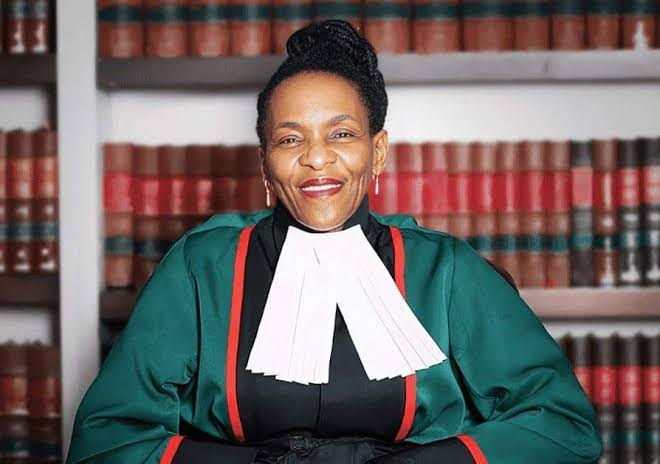
Nomonde Mngqibisa-Thusi was suspended
In June 2023, President Cyril Ramaphosa suspended her after the Judicial Service Commission advised that she should be suspended pending a Judicial Conduct Tribunal process.
The allegations concerned significant delays in delivering judgments.
She had not been removed from judicial office. There had not yet been a final constitutional determination that she was guilty of gross misconduct.
Yet precaution was considered appropriate.
The President acted under section 177(3) of the Constitution following advice from the JSC.
That decision established an important principle: precautionary suspension does not require the judiciary first to pretend that guilt has been established.
The rights of the judge can be protected while the integrity of the institution is protected too.
Then came Judge Portia Phahlane
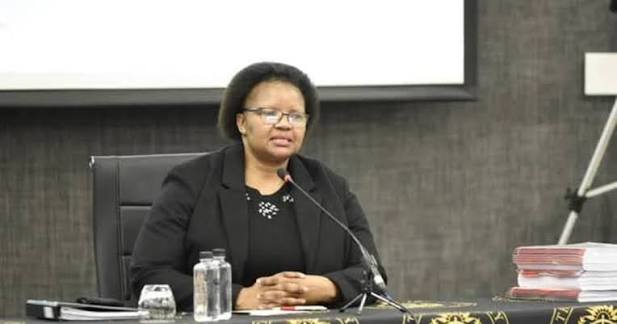
In November 2025, another woman of the Gauteng High Court, Judge Portia Dipuo Phahlane, faced serious criminal allegations.
The institutional response was immediate.
Chief Justice Mandisa Maya announced that Judge Phahlane would be placed on special leave with immediate effect pending the criminal proceedings against her and while the relevant processes concerning her position were considered.
At the same time, the Chief Justice expressly recognised Judge Phahlane’s right to the presumption of innocence and a fair process.
That is significant.
The judiciary did not say:
She has not been convicted, therefore nothing can be done.
Instead, the institution demonstrated that two principles can coexist:
A judge can be presumed innocent.
And:
A judge can nevertheless be temporarily relieved of active judicial responsibilities in order to protect the administration of justice.
That distinction matters enormously when one turns to Judge Makamu.
Judge Makamu denies the allegations against him.
That fact must be stated clearly and repeatedly.
But the complaint brought by Bouwe Wiersma was not dismissed as trivial or incapable of further investigation.
The judicial-conduct proceedings recorded an allegation that Judge Makamu solicited a financial benefit after deciding an eviction matter, that R5,000 was transferred to an account identified in the complaint and that the payment was allegedly connected to assistance concerning an appeal.
The material presented by the complainant included screenshots, call logs and proof of payment.
Judge Makamu disputes the allegations. He denies communicating with Wiersma, denies soliciting R5,000 or any other amount, denies that the disputed account belonged to him and disputes the alleged connection to the telephone numbers relied upon by the complainant.
Justice Halima Saldulker did not find those allegations proved.
But she considered the allegations sufficiently serious to warrant formal investigation and reasoned that, if established, they could sustain a finding of gross misconduct. The matter was recommended for investigation by a Judicial Conduct Tribunal.
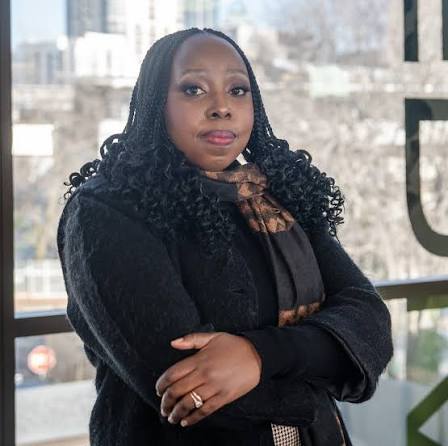
SUSPENDED: Judge Mngqibisa-Thusi
Phahlane was placed on immediate special leave.
Makamu remains on the bench.
Why?
If precaution was justified for them, why not for him?
The Judicial Service Commission should explain the principle governing the different responses.
If allegations concerning delays in handing down judgments could result in precautionary suspension pending a Tribunal process, what principle makes precaution inappropriate when allegations concern an alleged financial benefit connected to the exercise of judicial power?
If Judge Phahlane could be placed on immediate special leave while simultaneously retaining her presumption of innocence, why would protecting Judge Makamu’s presumption of innocence require that he continue exercising active judicial authority?
South Africa should ask the gender question
There is an uncomfortable question that follows from the comparison:
If Judge Makamu were a woman, would he still be sitting?
Section 174(2) requires consideration of the need for the judiciary broadly to reflect South Africa’s racial and gender composition.
But transformation cannot end at appointment.
It cannot merely mean ensuring that women are permitted to wear judicial robes.
It must also mean ensuring that once women reach the bench, the standards of protection, discipline and accountability applied to them are no harsher and no more forgiving than those applied to their male colleagues.
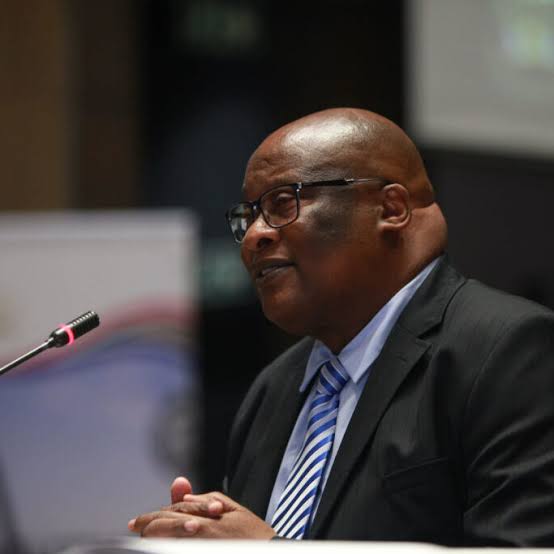
NOT SUSPENDED: Judge M.S.Makamu
That is why the comparison matters.
If there is an objective reason for the different treatment, disclosure protects the judiciary.
If there is not, the public is entitled to ask increasingly difficult questions about institutional consistency.
Suspension and special leave exist because there are circumstances in which an institution cannot sensibly wait for the ultimate outcome before taking precautionary action.
The Constitution itself recognises the distinction.
Section 177 establishes stringent requirements for the removal of a judge. But section 177(3) separately provides for presidential suspension, acting on the advice of the JSC, in the circumstances contemplated by the constitutional process.
The material before us records that distinction and also notes the statutory role of the JSC in addressing the desirability and conditions of suspension at the relevant Tribunal stage.
Why must Makamu continue hearing major cases?
The controversy does not end with the fact that Judge Makamu remains a judge.
There is a far more immediate question:
Why must he continue presiding over major cases while the Tribunal-level complaint remains unresolved?
A High Court judge exercises enormous power.
A judge can deprive a person of liberty. A judge can make orders affecting property, businesses, families and reputations. A judge can determine whether the state has lawfully exercised its power.
And among the major matters over which Judge Makamu has been presiding is the criminal prosecution involving businessman Joseph Mudolo, his wife and others.
The prosecution alleges fraud, money laundering and racketeering arising from an investment scheme linked to Shepherd Bushiri’s church. The accused deny wrongdoing, and the criminal case has not been finally determined.
It is utter foolishness to believe that Judge Makamu can adjudicate that criminal case impartially when his moral compass is the original sin before all to see.
Why expose such a consequential criminal prosecution to an avoidable controversy concerning the presiding judge?
Why must Judge Makamu specifically continue presiding?
What indispensable interest of justice requires this particular judge to exercise power over this particular major criminal case while allegations touching upon judicial integrity are undergoing a disciplinary process?
Why not temporarily reallocate such cases until the Tribunal has completed its work?
These are not accusations.
They are questions about institutional judgment.
Indeed, the material already identifies concerns about what assessment has been made of the appearance of impartiality and whether consideration has been given to reallocating the matter while the disciplinary process remains unresolved.
Why take the risk?
This is perhaps the simplest question of all.
Why take the risk?
If Judge Makamu is ultimately cleared, then the Tribunal’s findings can speak for themselves.
If adverse findings are ultimately made, the constitutional process can proceed accordingly.
But while that determination remains outstanding, why should major litigants particularly accused persons whose liberty may ultimately be at stake be placed in circumstances where the identity of the presiding judge itself becomes part of the controversy surrounding their trial?
Justice must not only be done.
Public confidence requires that the administration of justice remain worthy of trust.
That does not mean surrendering to every accusation made against a judge. If that were the standard, disgruntled litigants could paralyse the judiciary simply by lodging complaints.
This case, however, has moved beyond the mere existence of an accusation.
A judicial-conduct inquiry determined that the allegations warranted Tribunal investigation and reasoned that, if established, they could amount to gross misconduct.
That procedural reality changes the institutional question.
Why was precaution possible for women judges but apparently unnecessary here?
Return then to the comparison.
Judge Mngqibisa-Thusi was not required to continue exercising ordinary judicial functions while the process simply ran indefinitely.
Judge Phahlane was placed on immediate special leave even while her presumption of innocence was expressly protected.
Why is precaution apparently more difficult in Judge Makamu’s case?
And why, beyond merely remaining in office, must he continue presiding over consequential litigation?
This is where the gender question becomes provocative but legitimate.
If the answer is that gender has absolutely nothing to do with the difference, good.
Demonstrate it.
Explain the objective criteria.
Explain the procedural difference.
Explain why precaution was constitutionally appropriate in one circumstance but unnecessary in another.
Because transformation cannot simply concern how many women appear in photographs of the judiciary.
It must concern whether women and men occupying the same constitutional institution are subjected to standards that are recognisably consistent.
The robe cannot become a shield
Judicial independence is one of the foundations of constitutional democracy.
Without it, judges become servants of political power.
But judicial independence belongs ultimately to the people whose disputes judges determine.
It was never intended to become personal immunity for individual judicial officers.
A judge cannot demand accountability from Presidents, ministers, municipalities, corporations and ordinary citizens while the institution of the judiciary treats questions about its own accountability as somehow improper.
The disciplinary system exists precisely because judicial independence and judicial accountability are not enemies.
They reinforce one another.
A judiciary willing to scrutinise itself commands greater respect than one that appears reluctant to explain itself.
The JSC owes South Africa answers
The Judicial Service Commission should therefore answer clearly:
Has precautionary suspension been considered in Judge Makamu’s case?
If the relevant statutory stage has been reached, what advice has been given concerning suspension?
If suspension has been considered and rejected, why?
What materially distinguishes this case from previous cases in which judges were temporarily relieved of active judicial duties?
Has the continued allocation of major cases to Judge Makamu been reviewed?
What safeguards exist for litigants presently appearing before him?
And why is continuing active judicial service preferable to temporary precaution until the Tribunal process has determined the allegations?
The existing material itself identifies substantially similar unanswered institutional questions concerning Tribunal status, suspension advice, case allocation and safeguards for litigants.
Those questions deserve answers rather than speculation.
One judiciary. One Constitution. One standard.
Judge Makamu is entitled to fairness.
He is entitled to answer the allegations.
He is entitled not to be branded corrupt merely because a complaint has been referred for further investigation.
But constitutional fairness cannot mean that protecting one judge’s rights requires the judiciary to abandon precaution altogether.
Nomonde Mngqibisa-Thusi was suspended.
Portia Phahlane was placed on immediate special leave.
Judge Makamu remains on the bench.
And he continues to exercise judicial authority in major litigation while a Tribunal-level complaint remains unresolved.
Perhaps every aspect of that distinction can be justified.
If so, justify it.
Perhaps there is a procedural explanation.
Then explain it.
South Africans should not be expected to look at female judges who were required to step away, look at Judge Makamu continuing to wield substantial judicial power under a serious disciplinary cloud, and pretend that the contrast raises no legitimate question.
It does.
If Judge Makamu were a woman, would he still be sitting? Methinks the Chief Justice must answer.
However, when contacted for comment, the Office of the Chief Justice responded as follows: “Given that the article concerns specific judicial-conduct processes involving an individual judicial officer, and in light of the applicable constitutional and statutory processes, it is inappropriate to comment substantively on the matters raised. We therefore respectfully decline to comment at this stage.”
And the Department of Justice (DoJ), when asked to comment, responded: “Unfortunately, the Department is not in a position to comment on matters before the judiciary, these should be deferred to the Office of the Chief Justice.”
The Judicial Service Commission (JSE) also turned down the offer to comment. A spokesperson complained about the tight deadline indicated. And when extension was offered to enable the JSE adequate response time, the offer was ignored.