We have a crisis of definition in South African journalism and media fraternity. Everyone is called a “journalist.”
The intern rewriting press releases, the opinion writer, the TikTok activist and the veteran columnist are all dumped into one job description. But when the backlash comes, a columnist is judged by a journalist’s KPI, and a thinker by a reporter’s KPI.
We need to separate three distinct functions that have been collapsed: the Journalist, the Researcher, and the Columnist. Presumably, a columnist is not necessarily a journalist. They may be opinion leaders. But to be a lasting opinion leader, like Steve Biko, you must first be an observant researcher.
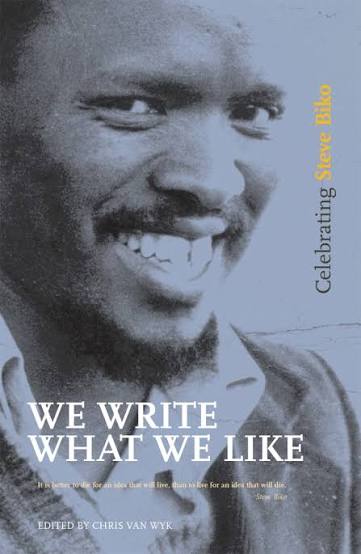
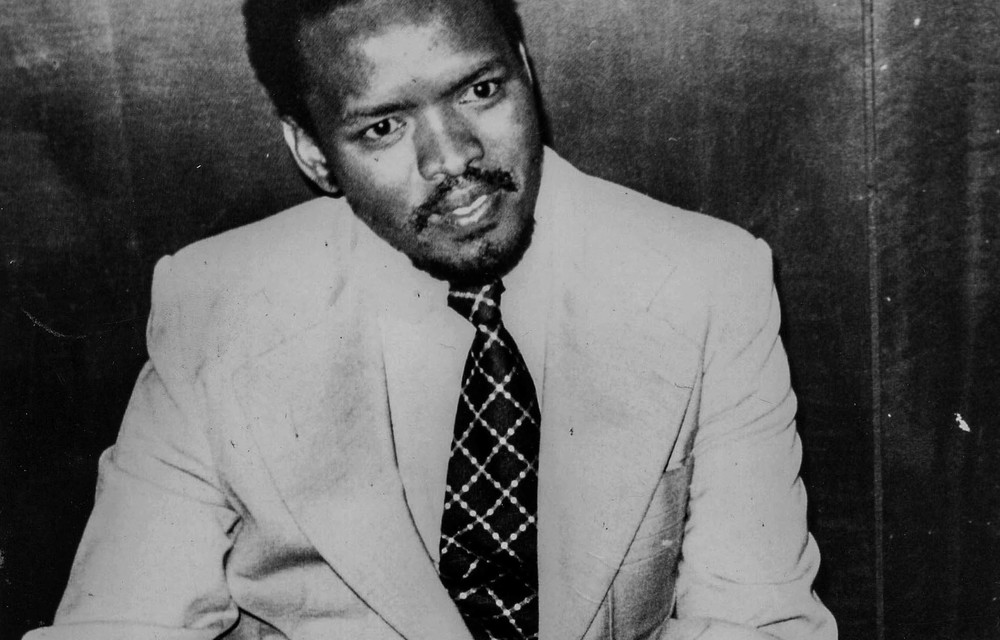
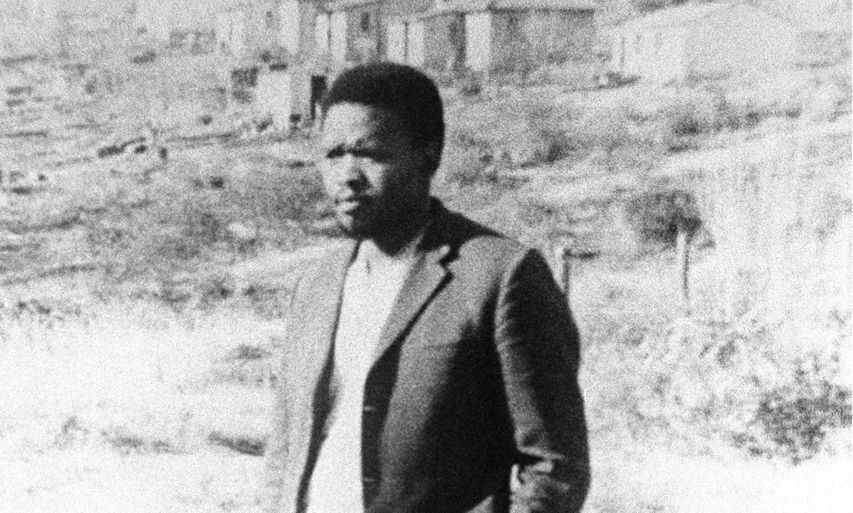
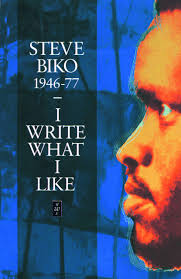
Steve Biko in I Write What I Like is often described as a thinker and philosopher, and he was. But that description misses why his columns hit so hard. He was not thinking in his bedroom. He was researching in the community.
He had his pulse on the pulse of the community. That is why he could write columns like Black Campuses and Current Feelings or We Blacks and people said: “He is writing about us.”
But, was Biko a journalist? Let us settle that with precision.
THE JOURNALIST: THE FACT WORKER
The journalist is a professional gatherer and verifier of new facts.
His first question is: What happened? His method is the five W’s and H (who, what, where, when, why and how). His allegiance is to the verifiable record. He goes to the relevant institutions to confirm information. Nothing is taken at face value. He must have at least two independent sources. He must keep notes.
His KPI in HR terms is objectivity:
• Accuracy rate: Are dates, names, places correct?
• Correction rate: When wrong, do you correct within 24 hours?
• Legal defensibility: Can your story survive a defamation suit?
• Separation: Do you keep fact separate from comment, as Press Code 1.1 demands?
A journalist can be fired for getting the address in a story wrong. That is right. Because his job is accuracy, correctness and truthfulness.
Biko was not a journalist. He never filed a news report. He never claimed objectivity. If you had forced him to be “balanced” about Black Consciousness, he would have probably laughed his lungs out.
THE RESEARCHER: THE PULSE-TAKER – BIKO’S REAL METHOD
Nowadays, this is the function we have lost in our media, and it is the function that made Biko immortal.
Between 1968 and 1972, Biko was not sitting in an office. He was President of SASO (South African Students Organisation). He was organizing throughout the length and breadth of the country. He was travelling to every Black campus – Turfloop, Fort Hare, Zululand, Durban-Westville, UNIN. He was sitting in dormitories at 2am listening to students crying because they were failing, because their Students Representative Council (SRC) had been banned, because their girlfriends were pregnant, because they felt inferior, etc.
He was also in community projects in backyard, King Williamstown – the Zanempilo Clinic, the Njwaxa Leather Works, the Ginsberg Educational Centre. He was listening to mothers talk about clinic queues, to workers lamenting their meagre earnings, wages unpaid, or beatings in the workplace.
That is research. Not library research. Interactive, embedded, participatory research. What academics today call “ethnography”.
That is why he could write Black Campuses and Current Feelings (1971). He did not guess current feelings. He had recorded them. He could quote, not statistics, but sentiments: “The Black students feel… The Black student is made to feel that he is inferior…”
withAnd We Blacks (1972). That is not an opinion piece. It is a research finding. He writes: “We Blacks are not a homogeneous group… But we share a common oppression…” He had done the fieldwork to make that generalization legitimate.
Biko the Researcher’s KPIs are different from a journalist’s:
• Immersion: How many hours did you spend in the community you claim to speak about?
• Listening: Can you reproduce the exact language of the people, not your language about them?
• Pattern Recognition: Can you move from anecdote to system? From “this student is sad” to “the system produces sadness”?
• Courage of Synthesis: Can you say “We” and take responsibility for that “We”?
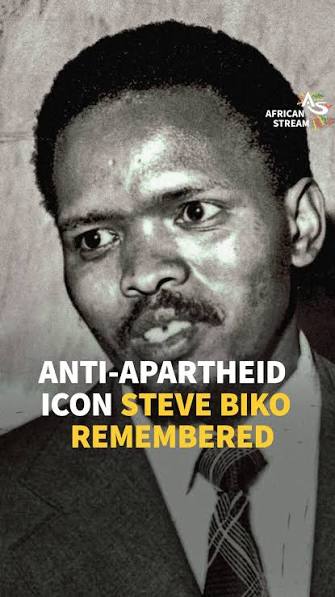
Biko passed all four with distinction. That is why his seminal column Frank Talk was so trusted it remains iconic nearly half a century after apartheid police brutally murdered Biko on 12 September, 1977. Black students knew: This man has been in our dining hall. He is not writing from elsewhere about us. He is writing from among us.
This is precisely what is missing from much citizen journalism today. A TikToker can film an ANC visit to a community. But has he spent six months among the people listening to the youth who say “we have been betrayed” and why? Biko would have.
THE COLUMNIST: THE OPINION LEADER AND MEANING-MAKER
Now, after journalist has gathered facts, after researcher has gathered feelings, comes the columnist.
The columnist’s job is not to report. It is to argue. To interpret. To provoke. To say: Here is what I think this means, and I will defend my right to think it, even as I defend your right to contest me.
A columnist may be a gogo, a taxi boss, a pastor, a football administrator like Kaizer Motaung, or a philosopher like Biko. He does not need a press card. He needs a worldview.
His KPIs are those of an opinion leader:
• Coherence: Does your argument hold together? If you say ANC has betrayed the people, do you maintain that logic throughout, and why?
• Courage: Do you stand by your writing when backlash comes? You must say I wrote the piece and stand by it.” That is a columnist’s KPI – integrity of conscience.
• Public Value: Did your piece elicit discourse that informs and educates? Many readers must argue about your perspective. That is success of a columnist – meaningful contribution toward public discourse.
• Ethical Humility: Do you defend free speech for others, even as you assert your own? Do you say, “I respect contestation and defend the rights of others to speak freely according to their conscience”?
That last KPI is what makes a columnist different from a propagandist.
WHY THIS MATTERS FOR BIKO’S LEGACY
If you are a columnist, you may be attacked as if you were a journalist who got the facts wrong. Even if you function as a researcher-columnist. You must research your subject to be guided by journalistic facts.
You must do what Biko did: You take the pulse. You listen to people in Soweto who say “the ANC must die”. You listen to people who say, “without the ANC, black freedom will die.” Then you synthesize the contrasting viewpoints, if you can. When you write as a columnist, you adopt a stance: My perspective is X. Contest it.
If a columnist is judged only as journalist, people miss the second and third functions. If we judge Biko only as a columnist, we miss that he was a researcher first. He could not have written We Blacks without having lived with Blacks.
THE REDEFINITION OF JOURNALISM
In the age of citizen journalism where anyone can publish, media houses must stop calling everyone a journalist. We need three contracts: Contract A – Journalist: Paid to be accurate. Not allowed to have a political party membership. Must correct. Must show notes.
Contract B – Researcher-Reporter: Paid to be embedded. Like Biko. Sent to live at a place for a month and listen. Not to file stories daily, but to file deeply. Measures depth, not clicks.
Contract C – Columnist/Opinion Leader: Paid to be distinct, not neutral. May be a non-journalist. A Thabo Mbeki could be a columnist. A Mbazima Shilowa could be one. A Thebe Ikalafeng could also be. Their value is not neutrality but authenticity. Their disclaimer: “Views are my own.”
If we had this, then when Thabo Mbeki writes about his African Renaissance, we would not ask, “Is he objective?” We would ask, “Is he authentic? Does he have pulse? Is he self indulgent?”
If we have this, Steve Biko would be properly classified: Not a journalist. A researcher-columnist-thinker-philosopher whose method was community immersion and whose product was liberation thought.
And columnists must be properly defended: Not as a journalist who make a factual error, but as a columnist-researcher whose perspective on burning issues is defensible and must be contested through debate, not through personal attacks.
Let journalists verify the facts. Let researchers listen to what people feel about burning controversies. Let columnists argue about what that feeling means for power.
That is how Biko’s I Write What I Like has survived. Not because Biko got every fact right, but because he got the feeling of a people right. He was authentic.