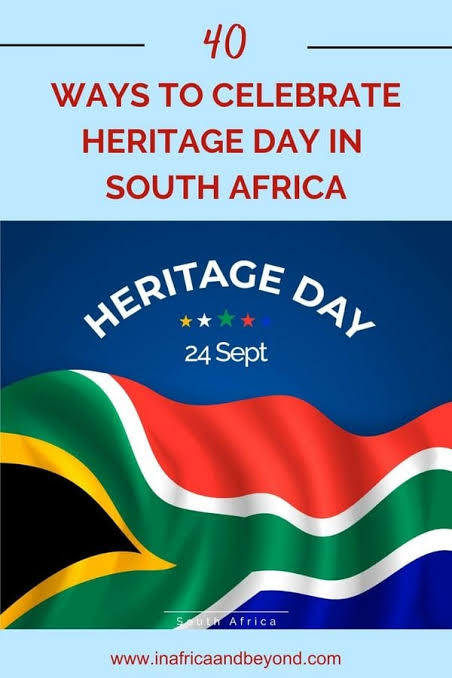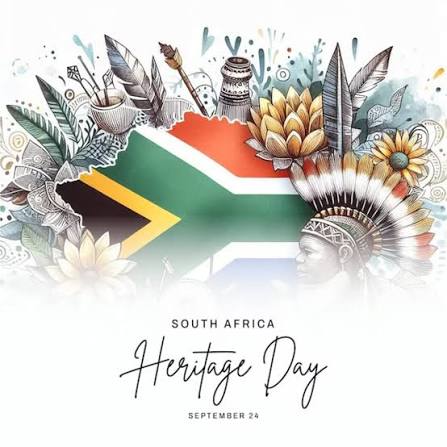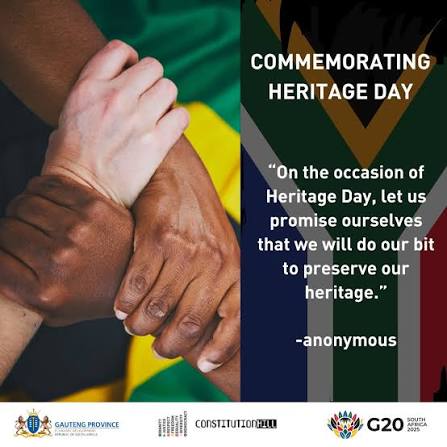
In South Africa, 24th September is a holiday celebrated as Heritage Day. This is a holiday that was etched on the calendar of the post-national liberation public holidays to celebrate South Africa’s diverse and rich heritage of multi-cultures. There is no denial that a people’s heritage is carried by its tangible and intangible artefacts.
In a colonial context, our varied cultures are the most authentic carrier of our people’s heritage. Our diverse cultures are a living archive of our heritage that history has bequeathed on our fragile nationhood. Thus, a people’s heritage is something to embrace, celebrate and promote.
Post-colonial polities are replete with monuments and artefacts that bear testimony to a history and a legacy bequeathed on the former colonised people by colonial conquest. The heritage of conquest is captured in the unmistakable colonial architecture, the statues, the colonial names, the colonial language and colonial religious practices that continue to breathe life even post the state of coloniality. In the context of South Africa being a post-colonial polity, are the former subjects of colonialism expected to continue embracing its tangible and intangible artefacts as their heritage?
Major cities of the country such as Pretoria, Johannesburg and Durban, and the small towns such as Swaartruggens and Zeerust, among many others strewn across the country, still proudly adorn their colonial names. Even the country name, South Africa, continues to be defined by colonial terms. This is the clearest sign that South Africa has not made a total break with its colonial past and is still steeped in the colonial heritage that embodies South Africa’s soul.
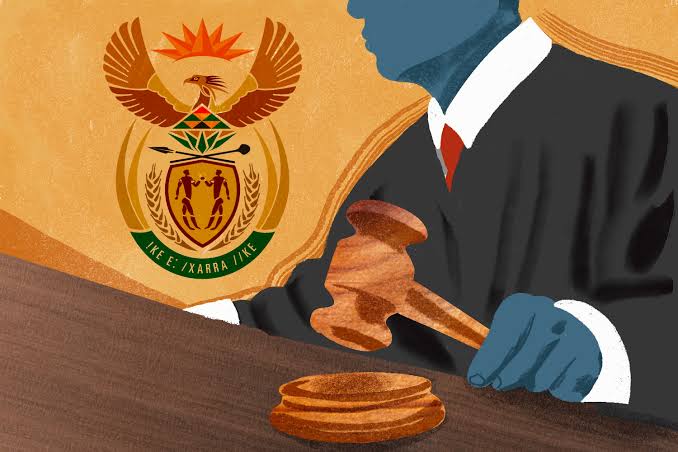
Those who argue for the continued embrace and even the celebration of a colonial heritage that manifests in the colonial architecture of important state buildings such as the parliament building, the Union Buildings, the court buildings, statues and other artefacts, argue for the celebration of Heritage Day on 24th September, in recognition and celebration of the country’s diverse cultures. This ostensibly is in step with the idea of forging a new democratic country premised on a peaceful transition, reconciliation and equality of all its peoples and their heritage.
On the face of it, the path South Africa chose, and the celebration of its cultures in their diversity and its heritage of a shared national identity was necessary to engender nation building and for the country’s stability. As we celebrate Heritage Day, which was inspired by the commemoration of King Shaka’s death, do we ever pause to ponder where this shared national heritage begins and ends.
Does it enjoin the breathtaking landscapes and the carefree rivers that crisscross its length and breadth under the blue African skies. Does it extend to the cheetah, the gazelle and the lion that roam freely on the savanna plains? Does it stretch to the ostrich, the meerkat, and the flora of the Karoo?
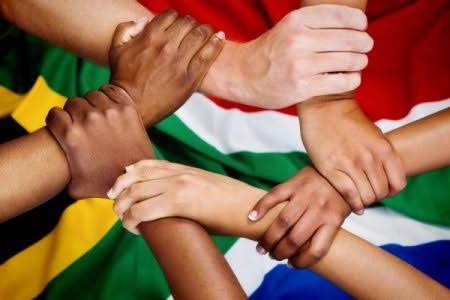
Does our shared heritage reach to the breathtaking canyons on the Mpumalanga escarpment and the sandy white and golden beaches along the coastline of the Western Cape, the Eastern Cape and KwaZulu Natal? Or is this shared heritage an exclusive privilege for those with title deeds?
Does it extend to the cold waters of the Atlantic Sea and the world renown Robben Island where Robert Sobukwe, Mandela and their comrades were incarcerated for long spells and made to break lime stones with hammers as if they were not educated professionals in order to break their spirit.
Does it extend to the San and the Khwe people whose enduring wrinkles and cave paintings together with Mrs Ples and the Taung child are an indelible testimony to our heritage as the cradle of humankind.
Does our shared heritage recognise Dingaan’s war cry against the colonisers as a legitimate call against colonial invasion, or is the 16th December, now named Day of Reconciliation, a subtle celebration of the Voortrekker’s retaliatory victory over the Zulu warriors at the battle at blood river.
Does it find resonance with the constitutional court declaration that the singing of the struggle chant ‘Kill the Boer’ is not hate speech? Does this legal position openly extend to the Afrikaners as they braai boerewors and belt Bok Van Blerk’s ‘Delarey’ in celebration of the Boer Resistance against British imperialism? Do these seemingly racially divisive positions – stemming from a divergent history and heritage – threaten South Africa’s fragile racial relations into the future?
Notwithstanding the fact that the impressive architecture and road networks and other infrastructure were built with the labour of the indigenous peoples of South Africa, the Indian indentured labour and labour of the Malay slaves, it was built with a colonial mind set and colonial aesthetics – which reflect South Africa’s colonial heritage. It is an architecture and infrastructure that reflects what Thabo Mbeki in his famous ‘Two Nations Speech’ referred to as two nations in one. One white and relatively prosperous, and the other larger nation, black and poor.
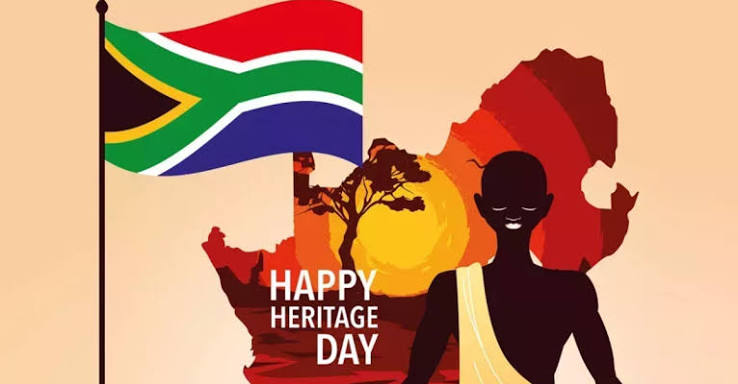
It reflects an architecture and infrastructure of inequality under colonialism, and one designed for different race groups under Apartheid. One highly sophisticated and efficient, developed for Whites, and another poor and inferior or virtually non-existent for Blacks. This is a legacy and heritage that continues to hold in the post-colonial and post-Apartheid polity.
Colonialism by its nature is a violent system of conquest, dispossession, domination and deculturation. Its modus operandi is to elevate the conqueror and their culture as superior and to suppress the vanquished and to denounce their culture as a non-culture. One of the strategies of colonialism is to deny its subjects a place in history and their heritage and to render them a people without history. This is deliberately aimed at denying them a reference point in the history of human development.
Beyond the tangible artefacts, a people’s heritage is intangible yet palpable. It is inscribed in their culture which encompasses their values, their traditions and their language. To deculturise and alienate black people from their culture, it became necessary to attack and denigrate their culture – i.e. their way of doing things – as inferior.
Deculturation is a process by which people are coerced into abdicating their own culture and socialised and assimilated into the coloniser’s culture. To lose one’s culture is to lose the essence of one’s being. It is to lose a sense of one’s DNA of who they are. It is our cultural DNA that shapes our world outlook which ultimately defines how we interact with the world. To lose one’s cultural DNA is to be alienated from the Self and to be denied one’s heritage.
To embrace and celebrate a colonial legacy in the name of a shared heritage is a misplaced and self-defeatist adventure. It is self-defeatist as it amounts to complicity in the continued psychological warfare of colonialism on the minds of the former colonised and this is the reason why black people should be emboldened to embrace the call for decolonisation.
The architecture and artefacts of coloniality continue to elevate the coloniser and thus distort the very idea of a shared heritage as they continue to broadcast images of inequality between the coloniser and the former colonised. In the post-colonial era, the colonial legacy lingers; the new aristocrats have failed to change the status quo. They are hamstrung by an obsession with the myth of non-racialism. And for this, they have to be called out.
Our heritage cannot find full expression in the absence of our ability to express ourselves as full beings. It cannot be limited to our songs and dances. It cannot be confined to our colourful dress code and the rich variety of food dishes when we celebrate and when we are in mourning. It must find meaning and resonance with the essence of our being. It cannot find full expression through a political vote if that political vote does not translate to access to land which has been made a heritage limited to those privileged by title deeds. Until we have equal access to land for productive and creative pursuits our celebration of a shared heritage shall remain a pipedream.
South Africa’s so-called shared heritage is steeped in contradictions forged by its colonial history. It is a conundrum of a fragile nationhood of two nations in one. Only time will tell whether the constitutional democracy is robust enough to withstand the tides of contradiction and sustain the fragile nationhood.