The potency of a political theory is not measured by the sting of its rhetoric but the effectiveness of its translation in the transformation of society
The objective material conditions of living are instructive to the generation of the subjective interpretation of the meaning and understanding of their manifestation in our experiences. In the South African context, the Blackman’s experience of life, as defined by the material conditions has, over sustained periods of unequal relations to his white counterparts, and to some extent also with other fellow members of the human race, been inseparable from the colour of his skin as the reason for his bleakness of being.
The impressions that the Blackman has of himself, and indeed his state of being, is inherently linked to his experiences of the prevailing material conditions. The material conditions are not neutral as they may appear. They are a by-product embedded in the arrangements of what Marx and Engels termed the ‘base and superstructure’ of the political economy, that obtains in racist capitalist societies.
To change his experiences and his impressions of himself requires a destruction or radical reorganisation of the prevailing conditions, and the corresponding ideological frames, which give rise to the social relations which obtain between himself and his white counterparts. It would therefore require a destruction or radical reorganisation of the economic base and the corresponding political superstructure, if the Blackman is to be freed from the quagmire of his miserable condition that defines black life.
Biko’s pioneering class of Black Consciousness in the sixties understood that the reasons for the black condition were inseparable from the colour of t
heir skin. They understood the dehumanising aspects of being black, and worse, the debilitating psychological effects of colonial and Apartheid racism on the minds of black people. It is for this reason that Black Consciousness always instigated for Black Unity and Black Solidarity and called for the Blackman
“to rally together with his brothers around the cause of their oppression – the blackness of their skin.”
It was not a mistake that Black Consciousness in the sixties and seventies was preoccupied with the mission of restoring the dignity and humanity of black people. If black people were to do something about their condition, they first had to find themselves and rediscover who they were as a people. Thus, it is no surprise that it was the immediate mission of Black Consciousness to extricate black people from their collective neurosis, instilled by the effects of centuries of racist subjugation under colonialism, and later, Apartheid segregation.
Black Consciousness sought to help black people to overcome the effects of alienation, inflicted by race-based laws by embracing the blackness of their skin, their culture and their language. It sought to instil a new sense of ‘the self’ and reclamation of ‘self-pride’ for black people to define themselves in their own terms. It was this quest for reclamation of their dignity and pride that gave rise to slogans like ‘Black is Beautiful.’ Black Consciousness was unapologetic about injecting militancy in black politics.
Black Consciousness through Ubuntu
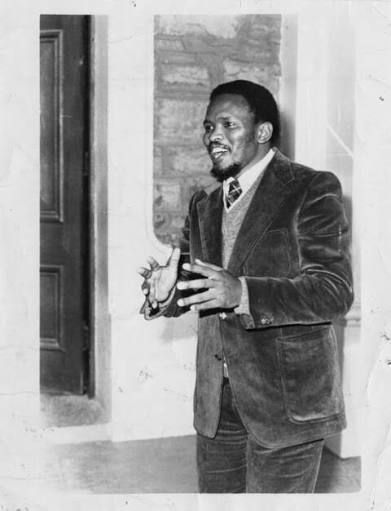
REVOLUTIONARY PHILOSOPHER: Bantu Steve Biko
Black Consciousness as a political theory is not without its detractors. In politics, there are no holy cows. Notwithstanding, Black Consciousness is not immune from scrutiny and criticism. If it is to reclaim centre stage, as in its glory days of the late sixties and seventies, and rekindle hope for the black masses, Black Consciousness should place black people at the centre of everything that affects their lives. We need to come to an understanding that Black Consciousness is more than a political philosophy, it is a way of life.
Black people are not incidental to considerations about them but central to any effort towards the restoration of their humanity as seen from the paradigm of Ubuntu. They are an image extension of their God only bound by physical dimensions in time and space.
Black Consciousness as a philosophy seeks to weave dignity into the tapestry of Blackness, never again to be trampled by other nations but to adorn the walls of their proud and rich heritage of Ubuntu/Botho. To reclaim and reshape the landscape of our heritage, Black Consciousness in the 21st century should chisel through the falsehoods of western archaeology and anthropology and give new meaning to the artefacts that bind us to our true history.
It should actively and rigorously seek and strive to relocate our glorious place in epistemology by debunking the myths and misrepresentations of our history distorted and falsified by western historians, anthropologists, archaeologists, colonisers and missionaries as well as the continued distortions by the new aristocrats in the democratic epoch.
It should, in concrete terms, articulate the linkages between the miserable lives of black people and the entrapments of the intricate web of the hegemony of western philosophy and capitalism together with the totalising phenomenology of racism. It should rally all black people across the globe to reject racism and to actively mobilise against any form of racism whether directed to an individual, a group, a community or black society in general. It should mobilise against all manner of manifestations of racism whether systematic, institutional, structural, cultural or attitudinal.
Black Consciousness should fulfill the mission Biko and his contemporaries envisioned: restoring the Blackman’s humanity so that black people take pride in being black and do not seek validation beyond their Blackness by imitating Whites or any other racial or cultural group to prove their worth. Black people should not expect or depend on love and respect from other racial groups; instead, they should place self-love, self-respect, and love and respect for fellow Blacks, central to their way of being.
When we come to terms with our Blackness and begin to embrace and love our Blackness, it should feel natural and effortless for black brothers to love and show respect to fellow brothers and sisters. It should feel natural for black men to love their women and treat them as their queens without feeling emasculated and undermined. Equally, black women should find it intuitively easy to respect and treat their men as their kings without feeling oppressed by patriarchy.
Black Consciousness should encourage a culture where children grow up in an environment of love and respect where men’s masculinity is not threatened, and where women and young girls can assert themselves without fear of recriminations from the menfolk. It should cultivate a culture where male and female roles are complementary and not antagonistic.
Black Consciousness should engender a culture where parents nurture black children to live their lives to the fullest as children under guidance of the wisdom of their village, or town and community values without aspiring to white values. In African custom, it takes a village to raise a child.
We lost these values as we sought to emulate western values that promote the centrality of individualism as opposed to elevation of the community. We are emulating new ways of being with emphasis on the so-called nuclear family, where everyone minds their own business and where neighbours take no interest in their neighbour’s child even when it is obvious, they are straying.
This is in no way an attempt to romanticise customary black life but a humble acknowledgment of the richness of our fast-dissipating heritage of Ubuntu. The only way to command the respect of other cultures is to embrace the fullness of our own. When others disrespect us, as they sure will to confound us, Black Consciousness grounded on the ethos of Ubuntu should be our fortitude. It should be our garrison that makes it bearable to rally behind one another to confront any form of dehumanisation of fellow Blacks.
Black Consciousness on our political economy
The Black Consciousness Movement has been criticised for lacking a clear and scientific theoretical analysis that adequately articulates the solutions to the problems facing South Africa. Proponents of a class solution to South Africa’s problems go further to argue that Black Consciousness’s theoretical conceptualisation is inadequate in addressing the class-based nature of global capitalism. Black consciousness is seen by its critics as narrow nationalism and shallow on class analysis.
Biko’s agitation for Black Consciousness as an antithesis to the thesis of White racism was not limited to the attitudinal proclivities of Whites as detractors of Black Consciousness claim. Biko understood White racism as a totalising system. Hence, the thrust of Black Consciousness was a negation of the thesis of White supremacy in all its manifestations, which are clearly observable in the racist political economy of South Africa.
Black Consciousness as a philosophy of the 21st century should openly and unapologetically demonstrate its grasp of the racist nature of our political economy. Material exclusion through landlessness and racist economic exclusion is at the heart of the problems still facing black people in the 21st century. The old-style signs that announced Apartheid right in your face have symbolically been removed, yet economic exclusion and poverty are the new signs of racial and class segregation in the epoch of democratic disorder.
There is, therefore, a need to clarify Black Consciousness as a totalising philosophy that is equal to the task of dealing with the system of structural racism in all its manifestations i.e. the economic, social, political, juridical, religious, cultural and psychological artefacts, which are all components bolstering the totalising strategy of global capitalism.
It is critical to advance a clear theoretical articulation of Black Consciousness as a philosophy not only limited to explaining the racism and alienation that continues to afflict Black people post national liberation. It should clearly demonstrate that it is adequately equipped to take meaningful and robust strides in the war against white domination in the terrain of South Africa’s political economy.
This calls for a strategic adjustment of the lens of Black Consciousness from the manifesting experiences of black people, and a refocus on the historical role of racism and white supremacy as instruments of global capitalism in the broader class struggle. Black Consciousness should accelerate the war against the exploitation of black people, predominantly as landless peasants and as overwhelming members of the exploited working class.
This analysis is premised on the view that racism is a historical, structural and ideological phenomenon in the evolution of capitalism, and black people its primary target race group. There is a need to advance the understanding of racism as a philosophy that reinforces the arrangements in the base structure, which in turn influence and shape the developments of the ideological superstructure and vice versa.
This understanding belies the narrative that racism is a natural phenomenon that is inherent in human relations and therefore cannot be defeated nor eradicated. Black Consciousness as a philosophy brings into sharper focus the contradictions of racism as an impediment not only to the realisation of a classless society but also as the primary source of alienation and exploitation of Blacks on a scale not experienced by any cultural or racial group.
To relegate the issue of racism and alienation to mere appendages of the social contradictions brought about by capitalism and common to any capitalist country, is a cosmetic and convenient obfuscation. Structural Racism, masked as a social contradiction, has assumed a life of its own and requires special attention in the broader class struggle against capitalism.

Black Consciousness, a philosophy of praxis
Black Consciousness should redefine what it means to be black in the 21st century if it is to experience a genuine rebirth and not suffer the fate of non-racialism as an idealism. It should clearly articulate the Blackman’s political, cultural and epistemological outlook as informed by the objective material conditions that define his pitiful existence, his bleakness of being, so that it can deliver him to his greatness.
It is important to morph Black Consciousness into the sphere of the mainstream of our political economy and to lose its derogatory descriptors by detractors as an exclusivist philosophy of black elites if we are to make it a way of life. However, without a clear, robust, modern philosophical outlook, Black Consciousness will be susceptible to vulgarisations and distortions from all manner of critics especially those threatened by its mission. Without being grounded on a clear and robust theory that encompasses our political economy, it shall be weakened and easy prey for bourgeois hegemony and neo-liberalism.
Our philosophical outlook should first and foremost be informed by the objective conditions that shape our social reality as black people. It is the awareness and recognition of the relationship between our people as subjects, and the reality of a racist capitalist political economy as the precursor to the objective material conditions that give birth to their misery and even their consciousness.
As social conditions evolve with the developments in the material conditions of society, Black Consciousness as a philosophy should evolve to reflect the changes that obtain in the objective material world in the 21st Century. This also calls upon us to redefine and reposition Black Consciousness to reflect these developments and movements in society.
Ultimately, the philosophy of Black Consciousness needs to be translated into the transformation of black people’s experiences in all aspects of their social interactions, be it their economic endeavours, their politics, their juridical arrangements, and their cultural and spiritual expression. This is a must do if we are to reclaim our humanity and our sovereignty.
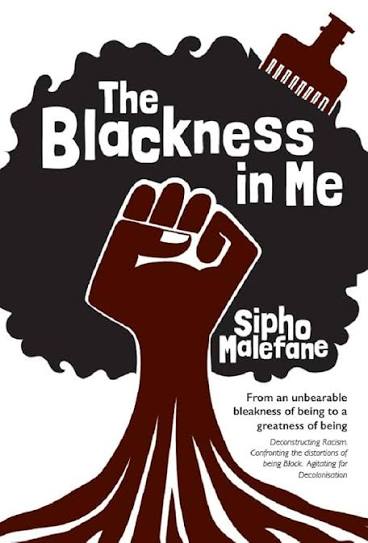
The Essay ‘Black Consciousness in the 21st Century’ is in the main extracted from the book ‘The Blackness in Me’ by S. Malefane