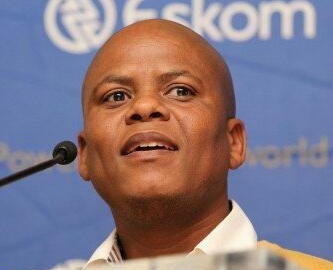
China’s top envoy to South Africa, Ambassador Wu Peng, is a diplomat on a mission: He wants to bolster bilateral ties between Pretoria and Beijing to the level where benefits of the existing “golden era relations” could be felt and seen across every sphere of society.
Amb Wu was briefing the media at a special function arranged by the influential National Press Club in Pretoria. His elaborate media conference follows closely in the recent official state visit to China by SA’s President Cyril Ramaphosa. The state visit coincided with the latest summit of the Forum on China-Africa Cooperation (FOCAC), which was attended by at least 51 African heads of state, or their delegations. Beijing regards relations with the continent are of utmost importance in foreign policy. During FOCAC, it was announced by President Xi Jinping that relations between China and Africa were elevated to “an All-Weather China-Africa Community with shared future for the New Era”.
Addressing the media function this week, Amb Wu said: “When I saw off President Ramaphosa at the Beijing airport on his return to South Africa, he emphasized one thing that he wants to see done without delay, and that is: Implement, implement, implement.”

Now, back on SA soil where he is deployed for the next few years, Amb Wu wants to do just that. There are several agreements that were entered into between China and South Africa during the state visit. They include cooperation in areas like the Beidou Satellite Navigation System, housing and human settlements, bilateral trade, agricultural market access and cultural heritage. The agreements marked the elevation of China-South Africa relations to an “All-Round Strategic Cooperative Partnership in the New Era”.
Additionally, during his key address to FOCAC, Chinese President Xi Jinping unveiled no less than ten strategic areas of cooperation with strict timeline of the next three years to achieve. For his part, President Ramaphosa key priorities include the revision of the visa regulation between the two nations. The objective is to ease the red tape so as to increase the flow of Chinese businesses into SA.
Secondly, SA wants the footprint of the Chinese Electrical Vehicles {EV’s} to be drastically increased. This could be done through increment of the automobile assembly points, leading hopefully to the migration of the manufacturing itself to SA. This would reduce the purchase price of the EV’s, leading to a high number in accessibility of the goods and services. Above all, the arrangement would also lead to skills transfer and the much-needed job creation in a country where unemployment is unacceptably high. SA is also regarded as the world’s most unequal society between the haves and the have-nots.
The amelioration of SA’s 30 years of the disordered faults of progress since the dawn of democracy and establishment of diplomatic relations with the world’s second biggest economy is what Amb Wu intends to tackle.
“I have worked on Africa-related affairs for nearly a decade…FOCAC has become a guiding force in international cooperation with Africa,” Amb Wu told a packed media function that was also attended by top academics and political players. He added: “Based on my own experience, I would like to summarize the spirit and outcomes of FOCAC using five C’s. The first C stands for Community,” he said. “This symbolizes the building of a high-level community with a shared future.”
Elaborating on the notion of a shared community, Amb Wu said: “China and Africa have always been interconnected through shared history, development goals and aligned strategic interests. President Xi Jinping emphasized at the Summit’s opening ceremony that China-Africa relations are now at their best in history.” Amb Wu was correct.

During FOCAC 2024, it was revealed that China “established or elevated strategic partnerships with 30 African countries that have diplomatic ties with China. Africa now holds a unique position as the only continent to have this level of partnership with China, and this fully reflects the strategic importance both sides hold for each other,” he explained.
He described the second “C” as representing “consensus”. He explained: “This refers to the shared vision for modernization.” Consensus in China-Africa relations is representative of consensus across the Global South on modernization. This also dismantles the myth that “modernization equals Westernization”, Amb Wu said to applause.
During FOCAC, President Xi announced a six-point plan on China-Africa’s joint pursuit of modernization. “This included principles of fairness, openness, people-first, inclusiveness, eco-friendliness, peace and security. This gained wide recognition by African leaders and represents a strong political consensus,” Amb Wu explained.
The third “C” stood for “commitment”. This highlighted the creation of a roadmap for the next phase of China-Africa cooperation. “A hallmark of China’s cooperation with Africa has always been the readiness to keep promises and take real action,” said Amb Wu. Past cooperation agreements between China and Africa have brought “tangible benefits to hundreds of millions of people”.
Furthermore, President Xi announced “Ten Partnership Actions” for the next three years. As part of the plan, “China will invite 1,000 members of African political parties to visit China, grant zero-tariff treatment to all products from 33 of Africa’s least developed countries, build supporting infrastructure for 10 industrial parks, implement 30 infrastructure connectivity projects and carry out 1,000 ‘small and beautiful’ livelihood projects”.
In addition, said Amb Wu, China “will launch 20 programmes of health facilities and malaria treatment, send 500 agricultural experts, launch 30 clean energy projects, and create at least 1 million jobs for Africa.” Other specific initiatives identified included expanding the “Future of Africa-Vocational Education Cooperation Plan, offering 60,000 training opportunities, inviting 1,000 African cultural and tourism professionals to China for study, establishing media and cultural exchange platforms in Africa, continuing China-Africa Press Communication Center Program, and designating 2026 as the China-Africa Year of People-to-People Exchanges”.
To ensure that the plan succeeds, China has put down 210 billion yuan in credit line, which includes 70 billion yuan of investment by Chinese enterprises in Africa. The fourth “C” stands for “creativity”. This speaks to hosting four high-level meetings during the Summit for the very first time. And the fifth and final “C” stands for “coordination”, referring to enhanced cooperation in international affairs. This was made more important as China and Africa aligned their strategies on global governance at a time when the global world order is undergoing what President Xi described as the “once-in-a-century changes”.
Finally, Amb Wu expressed deep appreciation to South Africa’s reiteration of its commitment to one-China policy, “acknowledging that there is only one China, that the People’s Republic of China is the sole legitimate government of China, and that Taiwan is an inseparable part of China”. He concluded by also noting SA’s support for China’s efforts toward national reunification. “All of our friends present today represent the bridges that will bring hope to China-Africa people-to-people exchanges,” said Amb Wu.
Abbey Makoe is Founder and Editor-in-Chief: Global South Media Network