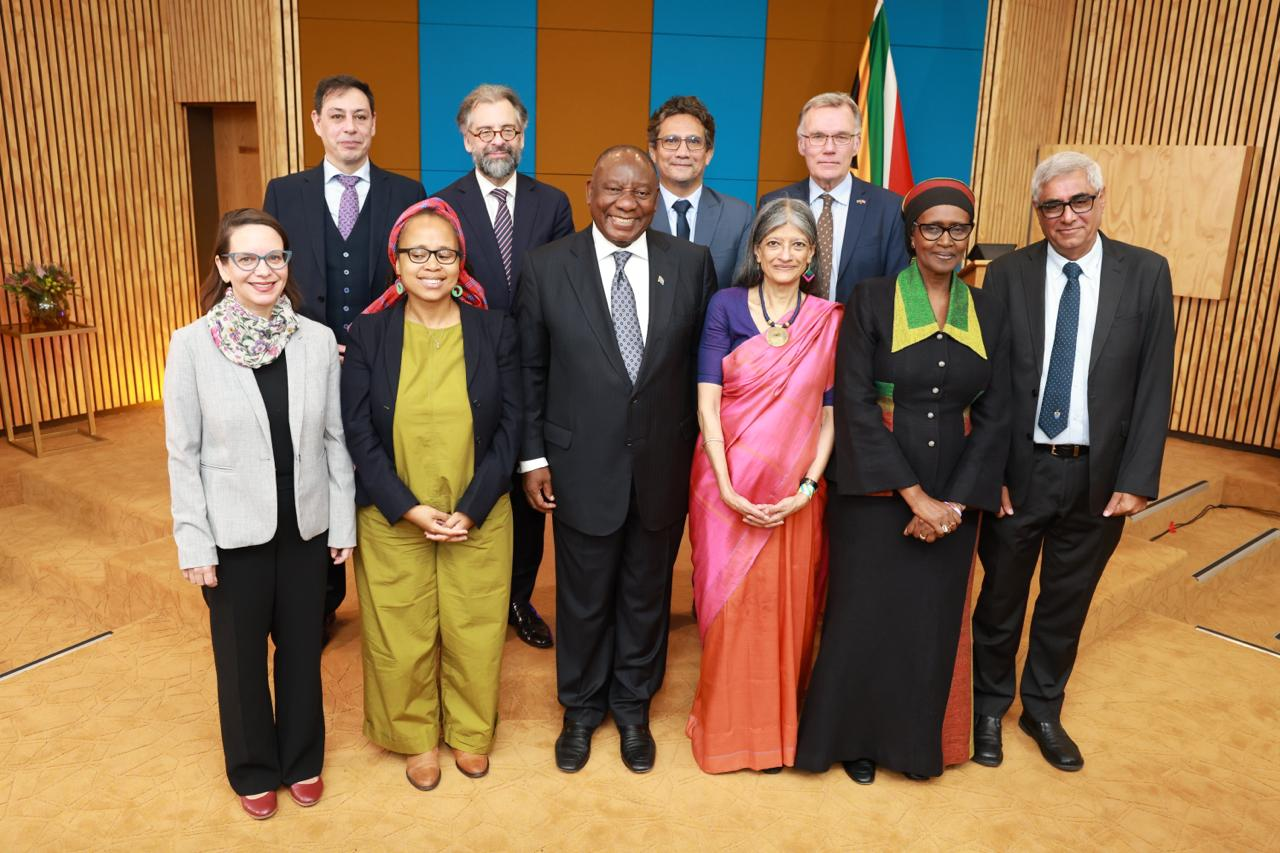
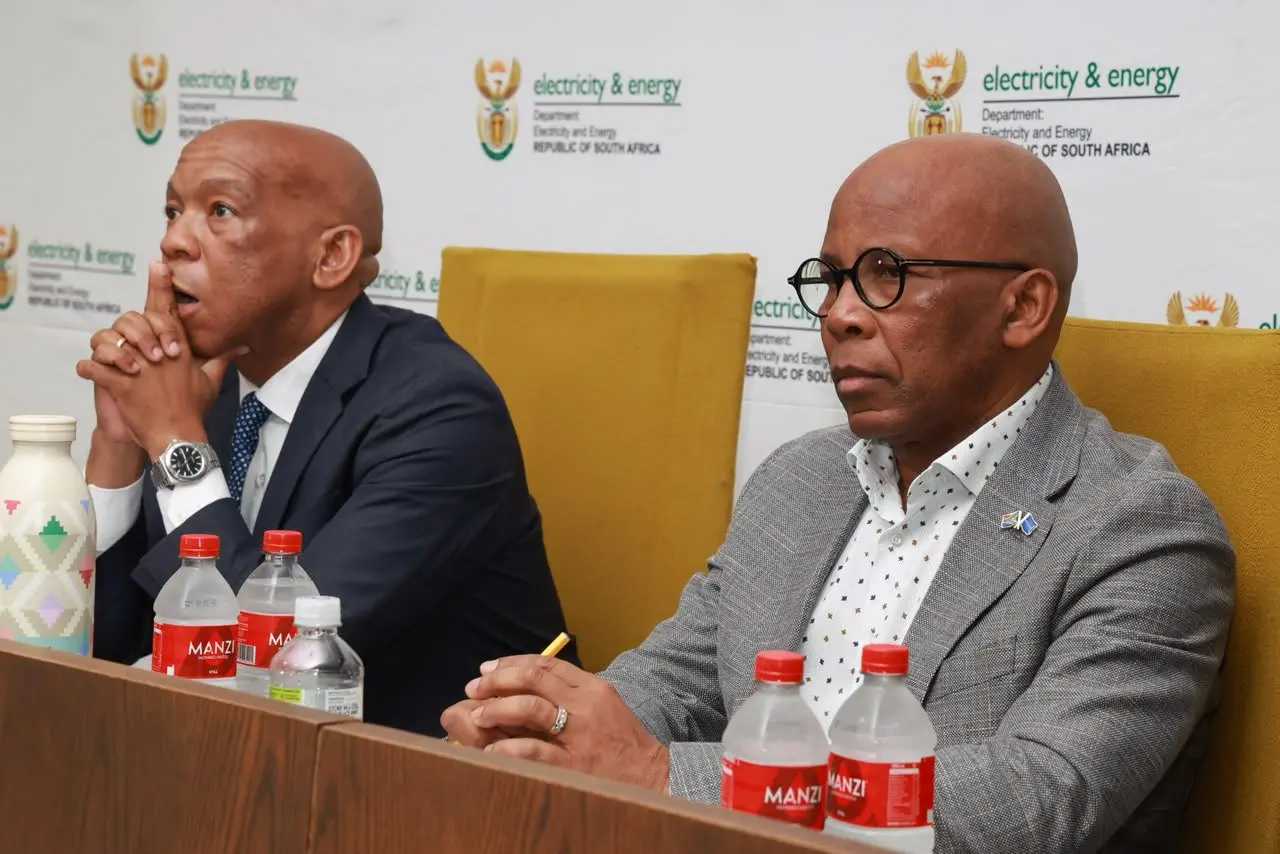
![PRESIDENT RAMAPHOSA'S KEYNOTE ADDRESS AT THE INTERNATIONAL PANEL ON INEQUALITY [Image: SA Gov]](https://gsmn.co.za/wp-content/uploads/2026/04/678926814_1431297252369404_2450149361202771917_n.jpg)
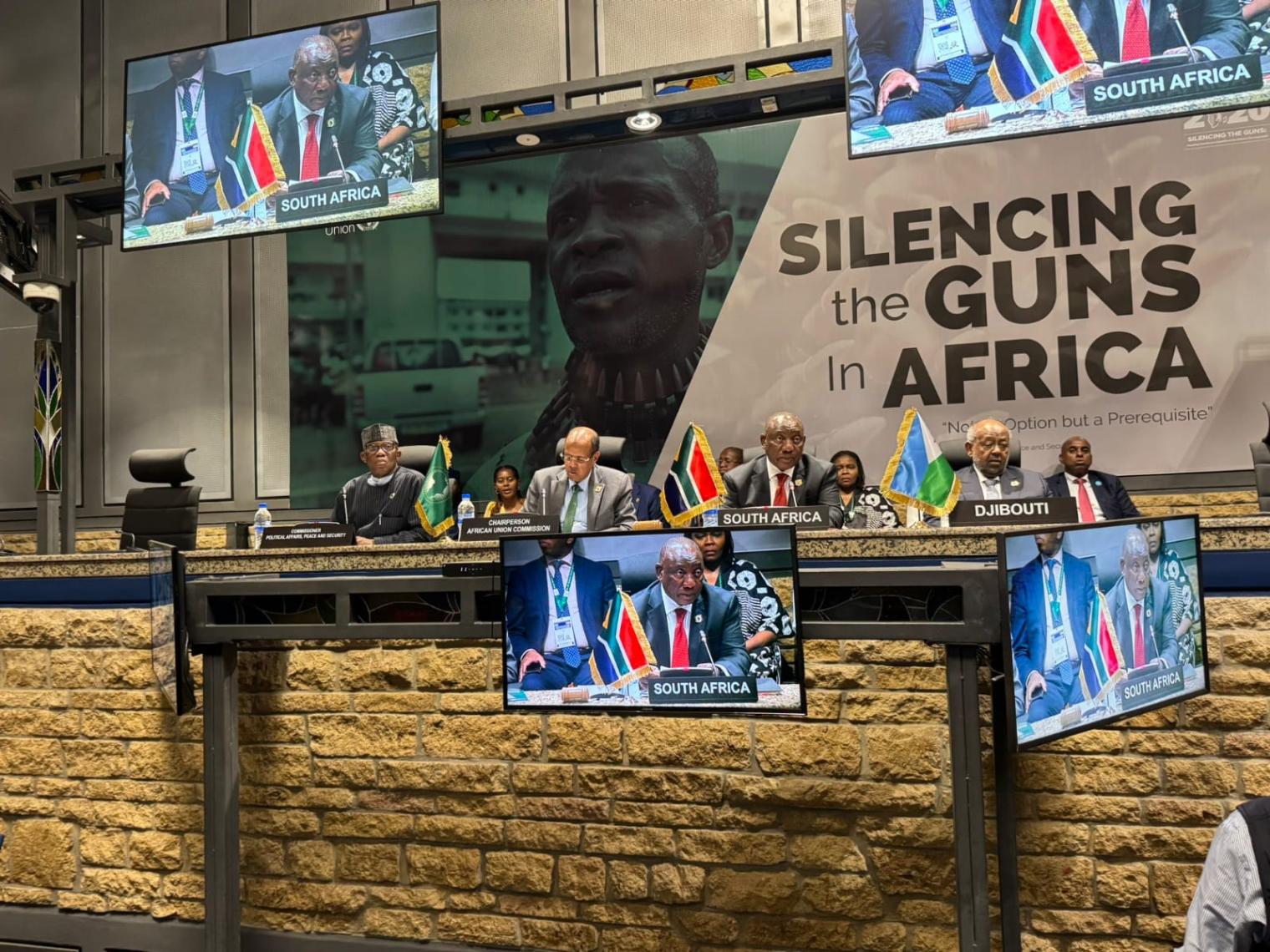
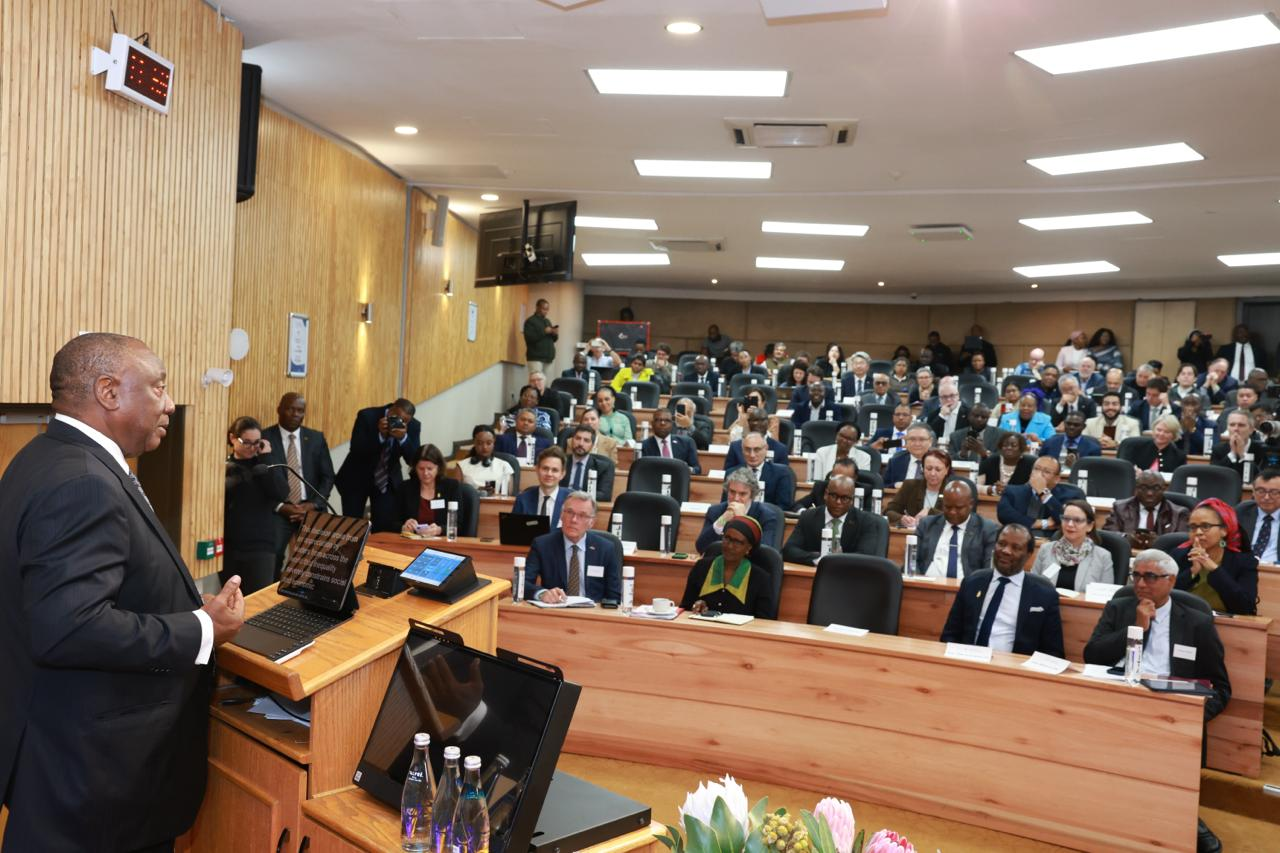
“It is a great honour to participate in this Consultative Council and meeting of the Founding Committee of the International Panel on Inequality. The decision to establish the Panel is one of the most consequential outcomes of the G20 Leaders’ Summit held in Johannesburg in November last year. This decision arose from an appreciation by leaders from across the world that inequality severely constrains social and economic development.
Indeed, inequality is one of the greatest threats to human progress. It retards human development and progress because where inequality exists, opportunity is scarce. Where opportunity is scarce, potential is wasted. And where potential is wasted, progress is not just slowed—it is stopped.
Inequality literally entrenches poverty across generations. It results in one’s starting point in life being a handicap and results in inferior schooling, nutrition, lack of networks that make upward mobility difficult or impossible. This prevents humanity’s progress.
Humanity cannot advance for as long as vast swathes of humankind people are denied the fundamental requirements of a decent life – water, food, shelter, education, employment, security. Humanity cannot advance when the talents, capabilities, creativity and energy of billions of people remain untapped and their potential remains unrealised. By the same measure, humanity cannot advance in a world that is deeply unjust and where so many people are unable to exercise the fundamental human rights that are their due.
It was to address this global crisis that I established the Extraordinary Committee of Independent Experts on Global Inequality as part of South Africa’s G20 Presidency. Under the leadership of Prof Joseph Stiglitz, the Extraordinary Committee did extraordinary work. It produced a seminal report that will form the cornerstone of the global fight for equality into the future.
Drawing on extensive evidence and a broad range of views, the report outlines in clear and precise terms the scale, drivers and consequences of rising inequality. It is astounding that between 2000 and 2024, the richest 1 percent of people in the world captured 41 percent of all new wealth.
The poorer half of humanity captured just 1 percent of new wealth. The committee’s report provided evidence that inequality is a threat to democratic freedoms, to economic growth and to general well-being.
It would be a mistake to think that inequality is bad only for the poor. Inequality threatens the stability of societies and the sustainability of economies. It worsens the effects of climate disasters and steadily makes the planet less inhabitable for all people.
The Extraordinary Committee was correct when it said that the world is facing an inequality emergency. The International Panel on Inequality represents a concrete opportunity to confront this emergency. It is an opportunity to bring together governments and peoples from different countries to help the world to understand and address inequality.
No nation can overcome inequality alone. We need coordinated multilateral action, rooted in solidarity and shared responsibility. We need a collective architecture of reform, credible monitoring and actionable insights to guide governments, multilateral agencies, academia and civil society.
Since the publication of the G20 Inequality report last year, the principles set out in the report have been endorsed by the African Union, several world leaders, more than 700 economists and inequality experts, and over 30 former world leaders.
I would like to make special mention of those leaders who have been particularly supportive of the work towards the establishment of the panel: Prime Minister Pedro Sánchez of Spain, President Lula da Silva of Brazil and Prime Minister Jonas Gahr Støre of Norway.
The struggle against inequality featured prominently at the 4th meeting of the ‘In Defence of Democracy’ initiative in Barcelona last weekend. At the meeting, leaders from across the world recognised that persistent inequality, social, economic and political exclusion, and lack of opportunity create fertile ground for extremism, polarisation and the erosion of democracy. The leaders welcomed coordination with international initiatives addressing inequality and social cohesion, specifically mentioning the International Panel on Inequality presented during the South African G20 Presidency.
The Panel will therefore begin its work amid a gathering groundswell of global activism for a more inclusive, equal and just world. It will provide the rigorous analysis and credible evidence that is needed to ensure that this sentiment is translated into actions that fundamentally and sustainably reduce inequality within and between countries.
That is why the work of this Consultative Council is so important. All those gathered here, from South Africa and across the world, are expected to propose an agenda for the first wave of work of the International Panel on Inequality.
The Consultative Council is expected to identify the critical areas for focus within four key themes taken from the original report: the scale and dimensions of inequality, drivers of inequality, consequences of inequality and finally policy options.
We expect this Consultative Conference to deliberate on the gaps in our knowledge in these areas and prioritise the key questions that we need to answer to address these gaps.
Thank you to all of the experts who are attending in person and to those who will be participating virtually. Thank you for sharing your time, expertise and passion. We encourage all world leaders and all governments to actively support the establishment of the Panel as a permanent international body.
Once established, once equipped and supported, this International Panel will be one of the most effective instruments the global community has to direct efforts to substantially reduce inequality.
But we must recognise that the panel can only take us so far. As communities, as social formations, as governments and as multilateral institutions, it is up to us to take forward the struggle for more equal societies and for a just and inclusive global order.
The International Panel on Inequality can provide the evidence we need. It can develop the analysis and make the policy recommendations. But it is up to all of us to act, to act together and to act with great urgency. We need to advance on all fronts.
At a domestic level, countries need to be investing in the education and health of their people, prioritising the needs of the poorest and most vulnerable. They need to provide quality public goods and services that improve living conditions and create opportunities.
Laws, policies and regulations need to protect workers, constrain excessive corporate power, create employment, safeguard the environment and ensure that taxation is progressive and redistributive.
On a global level, we need to transform the rules and institutions of global financial governance to direct their resources towards the needs and circumstances of developing economies. The commitments that have been made towards those countries that bear the burden of global warming need to be fulfilled and further enhanced.
If we are to overcome global inequality, developing economies need to have the space, the means and the capability to undertake just energy transitions appropriate to their national development paths.
Just as inequality fuels conflict, so conflict deepens inequality. It is therefore of the utmost importance that the global community rallies around efforts to resolve the conflicts that are today afflicting the world and to put in place credible mechanisms to prevent conflict into the future.
We need to restore the UN Charter to its rightful place at the centre of international relations and to reform institutions like the UN Security Council so that they can be reliable guarantors of peace.
We establish this International Panel knowing that inequality is deepening. We do so out of grave concern for the quality of lives of billions of people and the prospects for meaningful human progress. Yet, although the challenges are great, we see a rising tide of activism and a renewed determination across the world to confront and overcome this crisis of inequality.
As we undertake the important preparatory work to put this International Panel in place, we are full of hope and expectation. We are convinced that through our collective efforts we are firmly on the path towards a better, more just and more equal world.
I thank you.”