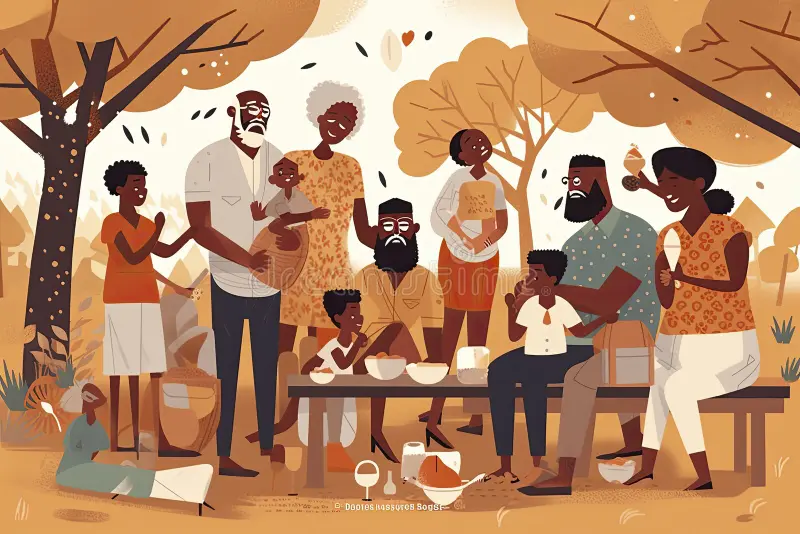
![AI image of a group of black people / black community [Image: iStock]](https://gsmn.co.za/wp-content/uploads/2026/03/istockphoto-1246822309-612x612-1.jpg)
South Africa has more Black leaders in powerful institutions than ever before. Yet the distance between the Black middle class and the communities that shaped it continues to widen. This essay reflects on the quiet abdication and co-option of that class—and the responsibility that now confronts it.
There comes a moment when confession must move beyond private reflection and become a public reckoning. For many of us in South Africa’s Black middle and professional classes, that moment has arrived.
I find myself pondering my own culpability in the storms that rage among our people—the erosion of kinship, the deepening social fractures, and the quiet abdication of responsibility by those of us who once understood ourselves to be custodians of a collective future.
Kinship—ubudlelwane, as we call it in isiZulu—is the invisible fabric that binds communities together. It is not sentimentality; it is shared fate. It is the moral understanding that the well-being of one is bound to the well-being of all. When this fabric weakens, societies do not merely struggle—they unravel.
Much of the national conversation today focuses on political leadership: corruption, factionalism, and governance failures. These critiques are valid, but they obscure a deeper and more uncomfortable truth. The crisis we face is not only the result of political betrayal. It is also the result of social withdrawal—particularly by those of us who gained access to opportunity after 1994.
The rise of the Black middle class was a historic and necessary achievement. For generations our parents and grandparents fought so that we might access education, professional careers, and economic mobility. Yet mobility came with an unintended consequence: distance.
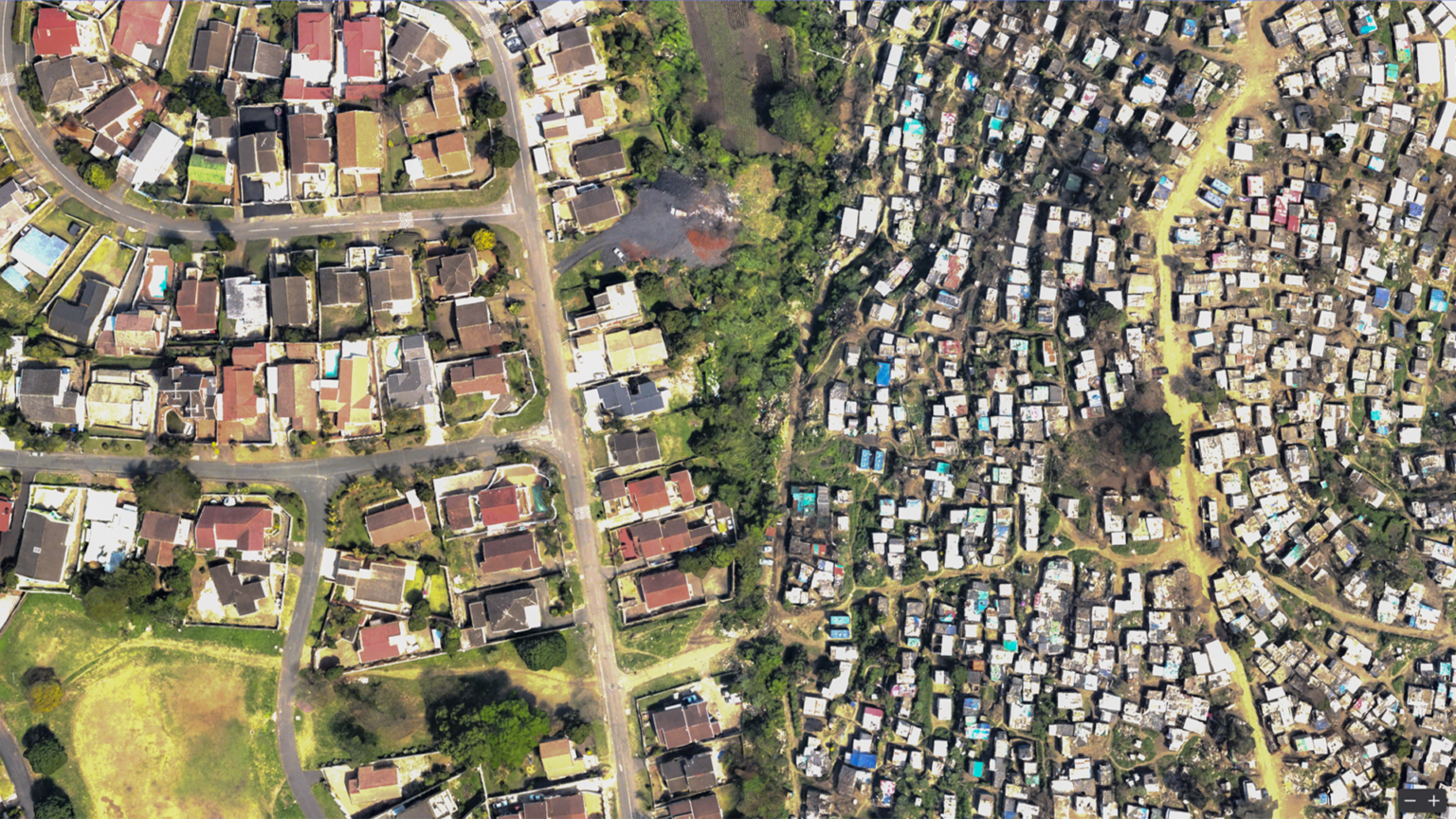
As many of us moved into suburbs, gated communities, private healthcare schemes, and elite schools, we did not simply change addresses. We created buffers between ourselves and the everyday realities of the majority of our people. Over time those buffers hardened into distance—physical, emotional, and moral.
The township slowly shifted from a place of shared life to a place we visited nostalgically—ikasi lami reduced to weekend ishisanyama rather than daily responsibility.
What must be named plainly is the mass exodus of the Black professional and managerial class from township life. When we left, we did not merely remove ourselves; we removed skills, mentorship, spending power, and civic leadership. Communities that once contained teachers, nurses, engineers, entrepreneurs, and administrators increasingly became spaces inhabited by the very young, the elderly, and the economically trapped.
Vacuum is never neutral.
Where community leadership retreats, other forces fill the space: gangs, predatory politics, collapsing institutions, and economies of desperation. The absence of stable middle-class participation weakens the everyday structures that sustain social life—schools, small businesses, civic organisations, and faith communities.
Yet the abdication of the Black middle class is not only geographic. It is also institutional and psychological.
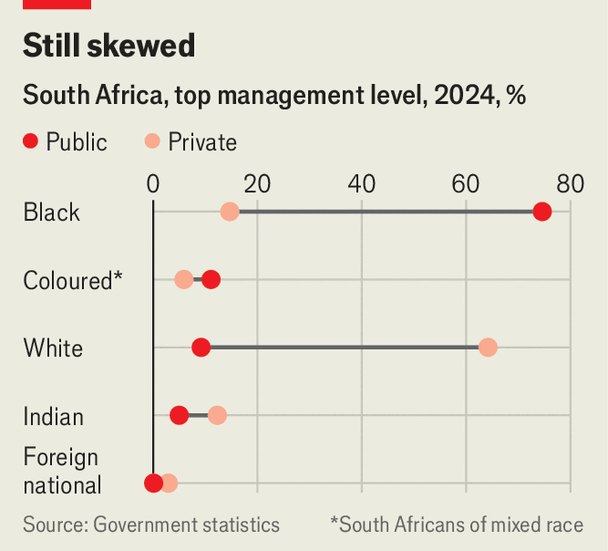
Many of us now occupy positions that would have been unimaginable a generation ago. Black professionals lead corporations, banks, regulatory bodies, universities, and state institutions. We sit in boardrooms where decisions affecting billions are made and preside over balance sheets larger than the budgets of some African states.
By the metrics of representation, the transformation of South Africa’s professional landscape is undeniable.
But representation can conceal another reality: co-option.
The institutions into which we have entered were not designed by us, nor were they designed with our communities in mind. Their operating logics—their models of risk, reward, and legitimacy—were built in an era when the vast majority of our people were excluded from the formal economy altogether.
To succeed within these systems often requires adaptation to their internal incentives. Careers advance through compliance with existing frameworks. Performance is measured through efficiency within inherited structures. Over time, it becomes easier to optimise the system than to question its architecture.
And so, a subtle shift occurs.
Success becomes defined by proximity to power rather than transformation of power itself.
This is the quiet mechanism of co-option.

We become highly capable managers of institutions whose deeper logic remains unchanged. We administer systems designed long before our inclusion, often without asking whether those systems are capable of producing fundamentally different outcomes.
In this sense, our generation risks becoming administrators of inherited power rather than architects of a new economic order.
It is within this broader reflection that the question of economic sovereignty inevitably arises. Artist Charles Masilela, in a recent LinkedIn thought-leadership piece, captures the paradox succinctly: “We have Black CEOs. We do not have Black economic sovereignty.”
His observation is not merely about corporate leadership. It is about who ultimately determines the direction of capital itself.
As Masilela reminds us, “Titles without capital allocation are costumes, not power.”
South Africa has produced a generation of highly competent Black executives who run some of the most sophisticated institutions on the continent. Yet the patterns of capital allocation that shape the economy remain remarkably resilient.

Masilela pushes the argument further with a stark reminder: “Credit is the oxygen of capitalism. Control credit, and you control who breathes.”
Whether one fully agrees with his prescription or not, his insight forces a difficult reflection. Representation at the summit of institutions does not automatically translate into transformation at the base of society.
But the deeper question for our generation may not be sovereignty alone. It may be responsibility.
Those of us who benefited from the opportunities created by democracy inherited both the moral capital of struggle and the material possibilities of a new South Africa. We are no longer the young professionals or activists of yesterday.
We are the elders now.
Elderhood is not defined merely by age. It is defined by the willingness to assume responsibility for the future of the community. It means recognising that the privileges we enjoy carry obligations beyond personal success.
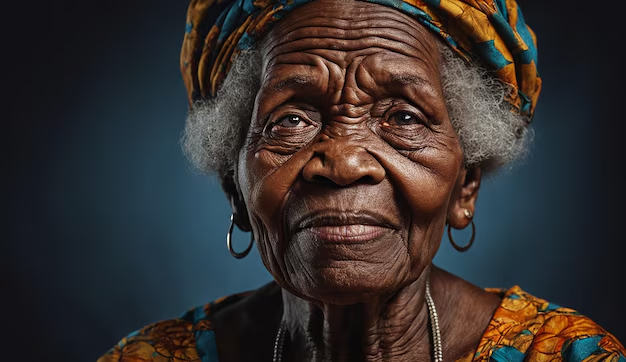
One day the next generation will ask what we did when we saw the fractures widening—when communities weakened, when inequality deepened, when the promise of democracy seemed to drift further from everyday life.
They will not ask what titles we held.
They will ask what we built.
As Charles Masilela reminds us, “Titles without capital allocation are costumes, not power.”
And so, the real question before us is no longer whether Black leaders can run South Africa’s institutions. We have already proven that we can.
The question is whether we will use that power to build economic sovereignty—or remain administrators of an inherited system.