Because the advent of the nation-state was imposed on Afrika by colonialism and imperialism, a misanalysis is often committed to the effect that the Continent would otherwise never have had nations and social classes.
It is outrageously ahistorical to think Afrika would have been immune to the laws of historical development and forever remain in the stage of communalism. It is a dangerous assumption to think Afrika would for eternity be trapped at the level of social formations like clans and tribes with their archaic pastoral and nomadic level of development.
This is not to exonerate colonialism and imperialism from the damage and scars it inflicted on the Afrikan people(s) and Afrikan land. The result was colonial demarcation with the result that there are now:
BaSotho in Lesotho and South Africa.
BaTswana in Botswana and South Africa.
AmaSwati in eSwatini and South Afrika.
AmaNdebele in Zimbabwe and South Africa.
AmaXhosa in Zimbabwe and South Africa.
Khoe and San people in Namibia and South Africa
Khoe and San people in Botswana and South Africa.
Etc.
This notwithstanding, South Africa (our Azania) cannot wish away nation-states in this day and age. Colonialism and imperialism aside, the nation-state was a necessary development of history that could not bypass Afrika. If it did not happen through colonialism and imperialism, it definitely would have taken root through the development of the means of production and the corresponding change of the social formations.
As things stand, there are fifty-four (54) states that make up the Continent of Afrika. The peoples of Afrika have over decades developed an awareness that they are different nations in different countries. They fought against colonialism and strove for independence, sovereignty and national self-determination. They now have governments, armies, police, laws, political and economic systems in accordance with which they govern their countries.
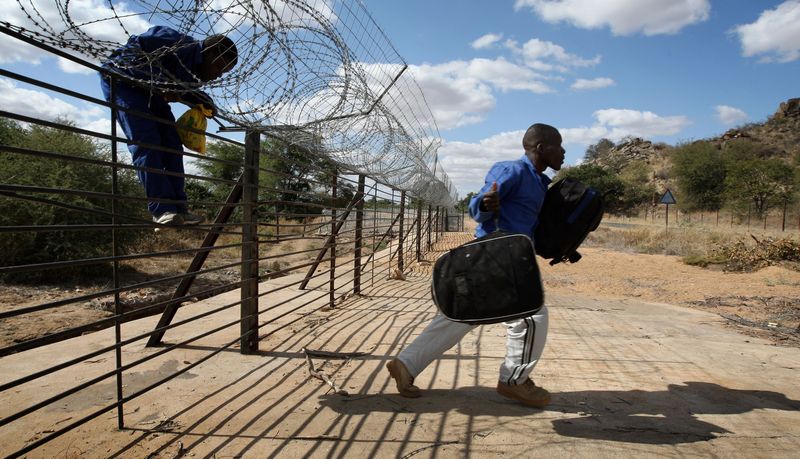
Despite the Pan-African noble aspirations of uniting Afrika and doing away with colonial borders, there would still have to be some demarcations for the sake of facilitating governance. There would still be laws registering the presence of people and regulating their movement from one demarcated zone to another. It therefore amounts to dangerous anarchy to agitate for the undocumented and lawless movement of people in and out of South Africa.
Somebody might suspect that this line contradicts AZAPO policy which stands for a “unitary Azania” where there will be “One People in One Azania”. Almost everyone knows AZAPO‘s long-held position for the abolition of Provincial Governments and their replacements with simple administrators. The administration of this middle tier government is heavily draining the national fiscus to the tune of about R790 billion per annum in direct transfers to the Provincial Governments.

AZAPO holds the plausible view that some resources could be saved and redirected to the Local Governments where they are mostly needed. No contradictions at all. The cumbersome Provincial Government may be removed, but (less) demarcations requiring governing will still be there.
Be that as it may. However, let us take the emotions out of this conversation. The immigration debate tends to be highly “politicised” in South Africa. Yes, it is a political debate, but it is “politicised” in the sense that some political forces misuse it for selfish political gains. That is why it usually crops up near or around elections. Not surprisingly, some political parties linked to the Afrophobic sentiment have been formed.
We have also seen how other political parties find the harassment of Afrikan immigrants to be low-lying fruits for their electoral mobilisation. It has now surfaced that the rich classes may be funding the “March & March” that purports to “Dudula” undocumented immigrants out of South Africa.
We cannot have forgotten the armed raids that took place in trains where suspected Afrikan immigrants were killed. These marauding raids moved to communities where the suspected immigrants were killed and their homes set alight. Of course, this harassment and intimidation of fellow Afrikans must be condemned in the strongest terms possible. It goes without saying that white immigrants would never be treated in this inhumane manner.
With that said, we must not be misunderstood to be condoning the influx of undocumented immigrants in South Africa. We unapologetically insist that every undocumented immigrant must be documented. There is no country in the world that can plan its life without knowing how many citizens and non-citizens are within its boundaries. Despite South Africa’s desire to care for every Afrikan in the Continent, this country cannot afford to arbitrarily open its borders and plunge into lawlessness. An Afrika with one-currency, no visas, etc, is a futuristic but distant goal. For now, every country in the world has to know and account for every person that enters its borders.
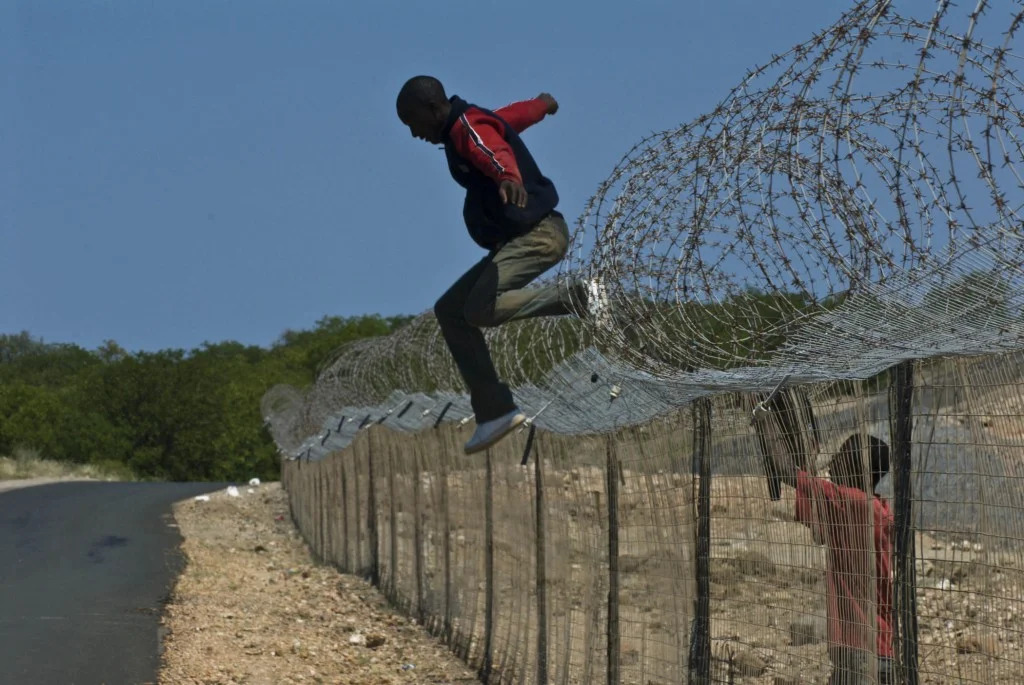
A country that accepts undocumented immigrants may suffer the following challenges (and more):
- Inability to trace criminals that are not documented and without fingerprints in the country’s databases.
- Inability to plan infrastructure development because there might be an influx of immigrants and cause an overload on, say, the sewage system that was designed for far less households.
- Inability to plan for primary healthcare. Clinics (healthcare workers and medication) may not be able to deal with the explosive overloads.
Local companies may be tempted to give jobs to undocumented immigrants to exploit and under-employ them. The local poor and the poor immigrant may fight over limited resources in what might degenerate into violent clashes.
However, the policing and deportations of undocumented immigrants injures the fiscus where they are deported only to return in no time. According to the official records, over 109 000 undocumented immigrants were deported in the 2024/25 and 2025/26 financial years, as of April 2026.
Granted this background, AZAPO believes the best way to deal with the immigration challenge is to tighten the borders and entry points into the country and direct all immigrants to holding centres where they will be documented and processed in terms of their needs and capabilities. There are those that may be deported.
By the way, Afrikan countries dealt with immigration in similar ways. In exile, South Africans lived in Refugee Camps under strict vetting and surveillance. We understood that this had to be the case to protect the political and economic stability of the host countries. Take Zimbabwe for instance, while the strict laws were in place, the authorities were able to accommodate Azanian freedom fighters. AZANLA Combatants were often harassed and arrested for breaking the Zimbabwean immigration laws. However, Zimbabwe’s Central Intelligence Organisation (CIO) would intervene, and our Combatants would be released under humane but controlled circumstances. Comrades were arrested and deported many times in Botswana.
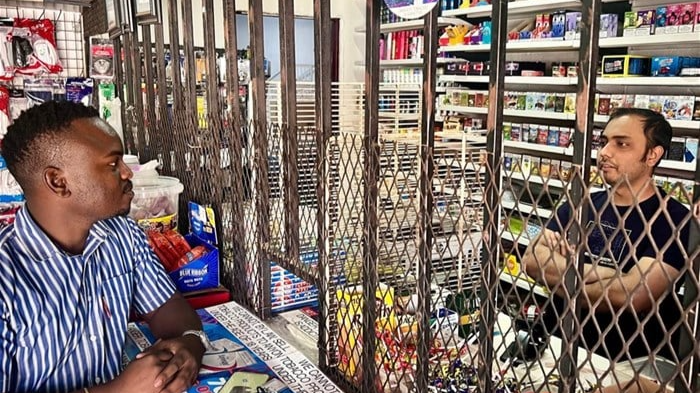
What about the ease with which immigrants get into South Africa and open Spaza Shops? It is fine if everything takes place under the country’s laws of licensing and paying tax. This does not seem to be the case right now, and this is wrong and must be stopped by the authorities. Check out the Indigenisation or Localisation Laws of a number of Afrikan countries. They do not hide the fact that their priority is their citizens, and then the rest.
Spaza shops have become a lucrative business in this country. The net profits often range from R15 000 to over R45 000 per month for well-run and high-volume locations. The Spaza Shop industry is estimated to number from 150 000 to 200 000 shops. They contribute over R150 billion to the economy on an annual basis.
The South African Immigration Act 13 of 2002 stipulates that immigrants generally require a minimum investment of R5 million in cash or capital alongside a detailed business plan to start a business. The added requirement is that the investment must be registered with the CIPC; and must create employment for at least 60% South African citizens or permanent residents. All indications are that these requirements are violated in the present status quo of lawlessness and lack of control.
As a matter of principle, the self-hatred mode which mechanically induces South Africans to assume that immigrants are exclusively black people must be done away with. The country’s laws must apply to all people irrespective of the colour of their skin.