

![MILES DAVIS [Image: The Audiophile Man]](https://gsmn.co.za/wp-content/uploads/2026/03/miles1967.jpg)
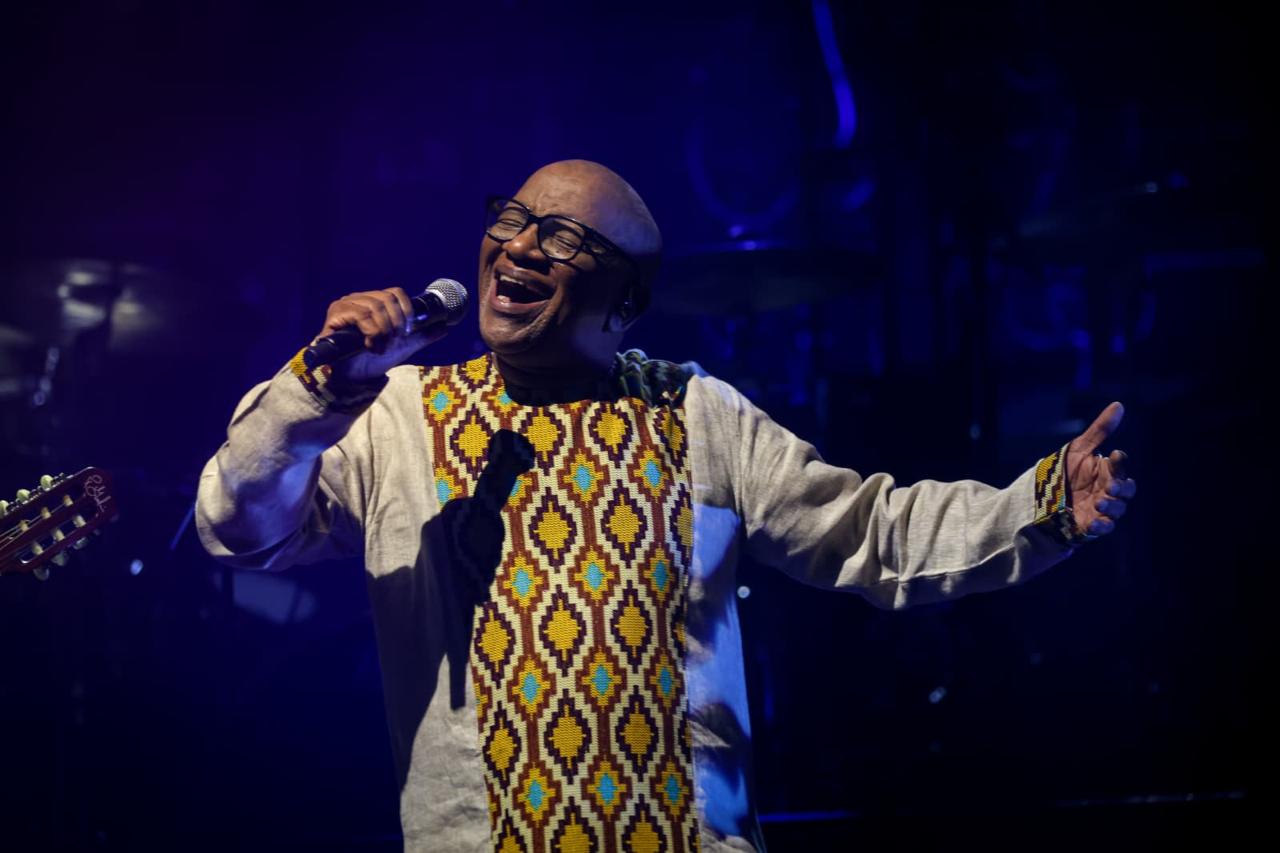
There are friendships forged in proximity, and others tempered in absence. Stretched across borders, tested by history, and sustained by memory. The musical reflections that follow emerge from the latter: a lifelong dialogue between us. Our paths diverged early under the pressures of exile, yet remained tethered by a shared sensibility, a common ear, and an enduring devotion to the music of Miles Davis.
We both left South Africa at sixteen, crossing first into Lesotho, that liminal threshold between departure and becoming. From there, our journeys unfolded along different geographies of exile. Oyama moved through the camps of the ANC across the African continent, before eventually finding intellectual and cultural anchorage in the United States. Tshepo’s route traced a wider arc through Africa, into Europe, and onward to America. Each passage layering experience, dislocation, and perspective.
Exile, in our case, was not merely a political condition; it was an education of the senses. It sharpened perception, deepened longing, and cultivated a receptivity to forms of expression that could hold complexity without collapsing it. It is perhaps no accident we both as men, found in Miles Davis a kindred spirit: an artist equally at home in rupture and reinvention, whose music refused fixity and whose silences often spoke as forcefully as his sound.
What bound us, across four decades, is not simply admiration for a musician, but a shared practice of listening and reading. Miles became a Library for us. Miles Davis became, for us, a language. One through which to interpret change, to navigate uncertainty, and to remain in conversation even when continents intervened. His albums marked time, but also disrupted it, offering new ways of hearing the world and, in turn, ourselves.

Now, years after our return to South Africa, each having traversed the corridors of corporate life and academia, we come back to that original conversation with renewed intention. This series of essays is not conceived as a definitive account of Miles Davis. It is, rather, a set of personal meditations: distinct yet resonant, shaped by different routes but grounded in shared experience.
Each will write separately at first, allowing our individual voices to surface unfiltered, unharmonized. There is something fitting in this approach. After all, Miles himself understood the power of juxtaposition: of voices entering, receding, colliding, and coalescing into something larger than any single line.
In time, these parallel reflections will converge in a co-authored piece, a final movement, if you will, where dialogue becomes explicit, and the long arc of our friendship finds direct expression on the page.
To read what follows, then, is to enter not only into an engagement with music, but into a lived history: of exile and return, of intellectual formation, of friendship sustained across distance. It is also to be reminded that certain artistic encounters do not fade with time.They deepen. They insist. They wait patiently for us to return to them, again and again, hearing something new each time.
This series is one such return. These essays are part of that process.

TSHEPO KOKA
I have come to think of listening as a form of memory.
Not the kind that archives events neatly, but the kind that returns unannounced summoned by a phrase, a tone, a silence between notes. For me, the music of Miles Davis has always operated in that register. It does not simply recall where I have been; it rearranges how I understand those journeys.
I left home at sixteen, carrying very little that could be called certainty. What followed was a movement through spaces that were at once formative and disorienting. Across Africa, into Europe, and eventually the United States. In those years, music became less an accompaniment than a method of orientation. It offered continuity where life did not.
Miles Davis, in particular, resisted the comfort of the fixed. Each album seemed to abandon the ground it had just established. At the time, I did not have the language for it, but I recognised the gesture: the refusal to be settled by circumstance. There was something in that which spoke directly to the condition of exile, not as loss alone, but as a continuous act of becoming.
This series is, in part, an attempt to return to that recognition. Not nostalgically, but critically. To listen again, with the benefit and burden of time. To ask what remains, what has shifted, and what continues to resonate in a world that is both familiar and estranged. Writing alongside Oyama, after all these years, is itself an extension of that listening. Our lives took different routes, yet we remained in conversation. Sometimes explicitly, often through the music itself. These essays are not an effort to resolve those differences, but to give them form.
If there is a unifying impulse here, it is this: to treat Miles Davis not as an object of reverence, but as a companion in thought. To engage the work as something alive. Capable of provoking, unsettling, and clarifying in equal measure. This is less a retrospective than a re-engagement.

OYAMA MABANDLA
There are moments when a piece of music refuses to remain in the past.
It returns, insistent, unresolved demanding not just to be heard, but to be reckoned with. My relationship with Miles Davis has been marked by such moments. They arrive without warning, collapsing time, drawing a line between who I was and who I have become.
Exile introduced me early to rupture. At sixteen, crossing into Lesotho was less a journey than an unmaking. What followed through were the camps of the ANC across the continent, surviving two massacres in Maseru in December 1982 and 1985 as a fully formed ANC revolutionary (For some reason the Boers chose to come for us in Lesotho, in the month Jesus Christ was born. For a regime that styled itself as a bulwark for Christian nationalism, surely this was blasphemous), and later into the United States, was an education shaped as much by displacement as by discovery. In that terrain, music was not a luxury. It was a form of coherence. Miles Davis offered no easy consolations. His music did not resolve tension; it inhabited it. It moved restlessly, often defiantly, from one form to another. In doing so, it mirrored something essential about the historical moment: we were living through a world in transition, uncertain of its own vocabulary.

Over the years, I have returned to his work not as a scholar cataloguing phases, but as a listener seeking orientation. Each return reveals something previously unheard, not because the music has changed, but because I have. That is the enduring power of his art: it grows in proportion to one’s willingness to confront it.
This series emerges from that ongoing engagement. It is not intended as a comprehensive account, nor as an act of homage in the conventional sense. It is, rather, a set of reflections shaped by experience personal, political, intellectual.
Writing alongside Tshepo brings an added dimension to this undertaking. Our histories intersect, diverge, and converge again, much like the music we are drawn to. There is a shared foundation, but no obligation to arrive at the same conclusions. That tension is, in itself, generative. If Miles Davis teaches anything, it is that meaning is not fixed. It is made, unmade, and remade in the act of engagement.
These essays are part of that process.


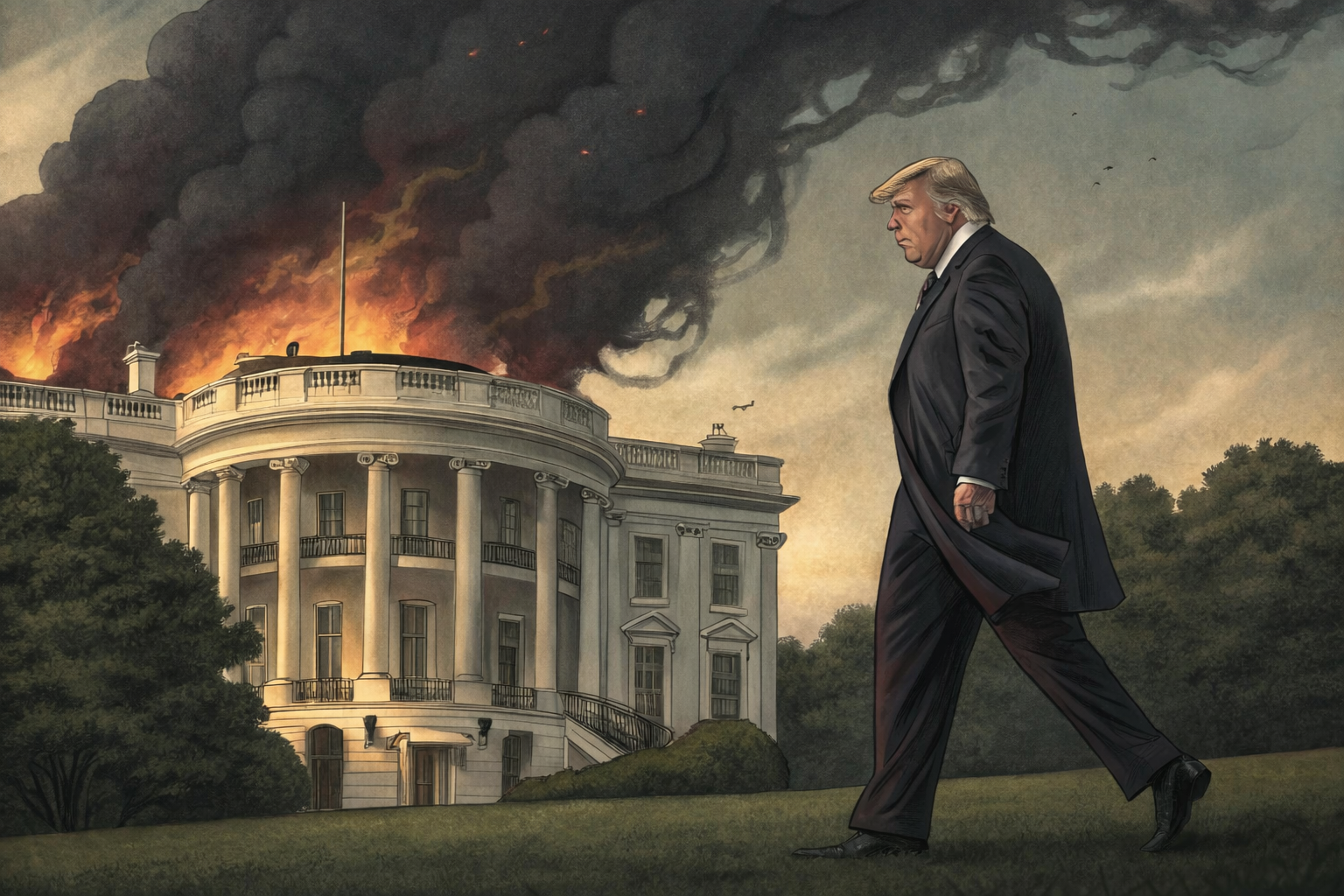
![trump and iran war in middle east (isreal) [Image: Times Now News]](https://gsmn.co.za/wp-content/uploads/2026/03/153887693.png)
![PAUL MASHATILE AND CHINA VP HAN ZHENG [Image: South African Government via Facebook]](https://gsmn.co.za/wp-content/uploads/2026/03/image-162.png)


![Manas Tshungu - missing person [Image: Supplied]](https://gsmn.co.za/wp-content/uploads/2026/03/Screenshot_34.png)

![AI image of US Donald Trump and Israel Netanyhu [Image: SBS, Getty, AAP]](https://gsmn.co.za/wp-content/uploads/2026/03/download-1.avif)


