

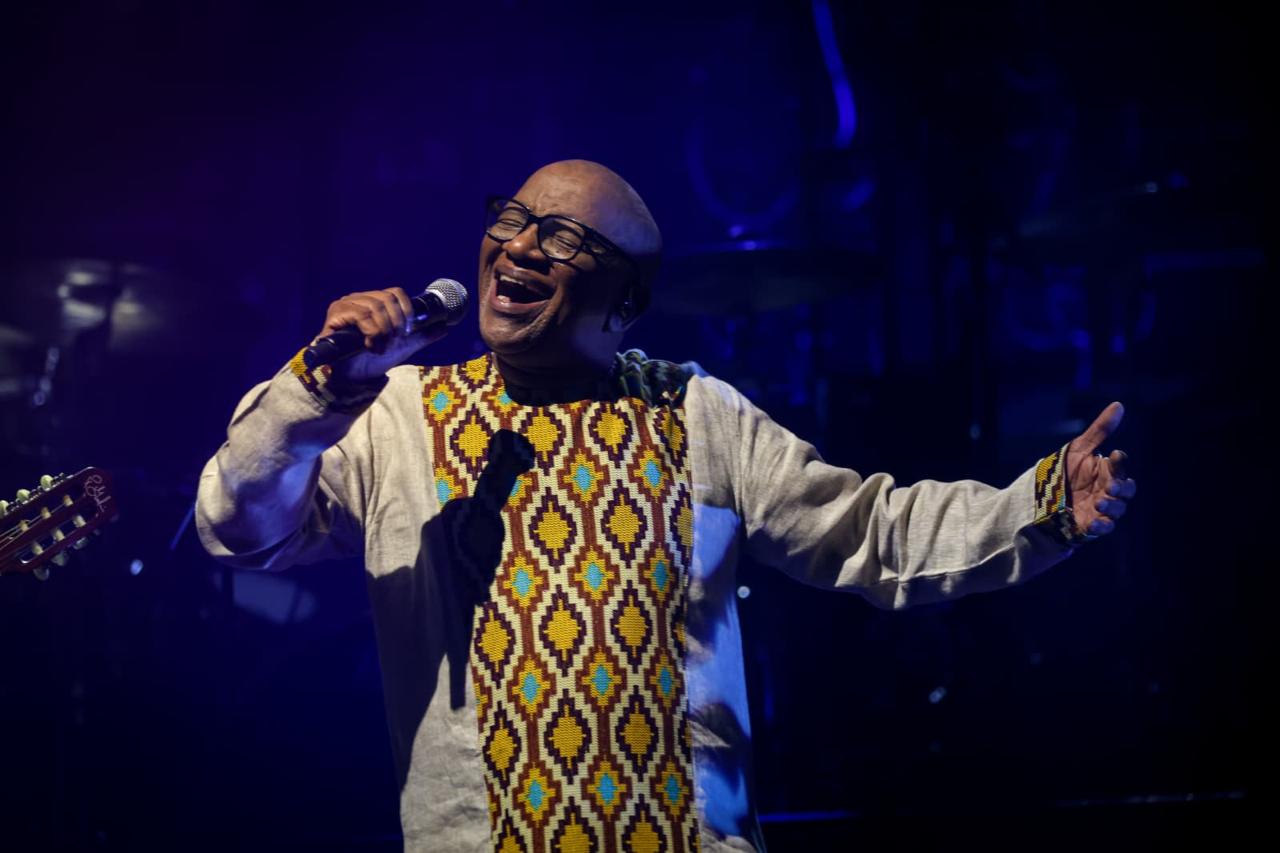
Lebo M’s story is a microcosm of how a global cultural architect outpaced formal diplomacy, and in addition, why post-apartheid South Africa is duty-bound to tell its story with the accuracy of a sniper, and remain in charge of the narrative.
From the dusty streets of Soweto to the illustrious stages of Minskoff Theatre in New York, London’s Lyceum Theatre, and the expansive theatrical arenas of Tokyo, Beijing, Singapore, and Seoul, Lebo M has charted a trajectory few could envision.
For over three decades, he has navigated the entrenched inequities of the global entertainment industry, engaging institutions as formidable as The Walt Disney Company, and asserting African artistry with unwavering authority at the pinnacle of international performance.
These productions transcend conventional theatre; they constitute complex, large-scale artistic ecosystems, often mobilising in excess of a hundred performers per show, supported by intricate networks of administrative, technical, and logistical personnel.
Across continents, these ecosystems sustain grossly thousands of livelihoods, particularly benefiting South African youth — from vocalists and dancers to musicians, costume designers, and production specialists. What Lebo M has constructed is not merely a production but a self-sustaining global conduit for African talent, generating enduring professional pathways and systemic opportunity. His journey embodies not only artistic triumph but also resilience, strategic negotiation, and disciplined excellence amidst global structural inequities.
It was within this milieu that the now-iconic Nants’ Ingonyama chant was forged — not as a perfunctory artistic embellishment, but as a profound cultural invocation. Steeped in lineage, symbolism, and historical resonance, it has become the heartbeat of the iconic The Lion King, a franchise whose cumulative economic and cultural footprint exceeds $12 billion USD across film, recorded music, and theatrical performances.
The magnitude is extraordinary: The original 1994 film grossed nearly $1 billion USD globally, with subsequent releases and adaptations expanding the franchise’s influence significantly. The Broadway production remains the highest-grossing stage musical of all time, generating over $10 billion in ticket revenue. Also, the production has surpassed 60,000 performances worldwide, staged across more than 100 cities in 24 countries. Additionally, it has been experienced by over 112 million people worldwide, translated into nine languages, and continues to this day to resonate across multiple continents concurrently.
Each performance transcends entertainment; it is a conduit of identity — a reaffirmation of African presence within global cultural consciousness. Yet, paradoxically, within South Africa, the resonance of such achievement is persistently attenuated. National media, rather than elucidating the intellectual, economic, and cultural magnitude of Lebo M’s contributions, has too often receded into tabloid sensationalism. Coverage frequently fixates on personal narratives that neither advance public understanding nor honour national and international accomplishment.
This is not merely an editorial lapse; it is a systemic dereliction. At its highest function, the media is an instrument of civic education and national consciousness. When it defaults to triviality, it undermines the foundation upon which societies recognise and celebrate excellence.

While certain public officials enjoy formal ambassadorial privileges, Lebo M’s ambassadorial impact is demonstrably more substantive. He has borne the South African flag into the world’s most prestigious cultural arenas – year after year – before millions. If truth be told, his impeccable influence has extended further, endured longer, and yielded more tangible global recognition than many who formally hold diplomatic office.
In any rational appraisal of national representation, Lebo M’s stature merits acknowledgement at the highest symbolic echelon — even the dignity of a Diplomatic Passport. Yet, this contribution has never been met with commensurate national recognition. No Presidential honour has been conferred, nor has any formal distinction from successive Ministers of Arts and Culture adequately reflected the global scale and enduring impact of his work.
This absence is not merely accidental or symbolic; it underscores a broader national failure to institutionalise and valorise cultural excellence. Media framing compounds this neglect: when domestic narratives reduce luminaries to trivialities, institutional recognition falters.

Against this backdrop, the recent conduct of one Learnmore Jonasi, a Zimbabwean comedian based in Pennsylvania, USA, must be interpreted. In a moment of ill-considered performance, Jonasi trivialised Nants’ Ingonyama, detaching it from context, profundity, and cultural significance.
Such an act is not merely a matter of comedic license; it reveals a pervasive cultural illiteracy. Moreover, it exemplifies an unfortunate pattern: a cohort of digital-era performers operating on informal, often improvised platforms conflates access with authority. Without mentorship, research, or historical grounding, they project confidence unsupported by substance. Jonasi and his contemporaries, in this instance, appear to have overstepped without comprehension of the cultural terrain they seek to occupy. In their apparent rush to fame, the result of their foolhardy speed is misrepresentation coupled with self-inflicted embarrassment before global audiences.
Similarly, this episode should also serve as a clarion call for the media. The notoriously unfathomable trivialisation of figures of Lebo M’s calibre creates a vacuum in which global audiences discern excellence, while domestic narratives fail to defend or contextualise it. In such vacuums, distortion flourishes.
In stark contrast, Lebo M’s discipline has nonetheless remained unassailable. For more than thirty years, he has laboured, often without immediate recognition, to construct a body of work commanding international respect. Today, through his global tours, he brings hundreds of South African performers into structured employment, providing salaries, international accommodation, and exposure to the world’s most prestigious stages.
What he has cultivated is not merely a career, but a sustainable ecosystem — one that converts artistic excellence into tangible opportunity and transnational mobility.
The legal action he has instituted against Learnmore, a $20 million USD lawsuit, in a way exemplifies this ethos. This is not a pursuit of personal gratification but a principled assertion of custodianship. It is a deliberate affirmation that South African cultural heritage is sacrosanct, signalling that artistic legacy, identity, and national patrimony is to be protected with the utmost seriousness and unwavering sense of patriotism. Cultural artefacts of this magnitude, forged over decades and generating billions of dollars in value, are neither disposable nor trivial. They are to be inherited, safeguarded, and transmitted with care.

Nants’ Ingonyama is not a line to be repurposed for momentary amusement; it is a declaration of identity, deserving respect and contextual integrity. The lawsuit reinforces the broader imperative: In Lebo M’s distinct journey, South Africa possesses a fully realised template for cultural excellence — from township origins to global mastery.
In humble view, it is incumbent upon both government and media to internalise this example and extend it through deliberate programmes: township workshops, rural outreach, structured mentorship pipelines, and informed, educational storytelling. The blueprint exists; what remain are a collective will, deliberate amplification, and replication of excellence.
As for Jonasi, the path toward understanding remains open, as it should. With proper counsel, reflection, and humility, there remains an opportunity to learn, as he should. Whether he seizes it is uncertain. What is certain, however, is that the distinction between fleeting visibility and enduring legacy has once again been laid bare.
Lebo M’s work endures because it is rooted in discipline, informed by history, authenticity, and guided by purpose. It is not merely performance; it is preservation. In safeguarding it, Lebo M does not defend himself — he defends the cultural inheritance of a nation, thereby ensuring that it remains intact, dignified, and worthy of those who will inherit it now and in generations to come.

![trump and iran war in middle east (isreal) [Image: Times Now News]](https://gsmn.co.za/wp-content/uploads/2026/03/153887693.png)
![MILES DAVIS [Image: The Audiophile Man]](https://gsmn.co.za/wp-content/uploads/2026/03/miles1967.jpg)
![PAUL MASHATILE AND CHINA VP HAN ZHENG [Image: South African Government via Facebook]](https://gsmn.co.za/wp-content/uploads/2026/03/image-162.png)


![Manas Tshungu - missing person [Image: Supplied]](https://gsmn.co.za/wp-content/uploads/2026/03/Screenshot_34.png)

![AI image of US Donald Trump and Israel Netanyhu [Image: SBS, Getty, AAP]](https://gsmn.co.za/wp-content/uploads/2026/03/download-1.avif)


2 Responses
This is a brilliant tribute to Lemon M’s achievements. The creation of employment opportunities for artistic performers and musicians is to be celebrated. The revenue generated is staggering. Bravo!
Lebo M. NOT lemon🍋