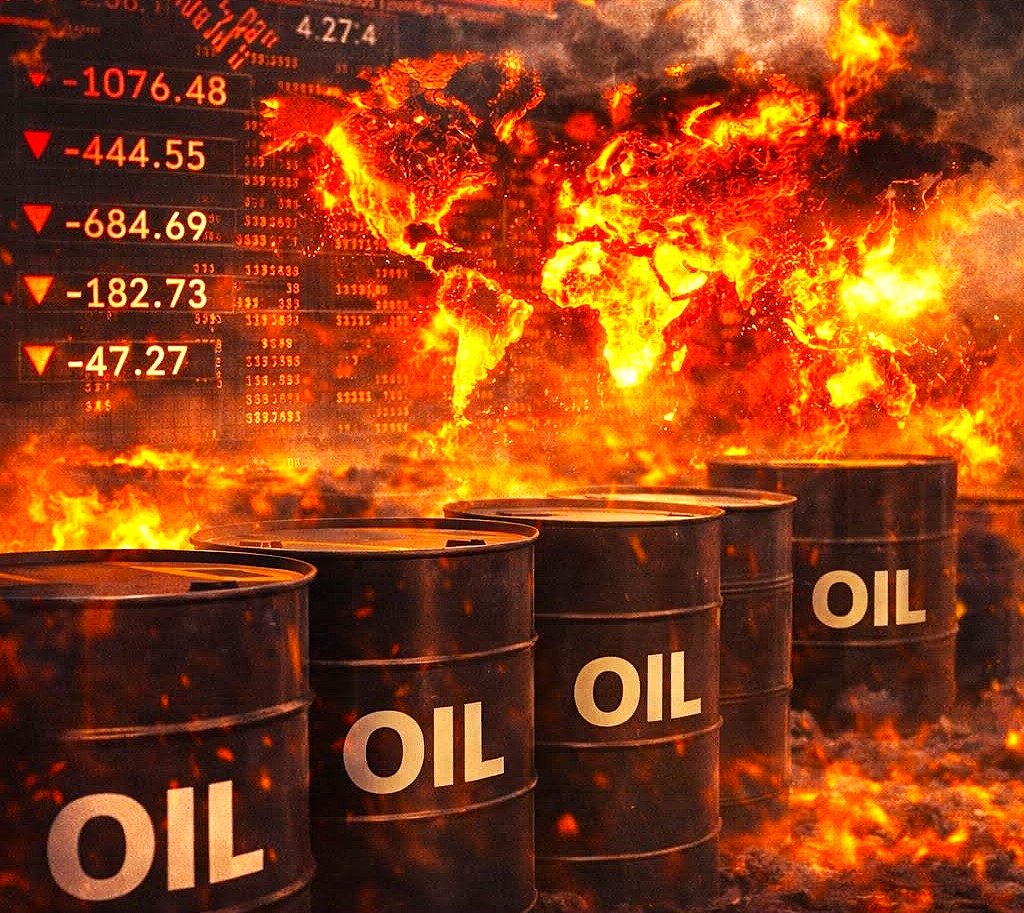
While most attention is on the rising price of crude oil, the prices of refined products are far worse, and show the real price effects of “demand destruction” wherein industries and countries cut refined production and thereby squeeze prices up.
Paradoxically, this tends to reduce the pressure on crude oil prices to rise: While a country or industry may have a shortage in access to crude oil, they’re also using less crude at their refineries, which are, after all, the only customers for crude oil; and that has tended to hold crude oil prices from rising sharply, as they did in the “first round” of blockage of the Strait of Hormuz in May and June. But the resulting “downstream” shortages of diesel and other “cracked” oil products drives their prices up.
OilPrice.com reported August 18 that the price of diesel fuel in Europe and Asia was over $170/barrel, twice the price of West Texas International crude oil, and pointing to a global food crisis during 2027, after harvests in the Northern Hemisphere. The price of diesel in the United States is currently $5.45/gallon, 40% higher than the price of regular gasoline.
Diesel prices affect farmers and the shippers who move their products, more than any other sector.










![Bishop Joe Seoka during The Funeral Service of Professor Itumeleng Mosala [Image: Mandla Seloane]](https://gsmn.co.za/wp-content/uploads/2026/08/WhatsApp-Image-2026-08-20-at-15.59.13-1.jpeg)