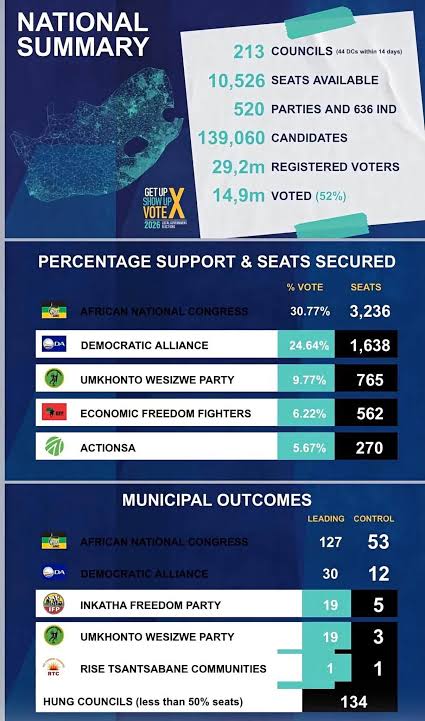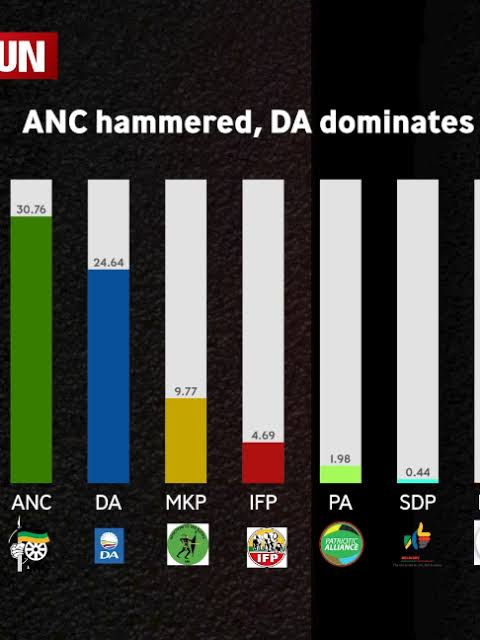
With the ANC decimated at the polls in the 2026 Local Government Elections (LGE) despite leading government in the so- called Government of National Unity (GNU), there is no doubt that South Africa is without a clear moral leader to chart the political trajectory of the country. And with a total of 30 million of eligible South Africans having opted to check out of the 2026 local government electoral process, the silent vote of the 30 million eligible voters may very well put South African politics on a knife edge.
A trend that started with the shock results of the 2024 national elections, when the ANC posted an unbelievable 40.18 % of the national vote, and for the first time lost its outright majority to form a government on its own, has been cemented in the 2026 local government elections (LGE-2026). From the 62.65 % of the national vote registered in the first democratic elections in 1994, the former liberation movement has failed to secure an outright majority in any of the eight major metros.
In LGE 2026, of all the eight major metros, only the Democratic Alliance (DA) has obtained an outright majority to govern Cape Town on its own. South Africa has clearly entered a new phase of its political evolution. Outside the eight metros, 139 of the total 213 councils could not register an outright majority for any single party in comparison to 66 in LGE-2021. This is 65 % of councils nationwide and suggests that coalition politics are increasingly solidifying on the South African political landscape.
On the surface, this may be a sign of the country’s increasingly maturing democracy, however, there is an unspoken and potentially dangerous reality of South African politics; Only 14.9 million of the 29.2 million i.e 51 % of the registered voters turned out at the voting stations. South Africa may be a titanic heading fast towards a hidden iceberg. More than two thirds of the eligible voting majority – an estimated 30 million accounting for 66.82 % of eligible voters – are outside the radar of democratic processes.
Notwithstanding, political parties, the media, and pundits alike, have concentrated on the unfolding developments with coalition negotiations with specific focus on the four major metros of Johannesburg, Tshwane and Ekurhuleni in Gauteng and eThekwini in KZN. With Herman Mashaba’s Action SA having emerged as king maker, there has been a lot of focus on the personality clashes between Herman Mashaba and Helen Zille and the apparent snub of the DA by Action SA in favour of what has been coined the ‘coalition of chaos’ – i.e. an alliance between ‘black parties’ in the form of the ANC, Action SA, MKP and EFF in the main.
Whilst the outcome of the coalition negotiations in the major metros, especially in Tshwane and Johannesburg were bound to attract attention of the media and the public, it is the loud voice of the silent majority that South Africa should be worried about. This is the majority that has opted out of the South African democratic project and its practices.
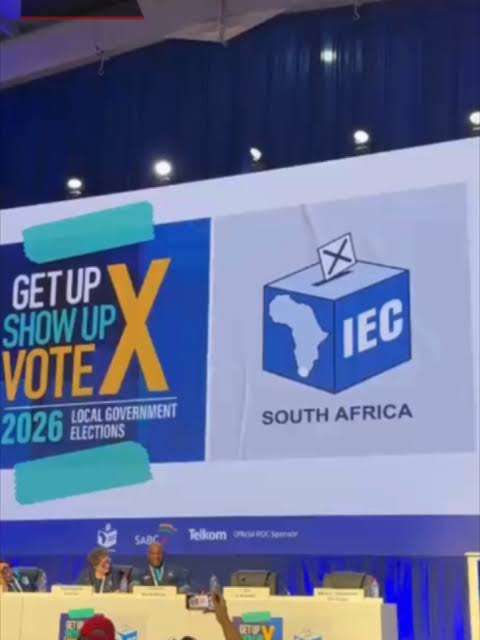
It is this majority that the ANC had promised a better life. With every election, they have been promised heaven and earth. Following many disappointments by the former liberation movement, they have tried their luck with the ever-increasing number of ‘a man and his dog’ political parties on the overstretched election ballot, only to see their lot worsen.
The South African economy has almost stagnated. GDP showed a marginal increase of 0,4% in the first quarter of 2026 only to slump by – 0,2 % in the 2nd quarter. Unsurprisingly, the South African unemployment rate shows no signs of abating, increasing from 32.7 % in the first quarter of 2026 to 33,7 % in the third quarter. In the same period, youth unemployment increased from 45.8 % to 47.3 % according to StatsSA. Overall economic indicators have not been encouraging in the last 10 years. GDP growth has averaged an uninspiring 2 % increase in the last 10 years, and in the same period, youth unemployment has deteriorated by almost 10 %.
In contrast to indications from economic data, the election ticker-tape parade has not disappointed. Election after election, every single party election manifesto has predictably promised industrialisation, beneficiation, and an increase in jobs. In the same vein, promises on service delivery have, in reality, been substituted with water cuts and more water tankers, poor potable water, more potholes, and dysfunctional streetlights.
With every election, the voting public hand a blank cheque to the political parties they vote for as they have no say what happens after they exit the voting booth. Despite claims to the contrary by politicians, the spat between Herman Mashaba and Helen Zille leading to coalition negotiations, following LGE-2026, are a clear indication that the elections are never about the electorate, but everything about the political parties and their political ends. No single party has attempted to demonstrate consideration of the electorate or their views. The electorate are a just a meal ticket for the politicians to get the council seat only to disappear for five years until the next election.
The South African political economy in the Democratic epoch was premised on a model where the private sector, through big business, would lobby the ANC as the majority party to agree to steer the economy and the politics of the country in a particular trajectory. It is for this reason that the ANC has inexplicably stuck to policies that were not pro the poor and employment creation but focused on fiscal discipline and strict monetary policy. This is the reason after its loss of an outright majority to govern; the ANC explained its marriage with the DA as a move that was responsive to the markets.
With the results of the 2024 elections and the ‘disastrous’ outcome of LGE-2026 for the ANC, the nuts and bolts that held together the model of the South African political economy have been thrown asunder. It is a model premised on an economic base that is predominantly and, in many respects, exclusively in the hands of whites, working hand in
glove with a dominant but pliant elite political class. It is a model of a symbiotic relationship that would see whites retain the land and property rights bequeathed by colonial dispossession and Apartheid segregation and protected by the guarantees of the 1996 constitution and control on the levers of the economy through neoliberal macroeconomics guaranteed by a co-opted political class. The collaborating black political aristocrat class would benefit from the symbiotic relationship through share certificates albeit with no real say on the ownership patterns or the trajectory of the economy.
In this relationship, the masses are conspicuously absent, except by way of contributing their cheap labour. With increasing unemployment, and with the ever-increasing pressures felt by the majority of the electorate, they have used the only power at their disposal to register their dissatisfaction with the status quo. The electorate has used the power of the vote to fight back against the exclusionary and elitist arrangements of the political economy. With the ANC having lost its outright majority in the national elections, and with no clear majority in any of the eight metros, the former liberation movement has lost the confidence of the black majority.
Even if the ANC may argue it is not a black party – it was voted into power by the black vote. The ANC has not only lost seats in the metros and councils across the country, but it has also lost its moral seat as leader of society. This leaves White Capital without a trusted and influential ally with political capital. If the direction of the coalition negotiations is anything to go by, the DA has been shown that the time for ‘baasskap’ and white arrogance is fast coming to an end. With no anointed leader of society steering the political superstructure, and with no clear direction on what is to happen with the silent majority – a whole 30 million of them – South Africa is facing a ticking timebomb.
The South African political economy is a pressure cooker. For as long as those who own and run the economic base do not see the need to grow the pie to allow new entrants through organic growth in trade, industry, finance and commerce, everyone stands to lose. With the bleak outlook on the economic front and the ever-increasing despondency with the political superstructure and its democratic processes, the system is bound to implode. Something is bound to give. What the country cannot offer to the silent majority through jobs, economic opportunities, or even social security safety nets as the economy stagnates, and the levels of poverty and inequality continue to increase, the pressure cooker may have to give through some un-negotiated outlet valve.
The silent majority that have checked out of the democratic project will not remain silent forever. Even then, it is not their decision to make, nor do they need agent provocateurs to light the spark. It is the high levels of poverty, and the ever-increasing rate of unemployment and the in-your-face obscene levels of inequality between the poor and the political aristocrats that will force them to speak. Even more compelling, it is just their sheer instinct for survival that will dictate their course of action.
This is just a warning and South Africa must take heed; the silent majority may just take to the streets, and the streets do not necessarily speak the language that the markets or even polite society prefers to hear, and that is the language of revolution. But then again, a government that has lost its moral seat to govern the masses, may just have no say when the revolution of the silent majority hits the streets. And when they do, they will make Jacinta and March and March look like Sunday picnic.