One historian proved the Nakba was planned. One moralist proved Jews have always resisted it. Together they prove the two-state solution was never meant to work.
Benjamin Moser was raised to believe what most liberal American Jews were raised to believe: that Israel was a democracy surrounded by enemies, that a Jewish state was the necessary answer to centuries of persecution, and that Arab rejection was the main obstacle to peace.
In the summer of 2016, he went to Hebron in the West Bank for the Palestine Festival of Literature. He watched Palestinians queue for hours at checkpoints while settlers walked freely through streets that Palestinians were forbidden to use. He watched children grow up under military law while their neighbours lived under civil law.
He went home and asked the question no liberal Zionist wants to ask: What if the problem is not the government, but the project itself?
That question became his 2026 book, _Anti-Zionism: A Jewish History_. It did not come from nowhere. It came from a long line of Jewish dissent, and from a historian Moser now calls essential.
“Ilan Pappe is Israel’s bravest, most principled, most incisive historian.” — John Pilger
Pappé is not an outsider. He is an Israeli historian, born in Haifa, educated at Hebrew University and Oxford, a member of the “New Historians” who used declassified Israeli archives to rewrite the founding story of Israel. He paid for it with ostracism in Israeli academia.
Moser gives us the conscience. Pappé gives us the evidence. Noam Chomsky, in his joint work with Pappé, On Palestine, gives us the geopolitics.
Together they form one devastating arc: Origin. Continuation. Moral Break.
The Origin: It Was Planned
In The Ethnic Cleansing of Palestine (2006), Pappé makes a claim that still shocks many readers because it is so plain:
The displacement of Palestinians in 1948 was not a by-product of war. It was the objective.
Zionist leaders, Pappé argues, had concluded long before 1948 that a Jewish majority could not be created by immigration alone. Most Jews fleeing Nazi Germany wanted to go West, to America, not to Palestine. To create a majority Jewish state on the majority of the land, the native population had to be removed.
The plan was not improvised. It was prepared in secret by David Ben-Gurion and a small group Pappé calls “The Consultancy,” meeting at the Red House in Tel Aviv.
It relied on the Village Files — detailed intelligence dossiers on every Arab village in Palestine, compiled over years: its water, its roads, its leaders, its defences. It was operationalised in Plan Dalet/Plan D, finalised on 10 March 1948, and handed to brigade commanders as clear-cut orders for systematic expulsion.
The result, between late 1947 and mid-1949: approximately 800,000 Palestinians expelled, 531 villages destroyed, 11 urban neighbourhoods emptied.
Deir Yassin, on 9 April 1948, where Irgun and Lehi fighters killed over 100 villagers, was not an aberration. In Pappé’s reading, it was the emblematic massacre that weaponised terror. News of it spread panic and accelerated the flight from Haifa, Jaffa, Tiberias, Safad, Acre, Lydda and Ramle — the urbicide of Palestine.
Israel’s official story has always been different: that Zionists never intended to expel Palestinians, that they accepted partition, and that Palestinians “voluntarily” fled to make room for invading Arab armies.
Pappé’s answer, drawn almost exclusively from declassified Israeli military archives and Ben-Gurion’s own diary, is that to admit ethnic cleansing in 1948 is to undermine Zionist ideology itself. Because it would mean confronting what he calls the racist heart of Zionism — the belief that dispossession could be rationalised as cleansing.
Other historians, notably Benny Morris, accept that large-scale expulsions happened but dispute Pappé’s reading of Plan Dalet as a pre-written master plan. Pappé’s reply is that the paradigm must change: stop asking whether it was war or ethnic cleansing. Start from ethnic cleansing as the paradigm that explains the war.
For Moser, this is the foundation. If the origin was cleansing, then everything that follows is not an accident. It is a continuation.
The Continuation: Oslo Was Not Peace, It Was Management
This is where On Palestine (2015) by Chomsky and Pappé becomes essential, especially Part Two: Reflections.
Both men agree on a point that still angers diplomats: the “peace process” was not a failure. It was a success — at doing something else.
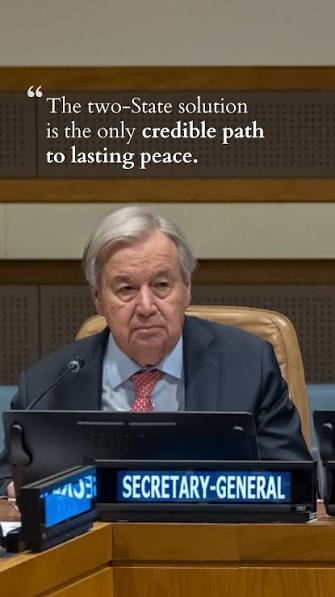
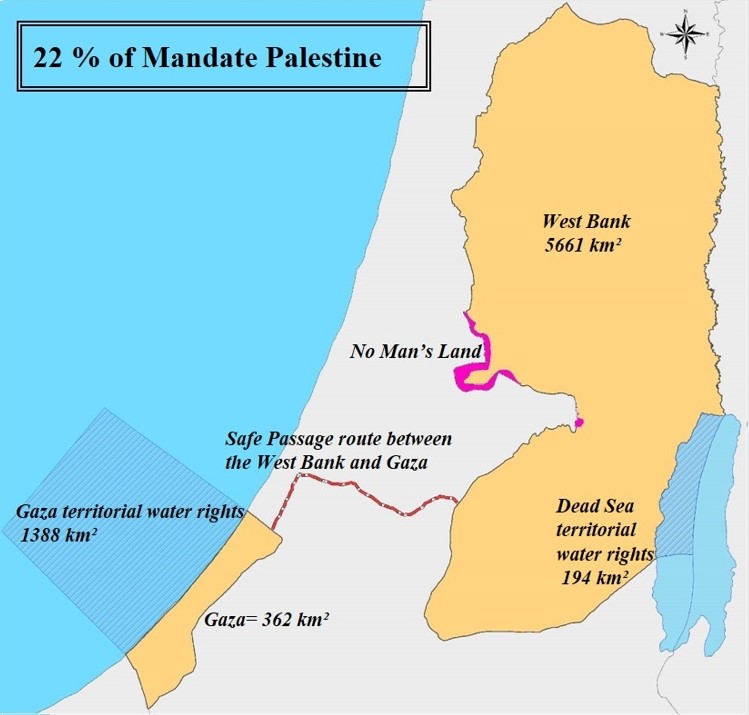
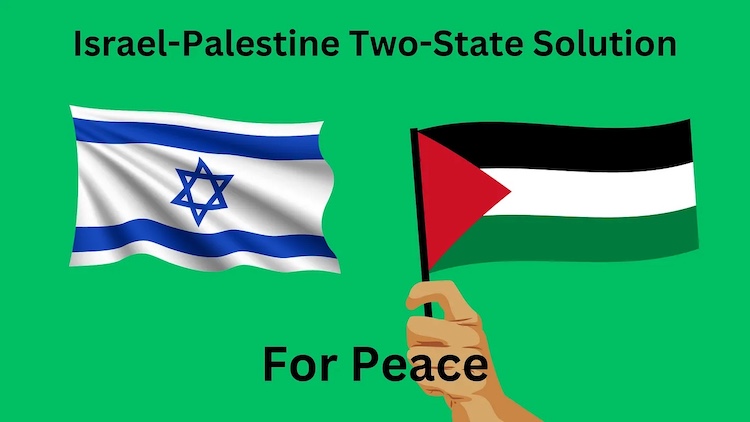
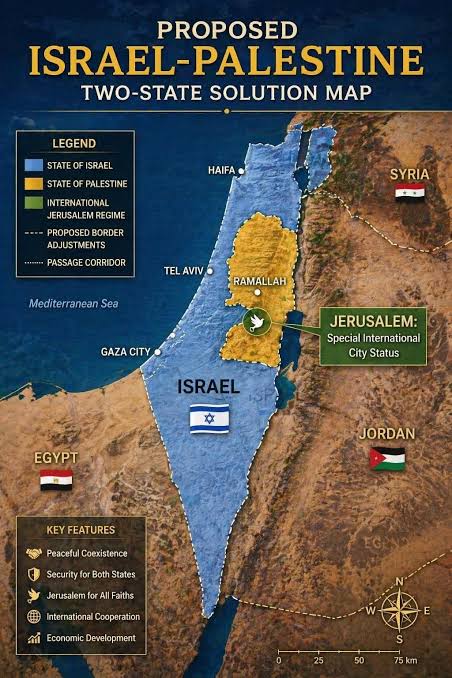
Pappé calls the dominant language the “Dictionary of Peace Orthodoxy.” Terms like “peace process,” “both sides,” “land for two peoples” make the situation sound uniquely complex while hiding its colonial nature. That orthodoxy promotes a two-state solution that would give 80% of historical Palestine to Israel and 20% to Palestinians, and asks the world to be endlessly sensitive to Israeli fears while Palestinians wait.
Chomsky puts it more bluntly: Israel’s conception of a two-state solution is at best a group of isolated, landlocked cantons in the West Bank in which a tiny Palestinian elite enjoys limited autonomy in Ramallah, and Gaza exists wholly apart so that a Palestinian state will have no access to the outside world.
After Oslo, a central goal was to separate Gaza from the West Bank. Chomsky notes that Gaza is the sole portal for Palestine to the wider world. Separate it, and any Palestinian “state” will be confined to the West Bank, dependent on Israel’s goodwill.
Settlement expansion, the Wall, checkpoints, the Jordan Valley, the expansion of Jerusalem — all of this happened during the peace process, not despite it.
Pappé goes further than Chomsky. He argues the Israeli government will never cease to seek this goal until it is confronted with the necessity to end its colonial project, become a state of all its citizens, pay reparations to Palestinians it forced into exile, and abandon the project of apartheid implicit in the two-state solution.
Here they diverge, and the divergence matters.
Chomsky, the pragmatist, still appeals for a classic two-state solution, citing international consensus, as a step-by-step path.
Pappé, the historian, insists on a strict one-state solution, in which the rights of all citizens must be guaranteed, be they Jews, Christians, Muslims, Israelis or Palestinians. Two states, he argues, would leave the apartheid structure intact and ignore the Palestinian right of return.
Moser sides with Pappé. For Moser, two states without decolonisation, reparations and return is not peace. It is apartheid with a flag.
The Moral Break: A Jewish Tradition Against Zionism
This is Moser’s great contribution.
Anti-Zionism, he argues, is not new. It is not self-hating. It is not antisemitic. It is a hidden tradition of Jewish dissent that has existed since Zionism was born.
In Anti-Zionism: A Jewish History, he profiles twelve Jews who said no, for every conceivable reason:
Polish Rabbi Aaron Samuel Tamares, who began inveighing against Jewish nationalism in the late 19th century. British diplomat Edwin Montagu, who tried to derail the 1917 Balfour Declaration. Hannah Arendt, who warned that a Jewish state would require a permanent army and permanent war. Israeli historian Avi Shlaim. Photographer and activist Nan Goldin.
What unites them, Moser says, is the idea of the “conscious pariah” — the Jew who refuses to go along with the rationale of power and violence, and who stands with other oppressed people instead of above them.
This is why the book resonates so powerfully in places like Brooklyn, New York and New Jersey, where younger Jews, secular Jews, Orthodox Jews, and leftist Jews are increasingly distancing themselves from the present government in Israel. They are not abandoning Judaism. They are reclaiming it.
They are saying: Judaism does not need a state that cleanses to survive. Judaism’s mission was doikayt — “hereness” — building a just life where you live, not building an ethno-state elsewhere.
Moser’s famous line captures it: “No state has a right to exist. People have a right to exist.”
He offers the book, he says, as a contribution to “construct an alternative vision of Jewish life, one that is free from racism, nationalism, and militarism.”
Critics in the New York Times and New Yorker accuse him of painting the world in black and white, of making anti-Zionists saints and Zionists villains. Moser embraces the charge. On Piers Morgan he said: “I do think it’s black and white!”
For him, there is no grey area when one people is being bombed, starved, and expelled while another claims it is self-defence.
The Core Thesis: Perpetual War Is The Logic
Put Pappé and Moser together, and you get the thesis that makes this article necessary:
A state defined as Jewish in a land where Jews were a minority cannot be secured without demographic engineering.
To maintain a Jewish majority, it must control land, borders, immigration, citizenship, water, and housing in a way that necessarily excludes Palestinians.
To maintain that control, it must constantly expand settlements, occupy territory, bomb neighbours, and criminalise resistance.
Therefore war is not a failure of Zionism. War is its maintenance.
Settlements are not an aberration of the right. They are the logic continuing. Gaza is not an exception. It is, in Moser’s phrase, the “logical, gruesome conclusion” of a project that began with expulsion and continued with occupation.
This is why Moser argues the two-state solution cannot work. Not because of Netanyahu. Not because of Hamas. Because of DNA.
No Israeli government, left or right, has been willing to accept a fully sovereign, contiguous Palestinian state with control over borders, water, airspace and East Jerusalem. The Knesset itself has affirmed there will be no Palestinian state in any part of Palestine, and that Israel is not the state of all its citizens but a Jewish state.
A Palestinian “state” offered on those terms would be a Bantustan — fragmented, demilitarised, dependent — not sovereignty.
And this, Moser argues, is why Zionism uses the horror of Jewish suffering to justify a new horror. It takes the real trauma of the Holocaust and converts it into a justification for a new hierarchy: Jewish supremacy over Palestinians in law, land and citizenship.
It harms Jews too, he says, by reducing a diverse, diasporic, universalist tradition into a narrow ethno-nationalism dependent on militarism and American power.
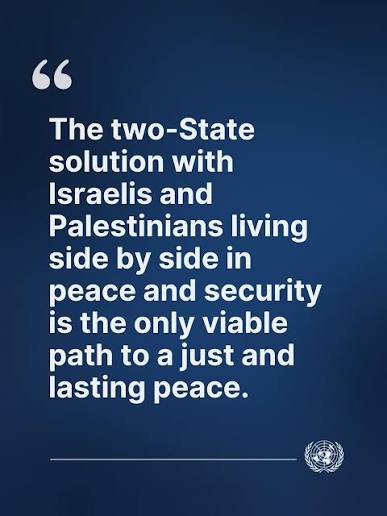
The Alternative: One Democratic State
If the diagnosis is correct, the prescription cannot be another partition, another process, another interim agreement.
It must be what Pappé, Moser and the hidden tradition have always demanded: one democratic, non-racial, non-sexist, non-sectarian state for all.
For all faiths. For all denominations. For all economic strata. For all cultures and creeds.
That means:
1. A state of all its citizens, not a Jewish state. Repeal of the Nation-State Law. Equal citizenship from the river to the sea.
2. Right of return and reparations. You cannot have equality without restitution — land, villages, property, water, and compensation for what was taken in 1948 and after.
3. Dismantling of the settlement and military regime. Settlements, checkpoints, the Wall, and separate legal systems in the West Bank must go, as apartheid laws had to go in South Africa.
4. Safety through equality, not supremacy.This is the hardest question, and Moser and Pappé do not dodge it. How do you guarantee Jewish safety after the Holocaust, after 7 October, after decades of mutual trauma, without a Jewish army and a Jewish majority?
Their answer is: safety through equality and international guarantees, not through domination. Like South Africa, the transition will require truth, restitution, and a new constitutional order where no group has legal supremacy over another.
Chomsky would add a warning: none of this will happen while the United States provides military aid and diplomatic cover. Change, as with South Africa, must come from below — from public opinion in the US and Europe, from Jews refusing to be represented by a state at war, from a global movement that says: enough.
That is already happening. In Brooklyn, in London, in Johannesburg, in university campuses and synagogues, a new generation is saying what Tamares said in 1890, what Arendt said in 1948, what Pappé said in 2006, what Moser says now:
We will not be safe by making others unsafe.
Conclusion
If 1948 was planned, and Oslo was managed, then peace will not come from another plan or another process.
It will come only when Israel ceases to be a Jewish state and becomes what Pappé, Moser and the hidden tradition have always demanded: a state of all its people.
That is not the end of Jewish life. It is the beginning of a Jewish life free from racism, nationalism and militarism — and of a Palestinian life free from exile, occupation and war.
The mountain is not small. But as Moser would say, the mountain moves when we finally tell the truth about how it was built.