For the last two decades, the City of Barcelona in Spain has become home to the Mobile World Congress, the world’s premier event in mobile and communication technologies. This annual pilgrimage brings together the most influential players in mobile and communications technologies comprising producers of cutting-edge mobile technologies, network equipment providers, representatives of wireless carriers, representatives of industries, universities, policymakers, and mobile technology users, under one roof. This year’s gathering Mobile World Congress 2025 (MWC25), held from March 3 to March 6 did not disappoint. A hundred thousand participants descended on the Fira Gran Via in L’Hospitalet de Llobregat, the venue of MWC25.
MWC25 comes at the midpoint of the 5G decade. 5G refers to the fifth generation of cellular network technology. It is reportedly capable of delivering data almost ten times faster than its predecessor 4G. With the 5G hype receding, participants adopted a more realistic vision of how it would shape the future of the mobile industry. The growing interest in artificial intelligence (AI) was expressed by the extent to which it dominated discussions and demonstrations. The discussion centred on how AI “can help drive more efficient network deployment and improve connectivity for everybody”. AI Native, a concept/term that refers to whether “systems, platforms, or technologies that are inherently designed to leverage artificial intelligence algorithms and techniques throughout their development and operation” is the latest entry in the information communications lexicon.
Themes and topics of societal interest and higher education ranged from The AI Frontier: Transformative Visions and Social Impact, The AI Renaissance: When Art, Culture & Code Culture Collide, AI Governance: Who sets the Rules, Ethics vs. Algorithms: The Fight for Fair AI, to The Double-Edged Sword: Will AI Hinder or Accelerate Diversity.
Given the far-reaching changes that technological revolutions have wrought, concerns regarding its social impact are to be expected. The implications for education are extraordinary. They date back to the first industrial revolution built on the advent of mechanization. The first industrial revolution led to a shift from agrarian to industrial economies. The requirement to manage machinery led to the expansion of public elementary education.
The discovery of electricity ushered in the Second Industrial Revolution. Its distinctive feature was the facilitation of manufacturing on a massive scale. This development gave rise to the establishment of technical schools and vocational training to satisfy the need for skilled workers in areas like electrical engineering, chemistry, and metallurgy. This also led to the expansion of secondary schools. Universities began to incorporate applied science in their offering.
The Third Industrial Revolution is associated with the ushering of automation, computers, and electronics. The result was to revolutionise production and communication. Building on the achievements of the second revolution, universities expanded research and development. This period also saw many countries investing in the massification of higher education systems to produce a knowledge-based economy.

Technology has enabled higher education institutions to embark on the digitisation and digitalisation of their offerings. Digitisation in education involves converting traditional educational materials into digital formats. Digitisation has enabled a whole range of services to be offered online. For instance, digitising textbooks into PDFs or e-books allows students to access them on tablets or laptops. This makes the cumbersome process of making physical copies unnecessary. The recording of lectures as video ensures that the content can be accessed and revisited anytime and anywhere. Digitisation enhances the scalability of educational offerings. Instead of these offerings being restricted to a few, they can now easily be accessed by millions.
Digitalisations, on the other hand, refers to an entirely different process. It transforms how education can be delivered and experienced through digital tools by creating interactive ecosystems that enable learners to participate in virtual forums. Virtual classrooms via Zoom or Microsoft Teams break geographical limits, connecting teachers and students globally in real-time. Embedded AI tools enable personalised learning thus accommodating student’s pace and needs.
Digitisation and digitalisation play complementary roles in enhancing access and efficiency in education. The COVID-19 pandemic contributed immensely to catapulting both processes forward into the future. UNESCO notes that over 1.5 billion students shifted to digital learning in 2020, highlighting the role of digitisation and digitalisation in education. AI has enabled us to search and instantly find information that would have taken days and months to access.
Like any technology, there are pros and cons to the use of AI. On the positive side, AI’s search capabilities enable students to sift “through vast amounts of data, providing students with relevant resources, articles, and studies in seconds. This can make research for assignments more efficient and expose students to a broader range of perspectives.” The AI-driven summaries “allow students to grasp key concepts faster, which can be especially helpful for complex topics or when time is limited.”
This facility enables students and researchers to “focus more on higher-order skills like synthesis, evaluation, and ethical judgment, as AI handles lower-level tasks like information retrieval.” However, over-reliance on these capabilities invariably undermines the acquisition of the requisite critical skills expected of students. This may result in a lack of depth in understanding and students’ problem-solving skills.
At the risk of repeating myself (see 4IR’s Impact on Education, Daily News July 8, 2020), it behooves one to indicate that our approaches to advanced technologies should go beyond flooding classrooms or lecture rooms with gadgets. We should reimagine new ways of using simulations, automation, machine learning, and augmented reality in our teaching. Fortunately, technology has a way of permeating society in an unplanned and sustainable way.
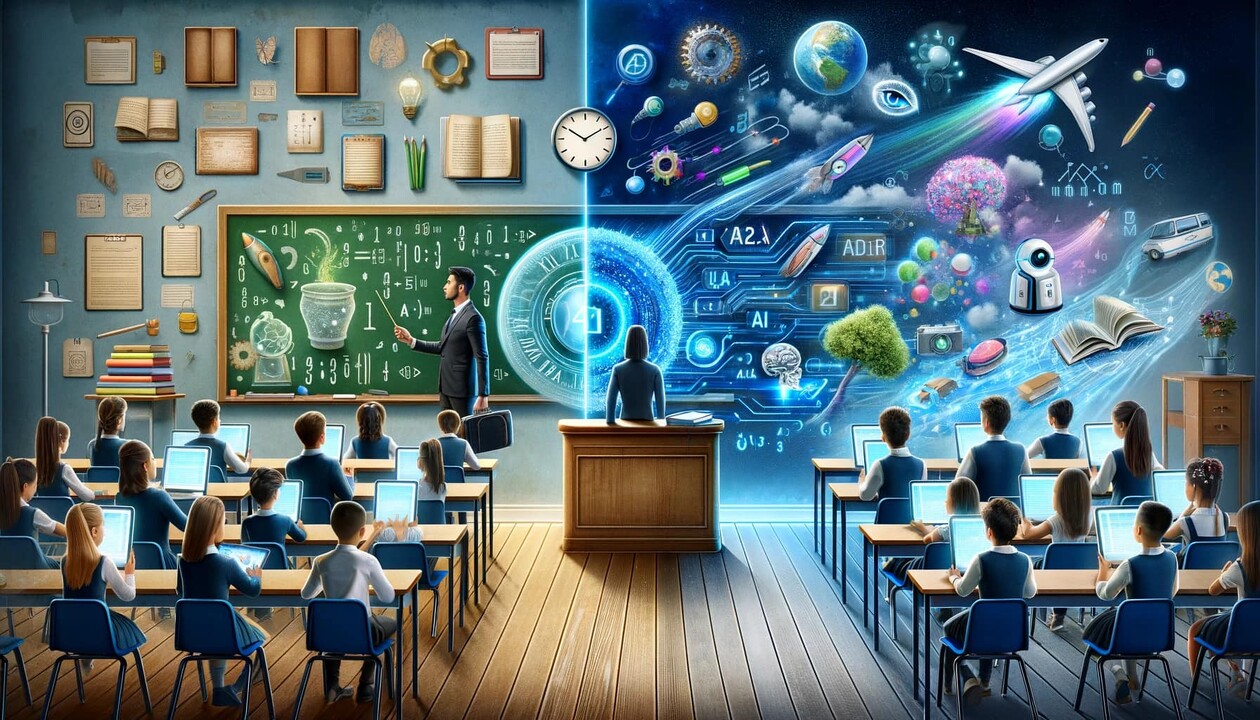
The Fourth Industrial Revolution upended the way education is expected to play out. Predictions are that 65% of children entering Grade R will be in jobs that do not yet exist. Advances in technology will require new and different skills. The implications for education are obvious. For centuries, education was built on the foundation of a relatively known future. Trouble arises when faced with an environment characterised by volatility, uncertainty, complexity, and ambiguity. This calls for a reimagining of how we approach curriculum. Education should ensure that human labour does not fall far behind the pace of technology.
The traditional packaging of knowledge, skills, and competencies into modules and qualifications is inadequate. The answer lies in focusing on disciplining the mind. It is about developing human qualities and dispositions that enable learners to engage meaningfully with the ever-changing technological landscape.
Albert Einstein was prophetic when he observed that “imagination is more important than knowledge. Imagination is everything. It is the preview of life’s coming attractions”. He said education should not be about “learning of facts, but the training of the mind to think”.