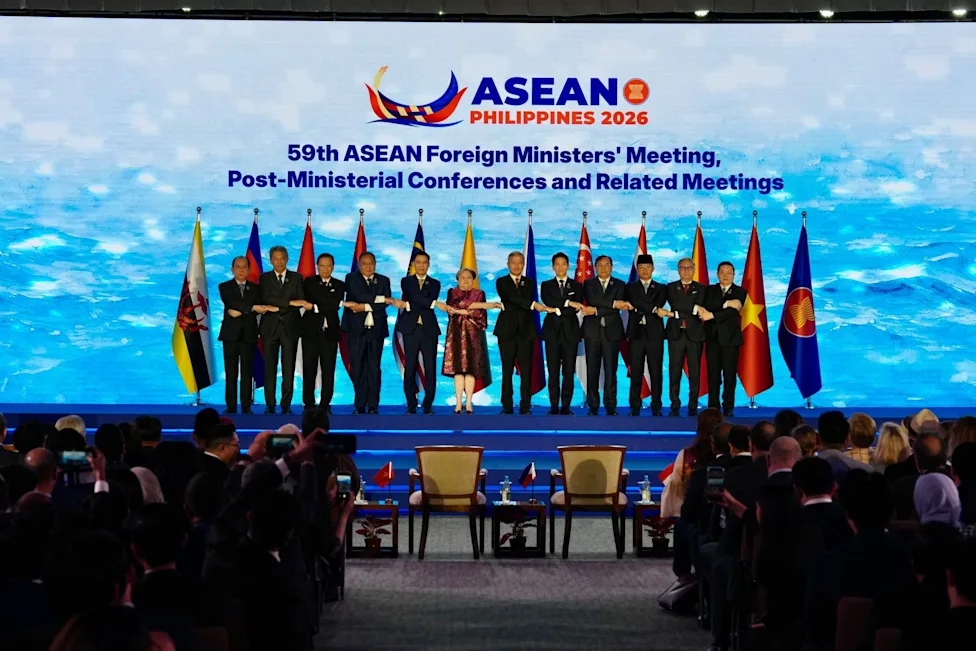
Foreign Ministers of the 11 nations of the Association of Southeast Asian Nations (ASEAN) opened their three-day conference in Manila, Philippines on July 21 with a closed-door morning session on the worsening situation in Southwest Asia, followed by the release of a joint message, the “ASEAN Foreign Ministers’ Statement on the Evolving Situation in the Middle East”.
They call for an immediate halt to all fighting in Southwest Asia and a full reopening of the Strait of Hormuz. The statement reads, “We expressed serious concern over the rapidly evolving situation in the Middle East, particularly the renewed hostilities involving the United States of America and the Islamic Republic of Iran.” Renewed fighting only diminishes the prospects for a peaceful resolution of the disputes.
The statement calls for “the utmost self-restraint” to attain peace, stability, prosperity, and the rule of international law. The ministers called for maintaining maritime safety and security and upholding the freedom of navigation through, and flights over, the Strait of Hormuz.
They recognize the immediate and long-term effects that this conflict has imposed on the 680 million citizens of the ASEAN countries. They identify how the war has affected regional trade, energy, food security, supply chains, agriculture, and agriculture inputs, especially fertilizers.
The ASEAN ministers pledged to increase internal cooperation and coordination and to provide emergency assistance to each other in times of crisis.
Of special note is their explicit rejection of warfare: “We further reaffirmed the obligations of all states to resolve their differences through peaceful means, respect the sovereignty and territorial integrity of all nations, protect civilians and civilian infrastructure in armed conflicts, and ensure the safety and security of United Nations peacekeepers and humanitarian personnel, in accordance with international law, including international humanitarian law, the UN Charter, and relevant UN Security Council resolutions.”
ASEAN is one of the oldest modern strategic-economic configurations, founded in 1967. Over the decades it has not only expanded in membership but has become more focused on economic development and political cooperation. It is known for its informal and personal culture, sometimes called the “ASEAN way.”
This refers to “quiet diplomacy” and a more human approach of persuasion, which stands in contrast to the present-day, degraded examples of Western alignments known for saber-rattling, threats, and de-humanizing one’s adversary.