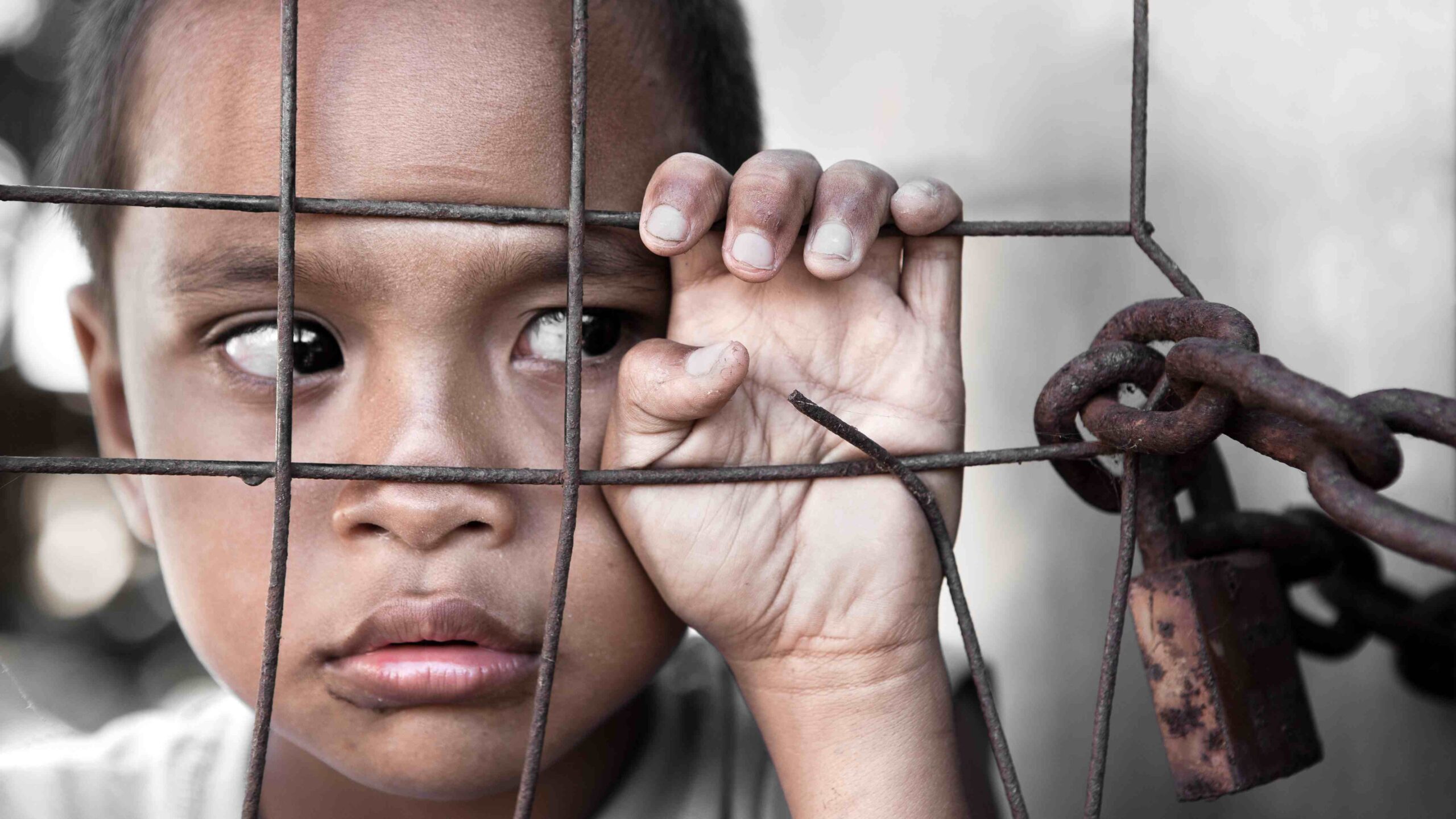
The brutal crackdown on Kathmandu’s youth mirrors the dark days of South Africa’s June 16 protests nearly 50 years ago. One survivor’s words still ring true: “When governments fear children holding placards, it exposes their own guilt.”
This past week, Nepal’s government tore down the very freedoms that keep a society alive. Nineteen young people—predominantly students in uniform—were shot dead, with hundreds of others injured. This was the result of a wave of public outrage, sparked by a repressive new law that banned major social media platforms for refusing to comply with invasive surveillance demands.
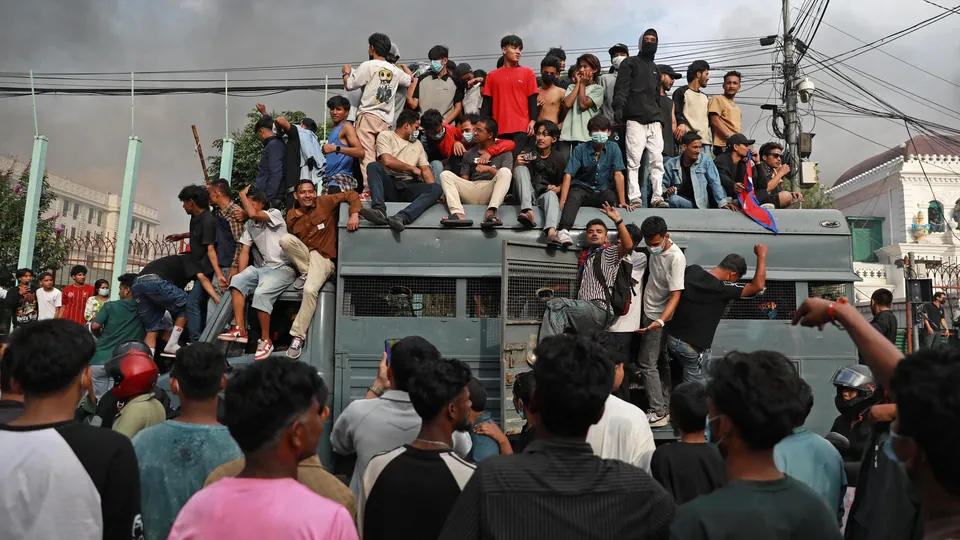
On Monday, September 8, thousands of young people in Nepal mobilised for what would be dubbed the “Gen-Z Protest.” They spontaneously, yet methodically, poured into the streets and marched across cities. Instead of listening, the state sent in armed forces. A government too weak to face criticism, and too arrogant to protect its citizens, chose to treat them as threats—and fired on them in broad daylight.
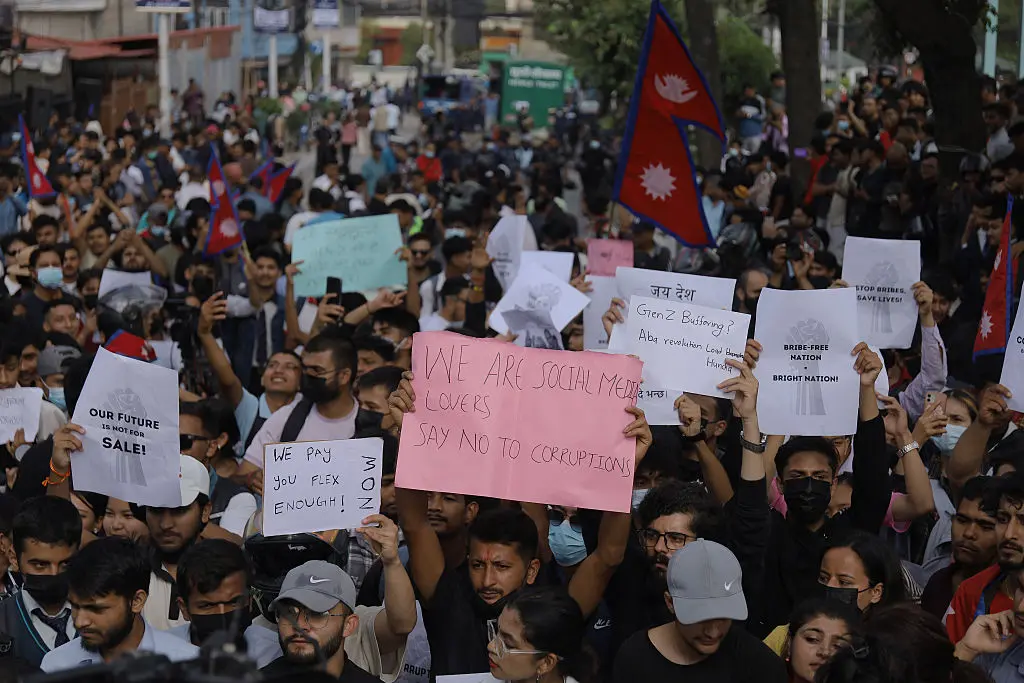
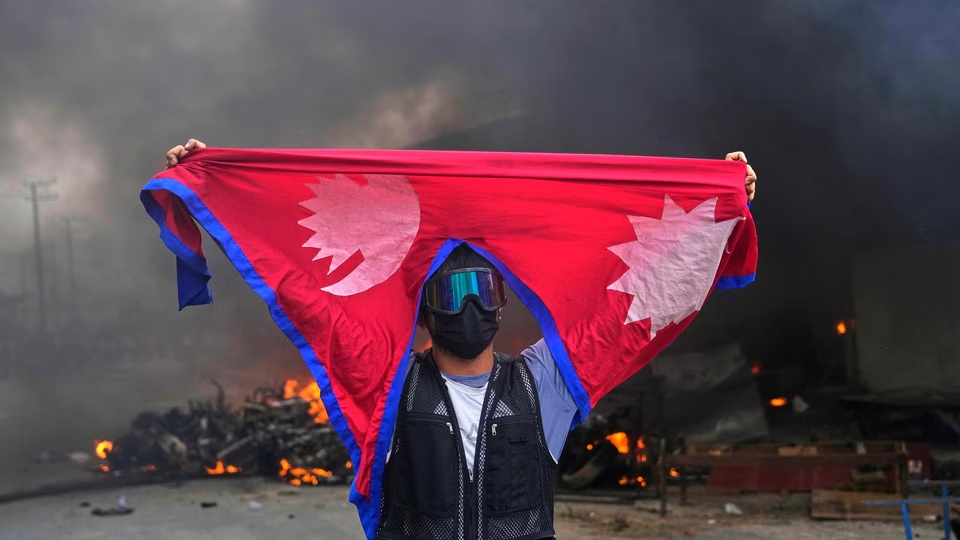
This harrowing event fuelled further unrest, with violence erupting across the small Himalayan nation. To date, the death toll has reached 30 and counting.
This violence didn’t start with the protestors—it started with the state. Just days before, a new set of draconian rules was implemented by the Nepalese government targeting all major social media platforms. Although the policy was framed as requiring platforms—Facebook, WhatsApp, Instagram, YouTube, LinkedIn, X—to register with authorities, the true nature of the law was far more sinister. It forced platforms to remove content critical of the government within 24 hours and demanded access to private user data, including messages, call logs, and chats. Under the guise of “public safety,” this was pure surveillance—an underhanded attempt at forced censorship.
When tech companies refused to comply, the government banned 26 platforms overnight. Social media went dark across Nepal, cutting off students, youth, and vulnerable citizens from the outside world—and from one another.
Following the outcry, the government lifted the ban and issued statements of regret. Prime Minister KP Sharma Oli resigned just 24 hours after the violence erupted. But these gestures come far too late for the families who buried their children, and the thousands of others hospitalised and traumatised.
Nepal’s Ministry of Health and Population has since confirmed that 34 people have died and 1,368 have been injured in hospitals nationwide following the clashes.
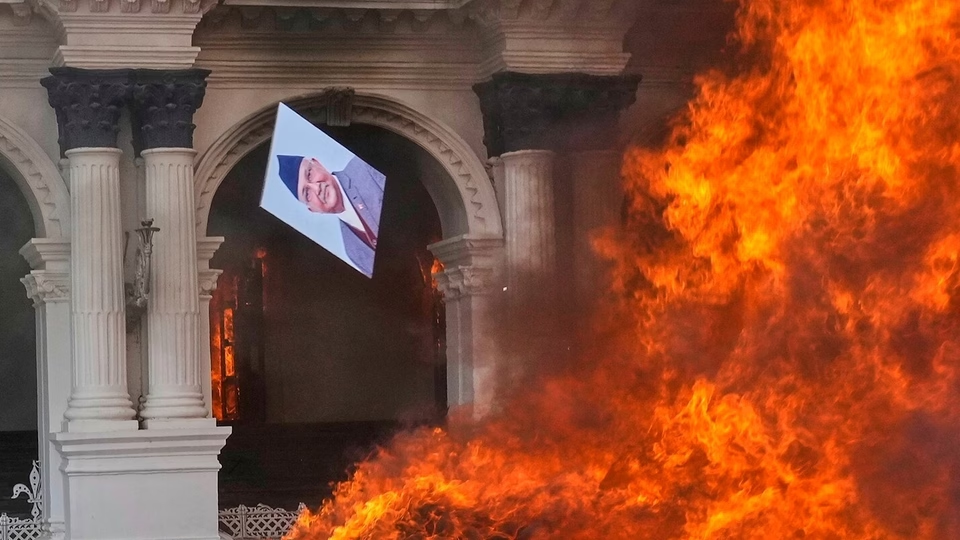
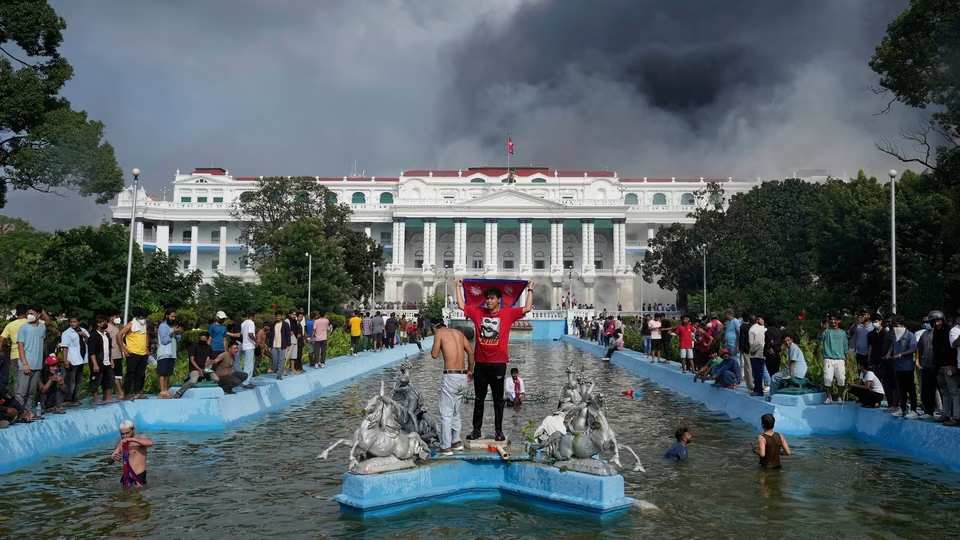
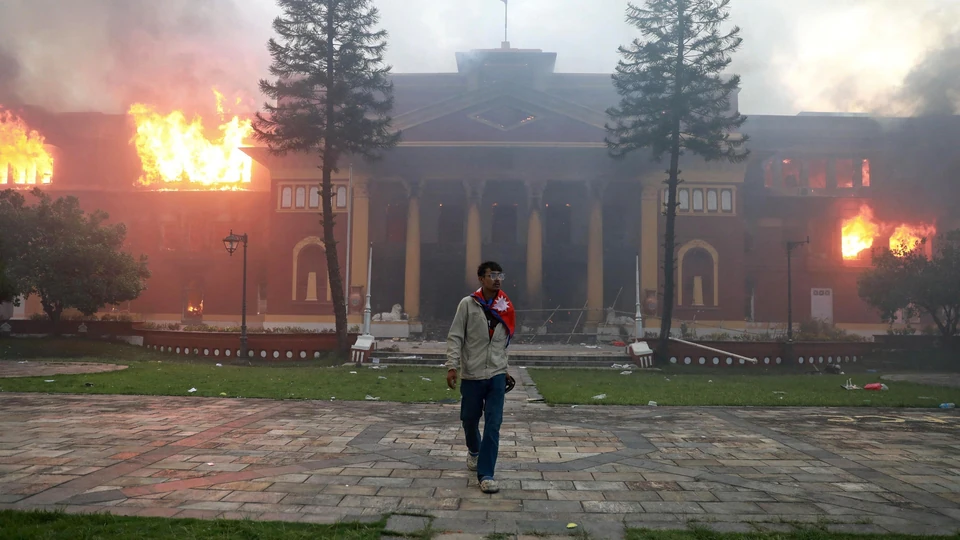
Meanwhile, the military has taken full control of the capital, Kathmandu. The Parliament building and the homes of multiple prominent politicians have gone up in flames. A military-imposed curfew is in effect, ordering civilians to stay indoors. While intended to restore “order,” the lockdown is further suffocating the lives and livelihoods of ordinary Nepalis.
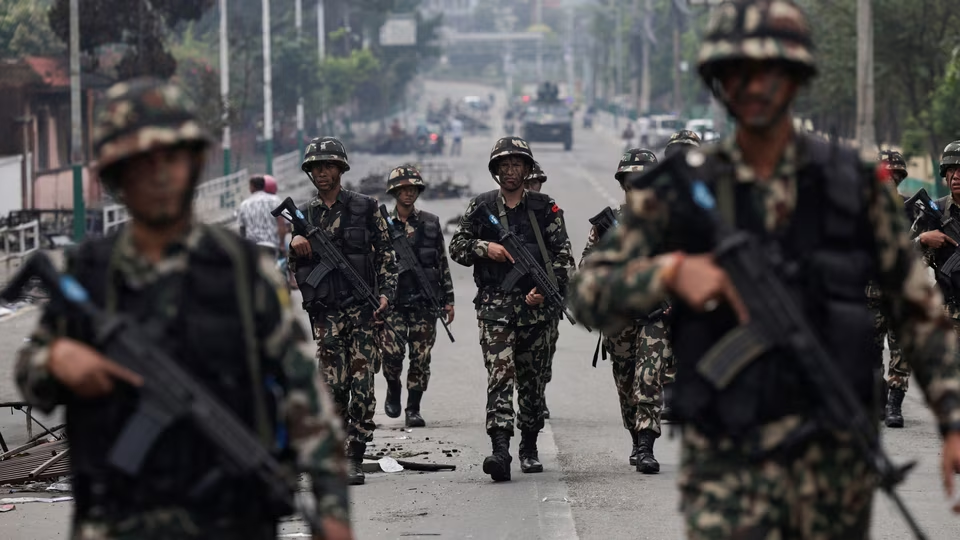
Nepal is a less developed country plagued by widespread poverty and a predominantly agricultural economy. According to the Asian Development Bank, more than 20% of the population lived in poverty as recently as 2022, with alarmingly high child-death rates. In such a fragile society, the economic and psychological costs of this violence are profound. Families of the injured face steep medical expenses, and the long-term trauma will cast a shadow for generations.
While this crisis is unfolding in a small, mountainous country, it reflects a broader global pattern: authoritarian tactics dressed up as digital governance. Around the world, governments are increasingly misusing their power to suppress dissent and eliminate transparency.
Closer to home, we’ve seen how states crush dissent under the pretence of “law and order.” On June 16, 1976 in Soweto, young students were gunned down for protesting the use of Afrikaans in schools. The abhorrent apartheid regime said it was protecting stability, when in fact, it was defending a system built on violent control, rampant exclusion, and systemic silence.
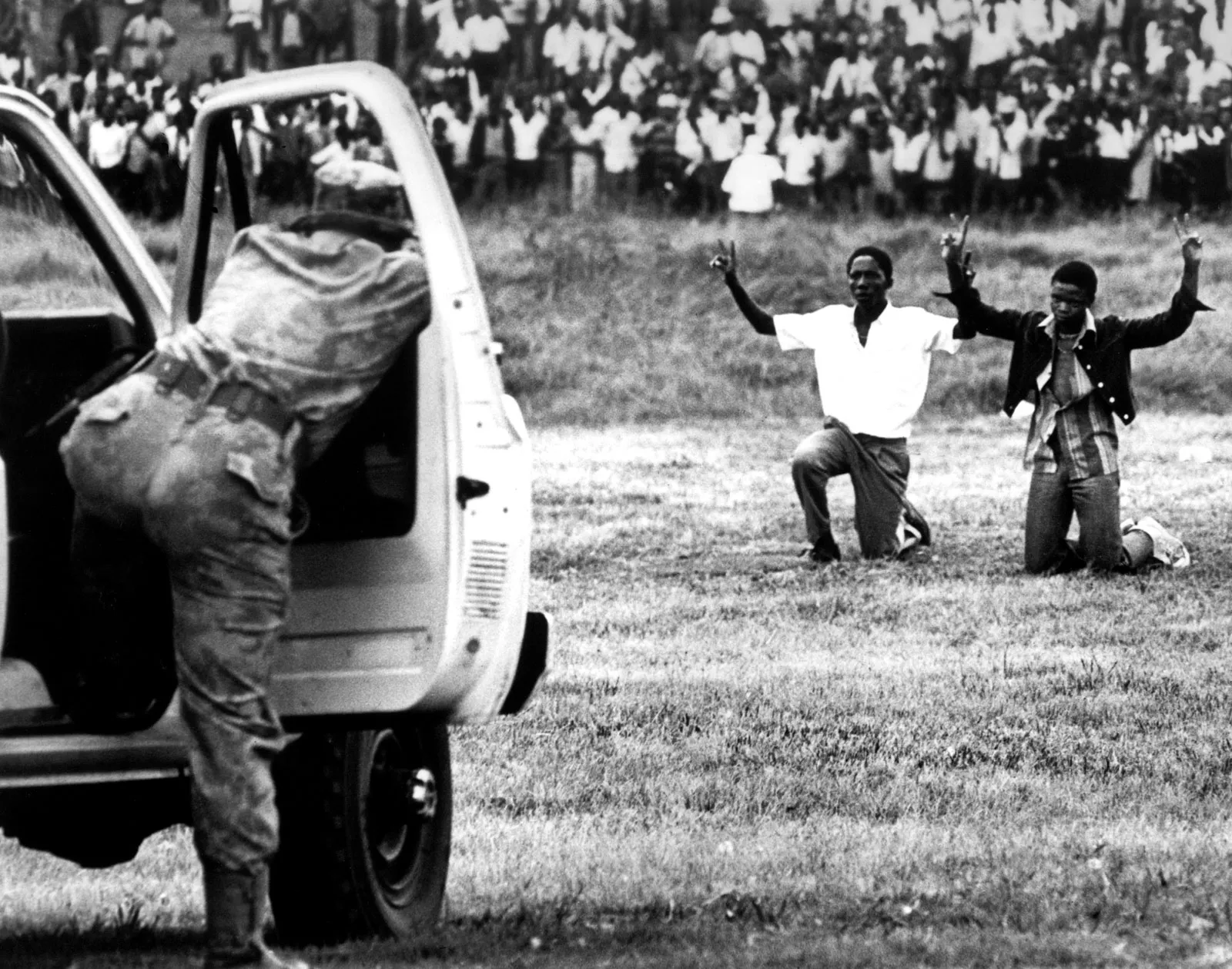
That same haunting logic is unfolding in Nepal. A government, afraid of scrutiny, switched off the internet. When youth resisted, it turned its guns on them.
This crisis reveals a critical truth: the suppression of digital freedoms is now one of the defining human rights struggles of our time. In remote regions and marginalised communities, social media is not just a platform for entertainment—it is a lifeline. It connects families, spreads information, and exposes corruption. It is a vital tool for democracy. When governments shut down these platforms, they are not just silencing speech—they are disappearing people.
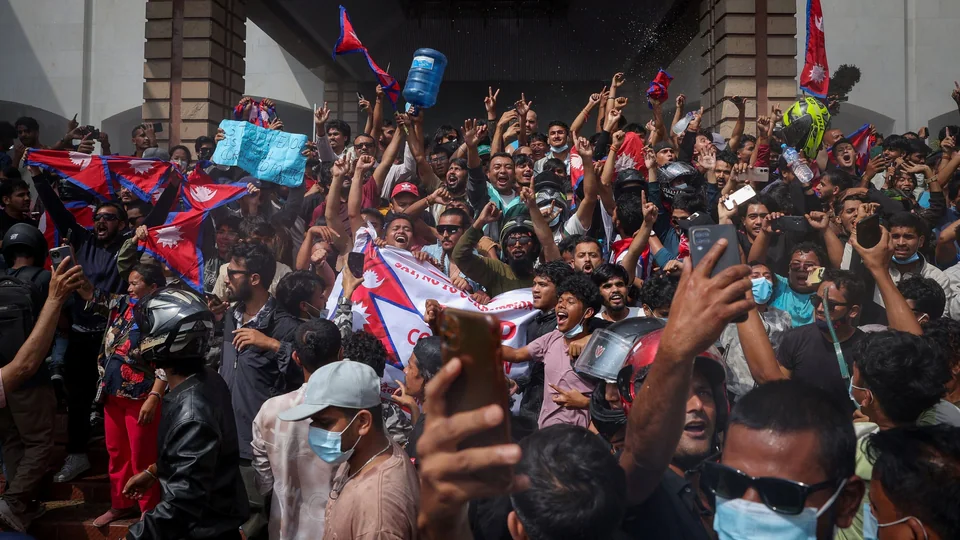
Young people in Nepal are not the threat—they are the resistance. Over thirty were killed and near-thousands wounded for daring to speak truth to power. Their bravery has certainly lit a flame that will not easily be extinguished.
What’s happening in Nepal is not just a national tragedy—it’s a global warning. When a government dismantles digital freedoms, treats criticism as treason, and wages war on its own youth, it threatens the very fabric of democratic society. These young protestors died not just defending their rights, but defending the rights of future generations to speak, connect, and live freely. In their defiance, they declared what every tyrant fears: the more you try to silence us, the louder we become.