The voters’ roll is the backbone of any credible election. Without an accurate and accessible register of voters, even the most well-run polling day can be undermined. In Zimbabwe, the proposal to move responsibility for the voters’ roll from the Zimbabwe Electoral Commission (ZEC) to the Registrar General’s Office has sparked debate. Yet, if approached carefully, this reform could bring practical advantages for both citizens and the electoral system.
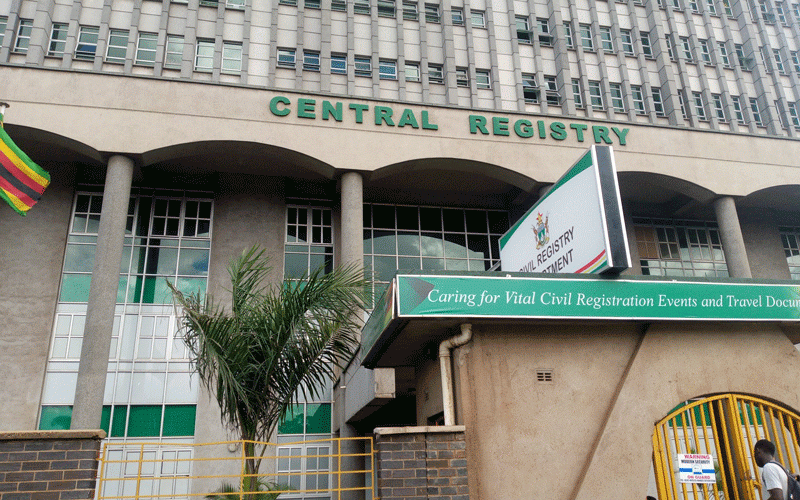
To understand the proposal, it is important to revisit how the voters’ roll came to be managed by ZEC in the first place. Before the adoption of the 2013 Constitution in Zimbabwe, voter registration was historically handled by the Registrar General’s Office. The Registrar General already maintained national civil registries, including birth and death records, as well as national identification documents. Because of this, the office was naturally positioned to manage the voter register.
However, constitutional reforms introduced after years of electoral disputes sought to strengthen the independence of electoral administration. As part of these reforms, responsibility for voter registration and the management of the voters’ roll was transferred to ZEC, the constitutionally mandated body responsible for administering elections. The intention was to ensure that the voters’ roll was managed by an independent electoral authority rather than a government department.
Over the past decade, ZEC has overseen several voter registration exercises and elections using the biometric voter registration (BVR) system. While the introduction of biometric technology modernised aspects of the voters’ roll, challenges have persisted. Periodic voter registration campaigns have often required citizens to travel long distances to registration centres. Updates to the roll are typically concentrated around election periods rather than being continuously integrated into the country’s broader civil registration system.
This separation between civil registration and voter registration has practical implications. When births, deaths, or changes of residence occur, these changes are not always immediately reflected in the voters’ roll. Civil society organisations such as the Zimbabwe Election Support Network (ZESN) and the Election Resource Centre (ERC) have at various points raised concerns about the presence of deceased voters on the roll and delays in updating records. These concerns highlight the importance of ensuring that the voters’ register is continuously aligned with the country’s civil registry.
Reintegrating voter registration with the Registrar General’s Office could address some of these challenges. Because the Registrar General already manages the country’s civil registry and national identification system, the office is uniquely positioned to maintain a continuously updated voter database. When a citizen turns 18, for example, their eligibility to vote could be automatically recorded once they possess a national identity document. Similarly, deaths and other demographic changes could be reflected in the voters’ roll more efficiently through direct integration with the national registry.
It is important to note that the proposed reform does not remove the authority of the Zimbabwe Electoral Commission to administer elections. ZEC would retain its constitutional mandate to run elections, supervise electoral processes, and ensure that voting is conducted freely and fairly. The change would primarily affect the administrative management of the voters’ roll, while ZEC would continue to exercise oversight and supervisory responsibility over the electoral system.
Across Africa, several countries operate electoral systems where voter registration is closely linked to civil registration authorities. In Botswana and Namibia, for example, national population registries maintained by government departments play a central role in supporting voter registration processes. These systems allow election management bodies to rely on existing identity databases when preparing voter rolls, improving accuracy and reducing duplication.
For Zimbabwe, such a model could allow ZEC to concentrate more fully on its core mandate: organising elections, supervising polling, and ensuring electoral integrity. Meanwhile, the Registrar General’s Office would maintain the foundational database that feeds into the electoral system.
Most importantly, the reform could make voter registration easier for citizens. Instead of waiting for periodic registration drives, eligible voters could be captured through routine civil registration processes. This would make voter registration more accessible, particularly for rural communities that often face logistical barriers during registration campaigns.
An accurate voters’ roll is not simply an administrative tool; it is the foundation of electoral credibility. When citizens trust that the voters’ list is accurate and inclusive, confidence in the entire electoral process increases. Disputes about “ghost voters,” missing names, or outdated records become less likely.
For Zimbabwe, improving the integrity of the voters’ roll could have broader democratic benefits. Greater accuracy would reduce suspicion between political actors, strengthen public confidence in election outcomes, and encourage higher voter participation.
Ultimately, the debate should not be framed as a contest between institutions but as a question of efficiency and public trust. If the transition is managed transparently, with proper safeguards and oversight, moving the voters’ roll to the Registrar General’s Office could modernise Zimbabwe’s electoral infrastructure while leaving ZEC’s authority over elections intact.
Democracy rests on the simple act of citizens casting their vote. Ensuring that every eligible voter is properly recorded is the first step toward making that act meaningful.