
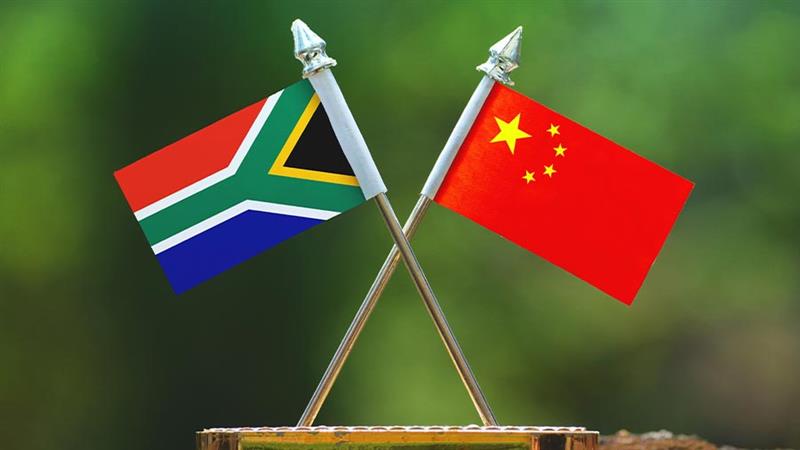
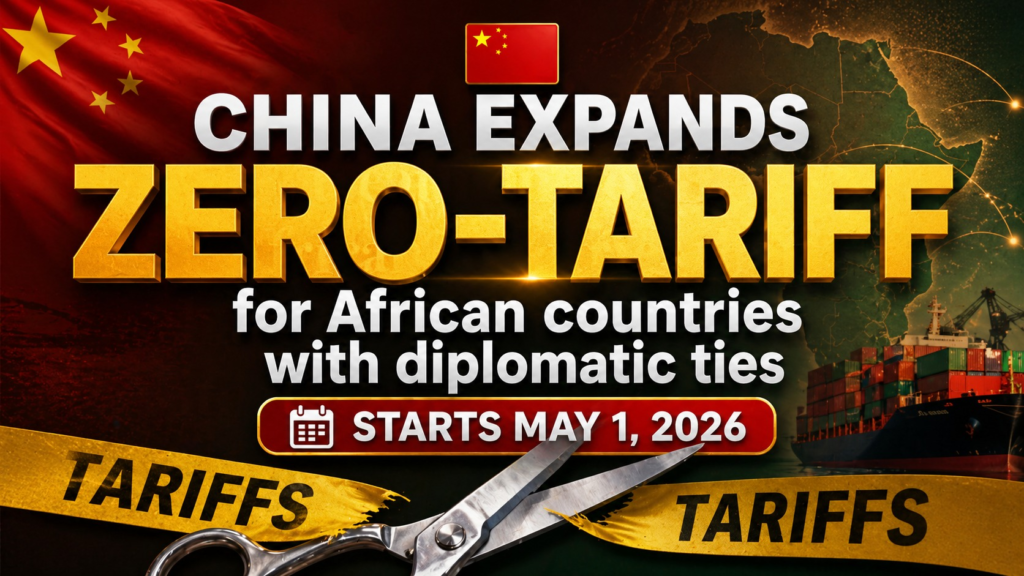
Amid rising global trade uncertainties and shifting supply chains, a major policy is drawing growing attention across South Africa’s business and industrial sectors: China’s decision to grant 100% tariff-free treatment on products from 53 African countries, effective May 1, 2026.

This move goes beyond reducing trade costs. It signals a new phase in China–South Africa economic relations—one defined by greater openness, stronger predictability, and deeper structural cooperation. For years, bilateral ties have steadily expanded across trade, investment, and industry. Now, the zero-tariff policy injects fresh momentum into this already dynamic partnership.

Even before full implementation, early measures have begun to show tangible impact. Since May 1, 2025, China has already extended zero-tariff access to a range of South African agricultural and mineral products. High-quality exports such as citrus, wine, and beef are now poised to benefit from improved competitiveness in the Chinese market.
Against this backdrop, the recent China (Shenzhen Longhua) – South Africa (Johannesburg) Economic and Trade Cooperation Conference, held in South Africa, sent a clear and positive signal. Participants from government, business, and community sectors on both sides emphasized the importance of seizing opportunities presented by China’s upcoming 15th Five-Year Plan and its continued high-level opening-up. They highlighted that, under the dividend of zero tariffs, both countries can better leverage their complementary strengths to elevate practical cooperation to a new level.
On the ground in Johannesburg, the policy is already translating into growing business confidence.

Amukelani Kubayi, Acting Director for Trade and Investment Promotion at the City of Johannesburg, described the zero-tariff policy as a “significant milestone,” particularly for local traders and small businesses. She noted that, with China already one of South Africa’s largest trading partners, eliminating tariffs will further expand trade volumes and unlock new avenues for cooperation.
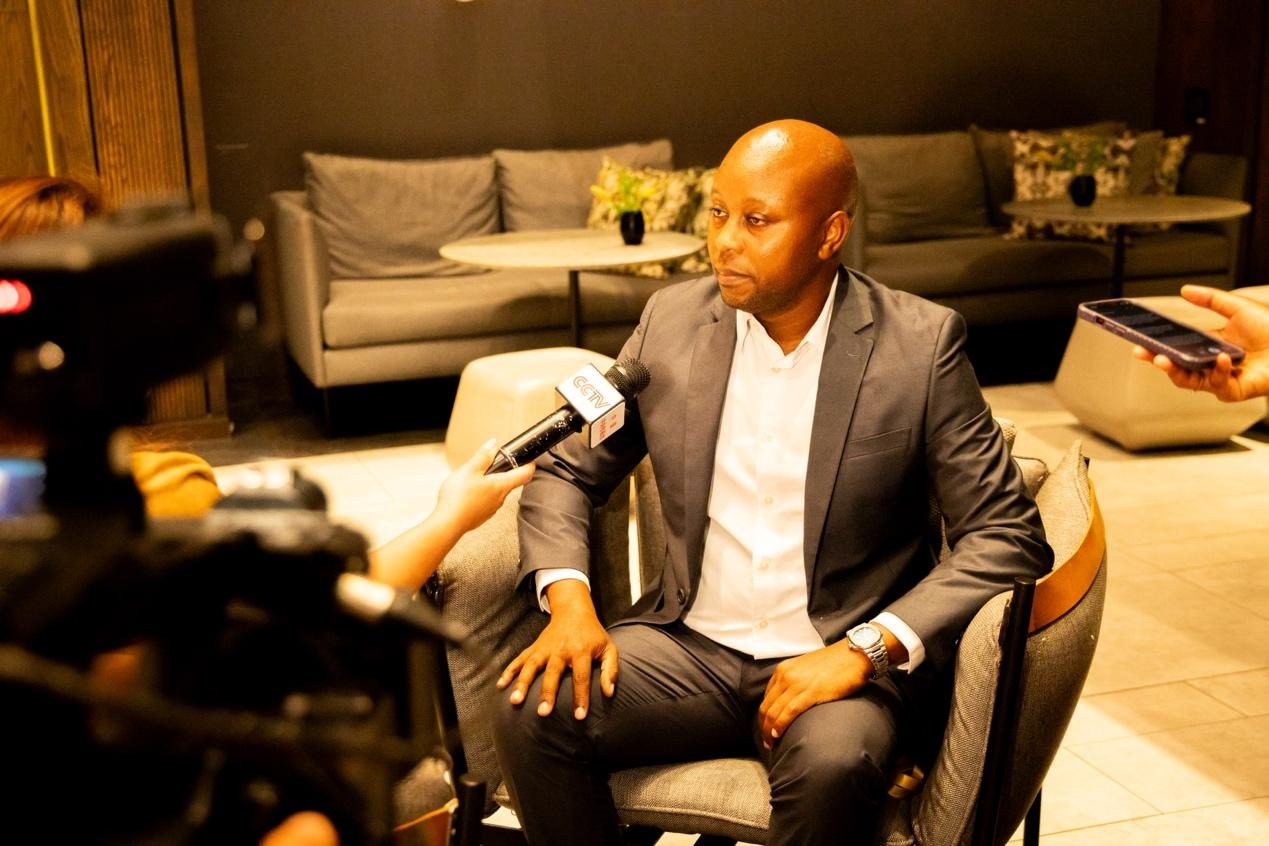
For businesses, the impact is immediate and tangible. Manelisa Bam, a South African entrepreneur and CEO of Bam Group Holdings, said the policy would significantly reduce the cost of trading with China. “It allows us to procure more products and do more assembly and innovation locally,” he explained. For small and medium-sized enterprises integrated into China-linked supply chains, the cost savings could translate directly into growth and expansion.
The agricultural sector is also seeing strong potential gains. With improved market access mechanisms and zero tariffs working in tandem, South African agricultural exports are expected to reach China more efficiently and competitively. Industry stakeholders say this will reduce costs, streamline processes, and enhance the global competitiveness of South African products—marking a potential turning point for the sector as a whole.
Over the longer term, the significance of zero tariffs extends well beyond cost reduction.

It is reshaping market expectations. With more predictable access to China’s vast consumer market, businesses are more inclined to scale up production, improve quality, and move up the value chain. According to Imram Thabang Makama, a representative of South Africa’s young entrepreneurs, increased trade will stimulate demand across logistics, ports, and processing industries, creating jobs and opening pathways for youth participation in trade and shipping sectors.
At the same time, global developments are reinforcing the importance of such cooperation. Geopolitical tensions and energy price volatility continue to disrupt supply chains and drive up transportation costs. In this context, strengthening stable and predictable trade partnerships has become a shared priority for policymakers and businesses alike.
Zero tariffs, therefore, serve as more than an economic measure—they are a bridge between markets.

From Johannesburg to Shenzhen, from farms to ports, from SMEs to multinational supply chains, this policy is enabling greater flows—not only of goods, but also of technology, capital, and opportunity.
More importantly, it sends a clear message: at a time of global uncertainty, openness and cooperation remain the most effective path to sustainable growth.
As the policy takes full effect, the scope of China–South Africa cooperation is being redefined. For South Africa, it represents not only improved access to the Chinese market, but also a strategic opportunity to participate more deeply in the evolving global value chain.
From Johannesburg, this new journey has already begun.

![AI IMAGE OF IRAN WAR W USA AND ISRAEL - IMAGE: WIO NEWS]](https://gsmn.co.za/wp-content/uploads/2026/04/image-1768397582204.webp)
![PRESIDENT RAMAPHOSA'S KEYNOTE ADDRESS AT THE INTERNATIONAL PANEL ON INEQUALITY [Image: SA Gov]](https://gsmn.co.za/wp-content/uploads/2026/04/678926814_1431297252369404_2450149361202771917_n.jpg)
![President Cyril Ramaphosa that he has appointed former apartheid-era government kingpin Roelf Meyer as South Africa’s ambassador to the US [Image: Luke Daniel | News24]](https://gsmn.co.za/wp-content/uploads/2026/04/roelf_meyer_and_cyril-1.jpeg)
![12 students who are set to depart for The Education, Training and Development Practices Sector Education and Training Authority (ETDP SETA)-Chinese Bursary Programme - [Image: ETDP SETA via X]](https://gsmn.co.za/wp-content/uploads/2026/04/HGkfZIJXIAADiBf.jpg)

![Bra Hugh Masekela [Image: Wits Uni / Daily Maverick]](https://gsmn.co.za/wp-content/uploads/2026/04/WitsUni-Hugh-citation.jpg)
![DEPUTY PRESIDENT MASHATILE'S SPEECH DURING TITLE DEEDS HANDOVER CELEBRATIONS FOR SEBILONG RESTITUTION COMMUNITY [Image: SA Government via Linkedin]](https://gsmn.co.za/wp-content/uploads/2026/04/1775836079262.jpg)
![President Cyril Ramaphosa has appointed Justice Nambitha Christabel Dambuza-Mayosi and Justice Katharine Mary Savage as Judges of the Constitutional Court [Image : Instagram of News24]](https://gsmn.co.za/wp-content/uploads/2026/04/WhatsApp-Image-2026-04-15-at-22.38.18.jpeg)

![Indigenous knowledge systems integrated into modern curriculum - south africa history curriculum reform - school, education - image [linkedin]](https://gsmn.co.za/wp-content/uploads/2026/04/1742898386729.png)