
![Miles Davis Bitches Brew Cover [Image: All About Jazz]](https://gsmn.co.za/wp-content/uploads/2026/04/b182f6aa7ca56e2017a8bec5f5f5cb1c.png)
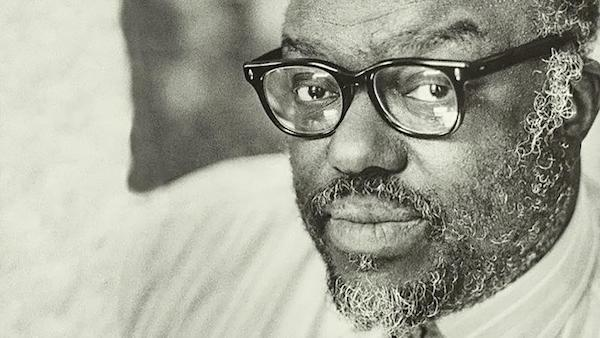
In August 2009, a lovely sister and I were at a concert by the jazz bassist, John Pattituci at Dizzy’s Club – part of Wynton Marsalis’s Jazz at Lincoln Centre establishment – and we ran smack into the bear of a man, that was Stanley Crouch, the irascible jazz critic and writer. At first, I did not recognize him. He seemed not so disagreeable to the eye, as pictures and legend foretold. But the tell-tale tropes were all there – the Mandingo thick lips, the thick glasses and lumbering swagger. I could not resist reaching out to him as he passed our table, “Hey man, are you Stanley Crouch?” “No, I don’t think so” was his retort. But the saxophonist Joe Lovano who was nearby, playing with Pattituci that evening, smiled and nodded towards me, “He is Stanley Crouch.”
Now, it is an unpardonable infraction, to ask a cat his identity in a New York City jazz club, especially one as notoriously obnoxious as Crouch. But I suppose because my accent had Kunta Kinteish strains, he must have exercised restraint, sparing me his notorious vitriol. This was after all Stanley Crouch, a dude who had been fired from his gig as a columnist for the Village Voice for throwing a colleague through the window after an argument.
And to his lasting infamy had greeted the publication of Miles Davis autobiography by his erstwhile friend Quincy Troupe in 1989, with a withering philippic, “Sketches of Pain: Miles Davis, the most brilliant sell-out in the history of jazz” which was peppered with such calumnies as “traitor” and permanently sundered his relationship with Troupe.
Troupe, who would be my teacher and friend, would opine that the reason for that withering review, which also accused Troupe of plagiarism, was that “Stanley is so evil man, because he is ugly. A dark son of a bitch who is jealous that I, not him, got the renown for doing Miles’ book.”
The root of Crouch’s dyspepsia towards Miles was Bitches Brew – the groundbreaking record that took Miles solidly into the realm of electronics and funk. For some jazz purists, this was nothing short of heresy, for which Miles had to be barbecued on the stake. Crouch would appoint himself the chief enforcer of this Fatwa. The antipathy would reach its apogee with Crouch’s evisceration of Miles in the Rolling Stone magazine review I mentioned above. The “Sketches of Pain” caption was clever; a play on Miles’s record, “Sketches of Spain,” which he knew, would get a lot of attention. The essence of the review was that Miles had sold out on jazz, a phenomenon presaged by the recording of Bitches Brew.
At the best of times the jazz community is a fissiparous and rancorous lot, a function of stylistic variegation, taste, and proclivity. But with Bitches Brew, this normative condition morphed into a veritable schism. On one side of the divide were the “Ayatollahs;” self-appointed keepers of the tradition, who pined for the music Miles had done with Charlie Parker and Dizzy Gillespie as the pioneers of Bebop. They longed for the post-Bop music he played with his incomparable quintet, with John Coltrane, Joseph “Philly Joe” Jones, Red Garland, Julian “Cannonball” Adderly, Paul Chambers et al which reached a crescendo with “Kind of Blue.”
They hungered for the music he did with the arranger Gil Evans, christened Third Stream, with distinct classical music echoes, indelibly etched in our consciousness with “Sketches of Spain” and “Miles Ahead.” And were high on the music of his iconic combo with Herbie Hancock, Wayne Shorter, Ron Carter et al which produced such gems as “Nefertiti.” They never forgave Miles for the coitus interruptus that was Bitches Brew.
On the other side of the barricade were the “Hipsters,” a new generation of aficionados, influenced by the Civil Rights movement, Vietnam War protests and Woodstock, who were politically engaged, multi racial, and eclectic in their musical tastes. Ever prescient-Miles Ahead- Miles had recognised the profound transformation of American society, the 60’s revolution of Vietnam, Woodstock and the Feminist and Civil Rights movements had wrought. It had upended societal mores, spawning a new subculture that was in utter rebellion against traditional American values.
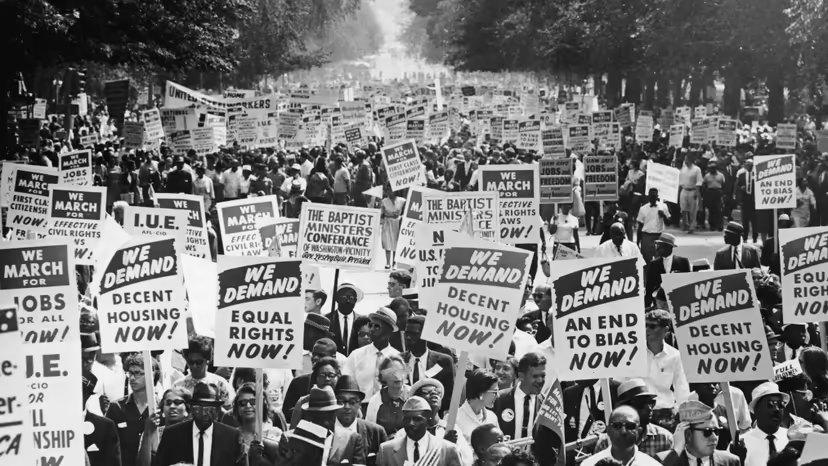
Miles discerned in this tumult, the potential to take jazz out of its black ghetto into the mainstream, thus expanding its audience. With the sons and daughters of the Establishment, embracing dance, raunch and revolution in such a trenchant and defiant manner, there was now a fertile opportunity to take jazz out of the dark and dingy club scene into the dazzling light of the concert hall and stadiums. It is indeed unthinkable that the 600,00 thousand revellers who descended on the Isle of Wight Festival in 1970 chanting “We Want Miles”, would have done so had Miles still been playing “Boplicity” and“Bags Groove”.Jazz had to move on with the times. It had to take Motown, Woodstock, and Jimmy Hendrix into account. And this is what Miles did with Bitches Brew.
But as Newtonian physics teaches us; for every action there is an equal and opposite reaction. For Miles, the resistance would be led by the grand Ayatollahs – Stanley Crouch and Wynton Marsalis.
Marsalis came to New York in 1979 as a 17-year-old, to study at the Julliard School. He would later join Art Blakey’s Jazz Messengers. He was prodigiously talented. But was also conservative in his outlook, with a neo-classical approach to jazz. Ironically, Miles had also come to New York in the mid 40’s to study at the same institution, but after getting his technical and compositional chops down, would rebel against its classical approach to jazz. That is when he left Julliard to join Charlie Parker’s Bebop rebels and a legend was born.
Marsalis quickly came to the attention of a group of black writers and thinkers nestled around Ralph Ellison of “Invisible Man” fame, Albert Murray, the author of “Stomping the Blues” and the perennial Stanley Crouch; a crowd with deep reverence for the canon, tradition and a classical approach to the arts, which Miles was in the process of subverting, with his transgressive style in his music, speech (the ubiquitous mothafucka) and sartorial style.
Miles was the subversive that had to be stopped and Marsalis, whom this group had co-opted and hipped to urbane sophistication, and classical readings on William Faulkner, James Joyce, Marcel Proust, Thomas Mann – the great literary canon – was unleashed in this crusade. And boy, did he dog Miles?
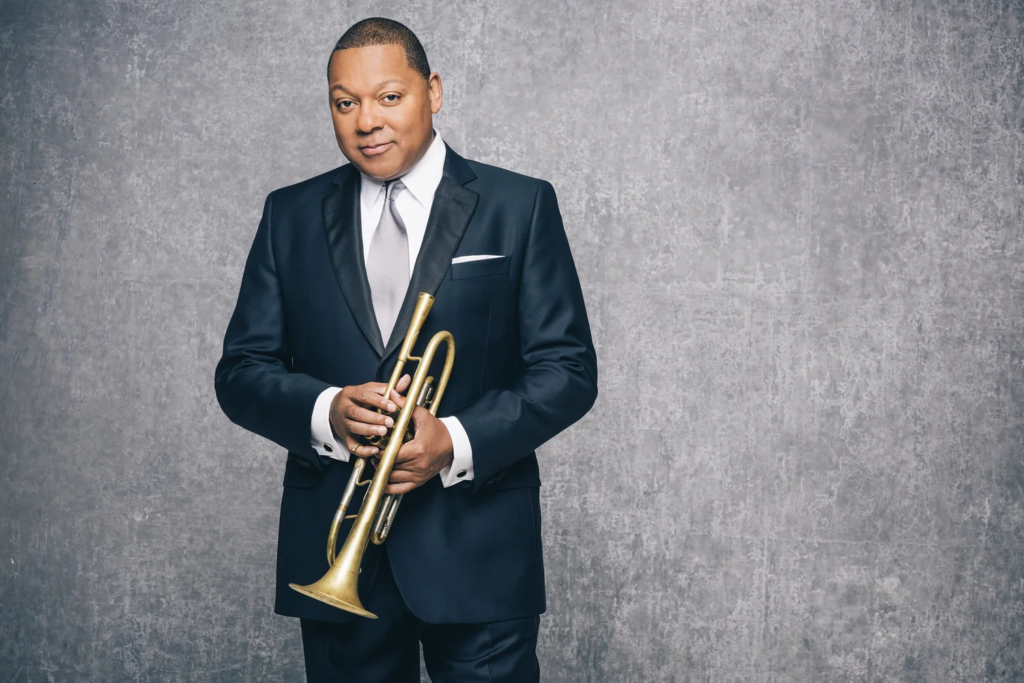
I met Marsalis, when he was on these shores in September 2011, at a cocktail party, a friend hosted for him. This was his first visit to our country. He has since returned twice, in 2019 and 2025 for the Joy of Jazz festival. I introduced myself as an uber Miles aficionado and gingerly indicated my disapprobation for how he and Crouch had treated this transcendent icon. He was surprisingly gracious about it and seemed more excited about the fact that I knew of his intellectual mentor, Stanley Crouch. “You know Crouch? Wow!”
We agreed to meet and discourse further on this, with Crouch in NYC, where I was slated to be in a few weeks. When I got to the Big Apple, I gave him a call. Unfortunately, he was going on the road the following day. And I was not about to meet with Crouch by myself. I did not exactly relish the idea of being thrown out of a window, should the conversation go south.
I was thus deprived an opportunity to engage on the meaning of Miles, Bitches Brew, and the evolution of jazz. For at its core, the brouhaha pivoted on the foundational question of, “What is Jazz?” Marsalis and Crouch believe that jazz is an American classical music and like its European kin must be frozen in time as a standardised idiom. This is patently risible, for jazz was always an evolving groove. From Scott Joplin’s Ragtime; to Satchmo’s New Orleans jazz; to the Swing era, dominated by Duke Ellington and Count Basie; to Charlie Parker, Dizzy Gillespie, Miles, and Thelonious Monk’s Bebop; to Miles’s Post Bop revolution (Cool, Hard and Modal); to Avant Garde or Free Jazz of Ornette Coleman and Cecil Taylor; and ultimately the style Miles inaugurated with Bitches Brew and “In a Silent Way,” inelegantly referred to as Fusion-Jazz.
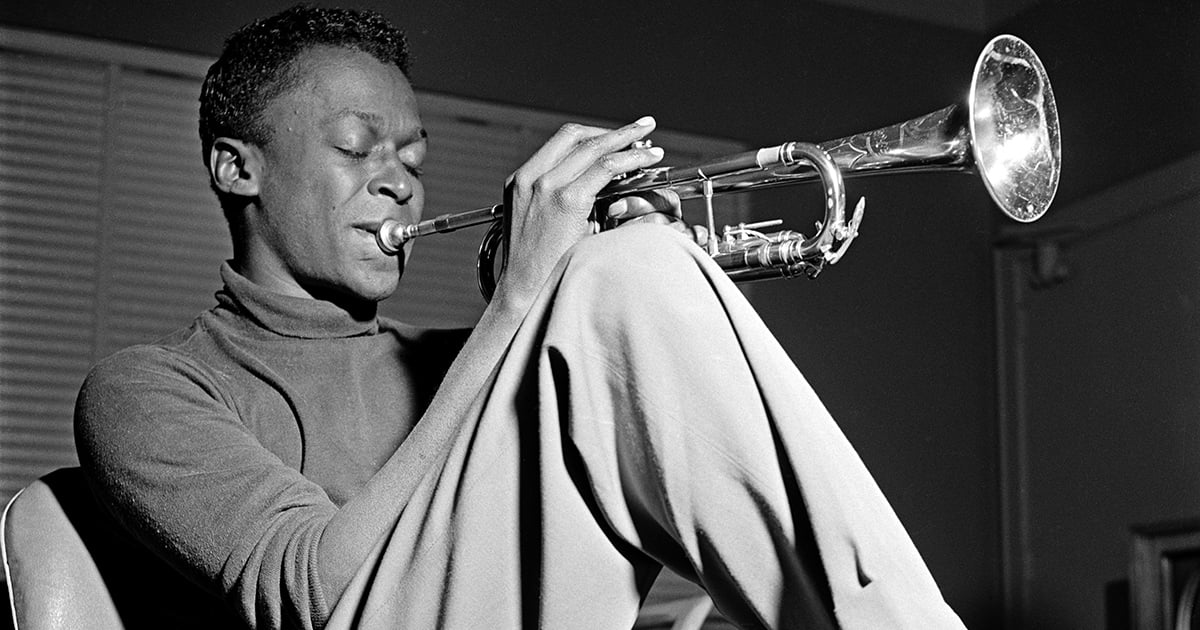
Jazz was always evolving and changing form, reflecting its social context. What remained constant was the “swing”- “It don’t mean a thing, if ain’t got the swing.” Thus, the criticism of Miles’ experimentation and explorations with the groove was both ahistorical and bizarre. But as we parted on the phone, Marsalis did a perfect rendition of Zim Ngqawana’s name, clicks and all, that even my lovely friend who had coconut tendencies, and could not click, struggled with –“Zim Ngqa WA Na.” For that, even his high crimes and misdemeanours against Miles are forgiven. Zim was a friend of mine. And like Miles, he will never die.
Marsalis, as he has mellowed and evolved, has since changed his attitude towards Miles. In May 2016, for the first time in the Jazz at Lincoln Centre Orchestra repertoire, the band revisited Miles entire body of work to mark his 90th birthday celebrations in a three-day fiesta from May 12-14th. I had the great fortune of being in the audience to mark a historic rupture with a reactionary past.
And this year from May 14th-16th, the orchestra will mark Miles’s centenary with a concert entitled Sketches of Miles: Miles Davis at 100, focusing on Miles’s collaboration with Gil Evans – Third Stream – memorialised in such luminosities as, Miles Ahead, Porgy and Bess, and Sketches of Spain. As the economist John Myanard Keynes famously observed, “When the facts change, I reserve the right to change my mind.” And so has Wynton.
Bravissimo!











![Bishop Joe Seoka during The Funeral Service of Professor Itumeleng Mosala [Image: Mandla Seloane]](https://gsmn.co.za/wp-content/uploads/2026/08/WhatsApp-Image-2026-08-20-at-15.59.13-1.jpeg)



One Response
Beautifully written jazz essay — I genuinely enjoyed it. Pity it wasn’t offered to the Sunday Times (South Africa); it’s the kind of piece you’d expect to find in the New York Times Magazine.