Tomorrow, Monday the 25th, not only kicks off our annually commemorated 16 Days of Activism Against Gender-Based Violence, but it is also the International Day for the Elimination of Violence Against Women. These hits close to home, considering that recent statistics indicate a chilling trend – that nearly 3 murders occur every hour in South Africa.
Managed by UN Women, the UNiTE campaign is a “multilayer effort to prevent and eliminate violence against women and girls around the world”, and ultimately fortify the 16 Days of Activism campaign. The theme for this year is: “Every 10 Minutes, a woman is killed. #NoExcuse. UNiTE to End Violence against Women.”
A study by the Human Sciences Resource Council’s (HSRC), reiterated just last month through the Minister of Women, Youth & Persons with Disabilities, Sindisiwe Chikunga, who indicated that at least 7 million South African women have experienced physical violence in their lifetimes. Additionally, more than 2 million women have survived sexual abuse. What is more disturbing is that these figures only reflect those who have formerly reported violence’s, whilst thousands continue to live in fear and silence.
According to UN Women, the 16 Days of Activism campaign is a critical commitment that encompasses societies across the globe. It is a prime opportunity to call for accountability and action from decision-makers, policymakers, and our failures in governance that perpetuate the occurrence of Gender-Based Violence and Femicide (GBVF).
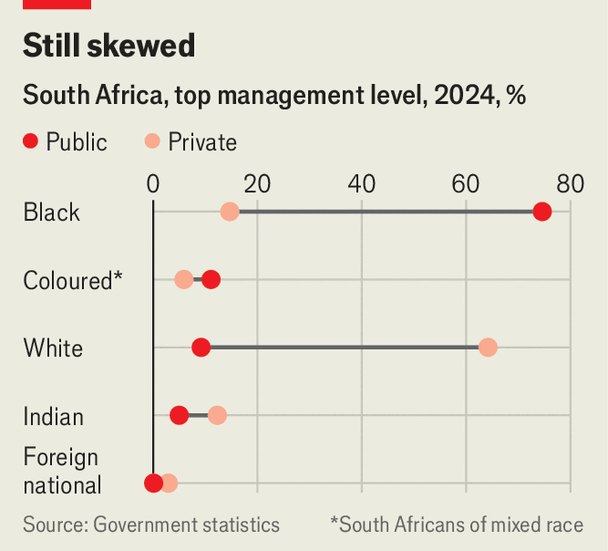
Violence against women in our society is an intersectional challenge, one that I have reiterated in my past writings. South Africa, although revered for having the best Constitution in the world, shamefully remains the world’s most unequal society. In no other society in the entire world, will you find a bigger gap between the rich and the poor. This is not merely speaking to income inequality, but also impacts systematic access, resources, institutions, education, healthcare, housing and infrastructure, service delivery, public protection services, and so much more. All of the aspects of a citizen’s lived reality are intertwined and intersectional, and these directly correlate with the prevalence of crime and violence in our society.
GBVF has been, in various sectors, attributed to economic factors such as poverty, cultural factors such as gender stereotypes, sexism and patriarchal attitudes, historical factors such as the apartheid, and more often, failures in the justice system and policing. Furthermore, the long-term effects of GBVF worsen their initial impact, and often results in physical and emotional trauma, psychological anguish, underage and unwanted pregnancy, as well as preventable diseases such as HIV/AIDS.

GBVF can be derived from any and every aspect of our modern realities. It is for this very reason, that violence against women and children must be tackled from every dimension. Violence against women and children is wholly unethical and anomalous in our society. It is therefore pertinent to recognise and address the social, political, and institutional factors that proliferate it.
In South Africa, all police stations are required to have Victim-Friendly Rooms (VFRs), an enclosed, non-threatening, dedicated space of safety provided for victims of intimate violence, including all forms of GBVF, child abuse, domestic violence and sexual offences. However, there have been countless reports of law enforcement mishandling GBVF cases. In fact, a few months ago in August, the nation was horrified by the bombshell revelation that over five million dockets have been closed without resolution since 2018, with 61 740 of these being rape cases. Moreover, 68.75% of dockets stolen from SAPS stations were open cases of rape and sexual assault. These outrageous statistics not only shone a stark light on the systematic failures within the South African Police Service (SAPS), but also the egregious ineptitude and abuses that are taking place at a systematic level.
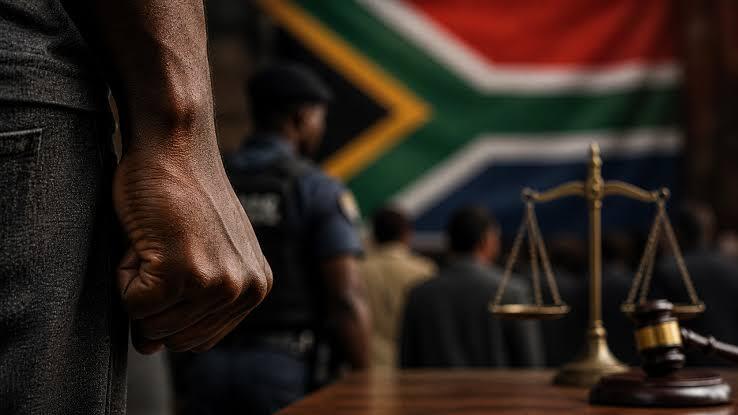
The treatment of GBVF has also been criticised at a legislative and judicial level. Ultimately, there is the prevalent argument that perpetrators of GBVF are protected by the law, more so than the victims and survivors. This means that manipulations such as simple bribes, to certain legal loopholes, are continually protecting perpetrators of GBVF in our society.
The treatment of GBVF cannot be underestimated at a foundational schooling level either. This is where children and young adults acclimate to the advancements of society, both technologically, educationally, and socially. This means that schoolyard innuendos and jokes about sexual assault, or digitally recorded sexual content, must be severely disciplined, and restricted in schools. “Boys will be boys” is a common expression that is used to overlook derogatory, sometimes predatory, and violent behaviours amongst males, and an aspect that must be stringently addressed when we consider the influential factors of GBVF.
The score of GBVF is that it is not restricted to the individual, or to a household, it adversely influences every aspect of our society. It intensifies violence across our society, which reproduces traumatised, inactive citizenry, making our overall society wholly ineffective. A society plagued by GBVF faces deep and lasting repercussions that often persist for years. The ripple effects of GBVF devastate entire communities, weakening social cohesion, while impeding progress and development.
The pervasive nature of violence also strains public resources, including healthcare, legal systems, and social services, placing a heavy burden on a society already grappling with inequality and a lack of resources. Addressing this pervasive issue requires an intentional strategy and commitment from our government, civil society, and individuals collectively. This will require us to foster a society that not only strictly and swiftly addresses institutional hindrances in addressing GBVF but also cultivates a culture of zero tolerance for violence in our society.
Recent national statistics indicate that 966 women and 314 children were murdered in the first quarter of 2024 alone. These figures translate to 11 women and 3 children being murdered every day. Considering the heinous rate of GBVF in our nation, 16 Days of Activism campaign is a momentous opportunity for us to constructively engage and address violence against women in our society.
This is a time to collaborate with the community, and the innumerable civil society organisations that consistently seek to mitigate this societal crisis. This is a time to hold governance accountable for failing systems and structures, and to address the issue of GBVF with the seriousness that it deserves. After all, abuse is a crime, not an excuse. As markedly said by Olivia Diogo, the Sexual Reproductive Health, and Rights Specialist at the Embassy of the Netherlands in Benin: “Violence against women and girls is an act of barbarism, inhumanity on which we must not be silent.”