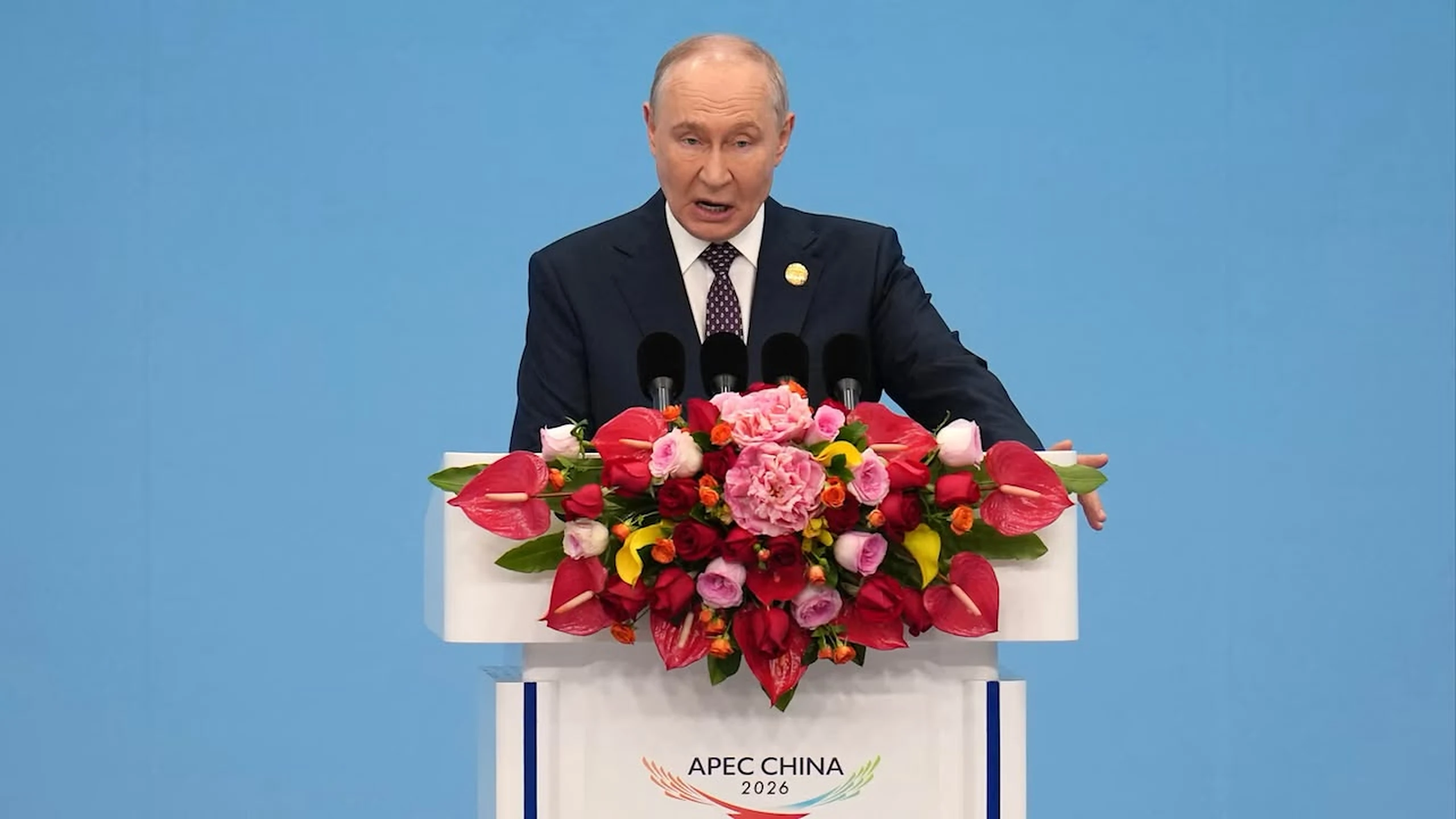
“We commend the Republic of South Africa’s substantial preparations for the forum and the topicality of chosen thematic priorities. We are particularly impressed with the emphasis on a search for a common denominator in the interests of combining efforts to facilitate sustained growth and development.
We still have a long way to go for attaining the desired results, and the overall background for joint work in conditions of geopolitical confrontation, that is being incited, remains unfavourable. The statistics are well-known: We are lagging far behind a schedule for achieving the UN’s Sustainable Development Goals until 2030, and only 17 percent of them are on track. Additional intensive efforts are urgently needed for attaining multiple parameters, including the fight against poverty, food security and access to energy.
Historical experience shows that it is impossible to independently cope with common challenges and threats. This is why the G20 was established in 2008 at the level of national leaders. At that time, it was necessary to put out the fire of a global financial crisis in emergency circumstances. It became possible to stabilise markets for a while. However, we are now witnessing an entire cascade of intertwined crises. Behind them are armed conflicts that have been unleashed and inspired by the West, trade, technological and hybrid wars, the demolition of the international trade system, the weaponisation of the dollar that has turned into a tool for manipulations.
A weakened link of the global chain dooms the entire humankind to ordeals. The West’s anti-Russia sanctions, augmented by terrorist attacks on the Nord Stream gas pipelines, are a convincing example. This has seriously impaired the competitive potential of those who initiated unlawful restrictions, primarily the EU. Apart from the West’s economic miscalculations, all this has slowed down global growth rates, provoked inflation, market setbacks and undermined the Global South’s development.
Nevertheless, the modern world is being transformed drastically and becoming truly multipolar. The 500-year period of Western domination is irreversibly becoming a thing of the past. It is necessary to find the strength and to accept this objective reality. The international community does not want to be hostage to unilateral decisions of former sovereigns. This is particularly obvious today when we are celebrating the 80th anniversary of Victory in the war against Nazism and the 65th anniversary of the UN Declaration on the Granting of Independence to Colonial Countries and Peoples as a starting point of acquiring independence by Africa, Asia and the entire Global South.
In 2022, BRICS confidently outpaced the G7 in terms of GDP. Today, BRICS and the G7 account for 37 and 29 percent of the global GDP, respectively. At the same time, developing states are growing twice as fast as Western countries: 4 percent compared to less than 2 percent. They generate advanced ideas and facilitate progress, including in the sphere of artificial intelligence. During Russia’s BRICS Chairmanship at the Kazan summit in 2024, the participants adopted multiple promising decisions to launch non-discriminatory, independent of anyone’s whim mechanisms stimulating investment and trade, with due consideration for Africa’s special needs.
The neo-liberal circles in the West regard the objective process of burgeoning multipolarity as a challenge rather than an opportunity. They are putting an absurd stake on a confrontation, on inflicting a “strategic defeat” on rivals. In so doing, they use neocolonialist practices that include siphoning off natural resources from developing countries on the cheap, imposing pseudo-environmental taxes on their products, attempting to thwart cooperation between countries in Asia, Africa, and Latin America, on the one hand, and Russia and China, on the other, and containing the industrialisation of the Global South. For example, the production of rare-earth metals by developing countries can bring them a pitiful $11 billion per year in profits, whereas the production of accumulator batteries in the West on their basis results in earnings to the tune of $400 billion per year.
We know well how the global financial system operates. The G20 Rio de Janeiro summit in November of last year revealed figures of military spending worldwide that amounted to $2.4 trillion. Assistance to Ukraine derived from the theft of sovereign assets and cuts in international aid to development has reached exorbitant proportions.
Under these circumstances, G20 retains its status as a useful venue for aligning the interests of states with different strategies and development levels, this primarily due to the efforts of BRICS countries. In 2024, leaders of our countries stated in no uncertain terms that the Global South should be given some true leverage for influencing the activities of multilateral institutions, specifically the IMF and the World Bank, a leverage that conforms to its weight category in the world, and make the WTO heed its interests. The task for now is to implement the agreements, and Russia will help this in every way.
It is important to guarantee that developing countries are independent in using their natural resources and getting a fair price for them. They should also have an equal and direct access to markets, supply chains, technologies and investment. We share South Africa’s plans to survey the G20 activities over past years. We hope that the result will enable us to reaffirm our commitment to de-politicised interaction based on the unshakeable principle of consensus with an eye to implementing the task to ensure a sustainable and comprehensive economic growth, a task set back in 2009. This would be a worthy result of Africa’s first ever G20 summit.”