Adopted at Birchwood Hotel, 29-31 May 2026
Preamble
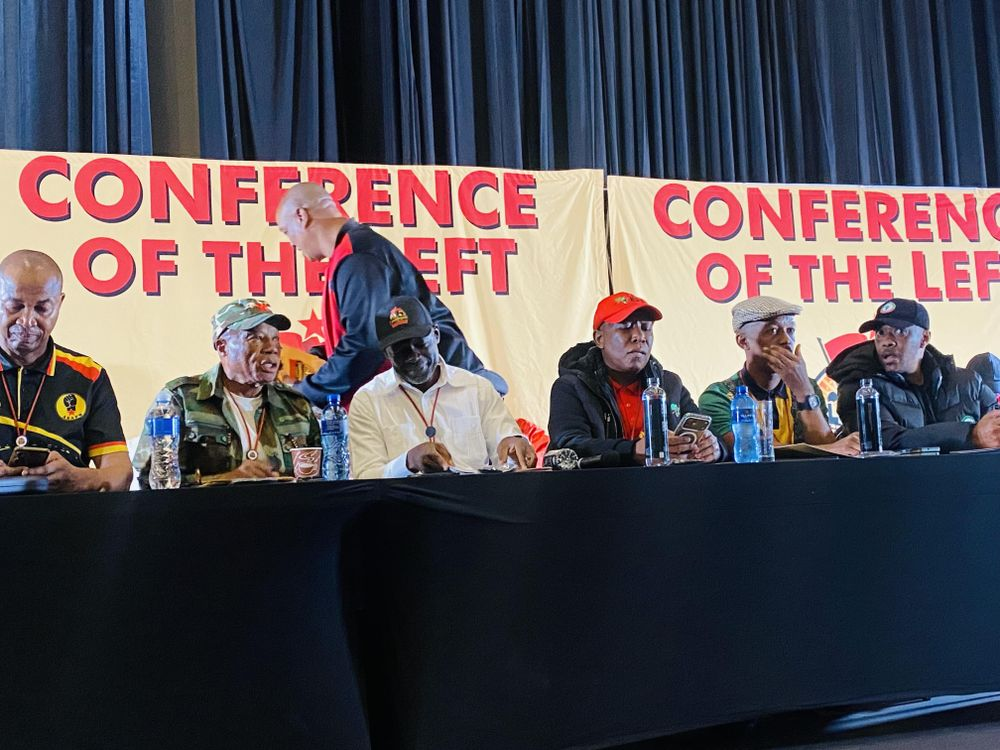
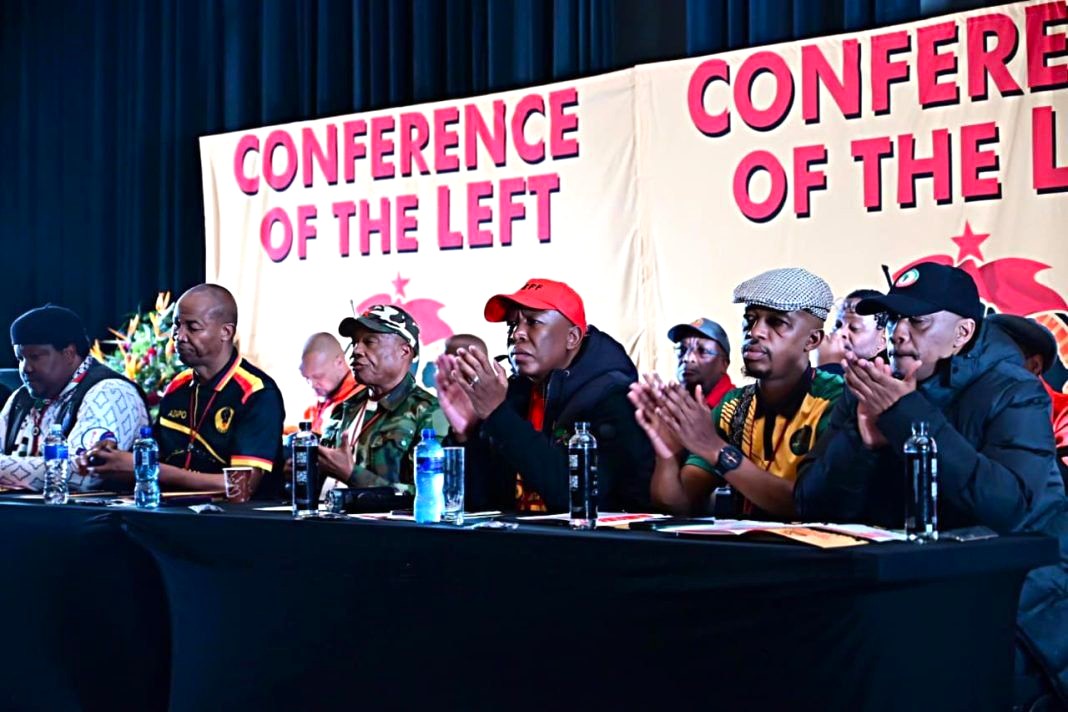
We, the political parties, trade unions and federations, community and social movements, co-operative and solidarity economy formations, youth and women’s formations, student formations, faith and religious formations, traditional leadership structures, progressive intellectuals, international solidarity organisations, and fraternal continental and global organisations of the Left, gathered at the Conference of the Left from 29 to 31 May 2026, declare the following.
We meet in a time of deep structural crisis. South Africa is marked by mass unemployment, poverty, hunger, inequality, social violence, gender-based violence, public institutional decay, ecological destruction, corruption, the crisis of social reproduction, and the deepening power of monopoly capitalism. Across Africa and the Global South, working people face neo-colonial domination, debt dependency, extraction, sanctions, war, occupation, militarism and imperialist aggression.
We have not gathered to lament this crisis. We have gathered to organise against it.
This Conference is not the launch of a new political party. It is not an electoral platform. It does not dissolve the identities, mandates, programmes or disciplines of the participating formations. It is a collective step towards rebuilding the organised power of the working class and the poor, strengthening unity across the Left and progressive forces, and adopting a common Programme of Action for the present period.
The Conference of the Left is clear that the strategic goal is a society beyond capitalism, based on social ownership, democratic economic control, wealth redistribution, land justice, equality, solidarity, ecological sustainability, peace, and the full liberation of workers and the poor. For many of us, this goal is socialism.
At the same time, the Left movement must be broad enough to unite all who stand with the working class, the poor, the unemployed, women, youth, students, rural communities, people with disabilities, LGBTQI+ communities, migrants, faith-based justice movements, traditional leadership structures, and other oppressed groups – including those who do not identify as socialist but are committed to fighting exploitation, inequality, neoliberalism, austerity, monopoly capitalism, patriarchy, racism, xenophobia, Afrophobia, war and imperialism.
The banner of “Building a Left Movement for Working-Class and Popular Power” enables unity across progressive traditions, including socialists, communists, trade unionists, community activists, feminists, Pan-Africanists, radical democrats, co-operators, environmental justice activists, faith-based justice movements, youth and student activists, and others. What unites us is not identical terminology, but a common commitment to struggle, democratic popular power, redistribution, public ownership, decent work, land reform, universal basic services, peace, anti-imperialist solidarity, and economic transformation in the interests of the majority.
Transformation is not delivered from above. It is won through organised struggle.
The Present Moment
South African capitalism is in structural crisis. Mass unemployment has become permanent. Secure work has been replaced by casual labour, outsourcing, labour broking, platform work, informal survivalism and the daily humiliation of joblessness. Millions of young people are denied work, income, skills, culture and hope.
The cost of living has become unbearable. Food, electricity, transport, fuel, rent, school costs and debt consume working-class households. Where wages exist, they are eroded. Where wages do not exist, families survive through grants, informal work, debt and unpaid care.
Working-class women carry the heaviest burden of this crisis: low wages, precarious livelihoods, unpaid care work, gender-based violence, unsafe communities and weakened public services. Patriarchy is not separate from class exploitation. It is built into capitalist society.
The 1994 democratic advance was a historic victory of the people’s struggle against apartheid colonialism. It opened political space, extended democratic rights, and created the possibility of deeper transformation. These gains must be defended. But the 1994 settlement did not resolve the national, class, gender and land questions. It did not dismantle the ownership and control of the economy by monopoly capitalism. Finance, mining, energy, land, food systems, retail, logistics and major productive sectors remain concentrated in the hands of capital.
The task of the present period is therefore to defend democratic gains while advancing beyond the limits of the 1994 settlement towards economic democracy, social ownership, land justice, working-class power and socialism.
The crisis is not only a crisis of policy. It is a crisis of ownership, power and class rule. Capital dominates investment, production, prices, land, credit and development. The state has too often been subordinated to austerity, investor confidence, financial markets and the interests of monopoly capital.
Reactionary forces exploit popular suffering. They redirect anger away from capital and towards migrants, women, workers, informal traders, the poor, LGBTQI+ people, people with disabilities and vulnerable communities. They offer scapegoats instead of transformation. They divide the oppressed so that monopoly capitalism can continue to rule.
The Left must answer this moment with clarity. The enemy is not the migrant, the unemployed neighbour, the informal trader, the poor household, or the worker from another country. The enemy is the system that produces unemployment, hunger, low wages, inequality, dispossession, violence and despair.
Property Relations, State Power, Working-Class Leadership and Mass Action
The Conference declares that who owns and controls the commanding heights of the economy is the foundational question of our period. Without changing ownership, there can be no real social transformation or advance towards a society beyond capitalism. Without democratic control over production, finance, land, energy, food systems and public resources, democracy remains incomplete.
The Conference commits to the expansion of public, social, worker, co-operative and community ownership of the principal means of production, distribution and exchange. This does not reduce socialism to co-operatives, nor to state ownership alone. Socialism requires public ownership of strategic sectors, social ownership, worker control, co-operative development, democratic planning, developmental finance, and production for social and environmental need rather than private profit.
The Conference affirms that the struggle for working-class and popular power cannot avoid the question of state power. The working class must organise in society, workplaces and communities, but it must also contest the direction, character and class content of the state. The state must be transformed from an instrument too often subordinated to capital into a democratic instrument of development, redistribution, public ownership, social protection, land justice, peace and socialist transformation.
The Left gathers because the crisis has reached a point where protest alone is not enough. The working class and progressive forces must build the capacity to govern, plan, allocate resources, transform property relations, defend public institutions, exercise democratic control and lead society in a new direction.
The Conference affirms the leading role of the working class. The working class is not one constituency among many. It is the decisive social force capable of confronting monopoly capitalism, reorganising production, defending democratic gains and leading society towards a socialist future.
The widest unity of the oppressed and exploited is necessary, but it must be anchored in working-class leadership. This leadership must be built through organisation, political education, unity in action, workplace power, community organisation, and the mobilisation of the unemployed, informal workers, women, youth, students, rural poor, people with disabilities, LGBTQI+ people and all oppressed communities as part of one broad working-class movement.
The Conference affirms mass action as a necessary instrument of struggle. Campaigns, demonstrations, pickets, workplace actions, community mobilisation, boycotts, and strikes by trade unions and communities must be supported where they advance the demands of workers and the poor. Mass action must be disciplined, democratic, non-sectarian, rooted in organisation and linked to a clear programme of transformation.
The Left must become a force capable of organising society, not merely commenting on society.
Economic Transformation and an Alternative Economic Plan
The Conference declares that the right to work and the right to a livelihood are central demands of the working class. South Africa cannot accept mass unemployment as normal. Unemployment is not the failure of individuals. It is the failure of an economy organised around profit rather than human need.
The Conference calls for a public-led programme of employment and production, driven by public investment, democratic planning and state-led industrialisation. This must include public employment, care work, environmental rehabilitation, township and village production, food production, worker co-operatives, youth brigades, student work opportunities, local manufacturing and community-based productive activity. The unemployed must be organised as a conscious political force capable of demanding work, shaping policy and participating directly in new forms of production and social ownership.
Outsourcing, labour broking and casualisation are instruments of class power. They fragment the working class, weaken unions, lower wages and turn public services into private profit streams. The Conference supports national insourcing legislation and calls for the progressive abolition of outsourcing in permanent, routine and core public functions.
South Africa requires a new programme of state-led industrialisation. We cannot overcome unemployment through imports, deindustrialisation, financial speculation and low-wage service work. Public investment, democratic planning, localisation and decent work must drive manufacturing, agro-processing, renewable energy components, public transport, rail, steel, clothing and textiles, pharmaceuticals, food production, housing materials and community-based industrial hubs.
The Conference affirms the building of a strong democratic co-operative movement from the ground up. Co-operatives must not be treated as marginal projects or poverty relief schemes. They must become part of a wider strategy for social ownership, local production, democratic control, decent livelihoods and popular economic power. This includes worker co-operatives, consumer co-operatives, village agricultural co-operatives, co-operative financial institutions, secondary co-operative structures and solidarity economy networks rooted in communities, workplaces, villages and townships.
The financial sector is a central site of class power. South Africa cannot build a developmental, employment-creating and socially owned economy while finance is dominated by banks, asset managers, speculative capital and debt-driven accumulation. The Conference rejects austerity and financialisation. It calls for the nationalisation of the South African Reserve Bank and a fundamental review of its mandate, ownership, governance and accountability. Monetary policy must serve employment, industrialisation, developmental finance, public investment, transformation and the needs of the working class and poor.
The Conference calls for a review of the 1996 Constitution from the standpoint of the unfinished national democratic and socialist tasks, including land, property relations, the role of the state in the economy, social
rights, public ownership, participatory democracy and the transformation of state power in favour of the working class and poor.
The Conference declares that the Left must move from critique to the construction of a credible alternative economic plan. This plan must include fiscal policy, monetary policy, industrial policy, trade policy, public investment, ownership and control of strategic sectors, developmental finance, democratic planning, and resource allocation towards employment, production, public services and social ownership.
The Council of the Left must establish the research, policy, organising, communication and implementation capacity required to develop and popularise this plan, and resources must be allocated to this work.
South Africa’s trade policy must serve industrialisation, employment, sovereignty and social need. Any proposed trade agreement must be subjected to full parliamentary scrutiny, public disclosure, democratic debate and consultation with workers, communities and affected sectors. The same applies to foreign loans, investment arrangements and financing agreements. No loan, trade agreement or investment arrangement must be allowed to undermine sovereignty, industrial policy, public procurement, food sovereignty, labour rights, environmental standards, democratic planning or the developmental role of the state.
South Africa’s critical minerals must be used strategically for industrialisation, not merely exported as raw materials for foreign corporations and imperialist supply chains. Minerals must support beneficiation, public and social ownership, local manufacturing, energy sovereignty, rail and infrastructure development, technology transfer, skills development, worker rights and decent work. The mineral wealth beneath our soil must serve the people.
The Conference rejects the false choice between corruption and privatisation. Corruption, maladministration, looting and elite impunity must be confronted decisively. But handing over electricity, rail, ports, water systems, spectrum, public health, public transport and other strategic network industries to private profiteers is not a solution. It is the continuation of the neoliberal offensive under another name.
The Conference opposes the privatisation and fragmentation of strategic network industries. These sectors must remain under public ownership and democratic control, and must serve industrialisation, employment, service delivery, national sovereignty and the needs of the people.
The Conference further resolves that corruption and abuse of public trust, including unresolved scandals such as Phala Phala, must not be suppressed or normalised. The Council of the Left must explore appropriate political, parliamentary, legal and mass action avenues to ensure accountability, transparency and public truth.
Social Needs, Land and Local Democratic Economies
The Conference declares the cost of living a central terrain of class struggle. Food prices, electricity tariffs, transport costs, fuel, rent, water charges and basic goods are shaped by monopoly control, profiteering, weak public regulation, financialisation, austerity and private profit.
The Conference commits to a common front against the rising cost of living. It calls for price regulation, action against price fixing and profiteering, stronger measures against monopoly control over essential goods, and the defence of affordable basic services as a right. Food, energy, water, sanitation, healthcare, education, housing and transport must be treated as public goods, not commodities.
The Conference opposes privatisation, prepaid exclusion, water and electricity disconnections, and the transfer of the capitalist crisis onto working-class households. It supports a permanent Universal Basic Income Grant set at a level that sustains dignity, financed through redistributive taxation on wealth, concentrated capital and financial speculation, as part of comprehensive social security.
The current Social Relief of Distress grant is inadequate and falls far below what is required for a dignified life. The Conference notes that millions who require income support remain excluded through restrictive criteria, administrative barriers and underfunding. The struggle for a Universal Basic Income Grant must therefore be linked to expanded social protection, redistribution of wealth, land justice, and the construction of economic alternatives that place human need before profit.
The Conference supports the abolition of student debt and the creation of pathways to education, skills, work and dignity for young people. Students are not a separate question from the working class. They are part of the struggle for a society that gives young people a future.
The Conference affirms that social protection must include the unemployed, students, pensioners, people with disabilities, caregivers, children and all vulnerable sectors of the working class and poor. Public services, workplaces, education institutions, transport systems, housing, communication platforms and political organisations must be accessible, inclusive and accountable to people with disabilities.
The Conference affirms the dignity, equality and full democratic rights of LGBTQI+ people. The Left rejects all forms of discrimination, violence, exclusion, humiliation and reactionary scapegoating directed against LGBTQI+ people. The struggle for socialism must be a struggle for the liberation of all oppressed and exploited people, including those oppressed on the basis of gender identity, sexual orientation or bodily autonomy.
Health is a right, not a commodity. The Conference commits to defending a fully funded National Health Insurance system against the private health industry, medical aid monopolies, pharmaceutical profiteering and all capitalist interests that seek to weaken, delay, distort or capture NHI for private gain. NHI must not become a mechanism for funding the privatisation of healthcare or subsidising private providers at public expense. It must be part of the wider struggle for redistribution, public provision, equality, social rights and the decommodification of healthcare.
The Conference calls for the rebuilding of the public health system, insourcing of health support workers, expansion of community healthcare, public pharmaceutical capacity, democratic accountability and international cooperation in health, including with Cuba.
The land question remains central to transformation. Land stolen through colonialism, apartheid and capitalist accumulation must be returned to the people. Restitution must be coupled with redistribution, so that land reform does not only address individual or community claims, but also transforms the wider pattern of land ownership and land use in South Africa.
The Conference stands for restitution, redistribution, security of tenure, and the expropriation of land without compensation. Land reform must restore dignity, advance equality, expand democratic access to land, and place land in the hands of those who work it and live on it.
The Conference supports anti-eviction legislation to protect vulnerable land occupiers, tenants, farm dwellers, homeless communities and working-class households from unjust, unlawful, illegal and arbitrary evictions. Such legislation must uphold the right to adequate housing, protect security of tenure, provide relief on rent arrears and mortgage distress, ensure alternative accommodation where required, outlaw brutal eviction practices, and advance land justice.
The Conference affirms three immediate demands: security of tenure, transfer of land rights to the people, and rent reduction. The broader aim is to overcome landlord domination, restore land to those from whom it was stolen, and build democratic, public, community and co-operative forms of land use and development.
The Conference supports village agricultural co-operatives, household production, communal production, food sovereignty, agro-processing, local markets and community-owned value chains. Municipalities must be rebuilt as organs of democratic development, public service, local economic planning and popular participation, not as sites of patronage, tender corruption and private extraction.
Social Violence, Community Safety, Migration and Climate Justice
The Conference declares that social violence is a central question of working-class life and struggle. Violence in our communities is produced and intensified by unemployment, poverty, inequality, patriarchal power, spatial apartheid, weakened public services, organised criminal networks, weakened community institutions, alcohol and substance abuse, gambling addiction, political intimidation, and the daily violence of an economy that abandons millions to insecurity and despair.
The working class lives with gender-based violence, violence against children, organised crime, extortion, substance abuse, political intimidation, violence against activists and community leaders, xenophobic attacks, vigilantism, unsafe transport, unsafe streets, unsafe schools, unsafe workplaces, and abandonment by the state.
The Conference condemns the role of capital in profiting from social misery through industries and practices that deepen alcohol abuse, substance dependency, gambling addiction, debt, family breakdown and community insecurity. The Left must confront not only the symptoms of social violence, but also the profit systems that feed on despair.
The Conference rejects both the neglect of working-class communities and narrow law-and-order politics that treats the poor as the enemy. Community safety is a democratic right. It must be built through organised social power: democratic policing accountable to communities, functioning public services, street and section committees, women-led safety structures, youth programmes, rehabilitation services, local economic development, and the protection of activists, organisers and community leaders.
The Conference declares that illegal migration is a matter of serious concern and must be addressed through lawful, humane, rights-based and effective regulation consistent with African solidarity. Migration must not be used to generate Afrophobia, xenophobia or hatred against African and other migrant communities.
The crisis was not created by migrants. At the same time, the Conference condemns the use of migrant workers as cheap labour by employers who exploit weak labour enforcement to undercut wages, divide workers and weaken unions.
The answer is not scapegoating. The answer is effective border management, proper documentation systems, strong labour inspection, enforcement of minimum wages and labour rights, action against exploitative employers, and the organisation of all workers into common struggle. The anger of the working class must be directed against capital, exploitation, corruption, unemployment, poverty wages and the systems that divide the oppressed.
The Conference declares that climate justice is a class question. The climate crisis is not separate from capitalism. Its consequences fall most heavily on workers, the poor, rural communities, mining-affected communities, informal settlements, women and young people.
The Conference supports a just energy transition that is worker-led, publicly planned, socially owned and based on South Africa’s developmental needs. The transition must not become a new accumulation strategy for private capital.
The energy path must be sequenced at a pace the country can afford, while protecting workers, communities, energy security, industrialisation and the environment. South Africa must use an appropriate energy mix, including renewable energy, coal and nuclear, under public ownership and democratic planning, while investing in cleaner technologies, environmental rehabilitation, local manufacturing and decent work.
The Conference rejects externally imposed transition models that destroy livelihoods, weaken sovereignty, deepen energy insecurity, or turn the climate crisis into a new market for private profit.
Internationalism, Pan-Africanism, Peace and Anti-Imperialist Solidarity
The Conference affirms progressive internationalism and radical Pan-Africanism as strategic principles of the Left. Our struggle is part of a wider world struggle against capitalism, neo-colonialism, imperialism, racism, patriarchy, war, occupation, sanctions and economic domination.
The Conference stands for peace, against war, against militarism, and against imperialist aggression. The struggle for peace is inseparable from the struggle against imperialism, occupation, sanctions, resource plunder and the domination of weaker nations by powerful states.
Africa remains trapped in systems of dependency created and reproduced by imperialism: debt dependency, unequal trade, extractive export structures, foreign control of strategic resources, currency vulnerability, illicit financial flows, and dependence on institutions that discipline sovereign development.
The task is not isolation from the world. The task is strategic delinking from imperialist dependency while deepening integration within Africa and the Global South. The Conference calls for continental economic integration based on industrialisation, food sovereignty, public control over strategic resources, regional value chains, shared infrastructure, technology transfer, and cooperation among workers, peasants, women, youth and progressive states.
The Conference supports alternative finance systems that reduce dependence on imperialist-dominated financial institutions and speculative capital: public and development banks, community and co-operative banking, regional payment and settlement systems, use of local and regional currencies where appropriate, debt audits, measures against illicit financial flows, and finance directed towards production, employment, industrialisation and social ownership.
Africa’s integration must not reproduce neo-colonial extraction under a new name. It must be people-centred, worker-conscious, sovereign, developmental and directed towards liberation from capitalism, neo-colonialism and imperialism.
The Conference expresses solidarity with the oppressed masses of the world, including the peoples of Palestine, Cuba, Venezuela, Iran, Western Sahara and the Sahel. It supports the right of oppressed peoples to sovereignty, self-determination, dignity, liberation and peaceful development.
The Conference supports South Africa’s case at the International Court of Justice against Israel under the Genocide Convention and calls for intensified solidarity with the Palestinian people, including public mobilisation, boycotts, divestment, sanctions, legal accountability and the isolation of institutions complicit in apartheid, occupation and genocide.
The Conference expresses unwavering solidarity with Cuba and calls for a South African Cuba Solidarity and Anti-Blockade Bill. It rejects threats of war, destabilisation and the use of unilateral sanctions against Cuba and other sovereign nations as instruments to provoke hardship, weaken sovereignty and impose regime change. The Conference affirms the right of the Cuban people to determine their own future free from imperialist interference.
The Conference supports the liberation and self-determination of the people of Western Sahara. It further expresses solidarity with the peoples of the Sahel in their struggle against neo-colonial domination, foreign military control, resource extraction, destabilisation and dependency.
The Conference expresses solidarity with the people of Iran against imperialist aggression, unilateral sanctions, military threats, regime-change operations and violations of national sovereignty. It affirms the right of all nations to sovereignty, self-determination, peaceful development and equal treatment under international law. Solidarity with Iran against imperialism does not mean silence on the struggles of workers, women, youth and popular forces inside any society.
The Conference supports de-dollarisation, strengthened Global South cooperation, sovereign development paths, public control over strategic resources, regional industrialisation and continental solidarity against imperialism.
Council of the Left, Programme of Action and Discipline of Unity
The Conference resolves to establish a Council of the Left as a standing instrument of coordination. The Council is not a new party. It will not contest elections in its own name. It will not replace existing formations or override their autonomy.
The Council must be based on equality among participating organisations. No single formation shall dominate the Council. Political parties, trade unions, community movements, youth and women’s formations, co-operative and solidarity economy structures, student organisations, faith and religious formations, traditional leadership structures, progressive intellectuals and international solidarity formations shall participate on the basis of mutual respect, democratic engagement and unity in action.
Its purpose is to coordinate joint campaigns, shared political education, continuity between conferences, collective intervention, and unity in action. It must be democratic, accountable, transparent and rooted in working-class and popular formations. The first meeting must take place within six weeks of the close of this Conference.
Eight Programme of Action Clusters
The Conference adopts a first-phase Programme of Action organised around eight strategic clusters. These clusters provide the basis for coordinated campaigns, political education, mass mobilisation, policy development, research, implementation and reporting.
- Economic Transformation, Work and Livelihoods
This cluster includes the right to work, insourcing, public employment, state-led industrialisation, democratic trade policy, regulation of foreign loans, strategic use of critical minerals, fiscal and monetary policy, public investment, developmental finance, public banking, co-operative finance, and the alternative economic plan. - Cost of Living, Public Services and Social Protection
This cluster includes food prices, electricity, water, transport, housing, education, social grants, the Universal Basic Income Grant, abolition of student debt, the social wage, price regulation, anti-profiteering action, and the defence of affordable public services. - Land, Restitution, Redistribution and Local Democratic Economies
This cluster includes land restitution, redistribution, expropriation of land without compensation, security of tenure, anti-eviction legislation, rent reduction, food sovereignty, village agricultural co-operatives, household and communal production, agro-processing, local markets, township and village economies, and democratic local government. - Public Health, NHI and Social Reproduction
This cluster includes the defence of NHI from private capitalist capture, rebuilding the public health system, public pharmaceutical capacity, community healthcare, insourcing of health workers, care work, women’s unpaid labour, disability inclusion, LGBTQI+ equality, and the wider crisis of social reproduction. - Social Violence, Community Safety and Working-Class Unity
This cluster includes gender-based violence, violence against children, organised crime, extortion, alcohol and substance abuse, gambling harms, political intimidation, violence against activists, migration regulation without Afrophobia, anti-xenophobia work, democratic policing, street and section committees, women-led safety structures, youth programmes and the right to live without fear. - Climate Justice, Energy Sovereignty and the Just Transition
This cluster includes a worker-led and publicly planned just transition, energy sovereignty, a sequenced energy path the country can afford, an appropriate energy mix including renewables, coal and nuclear under public ownership and democratic planning, mining-affected communities, local manufacturing, environmental rehabilitation, climate adaptation and protection of workers and communities. - Internationalism, Pan-Africanism, Peace and Anti-Imperialist Solidarity
- This cluster includes solidarity with oppressed peoples across the world, including Palestine, Cuba, Venezuela, Iran, Western Sahara and the Sahel; opposition to war, militarism, occupation, sanctions and regime-change operations; support for South Africa’s ICJ case against Israel under the Genocide Convention; strategic delinking from imperialist dependency; African continental integration; alternative finance systems; de-dollarisation; and sovereign development paths.
- Review of the 1996 Constitution, State Power and Democratic Transformation
- This cluster includes a review of the 1996 Constitution from the standpoint of unfinished national democratic and socialist tasks, including land, property relations, public ownership, social rights, participatory democracy, the role of the state in the economy, transformation of state power, democratic planning, accountability, and the capacity of the state to serve the working class and poor.
Each cluster must have a working group, responsible formations, clear timelines, allocated resources and twelve-month measurable outcomes. The Council of the Left must ensure that the Programme of Action becomes a living instrument of struggle rather than a conference document.
The Left cannot rebuild working-class power through declarations alone. It must build the capacity to organise, educate, mobilise, strike, campaign, negotiate, research, communicate and implement.
Unity is not silence. Unity is not the erasure of difference. Unity is not surrendering political identity. Unity means acting together where we agree, debating honestly where we differ, and refusing to allow our differences to be used by capital, reaction and imperialism to weaken the people.
The Conference resolves to adopt this Declaration; establish the Council of the Left; develop an alternative economic plan; support campaigns, mass action and strikes by trade unions and communities; campaign for the right to work, insourcing, state-led industrialisation, developmental finance, democratic oversight of trade agreements and foreign loans, strategic use of critical minerals, food security, public services, local government accountability, public ownership, social ownership, worker ownership, co-operative ownership and community ownership; defend and protect NHI from private capitalist capture; develop and campaign for a Cuba Solidarity and Anti-Blockade Bill; campaign for strategic delinking from imperialist dependency while deepening African integration and alternative finance systems; coordinate solidarity actions with oppressed peoples across the world; establish social violence and community safety as a central terrain of Left organising; rebuild political education; and affirm the leading role of the working class in socialist transformation.
Call to Action
The Conference leaves with a responsibility to the millions who are not in this hall: the unemployed worker, the young person denied a future, the student crushed by debt and exclusion, the woman who fears violence, the person with a disability excluded from full participation, the LGBTQI+ person facing discrimination, the family crushed by the cost of living, the migrant scapegoated for a crisis they did not create, the farm worker, the mineworker, the informal trader, the pensioner, the nurse, the teacher, the cleaner, the security worker, the shack dweller and the rural poor.
They did not send us here to perform our divisions. They are entitled to expect that the Left and progressive forces can unite in action, name the system that oppresses them, contest state power, transform society and fight for a future based on dignity, equality, peace, land, work, public ownership and socialism.
The Conference calls on the working class to assume its historic leadership role: to unite the oppressed, organise the unorganised, lead the struggles of communities and workplaces, and become the decisive force for socialist transformation in South Africa.
The future will not be given to us. It must be organised. The Conference of the Left begins this work. It does not end it.
Forward to working-class leadership in the struggle for popular power.
Forward to unity in action.
Forward against capitalism, neo-colonialism and imperialism.
Forward to land restitution, redistribution and expropriation without compensation.
Forward to public, social, worker, co-operative and community ownership.
Forward to the right to live without fear.
Forward to peace and international solidarity.
Forward to a society organised around social and environmental need, not private profit.
Adopted on Sunday, 31 May 2026, by the participating organisations of the Conference of the Left.