
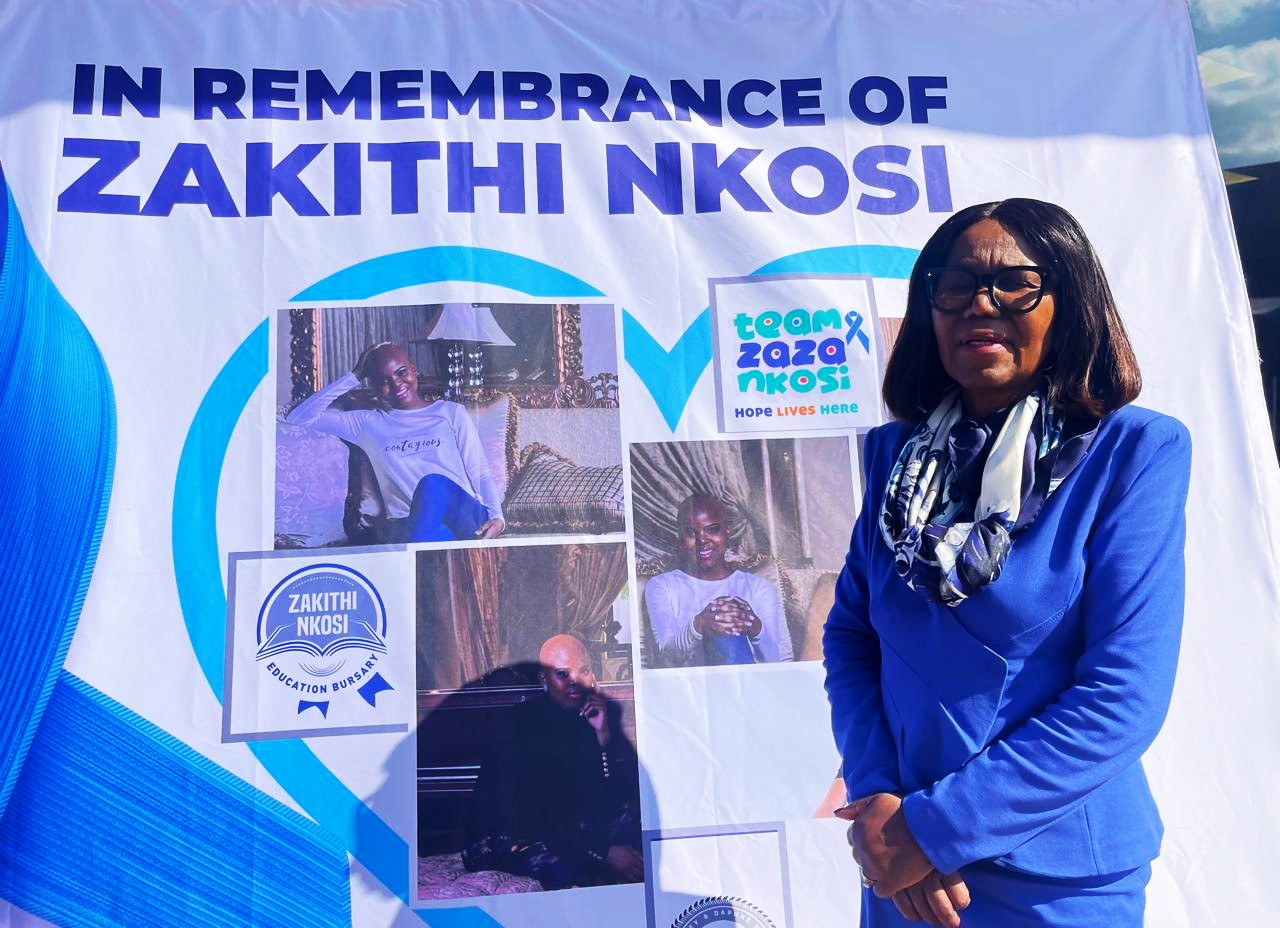
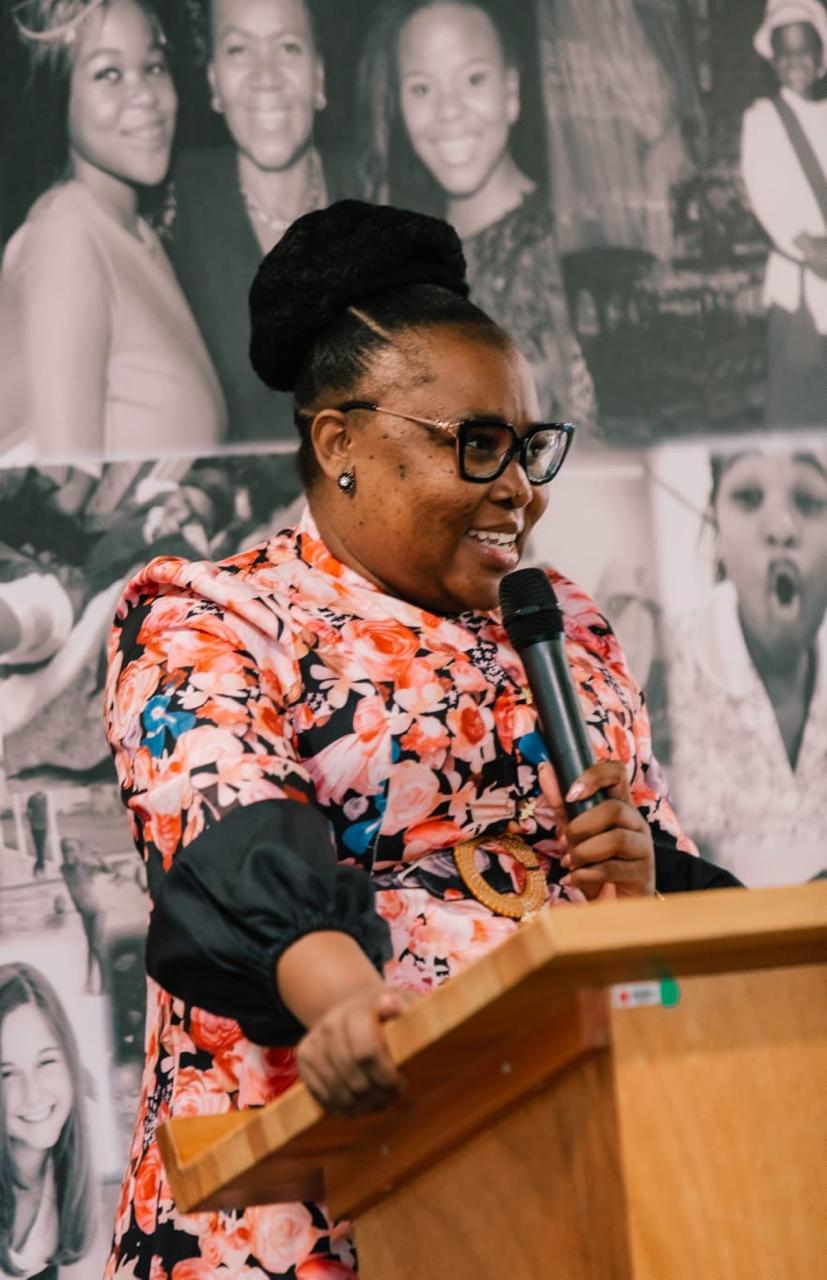
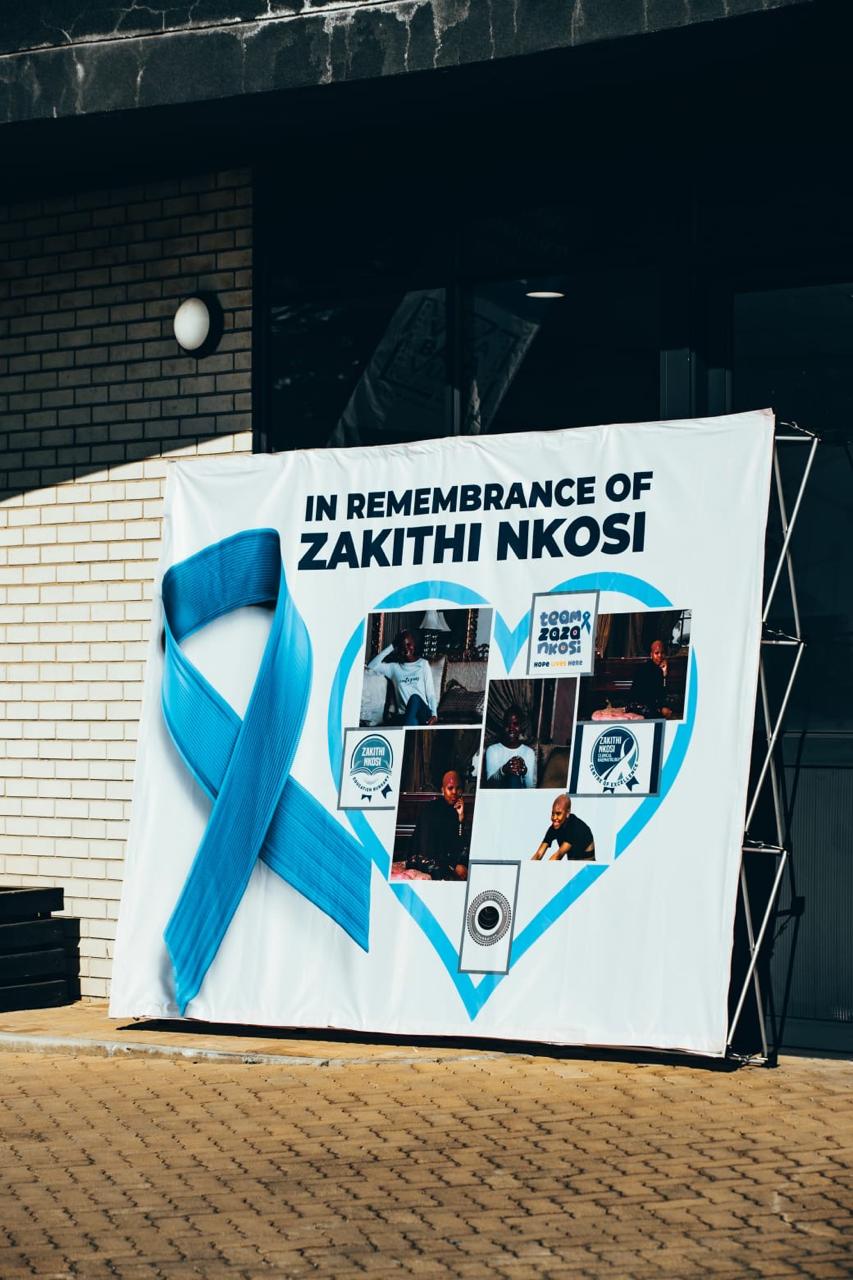
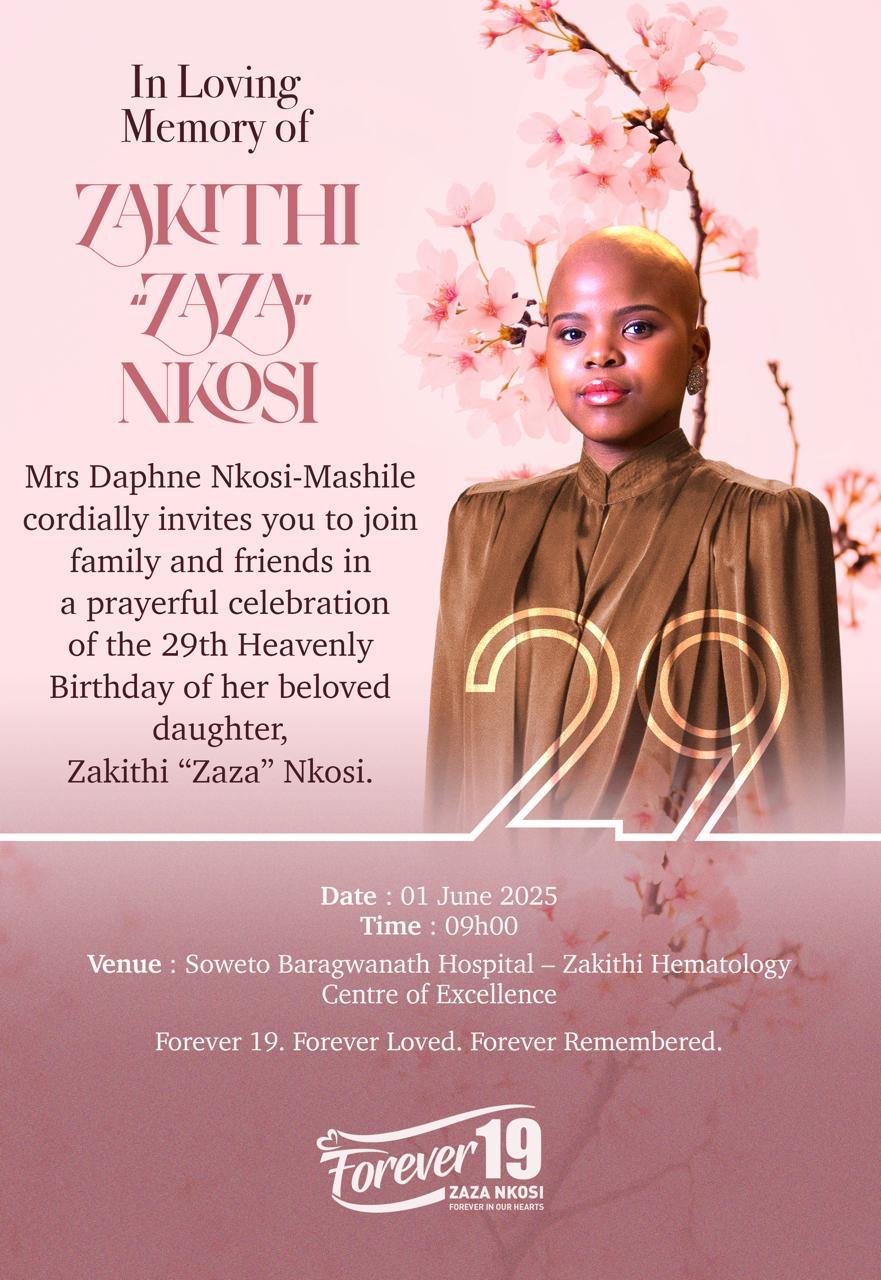
Renowned business woman and philanthropist Daphne Mashile-Nkosi fought back the tears as she stood on a makeshift podium at the Chris Hani Baragwanath Hospital, leading celebration into the life of her late daughter, Zakithi Nkosi.
Trying very hard to control her emotion, the visibly distraught mother told an intimate crowd that had gathered to mark Zakithi’s 29th “heavenly birthday” that she could barely fall asleep the previous night as she grappled with crafting a message for “Zaza”, as Zakithi was affectionately known.
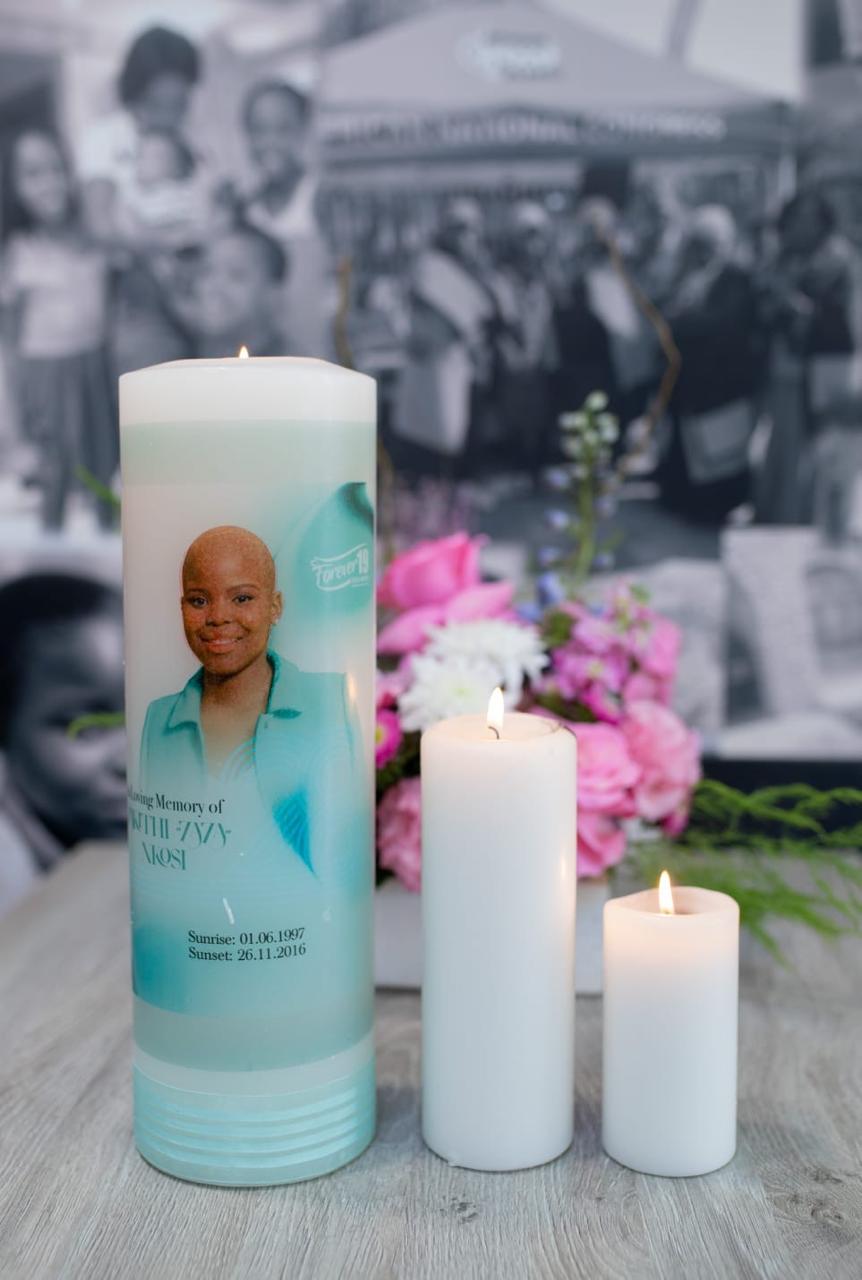
In June 2016, Zaza was diagnosed with a rare and aggressive blood disorder medically described as Hemophagocytic Lymphohistiocytosis (HLH) shortly after her 19th birthday. She passed on six months later after the family could find no stem cell match for her.
She could have turned 29 on the 1st of June.
The full-of-life teenager “Zaza” had passed her Grade 12 with remarkable aggregate marks and was on the verge of leaving the country to attend a university in the UK when she was suddenly grounded by a diagnosis of a stem cell anomaly.
Though visible the pain, Mashile-Nkosi, whose tribute was titled “A mother’s love will forever live”, typified a proud mother as she started speaking mournfully, saying: “Yesterday I was thinking a lot about Zaza. I was wondering if she would be married? The answer says no. She was too strong-willed and wanted her own things. Would she have had children? What the names of those children would have been? And so on.”
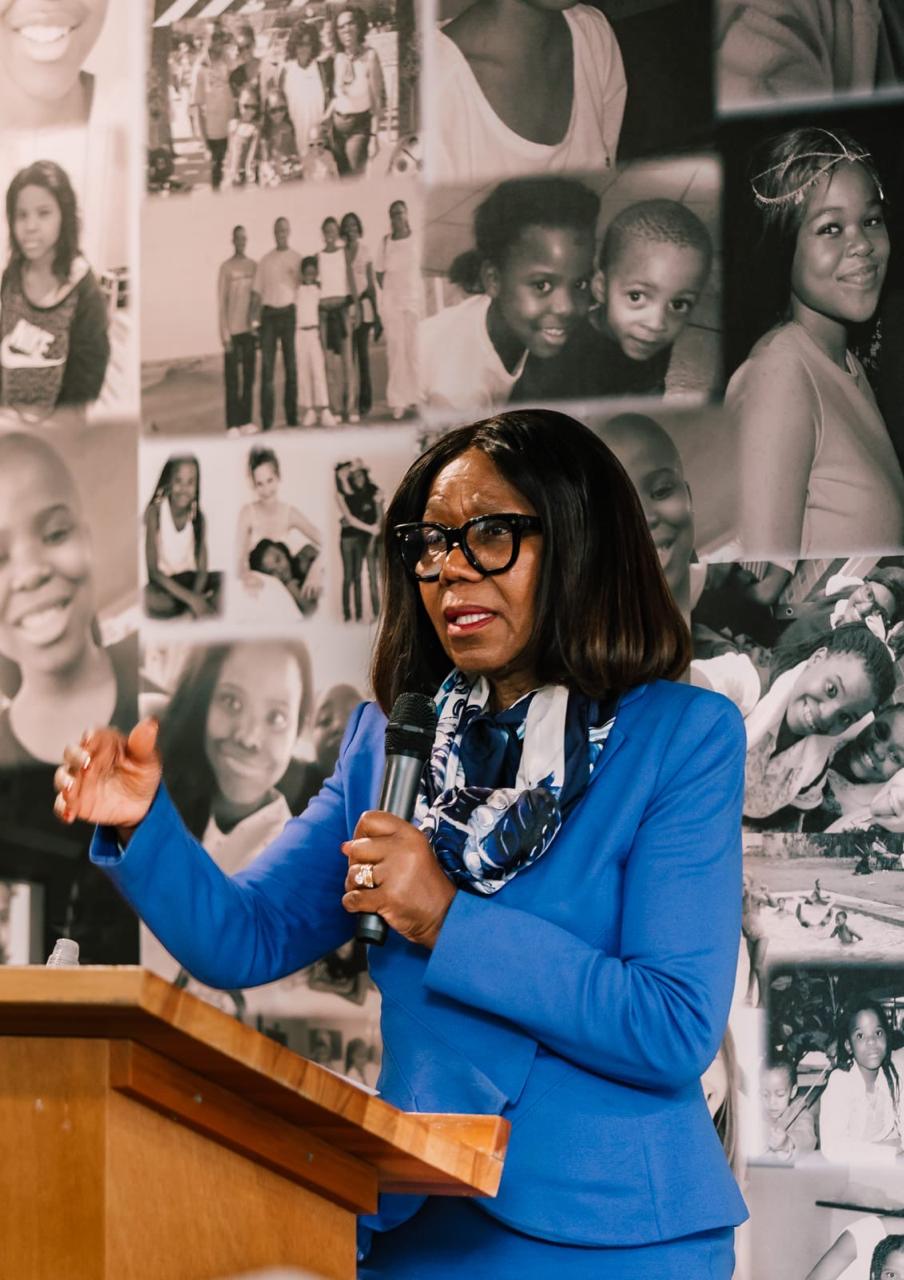
The theme of the occasion was: “Celebrating a life of courage, hope and lasting impact.”
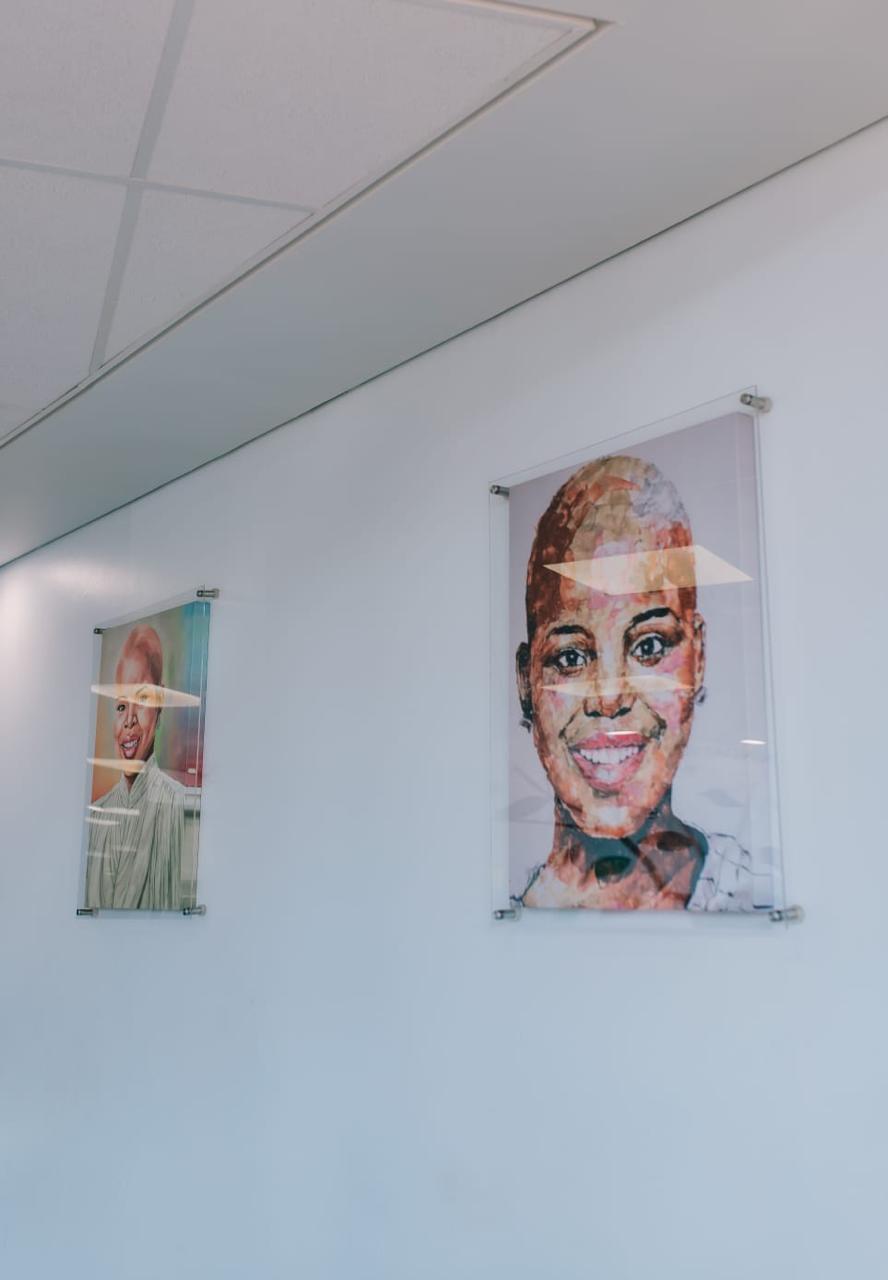
Mashile-Nkosi has pumped millions of rands into the Chris Hani Baragwanath hospital building that is the upmarket Zakithi Nkosi Clinical Haematology Center of Excellence in fond memory of her immortalized daughter.
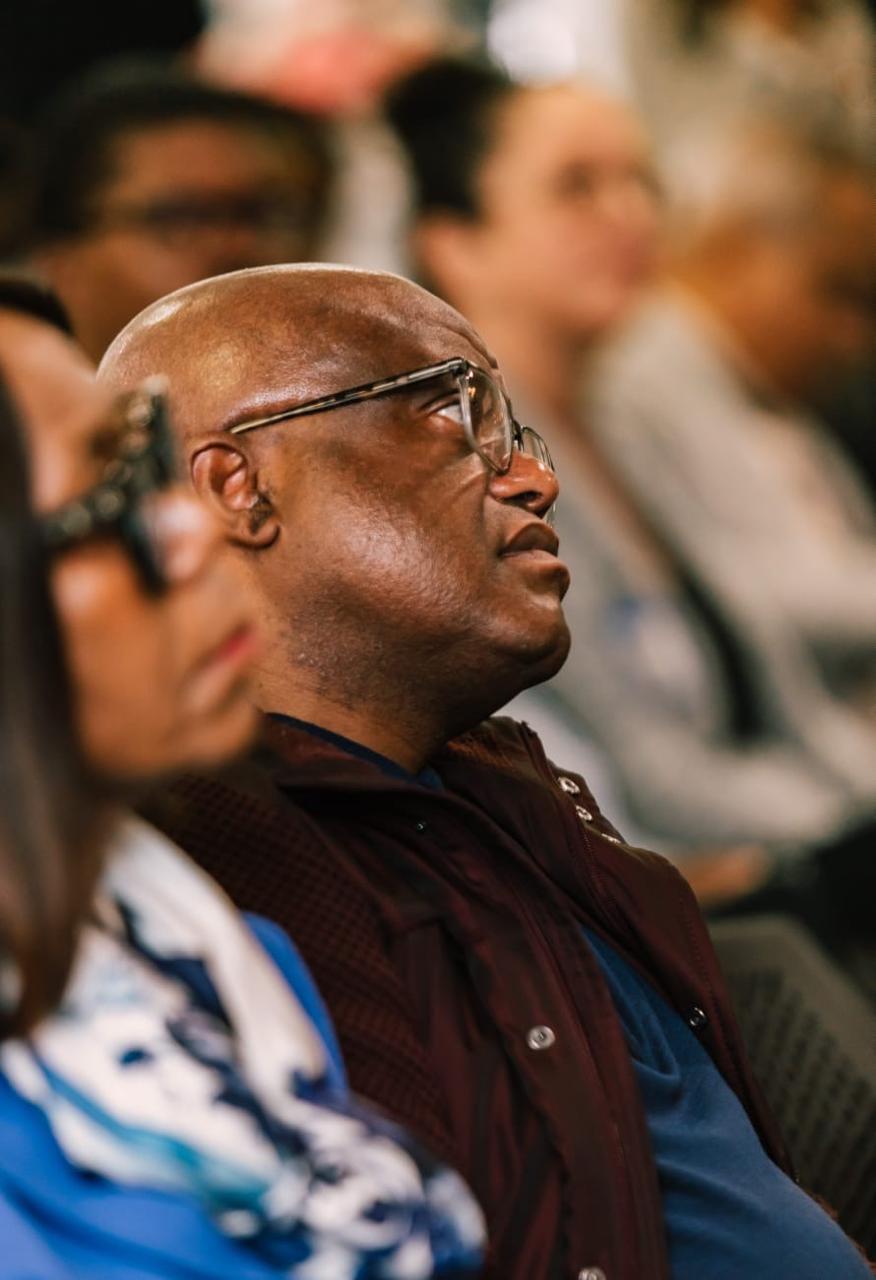
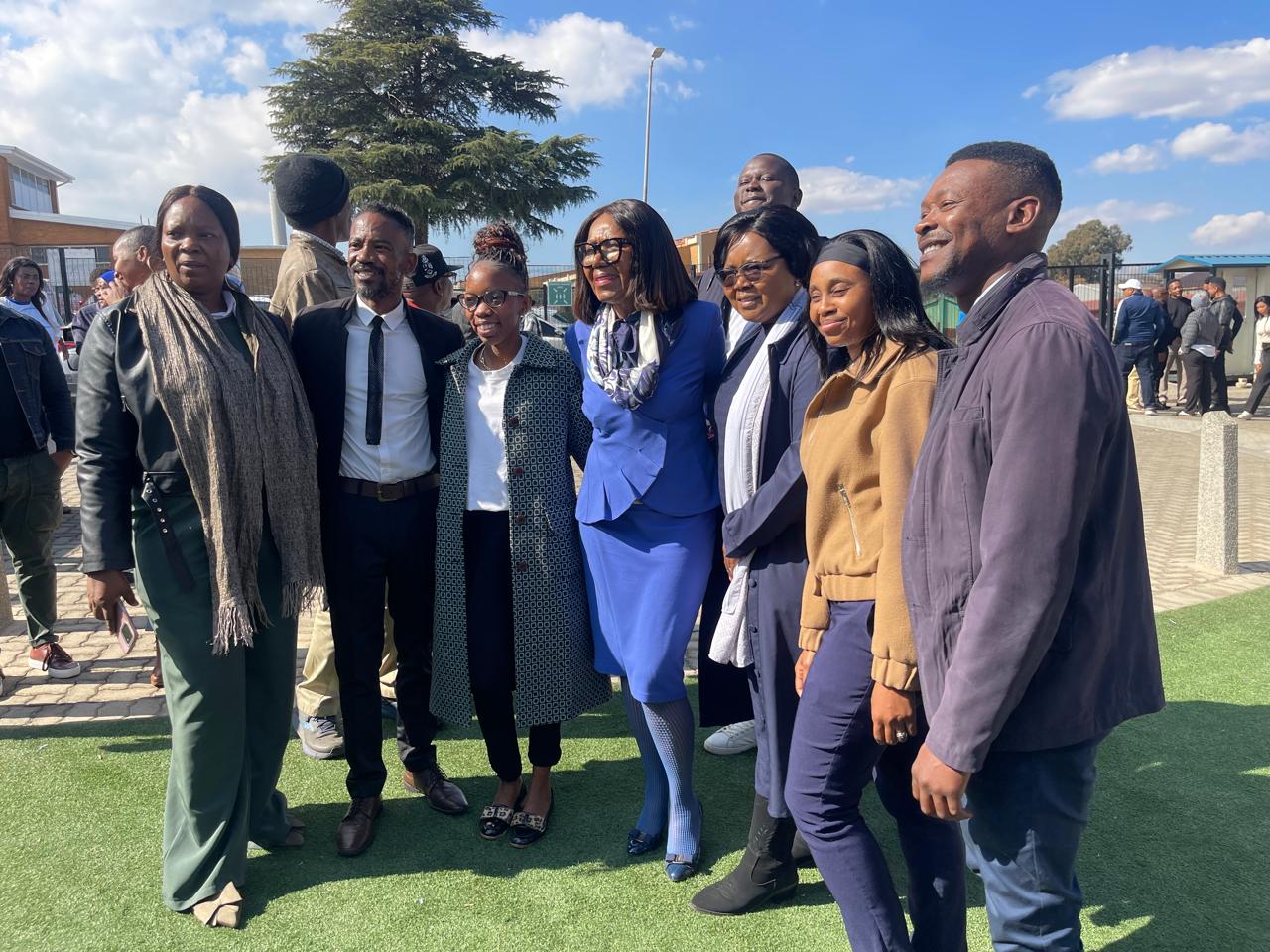
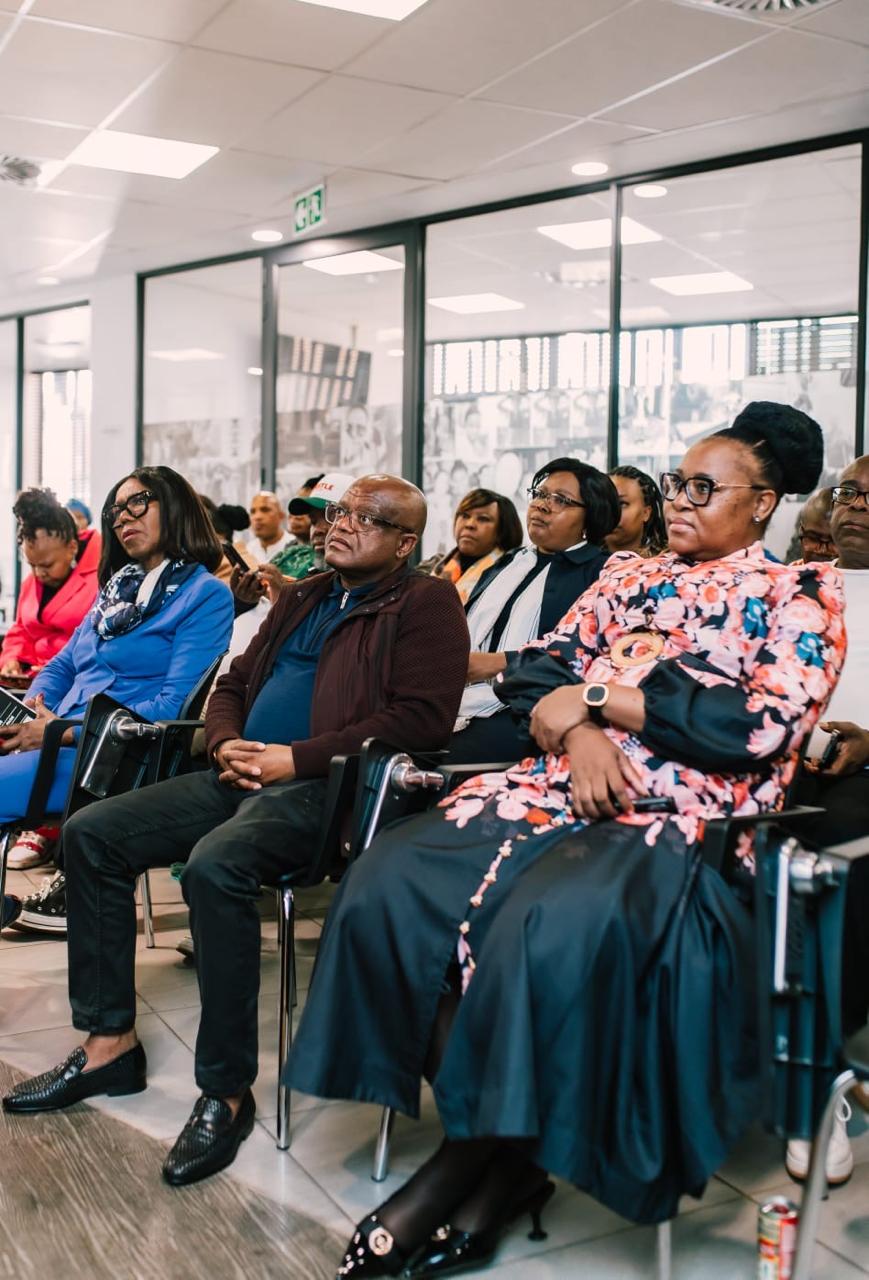
Among the audience was the CEO of Chris Hani Baragwanath hospital, Dr Nthabiseng Makgana, Executive mayor of Johannesburg, Dada Morero, doctors, nurses, gymnasts, church representatives, civic leaders and media, among others.
Said Mashile-Nkosi: “I can never thank Baragwanath hospital enough because it has given me an opportunity for an outlet to translate my grief into something that can help others. Zaza was my baby, my last-born.”
Determined to keep Zaza’s story as an inspiration for generations to come, Mashile-Nkosi has already written and published a book a while ago about her painful experience of losing Zaza. The book is simply titled “Untimely Departure”. Some people have asked her why the book had been titled that way when “God had decided that it was time”?
She explained: “For me it was ‘untimely’ because Zaza had great dreams. She’d say: ‘Mommy I’m going to protect you because daddy’s gone. I’m going to be a lawyer’. That is why I called the book Untimely Departure because she departed before she could achieve her dreams.”
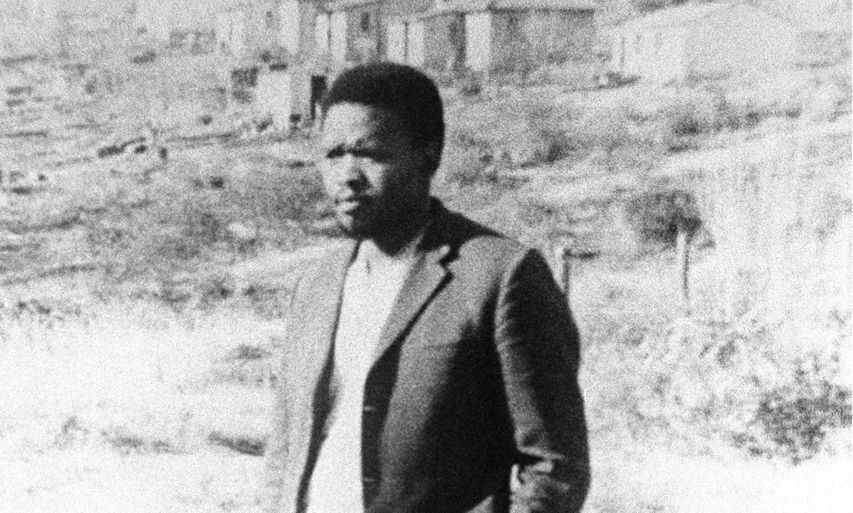
Mashile-Nkosi added: “Zaza was my only child who wanted to follow on the foot-steps of her father (Stan Nkosi, freedom fighter who served eleven years on Robben Island a mere three months after he had qualified as a lawyer during apartheid).” She also said her assistance to others is due in large measure to her late husband because “Stan liked to help other people. He loved doing good for mankind”.
She was also motivated to build the majestic hospital centre because she was thinking about “what is it I could do to ease the pain of a mother that can see for six months – you see your child being pricked with needles, do chemo (therapy), being weak, even unable to turn – just to remove the blanket, it’s just sometimes very difficult. And those of you who don’t know: It’s the journey that you have to go through,” said Mashile-Nkosi.
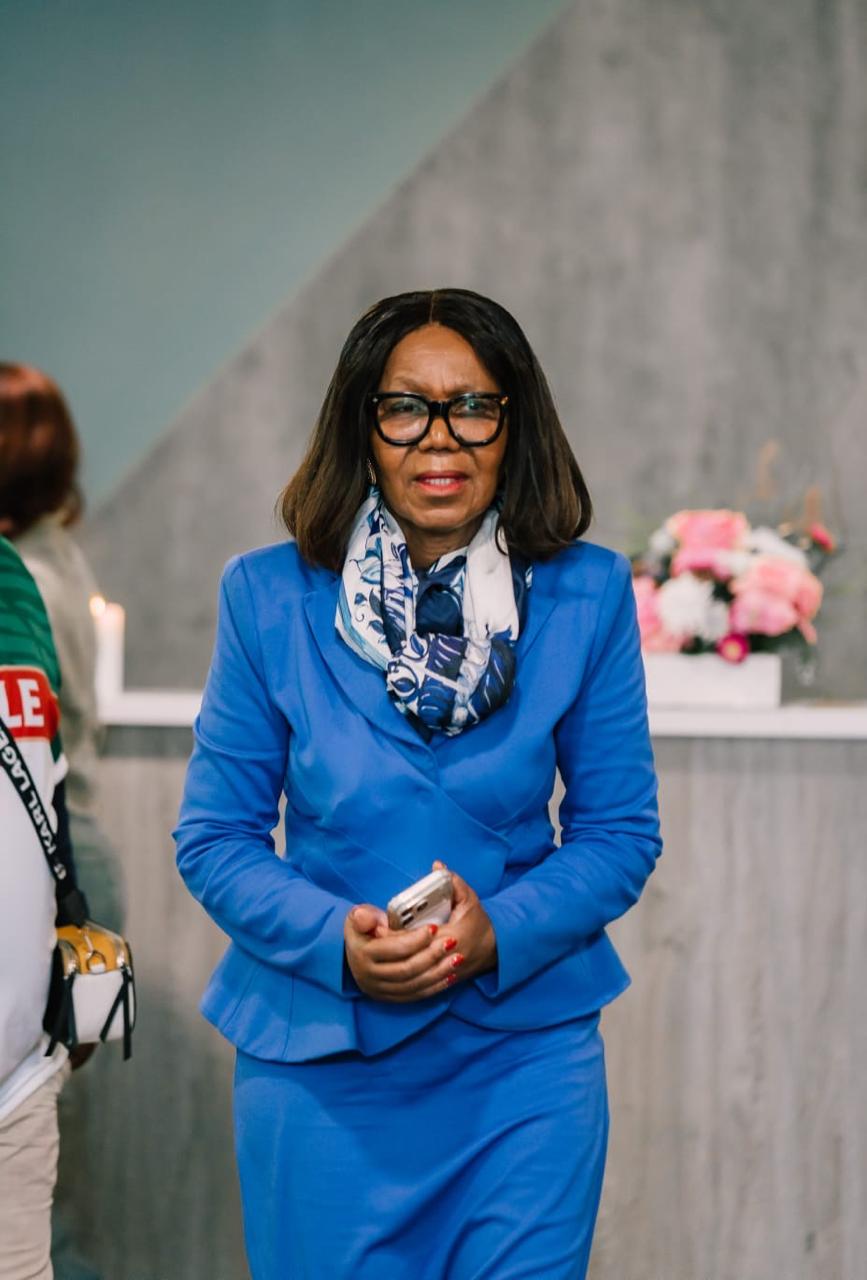
“But today is about celebrating Zaza. She was my baby. I had dreams. I had aspirations about who she was going to become,” she said, before adding: “But I want to talk about stem cell, because I did everything. I took Zaza to Netcare East, Pretoria, because I thought that she could get help there because there was a stem cell transplant unit in the private sector. But I didn’t know that for stem cell, you need a donor,” Mashile-Nkosi recalled.
She further said: “When I was told about the donor I spent money, networks that I had, I tested every employee of our company – about 2000 of them – trying to get a donor, and I couldn’t find any. By the time we got a donor from Brazil Zaza was too weak to actually do it.”
The mother-on-a-mission, as Mashile-Nkosi is, shared her observation about organ donation and lack of public education. “So my challenge was: What can we do about it because when you look at the statistics of Black people around stem cell – stem cell transplant need people to register as donors. I’m challenging you today, if you love Zaza like we do: I want each and every one to please go and get 100 people to register,” she said, before offering assurance:
“It’s easy, no needles – nothing. The last stem cell drive we undertook we did get a lot of donors. And if you want to be a donor, you must know that once you commit, you are committing so that when that person needs you – you are there, don’t change your mind. You must be very sure.”
She appealed to the hospital management to work with her Daphne and Stan Nkosi family foundation to undertake another public awareness campaign to promote stem cell donation.
She wants a march from Chris Hani Baragwanath all along the famous road towards the SAFA stadium opposite Maponya Mall, a distance of roughly ten kilometres. “We need to do it so that we can save lives,” she said.
Stem cell has more White donors than Black donors, Mashile-Nkosi observed. “When you look at the population (demographics), there’s something wrong with us.”
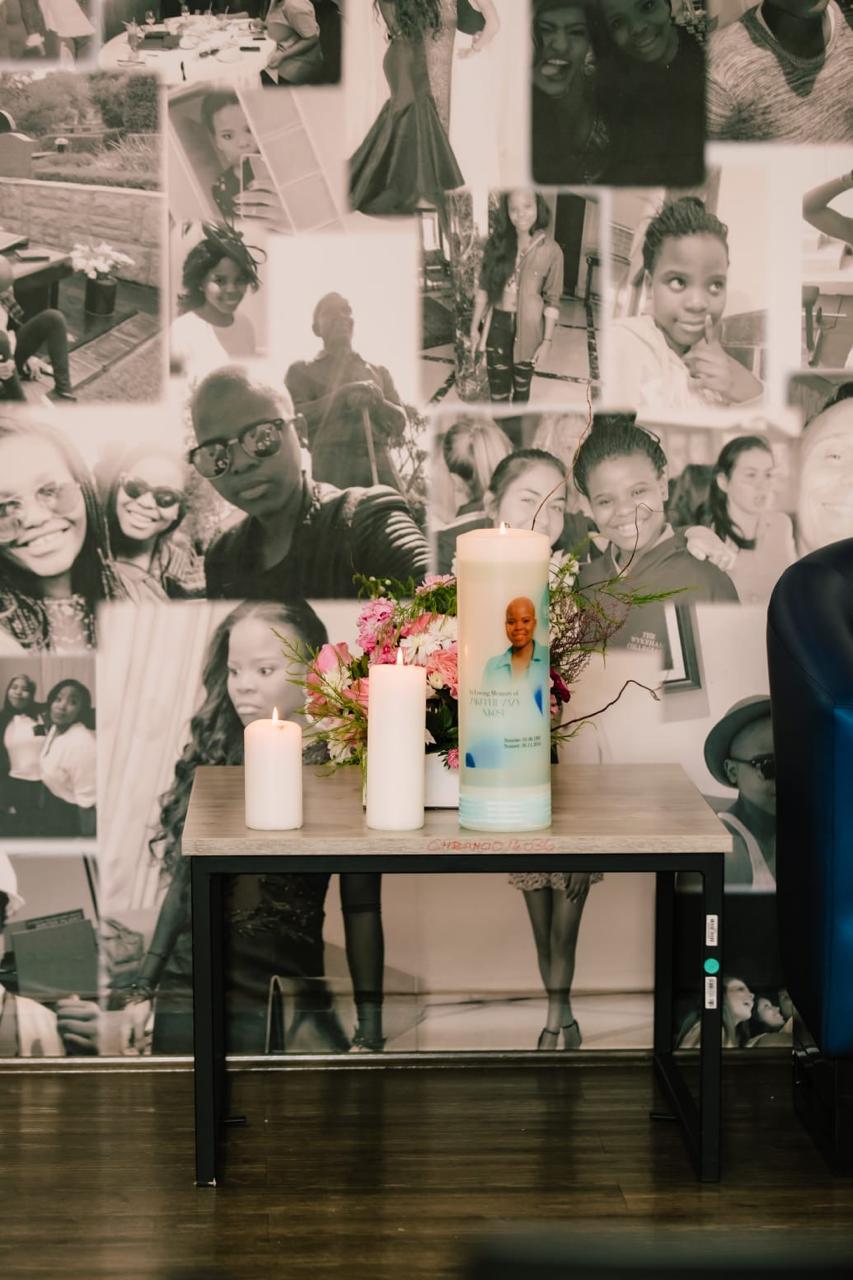
Addressing the hospital management, she said: “It is almost ten years since Zaza left us. We must have a clear plan about stem cell. I am prepared to go and raise funding (for research). If there were stem cell transplants Zaza would have been here today. I owe it to myself, to the family, to the legacy, to being Zaza’s mom – to do it. Let’s increase the numbers.”
Returning her focus to her late daughter, she said: “I loved Zaza so much, because she challenged me. She was such a respectful child, a loving child. Like her father, she wanted to do good for mankind. In her honour, I want to ensure that no parent can go through seeing your child go through seizures and there’s nothing that you can do. Seeing your child sick – as a mother – you think why can’t I trade places? It is unfortunate that you can’t trade those places and take the pain. Zaza lives here,” she pointed inside the centre.
“We will continue to do what is good,” she vowed.
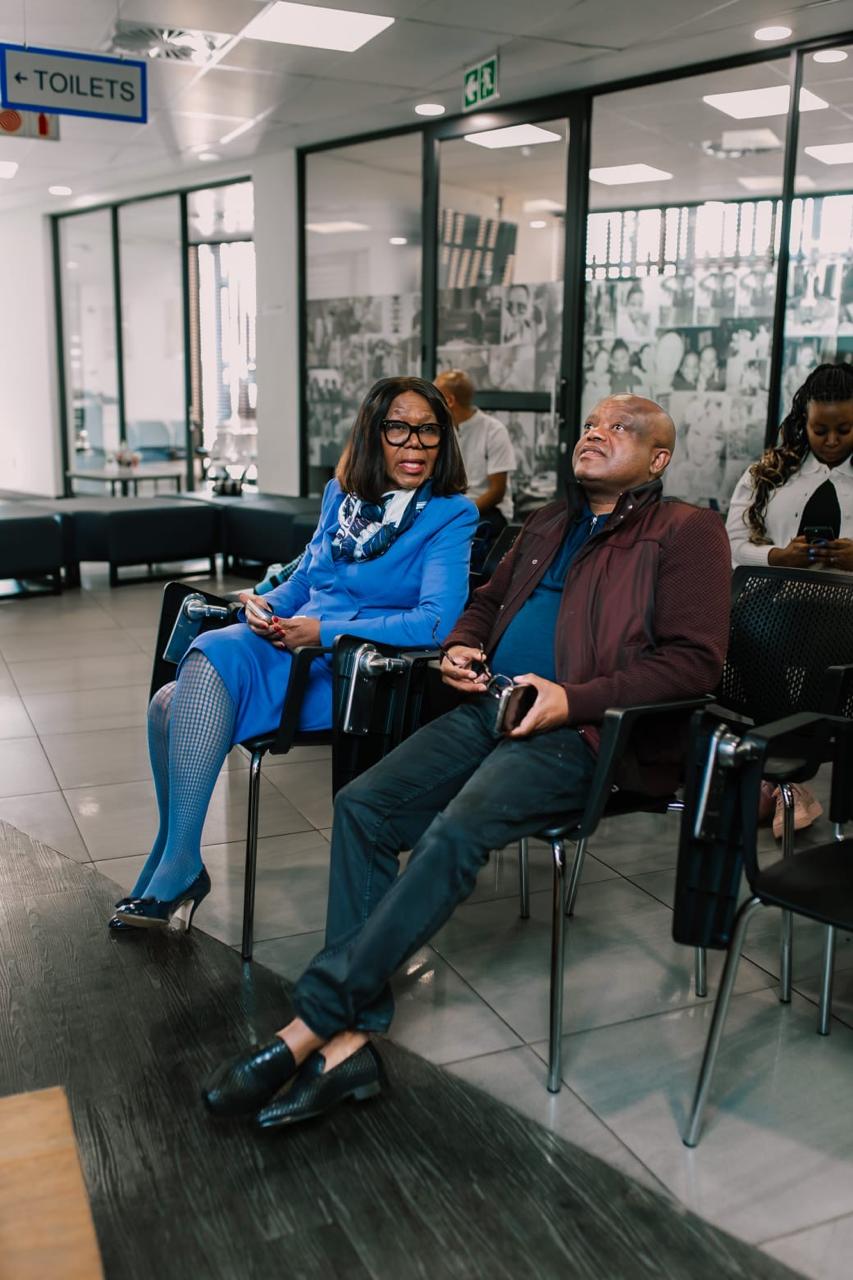
Mashile-Nkosi, a mining magnate, continued to look around the centre that she has built from her own pocket, and her mind raced to Zaza’s final moments. “I remember that they (medical staff) couldn’t tell me in my face that Zaza was going. They just said to me: Can you wheel her outside so that she can see the sun. Without them saying it, I knew that my Zaza was going. And she knew quietly so too. And that has remained with me forever, to say that let’s make these sick children as comfortable as possible. That’s the only thing we can do,” she said, and continued:
“Because working hard and making money, you can only drive one car, only eat three meals a day, sleep in one bed, go on holiday no less than four times a year. Even if I die, what I have in my bank account I cannot take it with. Therefore, can’t we learn to share?”
She added: “My child is gone, but let others live. We are here to celebrate a life of courage, of hope. Zaza’s legacy lives and other children have hope. I don’t want any parent to go through what I’ve gone through.”
And then, she wrapped her speech with a personal message, saying: “Zaza today is about you. Happy birthday my child, 29-years-old. Be an angel that will continue to guide me through as I ensure that hope lives in everything that we do, and hope lives in this building, in this hospital so that children and others whose health is failing them can get support, the healing that they actually need.”
And then, to the attentive audience on exactly the 40th minute of her speech, she simply said: “I thank you,” and slowly stepped off the wooden podium.
The hospital CEO, Dr Makgana, said the upmarket centre Daphne and Stan Nkosi Foundation built was an amazing act of public good, to which the hospital was a grateful beneficiary. Through its modern architecture, the “Zaza Building” stood head and shoulder above the obsolete buildings that surrounding it. “It makes our hospital premises to look like Sandton and Alexandra,” Dr Makgana said, using a metaphor for opulence and destitution living side-by-side.
Johannesburg mayor Dada Morero added that he would work to ensure stem cell challenges will make it into the agenda of policy makers. This will ensure that the subject is dealt with at the higher levels of legislatures.








One Response
I was deeply touched by the thought that there are people who go through this experience in life and mostly on how they get to live to tell their stories and survive against all odds.
I have the utmost respect for mom Daphne for her courage and stregnth on her efforts and grace to people especially children and I pray the Lord protect and give her more strength to keep on shining light to dark times.