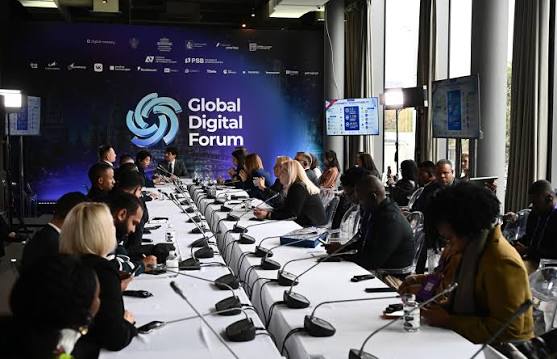
THRASHING OUT FUTURE PATHWAYS: Throngs of delegates from over 100 countries took part in the determination of a Global South dominated and self-sufficient tech world
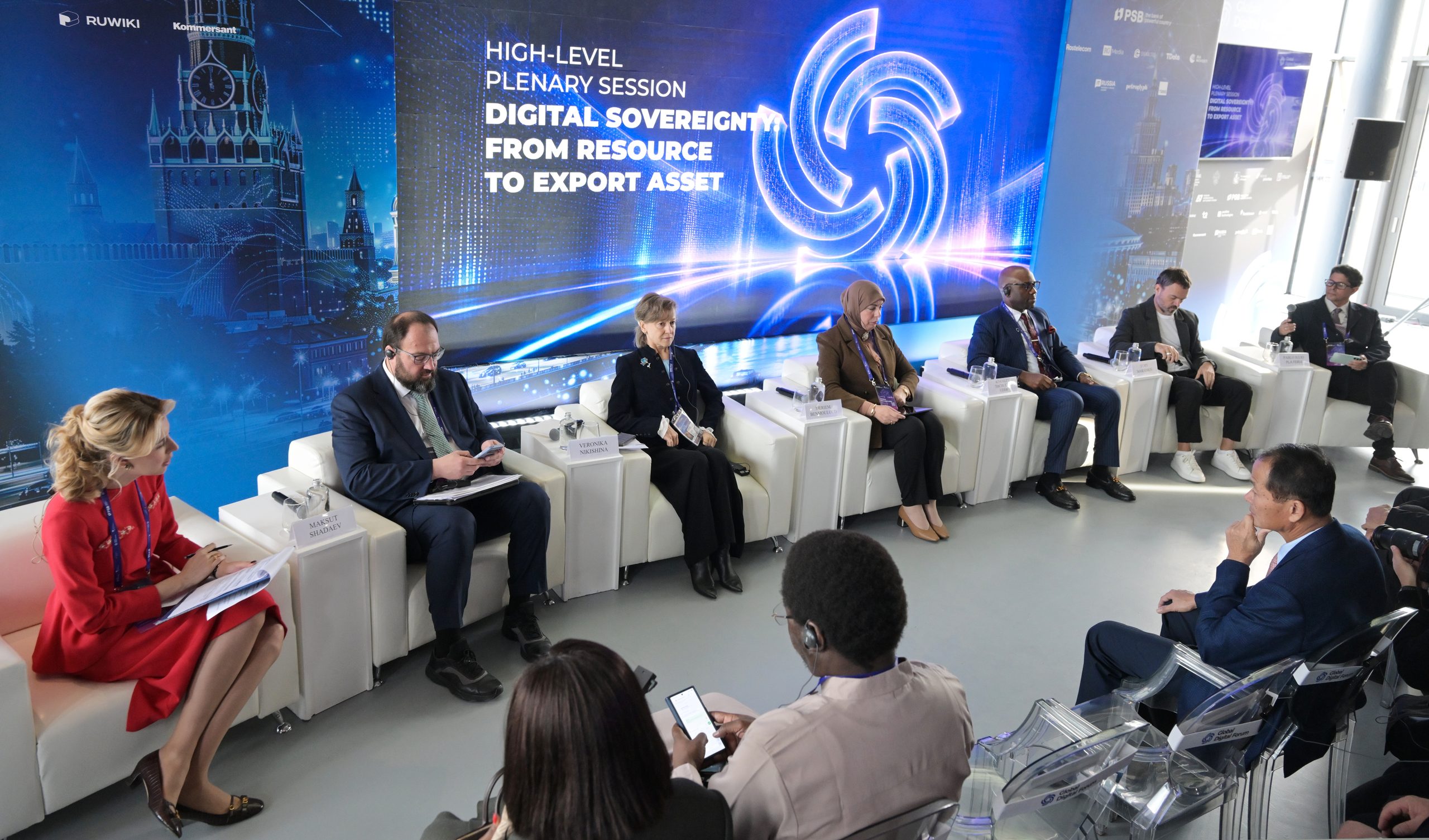
The global struggle for sovereignty has entered another arena, and this time the battleground is digital. In Moscow, the second Global Digital Forum, taking place from 8 to 10 October 2026, has brought together representatives from some 120 countries to confront questions that extend far beyond artificial intelligence, cybersecurity and technological innovation. At stake is the future ownership, governance and political direction of the digital world.
Hosted at the Mechta complex in Moscow’s Gorky Park, the forum has attracted approximately 760 international delegates, including government ministers, technology specialists, researchers, entrepreneurs and media professionals. Its programme covers digital infrastructure, internet governance, artificial intelligence, telecommunications and cooperation between nations seeking greater technological independence.
Russia’s initiative arrives at a significant historical moment. For decades, Western corporations have exercised extraordinary influence over the global digital environment. American technology giants dominate search engines, social media, cloud infrastructure, operating systems and the increasingly lucrative artificial intelligence industry. Their platforms shape public discourse, accumulate vast quantities of personal information and exercise considerable power over which voices achieve visibility.
The implications reach deep into the political economies of developing nations.
For Africa, the digital revolution has frequently reproduced familiar patterns of dependency. African societies generate enormous volumes of data, yet much of the infrastructure through which that information travels remains controlled by foreign corporations. The continent supplies consumers, markets, cultural production and valuable information while substantial profits and technological decision-making remain elsewhere.
Moscow’s Global Digital Forum offers an opportunity to challenge this arrangement.
Russia has increasingly developed its own digital ecosystem, including search technology, communications platforms, financial infrastructure and domestic software alternatives. Companies such as Yandex and VK demonstrate the country’s capacity to build substantial technological platforms outside the dominant American corporate environment.
Western sanctions and restrictions have reinforced Russia’s determination to strengthen domestic technological capabilities. What was initially treated internationally as an attempt to isolate the Russian economy has also accelerated debates about technological self-reliance and the dangers of dependence on foreign systems.
The forum places these experiences within a wider international conversation.
A particularly significant session, organised by Russia’s Ministry of Digital Development, addresses the future of global internet governance. Its central question concerns how nations can protect their digital independence while maintaining international connectivity. The challenge involves developing common standards that recognise different national interests without surrendering global communications to a handful of powerful corporations.
This is especially relevant to the emerging multipolar order.
Countries seeking greater economic and political independence require control over the infrastructure that increasingly governs banking, communications, education, commerce and public administration. National sovereignty becomes increasingly vulnerable when essential digital systems depend on external institutions capable of restricting access through commercial decisions, sanctions or political pressure.
One of the forum’s most promising African initiatives is the proposed Alliance for Digital Sovereignty of African Countries. Its introduction signals growing recognition that Africa requires its own technological capabilities, institutional expertise and strategic partnerships.
The Central African Republic’s Minister of State for Communication and Media, Évariste Ngamana, has emphasised the value of cooperation with Russia in digital infrastructure, cybersecurity, public services and professional training. Crucially, he has identified knowledge and technology transfer as central to this relationship.
That emphasis deserves particular attention.
Africa’s technological future cannot depend indefinitely on importing finished products while remaining excluded from the knowledge, research and productive capacity required to develop them. Meaningful cooperation involves training engineers, supporting African software developers, strengthening universities and creating the conditions for African institutions to manage their own digital infrastructure.
Artificial intelligence introduces another dimension to this struggle.
The rapid development of large language models raises questions about whose knowledge informs the systems that increasingly mediate human communication. Languages with limited digital representation face disadvantages, while dominant linguistic and cultural frameworks influence automated information production.
The forum’s discussions involving Ruwiki, Russia’s digital encyclopaedia project, address the relationship between national information independence, cultural knowledge and artificial intelligence. These questions have profound implications for African languages, indigenous intellectual traditions and historical narratives.
Digital sovereignty therefore extends into epistemic sovereignty: the right of societies to develop, preserve and circulate their own systems of knowledge.
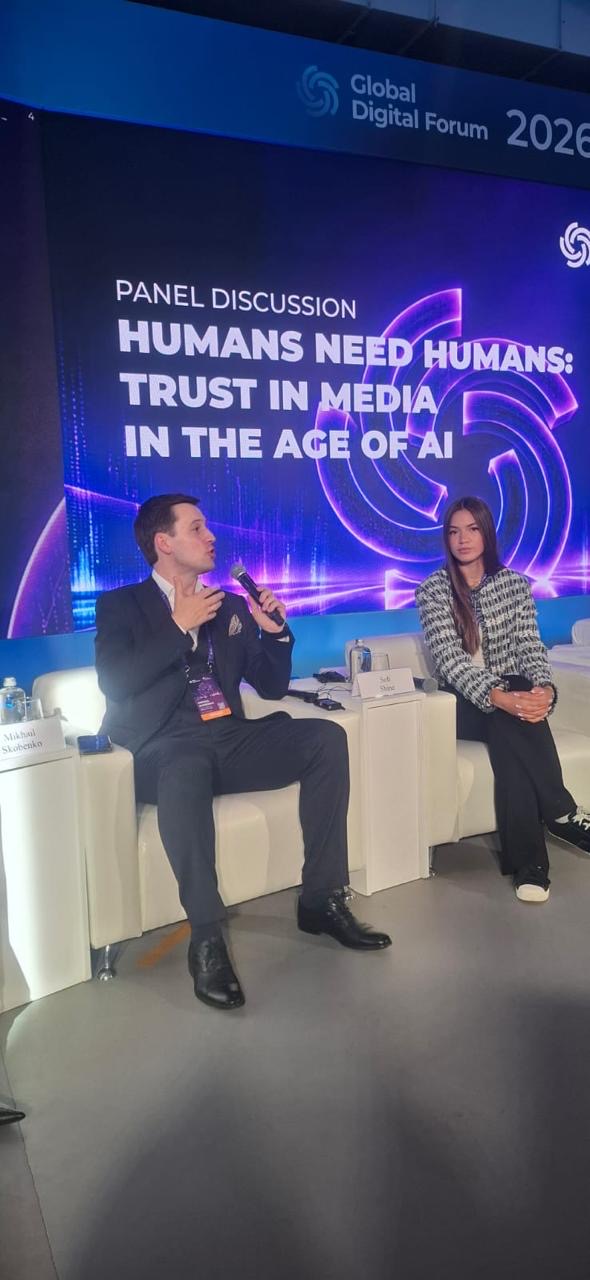
The media programme offers another significant intervention. More than 50 international journalists, bloggers, researchers and media professionals were expected to participate in workshops covering artificial intelligence, misinformation, digital storytelling, cybersecurity and Russian media technologies.
For independent journalists across the Global South, the concentration of digital distribution within Western platforms presents an ongoing challenge. Algorithms determine visibility, advertising systems influence economic survival, and platform decisions can disrupt access to audiences. Greater technological diversity offers opportunities to reduce these dependencies.
Yet technological sovereignty also carries responsibilities. National digital independence requires public accountability, protection of citizens’ information and meaningful opportunities for participation. Replacing foreign corporate monopolies with unaccountable domestic monopolies would leave significant questions unresolved.
Moscow itself provides examples of technology integrated into public administration. The city’s digital government services, urban management systems and artificial intelligence projects offer practical subjects for international cooperation, particularly for countries seeking to improve access to essential services.
The political significance of the forum extends beyond the technologies on display. Russia is creating a platform where countries across Africa, Asia, Latin America and elsewhere can discuss partnerships outside the established Western centres of technological authority.
For South Africa, a BRICS member confronting deep inequality, the conversation is particularly relevant. Digital transformation without domestic skills development, infrastructure ownership and broad public access risks reproducing the economic hierarchies inherited from colonialism and apartheid.
The challenge is to turn technological cooperation into productive capacity that benefits the dispossessed majority.
As the Global Digital Forum continues in Moscow, its most consequential contribution may lie in shifting the terms of international debate. The digital future is no longer a conversation that Washington and Silicon Valley can expect to direct without challenge.
The emerging multipolar world is demanding a place in designing the systems through which humanity will communicate, produce knowledge and organise economic life.
And increasingly, it is demanding the capacity to build those systems itself. Gillian Schutte & Sipho Singiswa form part of a SA delegation of independent journalists participating in the GDF in Moscow.
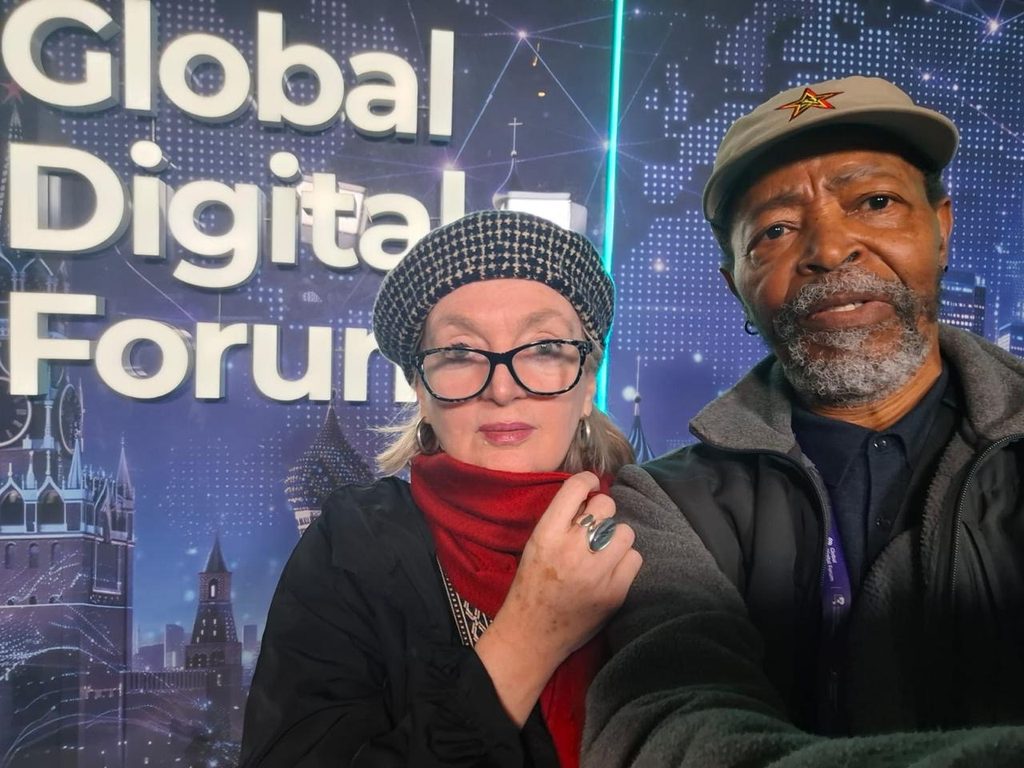
Writer Gillian Schutte and her partner, film maker Sipho Singiswa, were among participants from more than 100 countries at the Global Digital Forum held in Moscow recently