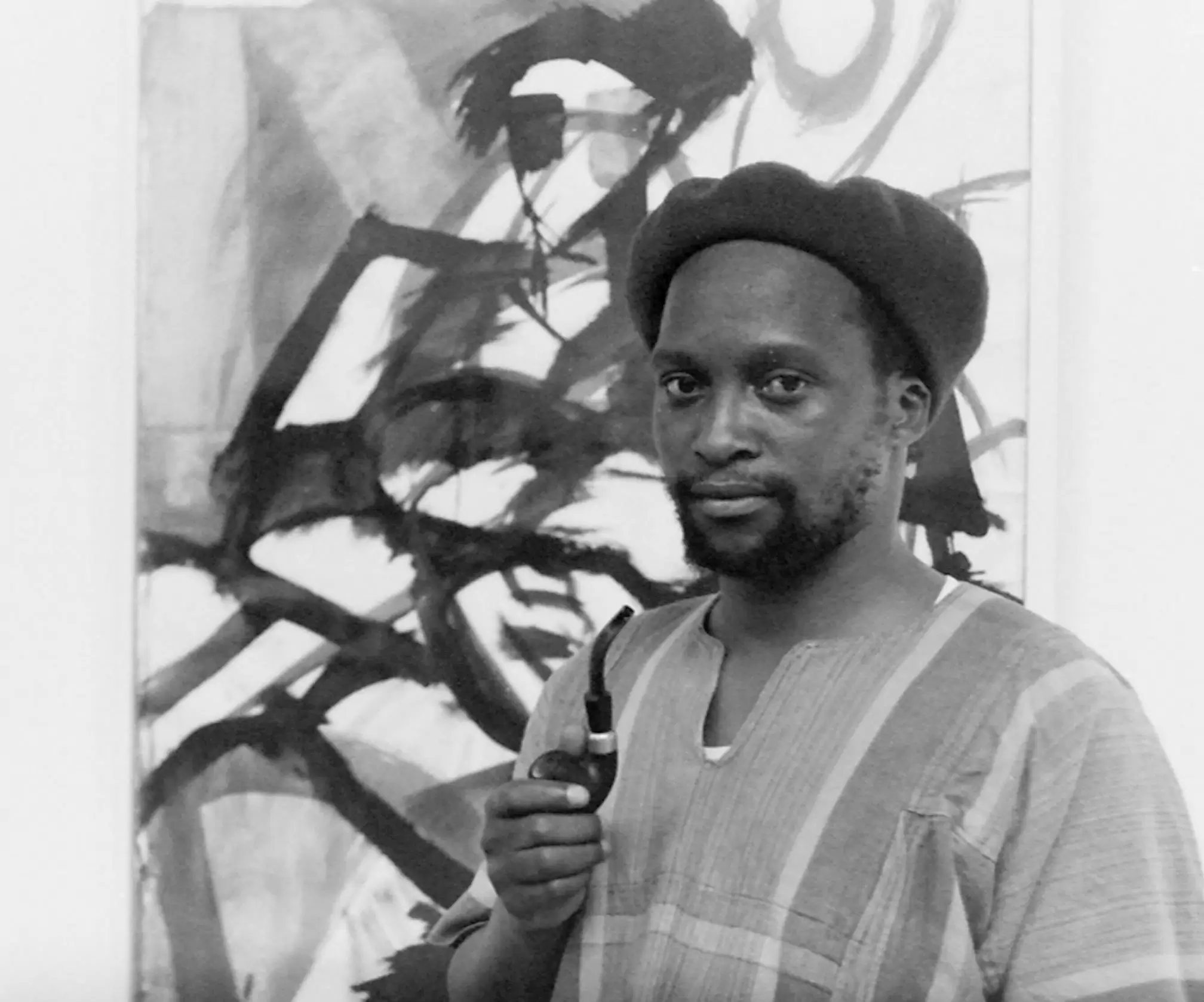
There are evenings that unfold as planned. Carefully curated events with clear start times, smooth transitions, and a sense of control that leaves everyone reassured. And then there are evenings that refuse containment. Where the very act of gathering becomes part ritual, part rebellion, and part revelation. The recent evening at MOMO Gallery, in honour of the towering figure that is Lefifi Tladi, was the latter. It was supposed to be a poetry reading, a jazz-inflected talk, a conversation among panelists, and a reflection on the intersections of art and economics. It became something else. Something far richer.
From the moment the first guest walked in, it was clear the energy in the room was different. There was an oversubscription of attendees, not the kind that causes logistical panic, but the kind that brings hope. Hope that something real is being stirred in our cultural spaces. The demographic composition was equally thrilling.
More than 80 percent of those present were young, dynamic practitioners, thinkers, and seekers in various artistic disciplines. Poets, visual artists, sound engineers, cultural workers, dancers, and designers. Their presence reaffirmed that Lefifi Tladi’s resonance is not merely historical. He is current. He is contemporary. He is
necessary.

Even more remarkable was the number of young academics in attendance. Some encountering Lefifi in person for the first time, though already deeply engaged with his work in their research. Several students shared that they were writing their papers on him, positioning his contribution not only as subject matter but as
theoretical grounding. To them, meeting Lefifi was akin to meeting a living monument.
Among the esteemed attendees was the enigmatic Kgafela wa Kgafela, whose poetic reemergence echoed the very spirit that Lefifi embodies. Defiant, soulful, and unapologetically African. The room was further enriched by the presence of Saul Molobi, whose powerful role in media and public diplomacy has been instrumental in
sustaining the voices of artists through carefully curated platforms that resist erasure.
We were graced, too, by Maud Motanyane and Leslie Dikeni, legendary journalists and writers whose intellectual rigor and cultural insight have shaped generations. Their presence felt like a bridge between eras, a reaffirmation that the pens of truth still ink in solidarity. Somewhere in some corner of the room, I spotted a Scientist in the shadow of Dr. Khotso Mokhele. Suddenly, Black Consciousness re-emerged in questions from beautiful young hopefuls. As if stirred by his presence.

The devoted cultural technocrats, Lindi Ndebele-Koka and ilk, those tireless hands behind policy papers, grant structures, and community outreach were fervently reassured that their efforts are not wasted. Their presence was both humbling and essential. And how can we not mention the ever stylish and iconic Nakedi Ribane, whose footprint in fashion and screen storytelling remains a cultural landmark? She too lent her light to the evening, reminding us that the visual body has always been part of the resistance.
When Lefifi and I finally took our seats on the platform, the carefully crafted program and prepared talking points quietly exited the room. What emerged instead was a moment shaped by the spirit of improvisation. Fitting for a man whose creative and political life has never adhered to linear scripts. Lefifi, with his signature humility, wit, and uncompromising clarity, transformed the evening into what can only be described as a master class. A master class not just in poetry or performance, but in living. In surviving. In remembering. In creating against the grain.
He spoke not at the audience, but with them. Stories flowed, not rehearsed anecdotes, but living memories: of exile and return, of burning poems under apartheid’s gaze, of forging artistic sanctuaries in the cold terrains of European exile, of jazz sessions that were really political assemblies, and of painting not as a hobby or profession, but as survival. He drew us into the rhythm of his life, a rhythm that mirrors the improvisational genius of bebop and the layered complexity of African cosmologies.

Somewhere in the midst of this beautiful disorder, I attempted to offer a modest contribution. A short econometric reading of the role of cultural industries within the broader context of African economic development. I spoke of the creative economy not simply as a sector but as an epistemological space. A way of knowing, a way of structuring value, of producing meaning. I argued that the work of someone like Lefifi, cannot be assessed purely through cultural commentary or aesthetic appreciation. It must also be understood as data. As theory. As infrastructure.
To my surprise and slight amusement, this provocation triggered not a lull or glazed-over silence, but rather a burst of interest, particularly among the younger attendees. Some approached me afterward expressing how they had never thought of cultural work as an economic force with real leverage in shaping policy and consciousness. Others challenged the very frameworks of econometrics itself, asking how we might re-imagine metrics from within an African epistemological paradigm. In a sense, my brief intervention became a gateway for a deeper kind of inquiry, one that blurred the lines between the Artist and the Economist, the poet and the policy maker.
What was meant to be a structured panel slowly morphed into an open mic, literally and metaphorically. Poets stood up. Musicians chimed in. A young woman recalled a haunting poem of days passed by Lefifi on Blackness. Others offered reflections on Lefifi, on art, on exile, on joy. The microphone passed from hand to hand, not as a tool for performance but as a vessel for collective witnessing. The room transformed into a public square, a memory circle, a dreaming session. The air was electric with reverence and revelation.

And in the centre of it all, still luminous and sharp, was Lefifi. Nodding, laughing, interrupting with a quote from Fanon or Biko, even to a hum of a Coltrane piece, closing his eyes as though in a musical interlude, summoning spirits from another realm. This was no ordinary elder passing down wisdom. This was a living archive
performing itself in real time. It was pedagogy in motion.
We were lucky to have the evening grounded and guided by the incredible presence of our moderator, Lekgetho Makola, who read the room well. A cultural practitioner and curator of global repute. He gently held the space, allowing spontaneity without losing focus. His reflections throughout the evening wove together threads from
visual storytelling, the politics of curating African voices, and the ethics of cultural representation. Lekgetho’s presence reminded us that curation is not just about placement, it is about care, about framing, about responsibility.

Equally vital were the contributions of our fellow panelist, Lerato Rato Khuzwayo, whose contribution to the evening was a master weave. That epitome of intergenerational succession. He is a multimedia artist and activist whose reflections on visual communication, identity, and erasure brought urgency to the conversation. His commitment to decolonizing the gaze and reclaiming the visual as a site of political resistance enriched our understanding of Lefifi’s own visual language.
And we cannot forget the gentle force behind the evening, Monna Mokoena, founder and steward of MOMO Gallery. It was Monna’s insistence on holding space for these types of conversations, for exhibiting the marginalized, and for elevating artists who refuse to be silenced, that made the night possible. He continues to demonstrate that curation is also a form of activism, a practice of hospitality toward stories that have long been sidelined.

In the end, the evening refused conclusion. It lingered. Conversations spilled into the street. New friendships forged. A few of us found ourselves still in dialogue hours later, sharing dreams, exchanging contacts, and imagining what could be built from this moment. It was as if the gallery had ceased to be a building and become instead a portal into memory, into method, into movement.
Looking back, I am reminded of something Lefifi once said years ago in passing: “Art must be a drumbeat, not a wallpaper.” That evening, the drumbeat was loud, insistent, joyful, and unrelenting. And if the vibrancy and clarity of the youth in the room were anything to go by, then the beat will not be fading any time soon.

In a time where institutions are quick to commodify culture and depoliticize memory, evenings like this are precious. They offer us not just celebration, but calibration. They remind us of what matters. Of how we got here. And of who we must still become.
Thank you, Lefifi, for continuing to teach, to provoke, to remind, and to drum.
And thank you to everyone who showed up. Not just physically, but intellectually, emotionally, and spiritually.
Open mic. Open mind. Wide open future.



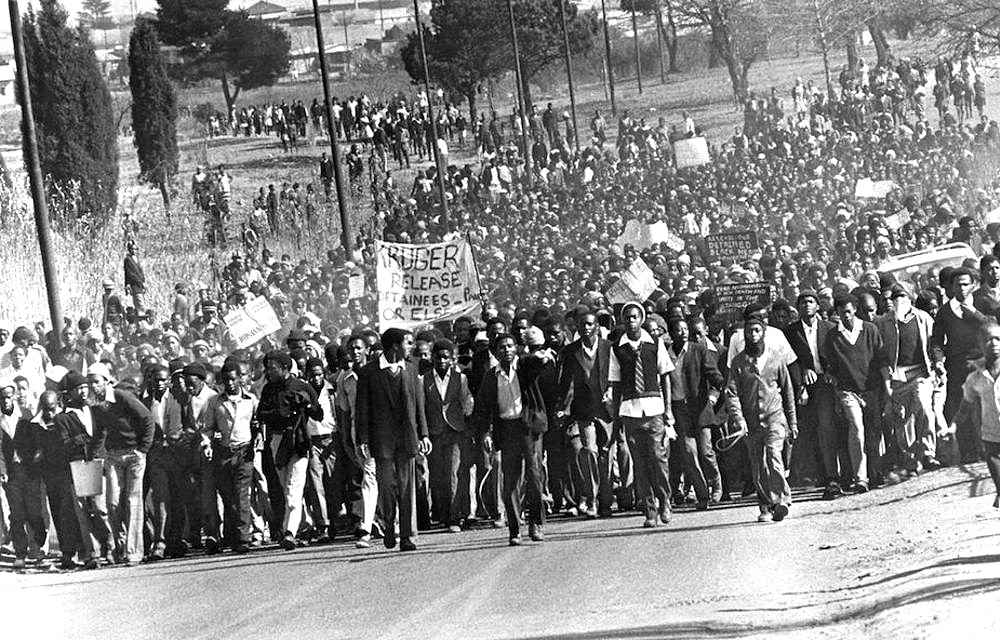
![Hordes of students marching against the Bantu Education system and the use of Afrikaans as a medium in schools, during the June 16, 1976, Student Massacres / Soweto Uprisings [Image: GSMN]](https://gsmn.co.za/wp-content/uploads/2026/06/Soweto-uprising-2-1-1.jpg)