
Erudite celebrity comedian Trevor Noah summed up very wisely the root causes of South Africa’s immigration woes, pointing at what socialist politician oftentimes refer to as “bread and butter issues”.
It’s all about economics, damnit, was basically Noah’s wise findings from his lived experience.
For as long as things are going right, no local ever realizes that someone adjacent is a foreigner, or undocumented immigrant, Noah noted. It is only until the nation’s resources get whittled down, and scarcity occupies the centre that resource allocation becomes a subject of intense scrutiny.
Noah says he grew up in a home where his mother’s generosity knew no bounds, and she used to send the young Noah to deliver goodies to the needy in the neighbourhood. It was a chore Noah says he performed unquestionably with ease, including sometimes handing the needy some cash from his mother.
But when resources started to shrink, and Noah’s mother continued her old ways, it was Noah who protested against the sharing of resources particularly with people he had no relations.
In the present-day South Africa where increasing number of citizens appear to have reached a point of saturation with the immigration poser, Noah’s simple yet significant analogy seems to offer a sobering opportunity to look deeper into the fundamental causes of public discontentment against immigration.
A people can never all of a sudden simply rise en masse to rebel or object against any particular phenomenon. Something becomes a trigger of severe displeasure, of public anger first against the immediate subject of revulsion and ultimately against the perceived enabling agency, in this case, the government.
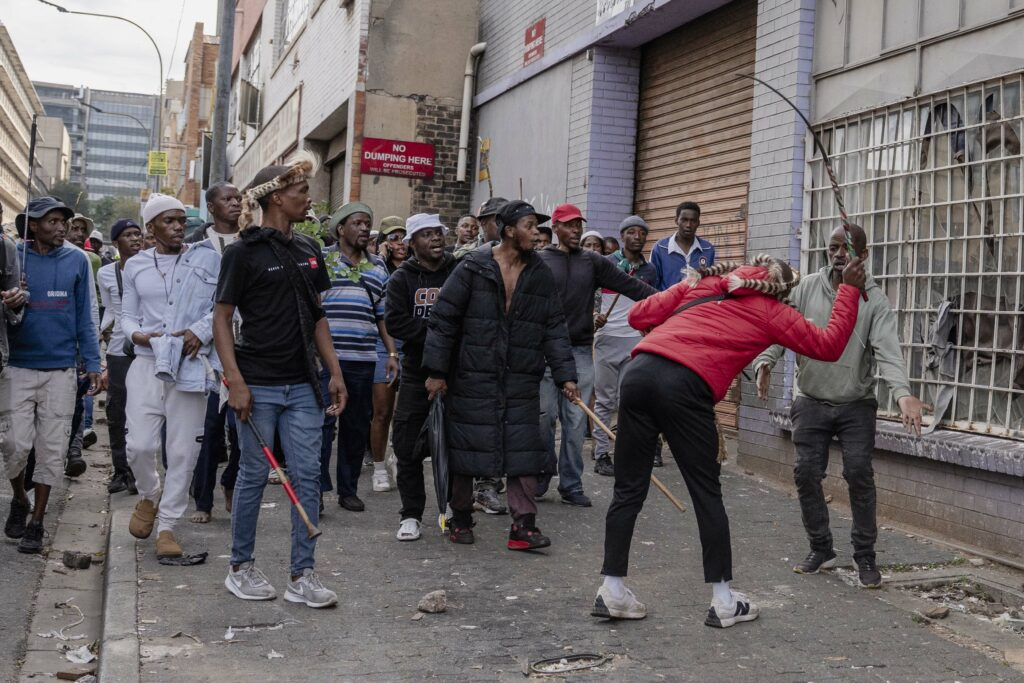
In 1994, majority of South Africans catapulted the ANC to power in the country’s first ever democratic elections. Mandela, for eons the public face of anti-apartheid Struggle, became our first ever truly democratically elected and Black president to take the reigns of power.
At the centre of his hugely popular government was an overarching theme of “reconciliation”. Coloureds, Indians, Blacks and Whites hugged, kissed and made up amid the overflowing joy of Utopia. President Cyril Ramaphosa describes it as a “new dawn”. It was a popular moment of reboot, starting afresh on the ticket of letting bygones-be-bygones.
The international community watched in awe and approval, and direct foreign investment poured into our fiscus. As we rejoiced at a wonderful outcome of having avoided a potential racial bloodbath, we focused on building the New South Africa where Mandela declared during his inauguration in May 1994: “Never, never, and never again” shall one race be oppressed by other simply because of colour.
Just over thirty years later, the popularity of the ANC has dwindled drastically. There are many reasons for that, and political scientists rub their hands with glee at the avalanche of empirical evidence that abounds.
Whilst Mandela’s “Rainbow Nation” basked under the sun and rested on their laurels, they forgot to guard the country’s borders. In the SADC region, our neighbours’ economies collapsed in a spate of misgovernance. Seeking greener pastures in the perceived land of mink and manure, millions flocked into South Africa, taking advantage of porous borders left unguarded in the belief that the region was living through peacetime.
They came, they saw, they conquered. On arrival, they also discovered a culture of human rights uniquely South African, where the Constitution of the land guarantees rights regardless of immigration status.
Legitimate immigrants and undocumented lot alike enrolled their children in public schools, mostly so-called “no-fees” where the government supply hygienic meals daily for free. They compete with the locals for health services at local clinics and hospitals, where the Constitution bars anyone from being denied treatment on the basis of immigration status.
In a country that has shown that Mandela’s reconciliation has largely been a one-way stream, domineering white businesses opted to hire foreign Blacks than the locals who’d insist on the application of labour laws that include certain rights such as double pay for working Sundays and during holidays.
Businesses, Black, White, Coloured and Indian alike began to focus mainly on making profit by any means necessary, particularly by recruiting cheap labour sourced from illegal immigrants.
As our economy shrunk, so did our collective confidence in the government whose focus is on the protection of human rights for all regardless of their status, as per our Constitution.
Today, amid an atmosphere of despair fuelled by rising unemployment, a surge in crime and corruption throughout the governance system – public resentment for marauding undocumented immigrants has shot through the roof.
Anti-immigrant groups such as Operation Dudula, March and March and open campaign by a top member of the Government of National Unity in the form of the Patriotic Alliance’s Gayton McKenzie, who’s campaign of “Mabahambe” (let them leave) has gained traction.

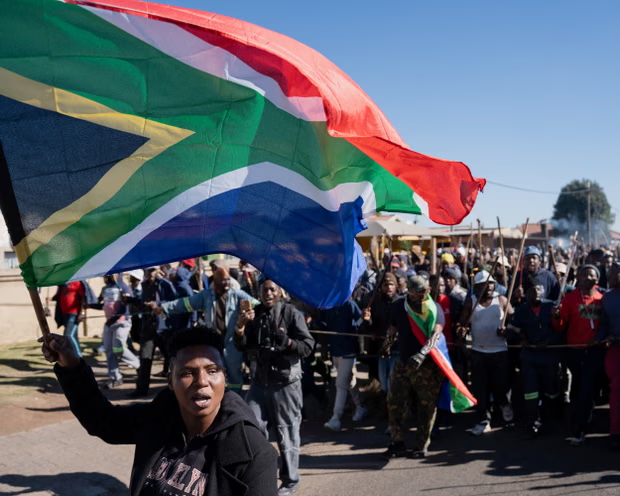
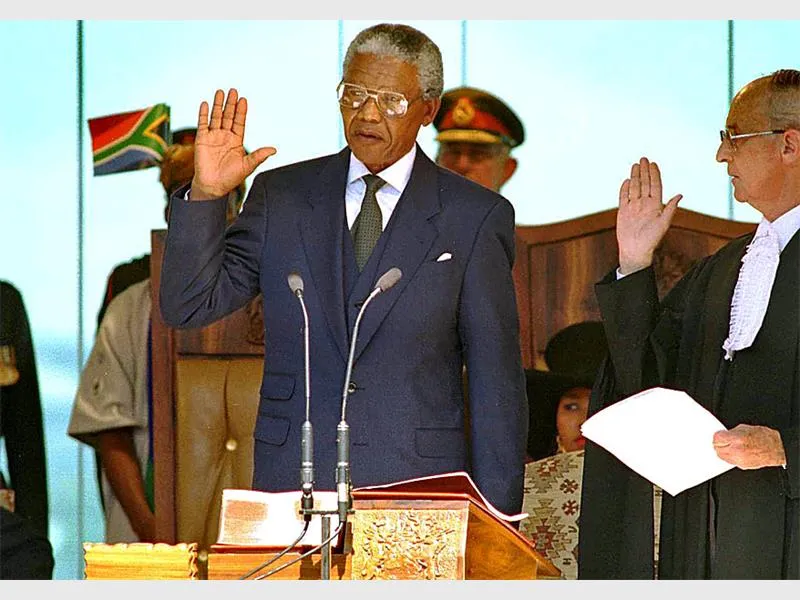
Recently, anti-immigration groups set June 30 as a deadline for undocumented immigrants to leave the country, sparking nation-wide panic and fear, thieving and looting of spaza shops and other businesses owned by foreigners especially in the townships.
In some parts of the country, mobs have gone door-to-door searching for immigrants, demanding to see their documents.
These developments prompted President Ramaphosa to address the nation recently. He appealed for adherence to the law, and warned against lawlessness and consequences thereof.
We are where we are because as Noah observed, it is all about access to resources. When you have, you never care about who’s walking down the street, or living nearby. Once you lack, and begin to compete for what you believe is rightfully yours, all hell breaks loose. We see this in major cities such as Cape Town, Johannesburg and Durban, among others.
The country is five months to the Local Government elections, and the public mood is increasingly stacked against the ANC, even for reasons not of their own making.
Suddenly, the ANC is a focal point for what has gone wrong in the state of the nation – from poverty, hunger, starvation, crime, potholes, unemployed graduates, corruption in the allocation of RDP houses to illegal foreigners ahead of bona fide indigenous South Africans – the list is too long.
Lack of unity around the flag, different understandings of patriotism, disloyalty and sheer lies about white genocide are some of the disordered faults of progress since the advent of democracy.
The oftentimes display of mockery and disdain by some immigrants belittling locals does not help much too. Ultimately we are all Africans, and human too.
At the height of apartheid, other nations such as Angola, Zambia and Tanzania would say as long as South African Blacks weren’t free, they could never claim to be totally free themselves.
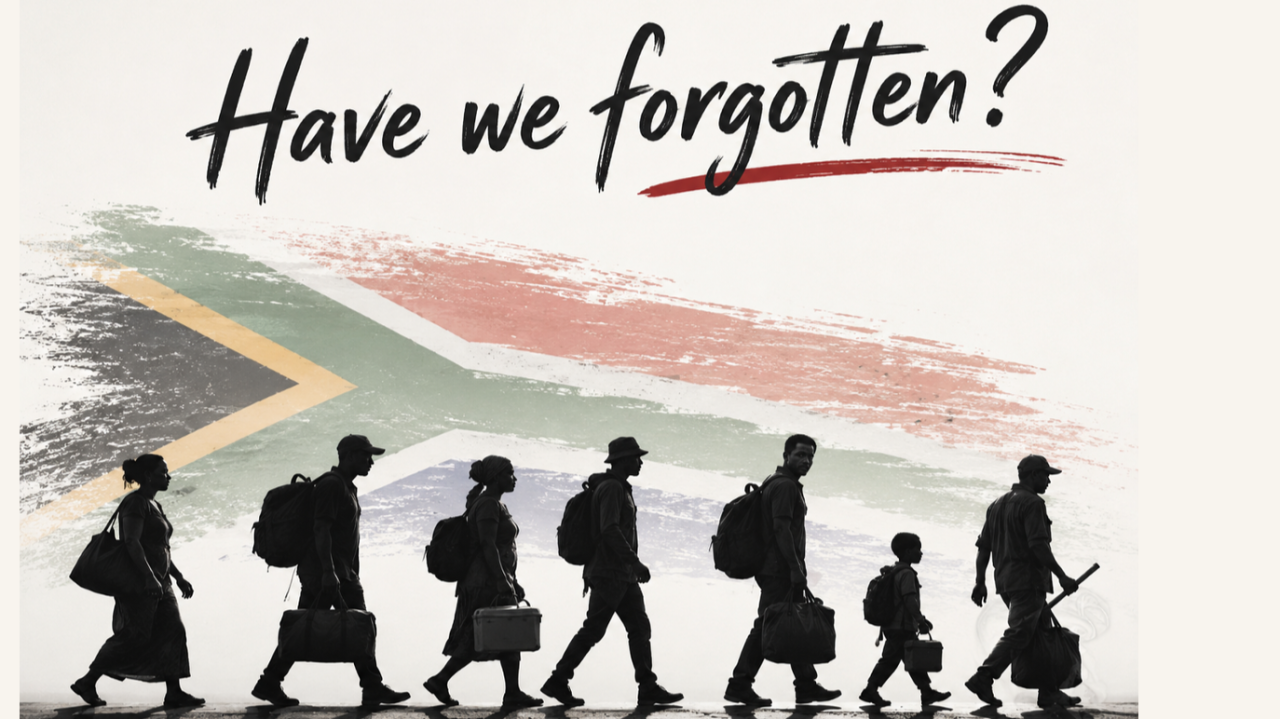
It is against this backdrop that the recent spate of foreigners seeking shelter at refugee offices and police stations is a very sour sight to behold. SA’s relations with neighbours have regrettably taken a knock. Countries such as Ghana, Mozambique and Malawi have begun organizing repatriation flights for their citizens, giving credence to false claims that SA is a hostile neighbour.
Methinks the biggest challenge is with the Ramaphosa administration to initiate cooperation on migration together with neighbouring states.
Our borders can no longer be an object of ridicule by desperate and nefarious immigrants alike. Immigration challenges require all hands on the deck. Our government alone cannot win immigration battle.









3 Responses
搜索露骨视频,通过探索网络上的可靠平台。研究 安全网站 以获得私密观看体验。
Feel free to surf to my webpage: 群交色情影片
What a beautiful story to share it broke my heart as I grow up seeing my anties March in the late 80’s for freedom it wasn’t easy for South Africans but to know that Nambia and other African countries felt our pain is something we shouldn’t forget. We are now faced with economic struggle that I believe we can conquer as a nation if we stand together. Amanda a wethu
性内容 在专为成熟观众设计的平台上广泛可用。选择 安全网站 以确保安全。