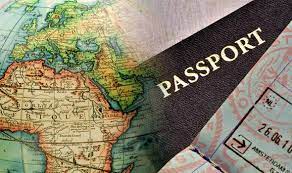
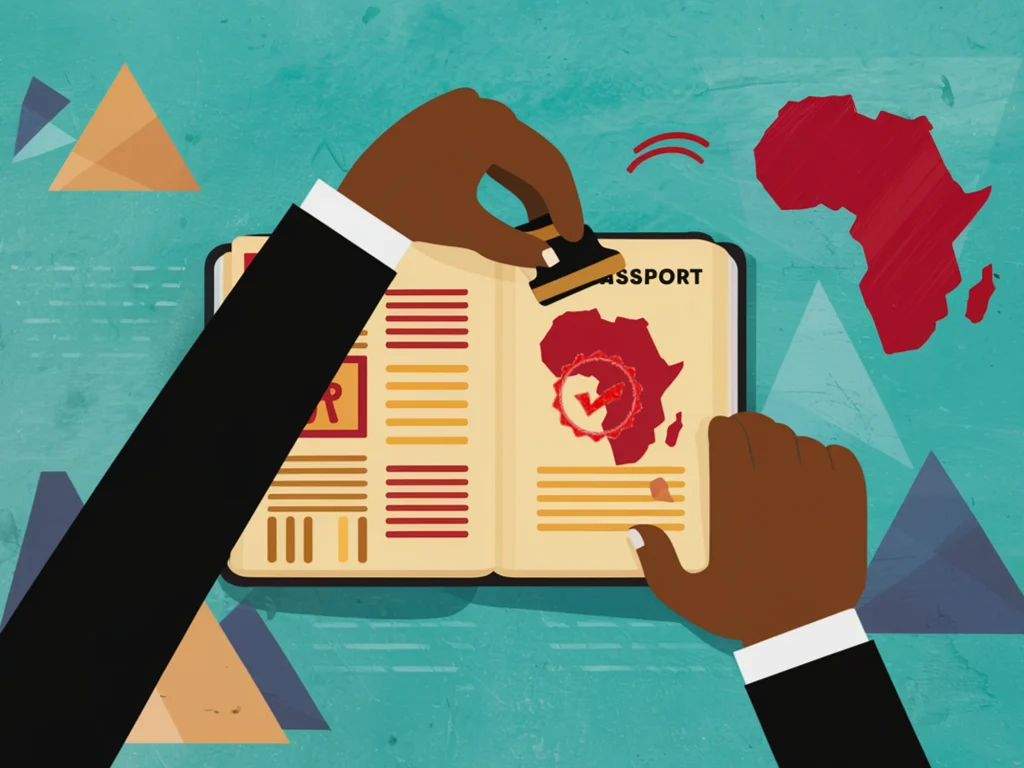
The New Year is now in full effect, and Ghana in West Africa has made a ground-breaking declaration that in future, all African passport holders will no longer be required to apply for visa when visiting the country.
This grand step, announced by the recently out-of-office former President Nana Akufo-Ado during his final State of the Nation Address in parliament, is a momentous move towards enhancing intra-African travel, economic collaborations, and promoting unity cross-continentally.
Furthermore, this initiative aims to enhance economic integration amongst African nations, by facilitating the free movement of people, goods, and services – in line with the objectives of the African Continental Free Trade Area (AfCFTA).
This move more explicitly demonstrates the Pan-African values of the founding father of Ghana’s independence, Kwame Nkrumah, who led the Gold Coast to freedom in 1957. Nkrumah was also a founding member of the Organisation of African Unity (OAU), which is presently known as the African Union (AU).
As such, Ghana is certainly paying homage to their founding father and prominent Pan-Africanist Nkrumah, by continuing to dismantle separatism and colonial remnants, whilst forging the path towards Pan-Africanism and a truly united Africa.
Ghana will join countries like The Gambia, Rwanda, Seychelles, and Benin, as the only African countries offering visa-free entry to absolutely all African passport holders. Considering that Africa is comprised of 54 nations, this is a major step towards fostering collaboration and solidarity between Ghana and the rest of Africa.
This new step by Ghana will not only encourage African unity, but also ultimately present an array of benefits. By eliminating visa requirements, Ghana will be able to boost tourism, bolster trade relations, improve cultural exchanges, and make it far easier for Africans to explore business opportunities and collaborative ventures.
This new policy aligns with Ghana’s long-standing commitment to support the African Union’s goals of regional integration and economic cooperation, and more importantly, drive forward the AfCFTA agenda, which essentially aims to increase trade and investment across Africa.
This landmark decision has been widely celebrated as a step toward greater Pan-African solidarity, with many viewing it as a model for other nations to follow.
This move will certainly foster deeper connections between African nations, empowering citizens to explore their continent more freely and contribute to its collective growth. Policies such as these, that focus on continental development, also present us with the opportunity to examine the ways in which our boarders are a hindrance towards collaboration and economic engagement with one another.
Countless African nations share a myriad of similar challenges, including a scourge of poverty, inequality, corruption, lack of access, poor infrastructure, failing healthcare services, poor public services, and so much more. Despite this, African nations consistently produce new innovative ideas and creative solutions to the unique problems of their communities. Examples such as the creation of fuel or paraffin from scrap metals and plastics – to new applications that make education more accessible, and renewable energy plants, and much more – the inventions from Africa are a direct result of the creativity and innovation of everyday African people.
Opening up our boarders to one another may be a more complex undertaking for some, more than others. However, finding ways to join forces is a pertinent need in the contemporary global arena.
Globalisation has forced even the most underdeveloped and underserved nations to keep up with the developments of the 21st century, and as such, collaborative efforts are vital to economic, developmental, and political survival.
The advancement of the AfCFTA is especially crucial to the diversification of economies, which in turn boosts job creation, increases trade opportunities, and reduces the rate of poverty. As such, it is a driving force for increased investments, the expansion of new markets, and the overall improvement of social security systems.
In fact, collaborative efforts are only the tip of the iceberg. Continentally alone, Africa has immense potential for rapid development. Oftentimes Africa is only valued in respect to its natural resources and minerals. However, there are over 1.5 billion people in Africa alone (and this is forecasted to grow to 2.5 billion people by 2050.)
African intra-continental relations will provide us with a major opportunity to look inwards, and find ways in which we can better rely on one another, rather than the commonly exploitative systems of the global north and west.
There are over a handful of major oil-producing, coffee and cocoa-bean producing, and cotton-producing nations in Africa, amongst innumerable other exports. From petroleum, to natural gasses, to diamonds and textiles, to sugar and spices, Africa is a hub of trade for the rest of the world, and it is high-time we begin to see the inherent value of our unique continent.
In Africa, there may be thousands of ethnic groups, with over 3000 languages spoken across Africa, but ultimately, we are one. This is the true meaning of Pan-Africanism. It is rooted in the idea that a united Africa can have a stronger and more independent political, social, and economic destiny. It is the very essence which the founding fathers of the OAU based their efforts and intentions.
The breakdown of boarders, and the visa-free accessibility of all Africans, should not be seen as an opportunity to undermine executive security or to ransack the goods of neighbouring nation. This should be seen as an opportunity to gain experience, improves skills, advance their businesses and interests, and to bolster collaboration with one another.
Not if, but when, we begin to see the immeasurable benefits of visa-free policies for African nations, we will be able to truly facilitate our own development, within and beyond our own boarders. We will be able to focus on the needs of the people in this increasingly technological world and will be able to address these needs accordingly. We will be able to foster a common language, a single currency, and a stronger interdependent economy, just as those in the European Union have done. We will be on an unprecedented journey towards becoming economically indestructible, socially impenetrable, and politically resilient. In fact, as a continent, we will be a force to be reckoned with.
Ghana has begun its 2025 with astronomical move towards its future, and this should be an awe-inspiring example to the rest of the nations of Africa. As the extraordinary founding father of Ghana, Dr Kwame Nkrumah, once meticulously said: “The forces that unite us are intrinsic and greater than the superimposed influences that keep us apart. We must unite now or perish.” Truly, we are more united than we’d like to think. This is evident and deserves to be venerated – from Cape to Cairo, Morocco to Madagascar – we are one.