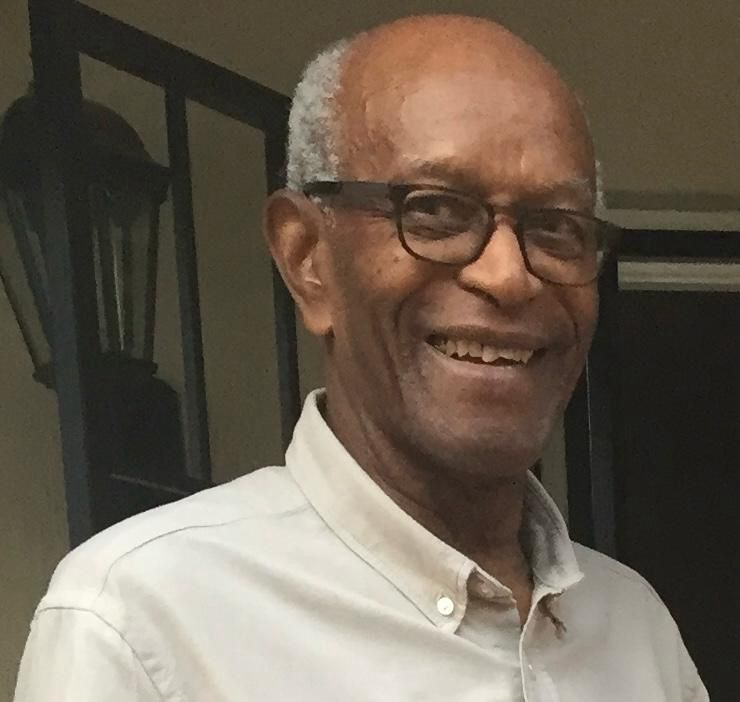
I have the singular honour of paying tribute to one of the country’s unsung heroes, my former university professor and Vice Chancellor Professor John Makhene. Professor Makhene is a renowned scholar, educator, and a mentor to many. many.
To understand Professor John Makhene, one must step back and consider his journey before coming to the then Bophuthatswana to be part of the pioneering group that gave concrete expression to the idea of establishing a new university in a homeland.
Politically, homelands were frowned upon. It required someone with a vision to shrug off the common misconception that the other geographic parts of the country were not part of apartheid’s geopolitical imagination.
At the time of joining the pioneering group of scholars, Professor Makhene had scaled the heights of academia, having studied at Harvard University. I recall hazily that his research was on Bilharzia. Professor Makhene left the comfort and certainty of gainful employment at the University of Fort Hare to pursue an idea. This was akin to embarking on a treacherous and uncharted territory. But this is what defined Professor Makhene as a man of vision, courage, and an enterprising spirit – a never-die spirit.
There is no better way of describing Professor Makhene than through my own experience. First, given the politics of the time, I would not have chosen to study at an unknown university. To crown it all, at a Bantustan. And here I was taking a train from Johannesburg to Mafikeng only to be confronted by a few houses. The bedrooms of these houses turned out to be offices and lecture rooms. I was among the students who registered late – my student number was 220.
In physical terms, there was no university except an idea. A close friend, who had studied at the University of Zululand, reconsidered his plan to register. I however kept faith. I found comfort in the fact that the new university had attracted scholars who were luminaries in their fields. They had joined the university with the sole purpose of starting something new unencumbered by the burdens of history and traditions. Professor Makhene was instrumental in this.
I came to realise early on that a university is defined by the academic programmes it offers, the quality of its academics, and the type of students it attracts. A university is not defined by its buildings. It was a source of pride to share the university calendar with friends from other universities. The qualifications, standing, and achievements of UNIBO’s academic staff were unparalleled compared to those at other historically black institutions.

Second, at a personal and academic level, I had the privilege of being amongst Professor Makhenes’ students. He taught us biology. No, I should say he lectured us. He forced us to up the game. Inasmuch as he was very clear on his subject, he never wanted to spoon-feed us. He was an engaging lecturer and professor. We would later be disappointed to realize that a 45-minute lecture constituted 3 long chapters in the book. Other professors were kind. It was a case of one lecture per chapter. With Professor Makhene we were forced to study hard.
Third, Professor Makhene was soon appointed to the position of the second Vice-Chancellor and Principal of the University of Bophuthatswana. He could be considered to have been the first Vice-Chancellor. It was under his leadership that the university took shape in both form and substance. The university expanded its academic provisioning. Professor Makhene oversaw an accelerated infrastructure build programme. In less than a few years, the university had become a centre of attraction. Its students came from every corner of the country including from neighbouring countries such as Lesotho, Botswana, Swaziland, and Zimbabwe. It was during my fourth year, that UNIBO’s fabled infrastructure took form. The architectural designs of UNIBO’s buildings were out of this world. It was something to behold. A remarkable transformation from those early houses that defined the University’s beginnings.
Fourth, I came to know Professor Makhene as a father figure. To the junior staff, he was a mentor. Many were later to indicate that he took it upon himself to ensure that all junior staff members were given the opportunity to upgrade their qualifications.
As a father figure, he would inquire about my studies. I was among the few students who got to be repeatedly invited for an evening meal at his home. I felt at home. The late Mrs Makhene showed equal interest in my well-being as her husband. I shall forever be grateful. May her Soul Rest in Eternal Peace.
Fifth, Professor Makhene ensured that the University of Bophuthatswana was a place of learning, not a hotbed of food protests. It turned out that some of the food protests were academic protests by students who were unprepared to sit for examinations. To counter this, Professor Makhene introduced meal vouchers. In terms of this arrangement, students were not forced to rely on the university cafeteria for their meals. If unhappy with the university cafeteria, they were free to buy foodstuffs from a Mmabatho Shopping Complex which was within walking distance. This was an innovative way of dealing with debilitating food protests. This arrangement helped to ensure that students focus on their main responsibility of focusing on their studies.
Sixth, I would be remiss if I did not mention that the University of Bophuthatswana was founded on the principle of it being a university designed to contribute to the development of the then Bophuthatswana. This is what universities should be about. As social institutions, they are extensions of the societies in which they are located. From the onset, UNIBO offered professional degrees. This enabled its graduates to find employment immediately after graduation. I was recruited for employment even before I had finished writing my final examinations. Today’s students are unfortunate in that they join the ranks of the unemployed the minute they finish their studies. This is a serious indictment of our current leadership – within and outside universities.
Seventh, I owe my journey to Professor Makhene. He ensured that I got the best lecturers and professors. He contributed immensely to the fact that I graduated cum laude in mathematics with my bachelor’s degree. Professor Makhene became one of my referees when I applied for a scholarship to study abroad. I was amongst the 7 out of 150 who got the Ernest Oppenheimer Memorial Trust Scholarship to pursue a postgraduate study in mathematics at Cambridge University in the UK.
As fate would dictate, I received another scholarship to pursue a master’s degree in physics in the US. For reasons that had to do with my other mentor Professor SH Taole, I chose physics.
Lastly, Professor Makhene inculcated in us a culture of respect for protocol. We couldn’t barge into his office whenever we were unhappy about anything. His predecessor Dr. Jacques Kriel had unwittingly aided and abetted this wayward behaviour. With Prof, we had to first engage either the Dean of Students or the Office of the Registrar. Our issues could only be escalated to his office if the other offices had failed to resolve our issues. These proved to be valuable life lessons that stood us in good stead later in our lives.
Dr Kriel made us feel good. He was smooth-talking. But he never solved our problems. Professor Makhene was a no-nonsense problem solver.
Over the years, I have kept in touch with Professor Makhene. He remained a pillar of strength and encouragement. If ever I have achieved anything, it is because I stood on the shoulders of the likes of Professor Makhene. I can say without any fear of contradiction that I am what I am today because of his influence.
But to be clear. Professor Makhene is responsible for my achievements and cannot be blamed for my failures and shortcomings. I can never thank Professor Makhene enough and his family for the support they have provided.