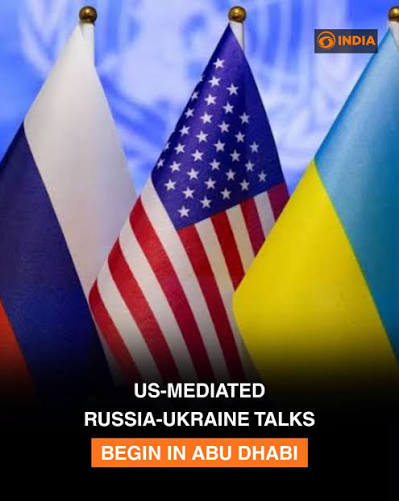
The US-brokered rare face-to-face talks between Russia and Ukraine, held in the UAE capital Abu Dhabi, has triggered renewed optimism about the end of the five-year conflict few could have anticipated its prolonging.
There is a permanent significance about this conflict. It has pitted nuclear power Russia against NATO, a trans-Atlantic military bloc that surreptitiously turned Ukraine into a basis for proxy war against the Russian Federation.
There are geopolitical reasons to lambaste the US President, Donald Trump. However, as credit ought to be given where it due, Trump has relentlessly made an effort – albeit imperfect – to bring an end to the Ukraine conflict he swears would never have broken out had he been in the Oval Office.
This week, Trump unleashed his envoys, Jared Kushner and Steve Witkoff, to lead the Abu Dhabi trilateral talks with relative vigour.
Thirty hours later, Ukrainian President Volodymyr Zelensky described the talks as “productive”, an encouraging statement of sentiment by a man whose previous utterances about Russia has been downright disparaging.
In return, the head of the Russian delegation Vladimir Medinsky, who is also the Russian Presidential Aide, also expressed cautious optimism. He said among the discussions were topics that included European security, a new prisoner exchange between Moscow and Kiev and the role of Western countries in the peace process.
In fact, the European security architecture was said to have been “the central topic of the talks”. Medinsky said the Ukraine conflict has exposed the failures of the existing system. “It requires a comprehensive overhaul. A Band-Aid won’t do the job here,” Medinsky said.